I’m sitting in the Burbank Hollywood Airport waiting for my flight to Hartford. The screen on the wall chatters with a morning show. Around me people take, then vacate the seats at the gate as their flights board. My flight to Hartford isn’t for a couple of hours, so I have an opportunity to let you know what’s up!
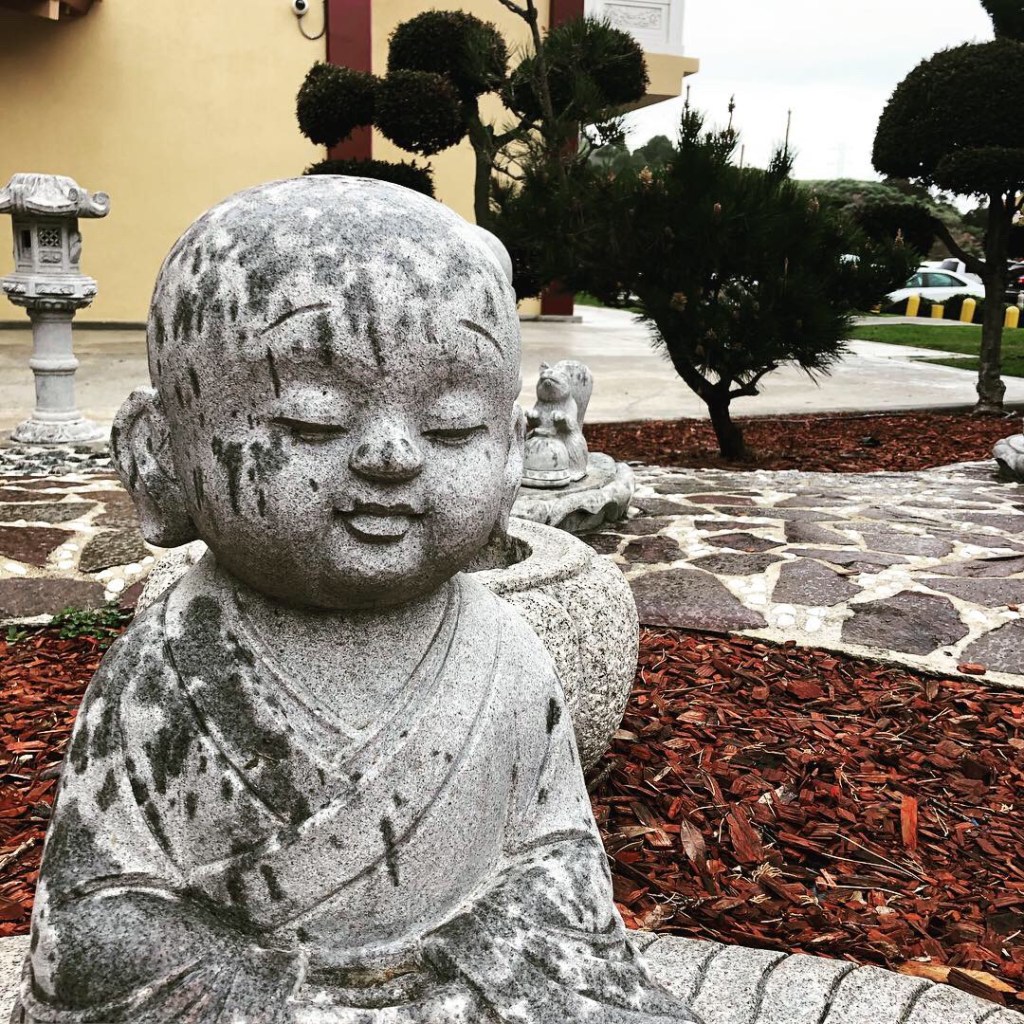
I’m returning after spending a couple of days in Los Angeles. My trip had a dual purpose. The primary purpose was to serve as the UCC delegate to the National Council of Churches Buddhist-Christian dialogue, which took place on Tuesday at Hsi Lai Temple, a Chan Buddhist temple, in Hacienda Heights. The secondary (although a very close second) was to visist my daughter, Olivia, who is a freshman at Occidental College in Los Angeles.
The dialogue was interesting. This is our second time meeting. This is how it goes. About twenty of us, Buddhists and Christians of different flavors, sit at a large oval table in a conference room and listen while members of the group make presentations on different topics that the group has previously identified. I was asked to speak to the topic of “Renunciation and Repentance.” Others topics for this dialogue included Buddhist and Christian perspectives on social justice and Buddhist and Christian perspectives on “ultimate reality.” I could tell that the group was going deeper compared to last dialogue because this time “difference” was allowed to arise in the group.
What do I mean by “difference was allowed to arise?” At one point we were talking about Buddhist reincarnation as it relates to Christian salvation. One of the Christians tried to make a connection between the two concepts. The Buddhist presenter shook his head and said, “No, they are not the same.” The conversation then shifted to a discussion of language and its limitations when faced with ultimate reality, which, by definition, is unspeakable.
The purpose of the Buddhist-Christian dialogue is to build connections across religious differences. The first impulse in building connections is to look for commonalities. We naturally do this when we meet someone new. “Where are you from?” one might ask. “Sacramento,” she says. “Oh, my cousin lives near there,” you say. And on it goes. We relax. There’s a good feeling. We’re not so different after all. And we aren’t. A foundational claim for both Buddhists and Christians is that all of life is connected. But if we stay in this easy place of “we’re all the same,” are we really getting at the truth?
Recognizing difference is vital to genuine connection. Integrity has boundaries. It is able to say both “yes” and “no.” Difference gives energy, variety, and beauty to life because difference is also truth. The English Romantic poet John Keats wrote, “Beauty is truth, truth beauty,—that is all/Ye know on earth, and all ye need to know.” Difference can feel sharp. It can feel scary. “What’s happening? Will we lose our connection? Will we argue? Will we fight?” Healthy dialogue allows both commonalities and differences to arise without getting caught in any of them. Instead, we calmly apprise and appreciate them. Commonality and difference. Connection and disconnection. This is the path to truth and beauty. This is the way of the unspeakable.
Presentation to National Council of Churches Buddhist-Christian Dialogue
Hsi Lai Temple
Hacienda Heights, CA
5 November 2019
Good morning, everyone. It is an honor and a joy to have the opportunity to speak with you this morning on the topics of renunciation and repentance. These are topics of enormous importance, but we only have a short time together. So I will begin by setting the frame and focus for my brief remarks.
Renunciation and repentance are spiritual practices that save my life. For me, they are important not as abstract theological concepts but as concrete actions. As theological concepts, renunciation and repentance in Buddhism and Christianity are in many ways worlds apart. But they intersect in profound ways in my personal spiritual practice. I would like to show you those intersection points by sharing with you a little of my spiritual journey.
I was born and raised in Grand Rapids, Michigan and baptized as an infant in the Christian Reformed Church (CRC). The CRC is a small, conservative, Evangelical denomination of Dutch immigrants based primarily in the Midwest and Canada. For generations all of my family on both my mother’s and my father’s side have been CRC. When I was in high school, my mom left the CRC to become and ordained minister in another denomination. She left because at that time the CRC did not allow women to become ordained ministers. At about that same time my dad came out as a gay man. He also left the CRC because the CRC, like many conservative Christian denominations, is not supportive of LGBTQ people. After my parents left, I left the CRC, and I seriously considered leaving Christianity altogether.
Instead, I decided to study theology at the graduate level. First, I moved to Germany and studied there for a year. I then returned to the U.S. and studied theology at the University of Chicago with the intent of becoming an academic theologian. But God called, and I answered. So instead of pursuing a Ph.D. I ordained in the United Church of Christ (UCC) and have been serving as a pastor for the past 23 years. The United Church of Christ is a Protestant Christian denomination that shares many of the theological roots of the church of my childhood, but they have taken those roots and grown in some very different directions, the most important of which for me are that the UCC ordains women and supports the equality of women in every aspect of church life. The UCC also welcomes LGBTQ to serve equally in all aspects of church life, including ordination. The UCC is also very active in ecumenical and interfaith work, which will become important later in my spiritual journey.
The CRC placed a heavy emphasis on renunciation and repentance. Every Sunday worship featured a reading of God’s law and a call to repentance, which each of us made individually and silently sitting in pews, our heads bowed, our eyes closed. There were many things we were expected to renounce as Christians. Sex outside of marriage was a big one. Also dancing, swearing, and secular music–especially rock and roll. Working, shopping, playing with friends, or any other kind of “secular” activity were forbidden on Sunday. Renunciation was about resisting temptation. Repentance was the remedy for succumbing to it. Renunciation and repentance were the twin practices for maintaining the behavioral norms and cultural boundaries of the community.
My understanding of renunciation and repentance have changed since I was a child. It’s not that I have rejected the practices of my childhood. Rather, my spiritual journey has challenged me to expand them. Let me explain.
One of the things I really appreciate about my upbringing was its emphasis on what we called “personal devotions” or “quiet time.” The idea was that as Christians we were to extend the practices of renunciation and repentance into our daily lives. I took this very seriously as a child. I would set aside 10-20 minutes a day to read my children’s Bible and then to pray. The Bible reading I found difficult but doable. We were taught that prayer was “talking to God.” So I would fold my hands, close my eyes, kneel next to my bed and say what was on my mind. It would take maybe two or three minutes before I would run out of things to say. I found the procedure spiritually unsatisfying, but I wasn’t offered any alternatives, so I kept at it for many years until eventually as a teenager I just stopped. I longed to develop myself spiritually, but nothing in the narrow range of options available to me made that connection. The practices I was taught didn’t offer enough “quiet” (since most of the “noise” was coming from my chatty brain) and not enough “time” (since once I was done “talking to God,” I didn’t know what to do.)
Fast forward many years. I am serving my first call as an ordained minister in the United Church of Christ. I am the solo pastor a small church in a small town in the Chicago area. It is not going well. The church is dying. The parishioners are fighting with each other and with me. One day I’m pacing my office looking for answers to some church problem or another. I don’t remember what, exactly. I find myself absent-mindedly looking at the books on my bookshelf and I spot one entitled Zen Mind, Beginner’s Mind by Shunryu Suzuki. When my wife and I married, we put our books together. This was one of hers. I pulled it off the shelf, started reading, and that began my Zen meditation practice, which I’ve maintained for the past 20 years. I’m currently a member of the Boundless Way Zen Temple in Worcester, MA. My teacher is David Dae An Rynick, Roshi. I received lay ordination in the Boundless Way Zen lineage in 2018.
What does this have to do with renunciation and repentance? Let’s take renunciation first. In my current understanding renunciation is a process of self-emptying. I find that in the practice of renunciation the Jesus way and the Zen way intersect at profound levels. Self-emptying in the Christian tradition is often talked about using the Greek term, kenosis. This word appears in the famous text from Philippians 2: “Let the same mind be in you that was in Christ Jesus,
6 who, though he was in the form of God,
did not regard equality with God
as something to be exploited,
7 but emptied (ekenosin) himself,
taking the form of a slave,
being born in human likeness.
And being found in human form,
8 he humbled himself
and became obedient to the point of death—
even death on a cross.”
Self-emptying in this context goes far beyond the understanding of renunciation as avoiding certain behaviors. In fact, my early experience of renunciation as primarily avoiding sex, swearing, and “bad thoughts,” whatever that meant, only served to reinforce my ego and self-consciousness. I had continual anxiety that I was being a “bad Christian.” My Zen practice has invited me to step beyond judgments of good and bad and into a practice of unconditional availability, letting go of self-concern so that I can be more effectively present and helpful in whatever circumstances I find myself.
Repentance is the spiritual practice of changing one’s mind (Gk: metanoia) or “turning around.” St. Paul famously described it thus: “Do not be conformed to this world, but be transformed by the renewing of your minds” (Romans 12:2). Jesus’ first sermon was a call to repentance: “Repent for the Kingdom of Heaven is near.” In my upbringing, repentance was closely linked to renunciation. One repented indulgence in things one was supposed to have renounced. For me, it took a form something like this: sitting in worship, head bowed, I silently pray, “God, I’m sorry for fighting with my brother this week. Amen.” One is supposed to feel remorse and vow never to do the repented-of thing ever again. But much of the time I did. There were always more sibling conflicts to work through, sexual thoughts to arise, or sweets to sneak from the cupboard. Repentance was a repetitive, guilt-inducing grind that once again only reinforced my ego-centric consciousness. The Kingdom of Heaven was not near. As far as I could tell, I was far, far from it.
What are we turning from and what we are turning toward in repentence? Christian teaching focuses on turning away from “sin” and turning toward God and toward our fellow human beings. Sin is often defined as anything that separates us from God or from our neighbor. When asked about the “greatest commandment,” Jesus said, “Love the Lord your God with all your heart, soul, mind, and strength, and your neighbor as yourself.” In other words, there are sins that harm our relationship to God (this is called “idolatry” in Christian theology) and sins that harm our neighbors, or put us out of right relationship with them. The root of all of these sins is the tendancy of human beings to prioritize the wants and needs of the individual ego above all else. This is how repentance in the Christian context can be understood as self-emptying. Turning away from the focus on self and turning toward a focus on God and neighbor.
Zen repentance can also be understood as self-emptying, but it is rooted in the understanding that there is no such thing as a separate self. The individual “I” is a construct of habitual thinking that if observed very closely in the process of meditation slowly begins to deconstruct itself. The turning in Zen involves noticing how we get caught up in our thinking processes and then returning attention to the breath over and over again without judgment. Over time this creates an expansiveness of spirit born of an experiential knowledge that in the view of absolute reality, we are one.
Repentance in Zen involves acknowledging our mistakes for the simple purpose of seeing clearly how we get carried away again and again by our thoughts: our thoughts of separation, our thoughts of oneness, our thoughts of good, our thoughts of evil, our thoughts of God, our thoughts of no God. The power of awareness is that it gives us the opportunity to get ‘street-smart’ (as my teacher puts it) in the ways of the mind. The point is not to eliminate thought. That is a common mistake. Our brains are thought producing organs. It’s just what they do. The point is simply not to mistake our thoughts for reality. Christian mystic Meister Eckhart famously said, “Let us pray to God that we may be free of God.” His point being that the word “God” itself can become an idol if we attach an idea of reality to it. God, in this mystical convergence, is simply the bare present manifesting moment after moment. Just this. Repentance is seeing with compassion how we continually “miss the mark” and returning to just this.
The practice of zazen has taught me in profound ways that the Kingdom of Heaven is indeed very near, in fact, right here, right now, just this. Repentance is nothing more and nothing less than reconnecting with right now. I have found that repentance practiced in this way leads to exactly the kind of spiritual development St. Paul was writing about when he warned Christians, “Do not be conformed to this world,” and exhorted them to instead “be transformed by the renewing of your minds.”
Renunciation and repentance tend to have negative associations in modern, Western cultures. This is understandable. For centuries Christian institutions have used the practices of renunciation and repentance as tools for social control. I don’t think my parents or the Christian Reformed Church had any bad intent in raising me to practice their particular forms of repentance and renunciation. They truly believed that they were loving me by saving me from hell. Unfortunately, the practices themselves plunged me into my own personal hell realms of anxiety and depression that to this day I visit from time to time. The difference for me now is that a new understanding of repentance and renunciation gained through meditation practice means that whether I find myself in the hell of suffering or the heaven of bliss, I have the tools to engage the present moment whole-heartedly. This whole-hearted engagement with reality is the fruit of renunciation and repentance. Whole-hearted engagement produces salvation for me and perhaps even for the entire world.
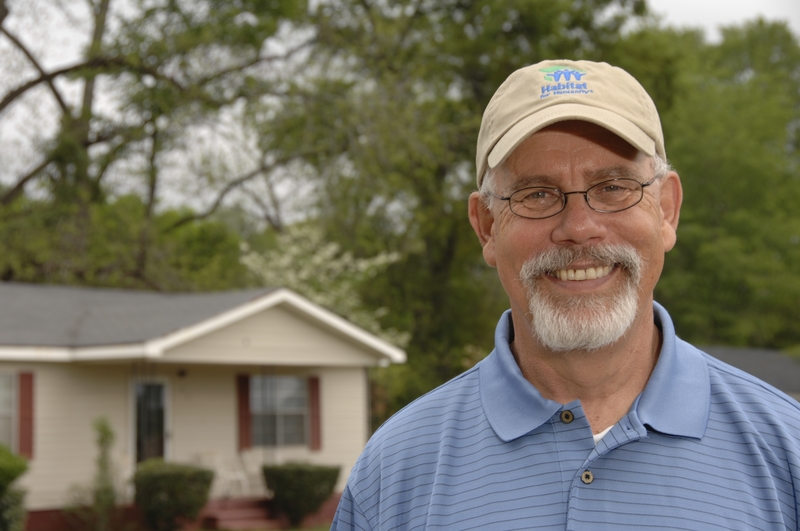
Habitat for Humanity “first volunteer” Clive Rainey
What’s Up with Pastor Todd 10-30-19
This coming Sunday, November 3, First Congregational Church of Granby welcomes guest speaker Clive Rainey to our 10am worship service. Clive is Habitat for Humanity’s “first volunteer. Clive joined founders Millard and Linda Fuller soon after they founded Habitat in 1976. You can read more of Habitat’s story here. Clive has served in many different capacities and played a key role in the development of the organization. In his 40 + years with Habitat, Clive has lead thousands of builds all over the world.
When asked “What is the first feeling you have when you put a hammer in your hands?’ Clive responds, “A feeling of power! This hammer is more powerful than guns or bombs or terrorism or dictators; more powerful than poverty or hatred. With this hammer I can change the world! I can begin that change with this house, this family, this neighborhood, this community, this country.” I think Clive would agree that the power he is speaking of does not reside in the hammer itself but in what the hammer represents. In the context of Habitat, the hammer represents a particular approach to changing the world called “partnership housing.”
It’s Habitat’s model of partnership that has made it truly transformative–the kind of organization that high capacity leaders like former president Jimmy Carter would give their lives to. My understanding of the model is that it’s less about charity and more about solidarity. When one is building a house in partnership with a family, a neighborhood, and a community, a context is created in which authentic relationships across race, class, and cultures can emerge. Charity keeps social hierarchies in place. There is the helper and the helped. No matter how the situation of the helped might be changed, the helper maintains her status as “not the helped.” In partnership characterized by solidarity, it’s clear that we’re all in this together. My fate is inextricably linked to yours. In the case of Habitat, clients are literally co-builders with volunteers. This social leveling creates an opportunity–even if for a moment–wherein helper and helped have the opportunity to meet together as equals in an authentic relationship of mutual love and respect. The helped is no longer an “object of charity,” but a full human being, no longer “other,” but, in some sense, me.
I have found that solidarity can scare the pants off most white, middle class, mainstream Americans. We don’t want to consider the possibility that given different circumstances, we might need housing assistance. We don’t want to consider the possibility that our relative privilege has little to do with our own personal worthiness and much more to do with chance and the fact that we live in an exploitive system that tends to benefit the few at the expense of the many. We don’t want to give up our sense of status and superiority. We don’t want to stand in the place of those who have experienced misfortune, discrimination, or exploitation. My guess is that that’s why there is a lot of charity in the world. Much rarer is true partnership. Habitat has developed an authentic, partnership model.
For me, solidarity, not charity, offers an opportunity for a more authentic walk with Jesus, who “though he was in the form of God, did not regard equality with God as something to be exploited, but emptied himself, taking the form of a slave, being born in human likeness. And being found in human form, he humbled himself” (Philippians 2:7-8). It turns out that the model of authentic partnership is also a model for authentic Christianity.
For critiques of the charity model read Winners Take All: The Elite Charade of Changing the World by Anand Giridharadas and Toxic Charity: How Churches and Charities Hurt Those They Help, And How to Reverse It by Robert D. Lupton. I hope you will join us this Sunday to meet Clive and learn the meaning of authentic partnership.
Following worship this past Sunday we had the second installment of our monthly “Working Lunch” program at First Congregational Church of Granby. This month we focused on a report of our Meet the Minister meetings. 47 church members participated in five Meet the Minister meetings over a period of several weeks. An intentional effort was made to invite the participating of both more active and less active members. Each meeting addressed four questions:
What brought you to FCC Granby?
What keeps you at FCC Granby?
What would you like FCC Granby to be in 3-5 years?
What steps might we take to get from here to there?
Responses were recorded and then tabulated through a method of qualitative analysis. You can read a full report of the results here.
Top line summary:
What brought you to FCC Granby? Sunday school for our kids (17 mentions).
What keeps you at FCC Granby? Frienships/”people” (13 mentions).
What would you like FCC Granby to be in 3-5 years? Merge South Church and First Church/a new combined church with new pastors, new mission, new space more that fits new mission (11 mentions).
What steps might we take to get from here to there? Get out in community/Invite people (9 mentions).
The response to the first question is easy to understand in light of what FCC Granby and the wider culture used to be. Most participants joined the church when they were young parents. It was generally thought in the wider culture that some sort of exposure to religion was a good thing for children. So they looked for a vibrant Sunday school program and found one at FCC Granby. Now those kids are adults and are either moved away or no longer find church relevant. Newer generations have little or no exposure to church. The wider culture no longer values religion the way it used to. Today we can no longer count on young families with children to find us. We need to put in the hard work of connecting with them.
The response to question two is important. Declining churches are often faced with hard choices due to limited resources. This raises a foundational question: What is the “church?” If a church decides that what it really is is the building, its options for creating a sustainable future are severely limited. Too often, the church ends up closing and selling its beautifully maintianed building to someone else. If the church, however, is the people, for whom the building is a resource for ministry, the church has many more options for creating a future for itself.
The response to question three inspires me. It says that many in the core, active membership of the church see the need to do something big to fundamentally change the decline trajectory of the church. Merger is the most obvious option, but what shape that might take remains unclear.
Response to question four may seem at odds with the response to question three, but I don’t see it that way. I don’t see a merger possibility as “throwing in the towel,” so to speak. I’ll say it again, if the vision of merger is tying one “Titanic” to another “Titanic,” we’re wasting our time. If, however, it is combining resources to create a new mission of reaching new people and having a greater impact on Granby and beyond, then it’s worth it. The time to begin building that new mission is now.
I would like to apologize for missing last week’s column. Without getting too much into the gory details, I have a recurrance of a tiny benign tumor. That in itself would be no big deal. The trouble is that it’s in my skull! So it can’t stay there. We decided on radiation treatment, which I had last Thursday morning. When I asked, the doc said I might experience “mild fatigue” afterward. I’m not sure what counts as “severe fatigue” but I now know I wouldn’t want to experience it. I spent the next 24 hours in bed. That threw my schedule off for the week, and I missed my deadline. So, once again, I’m sorry, but I’m glad to say I’m back on my feet and shouldn’t require any more radiation treatments. One and done!
I’m writing this from the downtown Granby Starbucks, which is crowded with people this morning. I’m guessing a few, like me, are here for the power and the wifi, which are down throughout much of the town, including First Congregational Church of Granby, because of the Nor’easter that swept through the region last night. Disruption, whether health-related or weather-related, is my experience right now.
Disruption is familiar territory for me. The big one, of course, was when dad came out as gay and my parents divorced. But even before that moment, much of my childhood experience was moving place to place following dad as he moved from job to job. As an adult, my experience hasn’t been that much different. Ministry has called my family and me to move from place to place following opportunities to be of service. Years ago my oldest daughter commented that the only consistent things in her life have been family and God.
For me, keys to surviving disruption are the following:
Keep it light.
Move quickly.
Widen your vision.
See the opportunities.
Nothing’s personal.
Focus on the essentials.
Perhaps we’ll have the opportunity to flesh these out further, but for now I leave them with you to think about in relation to our congregational transition.
Transition necessarily involves disruption. Look at Jesus’ example. My reading of Jesus’ death and resurrection is that it was a bit of a disruption–not only for Jesus personally but, as it turns out, for the entire world. Disruption is woven into the fabric of reality. It is also a key component of our faith. Given that realization, how will we respond to disruption as we move into God’s future?
The sound of rain on the trees and grass, the smell of moist earth on the breeze drifting through the window screens invites my awarenes to return to just this moment. As I notice the small details of life unfolding just as it is, I’m grateful. Admittedly, this is a pleasant moment when gratitude tends to manifest more easily, but what a gift that we as human beings have this capacity of simple appreciation.
I find that bringing my awareness to the present moment is almost always helpful. It’s easy to get lost in dreams of the past or visions of the future–be they frightening or longed for. Reality almost always turns out to be different from what we imagine.
That’s why after our second Meet the Minister meeting, which we shared this past Monday, I invited everyone gathered in the three season porch on the Wilhelm Farm to bring their attention to the late summer breeze, the patchy sunshine on the concrete floor, and their friends gathered at the table for conversation, cookies, and punch. Not every moment is a crisis. Every moment is potentially a moment to enjoy.
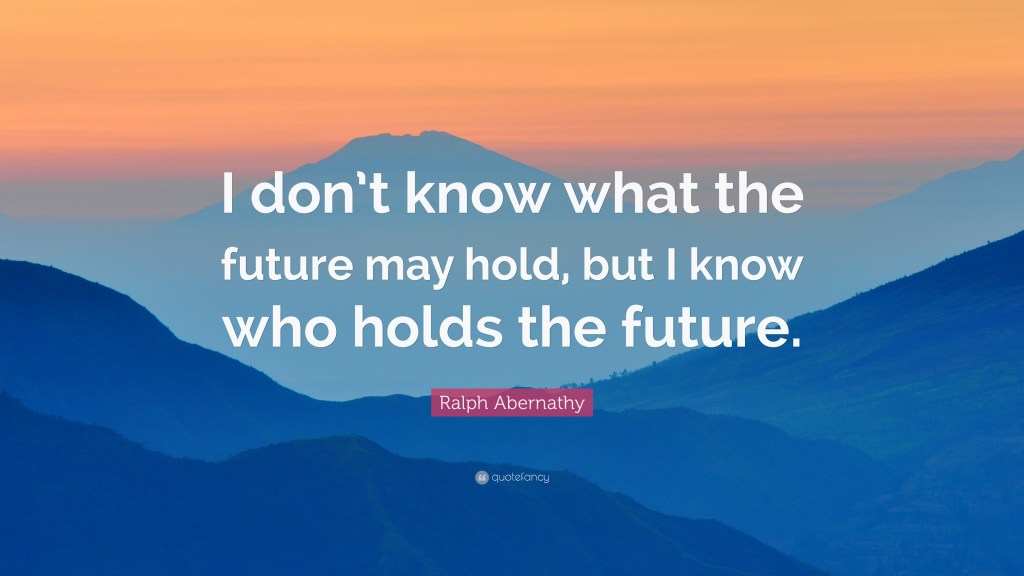
This is so important to remember as we move through this time of transition. We need to know where our help comes from. The Psalmist did. “My help comes from the LORD, who made heaven and earth. He will not let your foot be moved; he who keeps you will not slumber.” There is a fair amount of grief and anxiety in the congregation right now. There is also a fair amount of hope. Our task in the months ahead will be, among other things, letting go of what once was and trusting that though we don’t know what the future holds, we know who holds the future.
I was sharing some of this with the staff. They suggested that having some sense of a plan would help with the anxiety. It’s not up to me to tell you what the plan is. Any plan is up to us to craft together. That’s in part what the Meet the Minister meetings are for. Nevertheless, I can share my general sense of direction at this point. Right now we are working in a 3-5 year timeline. During that time we are going to shift our focus outward toward reaching new people. New people bring new life, new energy, and new hope. We are right now in the process of forming a Vitality Team to lead this effort. At the same time, we will be working through a process of building congregational health. We have already started this work with Meet the Minister meetings and the upcoming monthly Working Lunch program following worship. Additionally, the Church Council is recommending we engage the services of a consultant to help us with the congregational health piece. Finally, we will continue a process of collaboration with South Congregational Church to build relationships and determine whether or not we share a common mission. For now, all conversations about money, pastors, and buildings should be set to the side. Those decisions can be made once we determine whether or not we want to be together. If we discover that we can build a compelling vision for the future together, then we wil make those other decisions based on that common vision.
I know this is very high level and abstract for some, but maybe it will reduce anxiety to know that I and other members of your church family can see a positive path forward. As we move forward, the path will become clearer. And, once again, nothing is set in stone beyond the fact that if we don’t do something to address the decline trend we’re simply sealing our own fate. Tell me what you think. This is just my sense of things based on my conversations with you, with the folks at South Church, and my 23 years experience working with congregations in transition.
At First Congregational Church of Granby we’ve been having some wonderful conversations over the past several weeks. We’ve had four “Meet the Minister” meetings with about 40 total attendance with one more to go. This covers close to our active membership. Great participation! In those meetings we have addressed four questions: 1) What brought you to FCC? 2) What keeps you at FCC? 3) What is your vision for the next 3-5 years? 4) What next steps might we take to get there? There have been a wide range of responses, honest and heartfelt, and most have left the meetings feeling a mixture of grief over what was and hope for what might be. I will be compiling the responses and making a presentation at our next “Working Lunch” Sunday, October 20, in Cook Hall following worship. I’m looking forward to deepening the conversation in this time of transition.
Speaking of “Working Lunch” . . . We had our first Working Lunch this past Sunday, September 29 in Cook Hall. Ann Wilhelm and crew prepared a delicious lunch. Thank you so much! After lunch a group of about 25 church members created a timeline of significant events in the life of the church, in the town of Granby, in the United States, and in our world. We also included our own personal significant events such as baptisms, funerals, weddings, confirmation, and other life moments. It was helpful to take a 30,000 foot view of the movement of events and their interconnection.
Following the creation of the timeline, we made observations, including highlights, lowlights, patterns, things we would like to see continue into the future, and things we might not want to repeat. There were many insightful comments but one that struck me came from Emily Messenger. After reflecting on how people at FCC and other congregational churches tend to get upset and leave, she commented that we should be “learning to make conflict as a way of growing rather than splitting apart.” I thought that was incredibly insightful.
Conflict is normal. God created each of us different with differing perspectives, opinions, and life experiences. If we were all the same, life would be boring. Sometimes churches tell me they have no conflict. To me, this indicates one of three possibilities: 1) They are lying; 2) They aren’t doing anything of any significance; 3) They’re dead. It is also true that conflict handled in an unhealthy manner is the number one reason for decline in congregations. The good news is that we can learn healthy communication practices that will indeed enable us to use conflict as a way of growing rather than splitting apart. The Church Council is recommending we hire consultant and coach Rev. Claire Bamberg to help us with that work. You will have the chance to meet her Sunday, November 17, when she will be preaching and leading worship.
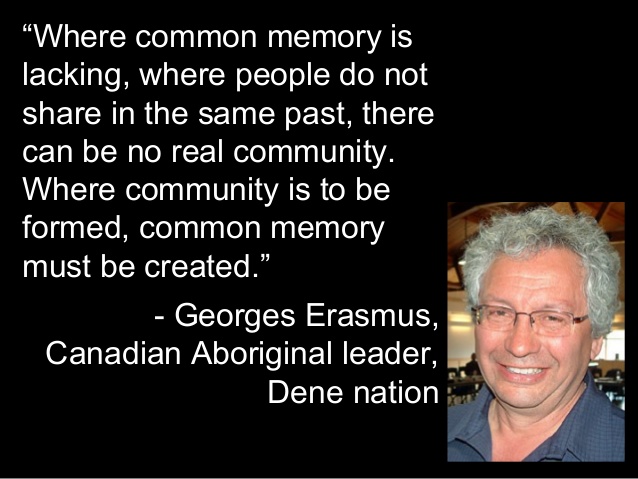
The point of the timeline exercise is to create common memory. Georges Erasmus, a respected Aboriginal leader from Canada, said, “Where common memory is lacking, where people do not share in the same past, there can be no real community. Where community is to be formed, common memory must be created.” Our history is full of ups and downs, but the good news is we can learn from it. And with new learning comes new opportunity for new life.






 Todd Grant Yonkman