What’s Up with Pastor Todd 9-11-20

What’s Up with Pastor Todd 9-11-20

This coming Sunday is known by many names in the church world: Homecoming Sunday, Rally Day, Christian Education Sunday, or–more recently–Faith Formation Sunday. It’s the Sunday in American churches that marks the beginning of the program year, the return of children to school, the return of families from summer vacation, the fall season of sports, holidays, harvest. 

I’m not sure which of the terms for this coming Sunday I prefer. The UCC, our denomination, calls it Faith Formation Sunday now, so I’ll go with that. In any case, Faith Formation Sunday 2020 is unlike any other I’ve planned and led in my entire career. Kids are going back to school–sort of. Many of our young ones are on a “hybrid schedule,” which means both days distance learning at home and days in the classroom. My college-age daughter, who should be in Los Angeles right now, spends her class time sitting in front of her laptop on our three season porch here in Windsor, CT. 

At First Congregational Church of Granby this Sunday marks the next stage in our gradual reopen process. We are inviting the public to pre-register online to observe the worship livestream in person in the Sanctuary. COVID protocols will be followed to ensure that everyone who chooses to be together in person can do so safely. Last Sunday we successfully celebrated our second outdoor in person worship service. I’m grateful to everyone who worked so hard to make it possible to be together safely. It was moving to see the faces of friends again.

Confirmation class, which was disrupted by the pandemic, will resume on Zoom this Sunday. I will be working together with the Explore Team to figure out our programming for the young ones. I don’t know about you, but I have moments when all of this feels very difficult, stressful, and depressing, but I’ve noticed that those moments, like all moments, pass, and a new thought, feeling, or experience arises. Remaining spiritually grounded through the changes gives me the energy I need to forge ahead. 

Last Sunday after worshipping outside under the trees, feeling the breeze on my skin, seeing the sun above and familiar faces around me, I realized that the sadness I had been carrying with me was gone. In its place was joy. This experience reminds me of a favorite song, one I’ve shared before: Richard Smallwood’s “The Center of My Joy.” I leave you with links to a couple of versions: one from the composer himself, and another . . . well, check it out for yourself. 
Vast Insight Surpassing Wisdom

[Explanation: For over 20 years my spiritual practice has been Zen meditation. I am currently a member of Boundless Way Temple, Worcester, MA. I study koans under the instruction of David Rynick, Roshi. “Koan” comes from the ancient Chinese practice of law and simply means “case,” as in the record of a legal proceeding that points to the truth of the matter at hand. Koans are statements of proceedings usually in a monastery context, that point to truth. Another one of David’s students and I have taken up the practice of writing verses in response to some of the koans we study. My dharma name is “Setsusho.” Below is the koan. The koan translation from the original Chinese is by poet David Hinton. Rather than transliterate the character names (in the example below, “Quingrang”), Hinton uses a literal translation of the Chinese characters, so Quingrang becomes “Light-Inception Peak.” Confusing, but perhaps opening up more nuance of meaning. Following the koan is “Setsusho’s” response!]

The Case:

A monk asked Master Light-Inception Peak: “The Buddha of Vast Insight and Surpassing Wisdom sat in meditation for ten kalpas on Buddha-Way Terrace, but the Buddha-dharma never took shape for him. How is it, in all that time, he never wholly became Buddha-Way’s turning seasons?”

“A question to the point exactly,” replied Light-Inception.

But the monk persisted: “After all that meditation on Buddha-Way Terrace, how is it he never wholly became the Buddha-Way?”

“Because he never became a Buddha.”

Setsusho’s Verse

Deaf monk sits beneath a dead branch

Half moon hangs in the sky

In Kenosha, Jacob Blake

Lies in hospital, spine severed

What’s Up with Pastor Todd 6-26-20

What’s Up with Pastor Todd 6-26-20

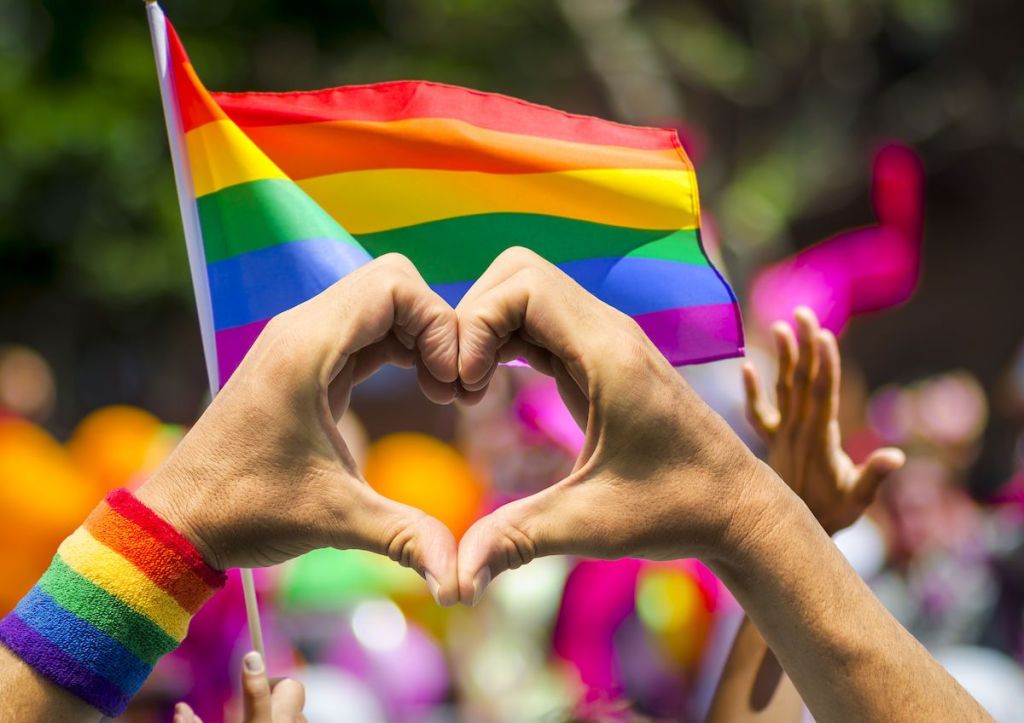
On Sunday, June 28, 1970 the first Pride Parade was held in New York City. Similar events were held in June of 1970 in Chicago and San Francisco. All were in response to the Stonewall uprising the previous year, which marks the beginning of the modern gay rights movement. 

For the first time in its 50 year history the NYC pride parade is cancelled due to coronavirus. Cancelled for the first time in 50 years, on its 50th anniversary.

A couple weeks ago I began an online training for leadership and organizational coaching during the COVID pandemic. As the group was naming the different dynamics around loss, grief, and trauma folks are experiencing during this time, the AIDS epidemic came up. For those of us who lived through the 1980s/1990s decades of the AIDS epidemic, when thousands upon thousands of mostly gay men were dying in places like New York City, San Francisco, and Miami, COVID brings up ghosts of that trauma. As many of you know, my dad was one of those gay men who died of AIDS, so this year’s Pride is just a strange, strange time for me, and I’m guessing for many of my LGBTQIA+ brothers and sisters. 

Folks are hosting virtual Pride events, but for me and my family the highlight of Pride has always been the parade. My kids tell me that Providence (RI) Pride was their favorite event of the year. People of all ages, colors, and creeds gathered downtown for a day of fun and joy and celebration. We marched as a church. We waved banners and wore silly hats and cheered for the crowd as the crowd cheered for us. The City of Providence was never happier or more together than on Pride weekend. 

My Pride story is a family story. It’s a story of my family finding its family: a community of people committed to living without shame; people of all different identities committed to accepting and loving every inch of themselves and every part of every other. Nothing needs to be hidden. Everything can be talked about. Vulnerability, instead of a sign of weakness, is lifted up as a sign of strength. Pride is a time of honoring those who have gone before: martyrs and heroes and loved ones lost who had the courage to live their truth, and because they chose to do so, paved the way for those of us who would follow to more perfectly manifest what, for me, is nothing other than God’s boundless, unconditional love.

What’s Up with Pastor Todd 6-19-20

What’s Up with Pastor Todd 6-19-20

“If we let it fall apart, what could we do then?” In the early days of the COVID pandemic, I used the phrase “stay safe, stay together” to chart a course through what has been a difficult, scary time. I’m glad to say we’ve done that. 

March 22 was our first livestream only worship service at FCCG. In those early days and weeks, we were in emergency mode–or at least church leadership was. Every day new information about the pandemic was coming out from state and local officials. As a church we had to learn quickly and adapt nimbly to keep everyone safe and everyone together. Folks were frightened and disoriented. We were looking for direction and trying to find our footing.

We adapted quickly. Many of us learned how to use Zoom. We adapted our worship service and upgraded our technology. We learned new routines of working from home, of checking in by phone, of making sure people were safe and supported. We started new programs: weekly Zoom Bible study, “Thank-Goodness-It’s-Zoom” virtual happy hour, online prayer group, daily online devotional. The Vitality Team has really shined in these past months (thanks Beth Lindsay, Ann W, Don S, Anne delC., Dick L, Kerri C, Heather D!) raising money for essential workers, organizing a cheer parade, delivering Easter cheer baskets, thanking postal workers, organizing mask making, organizing gardening supplies and cheer cards for the residents of Meadowbrook, and more. The one thing I love about this COVID time is that it has opened an opportunity to connect with new groups of people beyond our walls–people we have overlooked for too long.

Now we’re at a different place. Summer is upon us. Folks are getting restless. For some, perhaps, the novelty of worshipping from home has worn off. Zoom gatherings that were well attended at first have tapered off, so we’ve discontinued them for now. I hear complaints. The diversity of opinions about whether and how to continue our collaborations with South Church is wide. The weight of grief over what’s been lost over the past months and the worry over what is to come are significant. I’m finding that leading the church from a place of staying safe and staying together is actually becoming more challenging the deeper we move into this pandemic.

One of the things we learn in coaching training is the technique of asking “powerful questions.” Questions that point to the heart of the situation can sometimes shift perspective and remove obstacles to growth, life, happiness. It occurred to me that a powerful question for this moment might be “What if we let it fall apart? What could we do then?” We still need to stay safe. And I think we still want to stay together, but what if we took a breather? What if we relaxed the meeting schedule? What if we let go of our expectations of “going back to normal” and just did the things that brought us life, joy, and energy? What if we focussed on the work of the Vitality Team that is bringing blessing and joy to so many people? 

The Re-Open Team–Lori F, Lisa R, and Sue M–will be beginning their work soon. I’m hoping in the coming weeks we can begin to define when, how, and under what circumstances we can begin some in-person gatherings. Until that time, what do you need to let go of? What do you need to embrace?

What’s Up with Pastor Todd 6-12-20

What’s Up with Pastor Todd 6-12-20

I recently heard on a news podcast that something like 70% of Americans think our country is “out of control.” I don’t know where you’re at, but this statistic points to a feeling we’ve been noticing around us and perhaps feeling ourselves for some months now. The recent protests around the killings of George Floyd, Breonna Taylor, and Ahmaud Arbery just add to the generalized feelings of chaos, uncertainty, and grief that we’ve all been facing.

Recently I was invited to join a cohort of clergy and lay people to receive training on hwo to coach individuals and congregations through the COVID pandemic. Training began this week and will continue (online, of course) through the first half of July. We’ve been learning to identify and contextualize the component parts of the circumstances we’re facing in order to more effectively address them and help people through this time.

There are some practices I’d like to suggest that may be helpful in dealing with feelings of grief and feelings of being “out of control.” When circumstances feel out of control, it’s helpful to find ways to “stay grounded.” Staying grounded is a big reason why I spend an hour every morning sitting still and silent, minding my breath. Literally sitting “on the ground” is an incredibly effective way for me to feel “grounded.” Circumstances can be swirling about me, but I know there is a stable place of rest that is always present–literally beneath my feet. 

How will you “stay grounded?” Another technique for when you feel out of control is to identify and describe in detail five things near you. For me, it’s the IKEA couch supporting my back, the Sisal trunk that I’m resting my feet on, the roar of a motorcycle engine on the street, the sigh of the breeze through the trees, now the sound and smell of rain. Is the world really coming apart? Yes, in some ways the world is coming apart. In others it’s coming together. And through it all like the finest of thread the rhythms of the universe continue completely unbothered by our small concerns. While some things are out of our control, other things are in our control. Sometimes it’s helpful to focus on the things we can control beginning with where we place our attention.

Many of you are probably familiar with the five stages of grief originally identified by Dr. Elisabeth Kubler-Ross some decades ago: denial, anger, depression, bargaining, acceptance. Perhaps you weren’t aware that later in her career she identified a sixth stage: meaning-making. Meaning-making is the stage of grief that produces creative new life out of death. For example, parents of the Sandy Hook shooting victims creating the organization Everytown for Gun Safety. Or Philonise Floyd, brother of George Floyd, who was recently killed in an encounter with police, testifying before congress in support of police reform. 

In the context of our congregational life and our individual lives, I’d like to suggest a powerful question as a tool for meaning-making: “In this time, what are you discovering is ‘essential’ as opposed to merely ‘traditional’?” In other words, what things were we doing before COVID out of mere habit that we’ve found we can do without moving forward? What things have we found we can’t do without that we want to give extra time and attention to moving forward? Loss without a sense of meaning is unbearable. Loss that leads to a simpler, happier, more productive life offers each of us an invaluable opportunity.

What’s Up with Pastor Todd 6-1-20

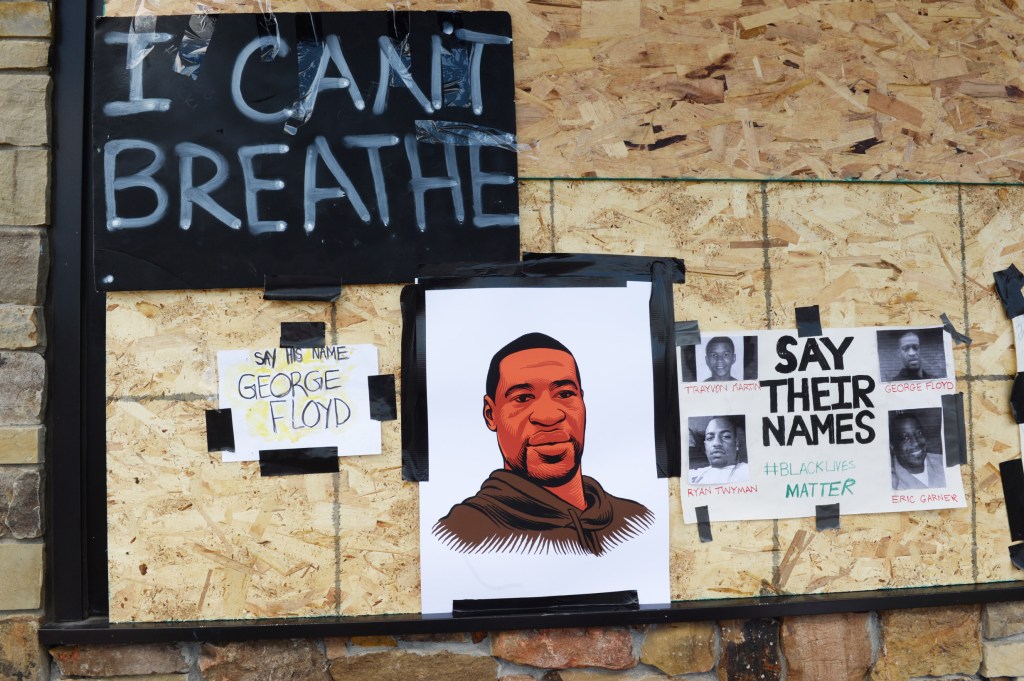
Signs, artwork and flowers were placed by people to pay their respects and protest the Monday death of George Floyd at the intersection of 38th St. and Chicago Ave. in Minneapolis on Saturday, May 30 2020. (Scott Takushi / Pioneer Press)

What’s Up with Pastor Todd 6-1-20

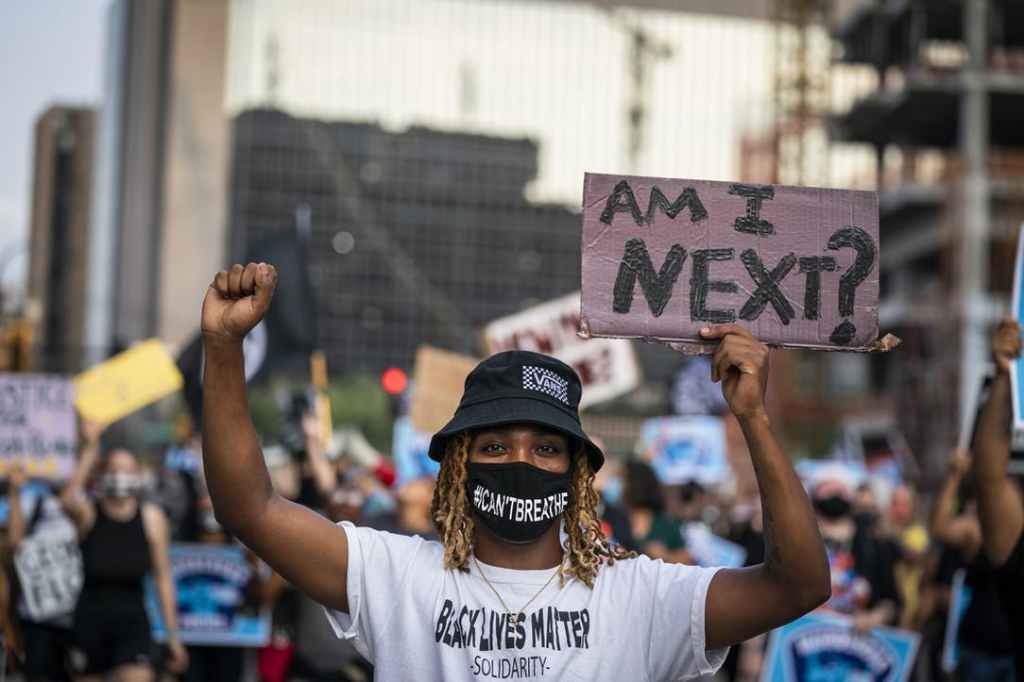
Sunday, May 31, 7am: “I can’t breathe.” George Floyd called out for his mother and pleaded with the Minneapolis police officer who had his knee on his neck. “I can’t breathe,” said Mr. Floyd, until he lost consciousness and later died. “I can’t breathe,” said George Floyd, an unarmed African American while a white police officer squeezed the life out of him and four other police officers looked on.

When I read the story and watched the video of George Floyd’s death this week I was immediately reminded of Eric Garner, another unarmed Black man who called out, “I can’t breathe,” while a white police officer held him in a choke hold on a Staten Island street corner several years ago.

The stories of George Floyd, Eric Garner, Breonna Taylor, Ahmed Arbery, Tamir Rice, Sandra Bland, Trayvon Martin, Philando Castile, Freddie Gray, Michael Brown, the nine who were gunned down during a Bible study at Mother Emmanuel A.M.E. Church–Clementa C. Pinckney, Cynthia Marie Graham Hurd, Susie Jackson, Ethel Lee Lance, Depayne Middleton-Doctor, Tywanza Sanders, Daniel L. Simmons, Sharonda Coleman-Singleton, Myra Thompson . . . (say their names) are stories of a system of racial violence that goes all the way back to the very founding of our nation; nevertheless, the cry “I can’t breathe” also reminds me of an interview I heard back in March with an Italian doctor responsible for a hospital in Milan overwhelmed with coronavirus patients. He described what it was like to watch his patients die in isolation, their breath cut off as their lungs filled up with fluid. And even though coronavirus doesn’t discriminate based on the color of one’s skin, here in the U.S., people of color are disproportionately dying of the disease because as a nation we refuse to directly confront and address what pastor and activist Jim Wallis calls “American’s original sin.” So even in the case of coronavirus, we cannot escape the specter of systemic racism.

Though my chest is tight with grief, anger, and fear on behalf of my family, friends, former parishioners, brothers and sisters in Christ, my neighbors, my neighborhood, my country, I can breathe. And as long as I can breathe I am going to speak out against racism in all its forms wherever I see it. And I see it all around. 

Monday, June 1, 3:29pm: Much has transpired in the past 24 hours. While I can only imagine what it’s like for my friends, neighbors, biological family, and faith family of color to experience the repeated traumatization of systemic racism in America, I know that to bear witness to trauma is also to receive that trauma into one’s heart. Emotions in my household remain raw. Nevertheless, I had an encouraging conversation with a small group of Granby town leaders this morning. We are determined to channel the collective energy of our grief and fear into positive action. Our dream is to lead a sacred conversation on race in the town of Granby. I invite you to pray for us, to pray for yourselves and your neighbors, to pray for our town, our nation. I invite all of us to breathe for George Floyd. I invite us to breathe for Eric Garner. I invite us to breathe for all of our brothers and sisters of color who have swung from the lynching tree. I invite us to lament and repent the sin of systemic racism. And then breathe once again, for the healing of your heart, for the healing of our world.

What’s Up with Pastor Todd 3-27-20

What’s Up with Pastor Todd 3-27-20

Welcome to the fifth week in Lent and the first week of Governor Ned Lamont’s “stay-at-home” order for the State of Connecticut. My wife, Nicole, who is Senior Minister at First Church in Windsor, my two daughters, who were sent home from their respective colleges to do distance learning, and I are learning to share work space in what a couple of weeks ago seemed like a more-than-adquately large house. I’m always glad when we’re together as a family, but the circumstances of this together time are difficult.

One of the difficult moments for me was two weekends ago. My oldest daughter, Fiona, who is a senior at Williams College, was required to leave campus along with almost all of her classmates. The campus is closed because of coronavirus. When the moveout notice came, I felt a mixture of sadness for Fiona–who was very upset to have to say goodbye to her friends, miss her final crew season, and miss all of the other rituals of senior spring–but also some selfish happiness that she would be coming home for a while.

What I wasn’t ready for was the feeling I had helping her pack and move out of her apartment. I suddenly had the realization that I was moving my oldest from college for the last time. Fiona went to boarding school for high school. So the rituals of move-in day and move-home day have been a part of our lives for the past eight years. In the fall, Fiona will be beginning her first full-time job and living on her own in Boston. She will be a full-fledged adult. This was a big moment, but there was no graduation ceremony, no bacclaureate. The family didn’t have time to gather. There were no graduation presents or cake. Also, the weather wasn’t right. In the past, moving our children from their dorms was done in the warm, late spring sunshine. The day I moved Fiona from her campus apartment for the last time was cold and gray.

We will get through this crisis time as a family. We will get through this crisis time as a church. And I’m hopeful, though the behavior of some worries me, that we will make it through this time as a nation. But we are lying to ourselves if we don’t recognize the fear, grief, and loss that many are experiencing. The kind of loss that Fiona and I and the rest of our family is experiencing around senior spring has a name for it: “ambiguous loss.” Ambiguous loss is a term coined by professor and psychotherapist Pauline Boss. Her book is entitled Ambiguous Loss: Learning to Live with Unresolved Grief. 

We experience ambiguous loss when conventional rituals and processes around grief are either unavailable or inadequate. Too often our culture devalues ritual, but things like funerals, graduations, weddings, going-away parties, or simply the chance to say good-bye are hugely important for helping us process grief and helping us heal. When those things aren’t available, grief gets frozen and our emotional and spiritual development gets stuck. A lot of us are going through experiences of ambiguous loss. It’s important that we recognize this and find ways to grieve and to heal.

A way to move through the experience of ambiguous loss is to find other ways of making meaning of the experience. For example, my dad came out as gay in 1991 and died of AIDS in 2012. I am dealing with this ambiguous loss by writing a memoir. How can we find creative ways of making meaning in the midst of global pandemic?

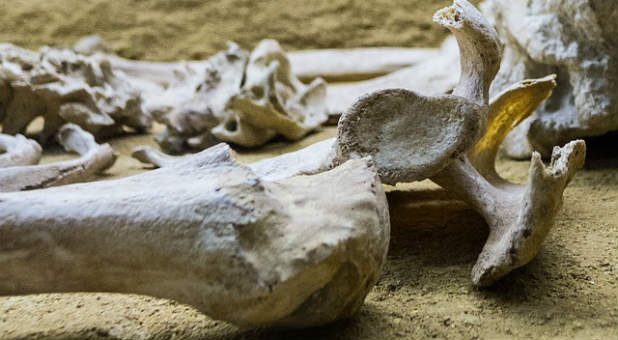
Ezekiel 37 records the prophet’s vision of a “valley of dry bones.” These are the remains of a devastating battle or a devastating disease: dead left unburied, lives left unmemorialized. It’s a terrifying vision of social annihilation. God asks Ezekiel, “Can these bones live?” Ezekiel responds, “O God, you know.” Then God answers God’s question by reconnecting the bones and putting flesh on them. Through God’s power the dismembered corpses are “re-membered” and given new life. The bones in this vision aren’t just the remains of ancient, long-forgotten soldiers. They’re your bones. They’re my bones. In this time when coronavirus has dismantled our expectations and thrown our futures into confusion, can we live? I can’t wait for God’s miraculous answer.