What’s Up with Pastor Todd 5-23-21

What’s Up with Pastor Todd 5-21-21

This week I was describing our First Church South Church consolidation work to a colleague. He commented that in his therapy practice, he has been noticing that the competitive “divide-and-conquer” mentality we see on display in our politics is seeping into everyday the interactions and relationships of his clients. He continued, “In your church consolidation work you’re trying to build a culture of unity, and unity is in short supply these days.” Two implications of this observation: 1) If we’re finding consolidation work difficult, it’s because we’re going against the wider culture in some important ways, 2) The work of consolidation itself is important work for the wider culture. We’re demonstrating to Granby and beyond that “e pluribus unum” (our national motto: “out of many, one”) is still possible. 

The competitive mindset is everywhere. It’s a basic component of our economy, for example. And I admit I can be an incredibly competitive person. I enjoy the feeling of “winning.” Which is why I found Pastor Carey Nieuwhof’s podcast this week so helpful. Listen to it here.

Carey Nieuwhof’s guest is Simon Sinek. You remember him! He is the “Start With Why” guy. We watched part of his TED talk during our “What is Your Why?” workshops last year.  If you need a refresher on Sinek and his teaching on “Starting with Why,” you can find his TED talk here

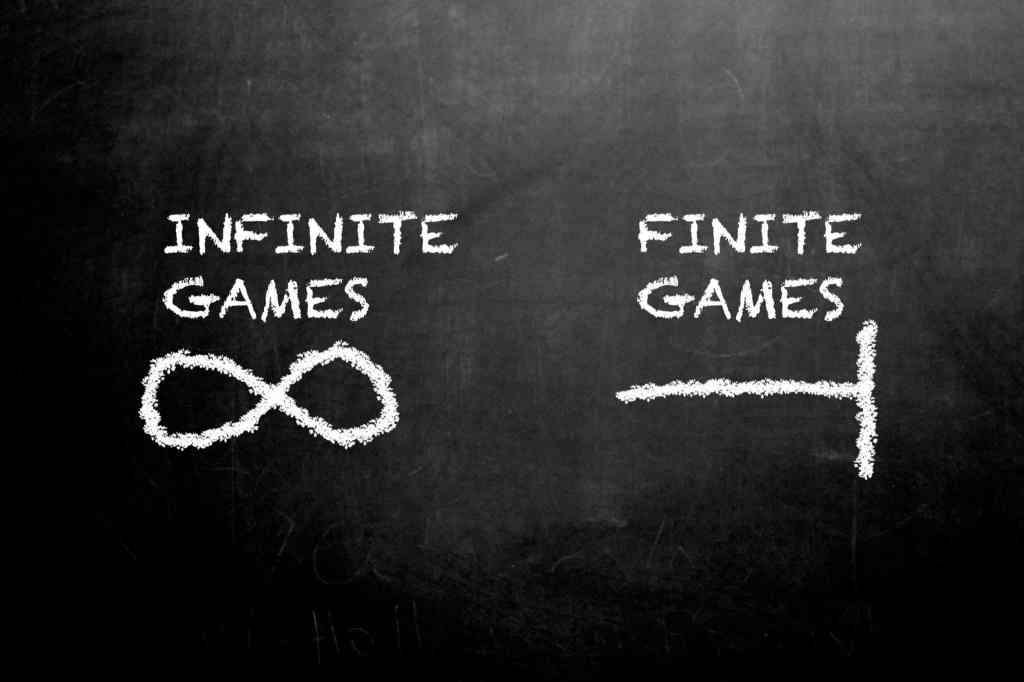
In his interview with Nieuwhof, Sinek applies his insights directly to congregational life. One that I found helpful is the distinction between “finite” and “infinite” games. Sinek got this idea from the book Finite and Infinite Games by theologian James P. Carse. A finite game has a definite beginning, a definite end, clearly defined rules, and is played to win. Think of chess, pretty much any sport, etc. An infinite game has no particular beginning, no end, and no clearly defined rules. The goal of the infinite game is to perpetuate itself. Think of “life,” for example, or “marriage,” or “parenting.” How does one “win” at life? Who decides? 

The problem, Sinek argues, is that we confuse infinite games for finite ones, which leads to suffering. Current politics, for example, is played as a series of battles between political parties with winners and losers. If one approaches “marriage” as a finite game, for example, I wouldn’t think it would last long. I can’t imagine many people would want to live in a continual battle for domination with their intimate partner.

How would our consolidation work change if we viewed it as an “infinite game?” A colleague of mine uses improv theater exercises in working with congregations. Improv is a wonderful example of an infinite game. The point of improv is to keep the scene alive. The principle of improv is “Yes, and . . .” The audience or your scene partner offers a line, the improv artist accepts what’s offered and builds on it. It requires trust. The scene could completely bomb. The players risk losing their audience. Players are willing to risk and willing to trust because the point of an infinite game is the joy of playing. This simple process takes the scene into fresh, unexplored–pehaps infinite–territory. Some might call it Promised Land.

What’s Up with Pastor Todd 5-14-21

What’s Up with Pastor Todd 5-14-21

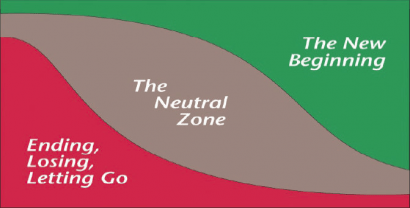
In Managing Transitions: Making the Most of Change author William Bridges writes about “using the Neutral Zone creatively.” The “Neutral Zone” is also known as “wilderness time.” It’s the time between the ending of the old way of doing things and the hoped for new beginning. This is the shape of transition: ending–neutral zone–new beginning. In Biblical language there’s “crossing the Red Sea” (ending of enslavement), “wandering in the wilderness” (neutral zone), and “crossing the Jordan River” (new beginning in the Promised Land.)

The Neutral Zone is a tricky part of the transition journey. Much of the work is “below the green line”–that is, it has to do with intangibles such as “information,” “relationships,” and “identity.” It is the inner work that is necessary for something truly new to emerge. It’s sometimes said that at the Red Sea God took God’s people out of slavery. During the wilderness journey, God took slavery out of the people. On the one hand people can become impatient in the Neutral Zone because it seems like “nothing is happening.” On the other hand there’s a danger of becoming stuck in the Neutral Zone. Transitions aren’t meant to last forever.

How can we–in Bridges’ words–”use the Neutral Zone creatively?” Here are two of Bridges’ suggestions. I invite you to share yours:

  1. Consider: “what new roles, reporting relationships, or configurations of the organizational chart do you need to develop to get through this time in the wilderness?” (p.46). One possible org chart change: consider combining committees where appropriate. It’s natural for the old way of doing things to begin to fall apart in the neutral zone. For example, in the wilderness God’s people had to adjust to spending their nights in tents instead of in houses and their days walking instead of making bricks for Pharaoh. One of the things that happens in the Neutral Zone (if things are moving forward in a natural way) is that long time, established leadership will begin to step back, which makes space for new leadership to emerge. What if that new leadership hasn’t emerged yet? My suggestion: combine First Church and South Church teams and rotate leadership or establish co-leadership. Deacons, for example, might consider this. Also the music ministries. Perhaps also the Finance Teams. Rather than try to patch something together, let it fall apart to make space for the new.
  1. “Step back and take stock” (p. 50). This is one of Bridges’ suggestions. I would love to hear your perspective on how things are going thus far. Give me a call (860-990-1073), or send me an email pastor@firstchurchgranby.org. You call also schedule a time on my calendar through our office administrator (sue@firstchurchgranby.org). I’m a data guy and you have data on how things are going. The data are your thoughts, feelings, perspectives, and experiences of this transition time.

What’s Up with Pastor Todd 5-7-21

What’s Up with Pastor Todd 5-7-21

In a “Union Service” on April 25, First Church and South Church commissioned six working groups composed of both First Church and South Church members whose purpose is to “imagine a new entity, including: its sense community; its infrastructure; telling its history; its program; its property and its staff and technological communications.” Each of these working groups will be assigned its own coach, who will be meeting with the groups to support their work. 

Many of us are familiar with coaching through our work with Rev. Dr. Claire Bamberg and/or Rev. Paul Nickerson. My transitional ministry contract includes the expectation that I will provide “coaching where appropriate.” But what do we mean by “coaching?”

People use the term “coaching” in many different ways. The definition that Claire and I use comes from the International Coach Federation (ICF), which sets global industry standards for professional coaching. Methodist pastor J. Val Hastings, Founder and President Coaching4Clergy, puts the ICF approach this way: “Here is how I define coaching: As a coach, I help people get the results they want by bringing out the best in them. I’ll also explain that coaching isn’t about fixing people or solving problems, rather coaching is a developmental or discovery-based process. Similar to athletic coaches, we further develop the skill and talent already inherent in the people we coach.”

Coaching is often confused with “consulting.” Consultants tend to “tell you what to do.” They have expertise in a particular field and apply that expertise to your particular situation. Paul Nickerson, for example, uses more of a consultant model. Consulting is helpful. That’s why consulting is such a big business.

Coaching in the ICF model relies on deep listening, powerful questions, and something called “artful language” (which is a discipline of atuning oneself to the client’s preferred vocabulary and style of expression.) These are the basic tools that when deployed effectively can lead to “a-ha” moments of discovery on the part of individuals and groups.

What are some “a-ha” moments that you have noticed in our coaching work so far? Perhaps you’ve had a personal moment of insight. I would love to hear it. Perhaps you’ve noticed a moment in a meeting or one of our Sharing Services in which heads were nodding and there was a feeling of connectedness. The word cloud exercise we did last year that revealed a common “Why” around the words “inspire” and “love” was an “a-ha” moment for many. Discovering these insights and then building an action plan around them is what coaching is designed to do.

We are so blessed to have access to have this much coaching for our project. I’m not aware of any other consolidation projects that have coaches assigned to each working group. I encourage all of us to engage the process wholeheartedly. 

Worship Resource: Mother’s Day

Centering Prayer                                  

Mother God, womb of the world, thank you for mothers, who gave us life from their bodies. Life is the gift that makes all other gifts possible, so we say “Thank you, mom, for life.” A mother’s love can be so intimate as to be overlooked. We repent taking our mothers’ love for granted. A mother’s absence can be so painful as to leave us forever scarred. Give us the grace to embrace our own mothering, as imperfect as it may be. Give us the wisdom to honor our mothers in their full humanity. Give us the will as a nation to pay mothers more than just lip service. We pray for equal pay for equal work. We pray for paid maternity leave. We pray for access to health care and housing and education and all of the tools mothers need to flourish. Amen!        

Worship Resource: 4th Sunday of Easter Year A

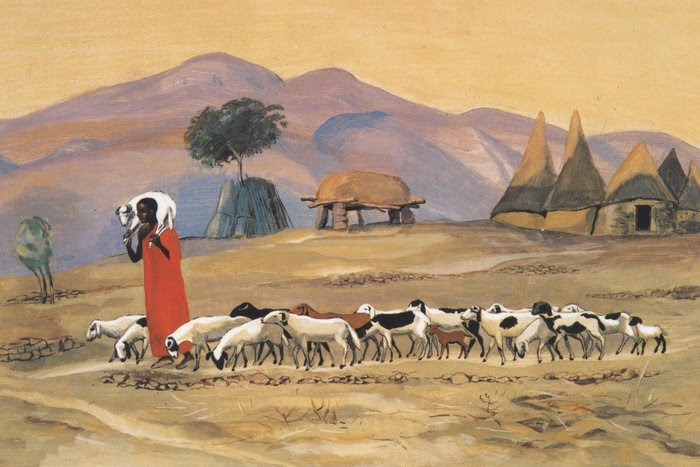
The Good Shepherd – John 10:1-16

Opening Prayer                                                                                                                                             

Good Shepherd, teach us to listen for your voice in rumbling traffic, clacking keyboards, complaints, laughter, birdsong, the ringing that remains when all other sounds go silent. Teach us to discern your call amid the myriad voices competing for our attention. Teach us to trust your leading. Amen.

What’s Up with Pastor Todd 4-30-21

What’s Up with Pastor Todd 4-30-21

Last week we began exploring the second half of Weird Church: Welcome to the Twenty-First Century by Paul Nixon and Beth Ann Estock. This section describes 21 models, forms, paradigms for doing church that the authors have observed emerging in the 21st century. There are a lot of unknowns about the church of the 21st century, but one thing Nixon and Estock seem fairly certain of is that the “neighborhood, denominationally-franchised church . . . with a weak local vision and identity” is about to disappear.

As I read through the weird church paradigms, it seems to me that a number of them might be components of a new UCC in Granby: “The Simple Cell,” “The Dinner Party,” “The Soulful Community,” “The Community Enterprise,” “The Pilgrimage,” “The Innovation Lab,” “The Tabernacle,” all might manifest themselves in some way even if they don’t become the dominant or “stand alone” model. The book gives current examples of churches following these models. Which one of these example churches would you like to learn more about? 

My hope is that by the end of this process we will land somewhere with some kind of emerging, distinct local identity that new people can connect with. One of the reasons the denominationally-franchised church is headed for extinction is that too often it tries to be everything to everyone and so ends up unable to connect authentically with anyone. In the Book of Revelation, Jesus says to a “lukewarm” church “I will spit you out of my mouth” (3:16).  Trying not to offend anyone, the church as we have known it has feared being weird. 

I’m reminded of our “What’s Your Why?” training. Simon Sinek makes the point that the successful organization connects with the people who already on some level share the organization’s values. That’s why it’s so important as we go through this process to ask “Who is God calling us to reach next?” Rev. Paul Nickerson sometimes calls this person “unchurched Harry and Mary.” All of the weird church paradigms are targeted toward a specific group of people with particular spiritual, emotional, and social needs.

Several years ago Rev. Traci Blackmon, UCC Executive Minister for Witness and Justice, preached at a meeting of the newly formed Southern New England Conference UCC. Her text was the story of the Crossing of the Jordan God’s people were nearing the end of their forty year wilderness journey. Looking across the Jordan River, they could see the Promised Land. Like God did at the Red Sea forty years earlier, God had promised to part the waters for them so that they could cross over. But the waters didn’t part until the people at the front of the procession actually stepped into the water. A way opened up where there hadn’t been one before, but only after the people were willing to step out in faith.

Time and again I’ve found that to be true. And I’m finding it to be true now. I’ve had several exciting conversations with community members who are aware of our collaboration efforts and are interested in partnering with our congregations in creating something new. Every day has the potential to give rise to a clearer vision for our new combined future as long as we are willing and brave enough to continue moving forward in faith.