What’s Up with Pastor Todd 8-27-21

What’s Up with Pastor Todd 8-27-21

The fall 2021 theme for worship at First Church and South Church is “Dreaming Together.” As a reminder, we will be sharing Union Services on the first and third Sundays of the month. The remaining Sundays we will be worshipping separately. In September and November the Union Services will be hosted by First Church. In October and December the Union Services will be hosted by South Church.

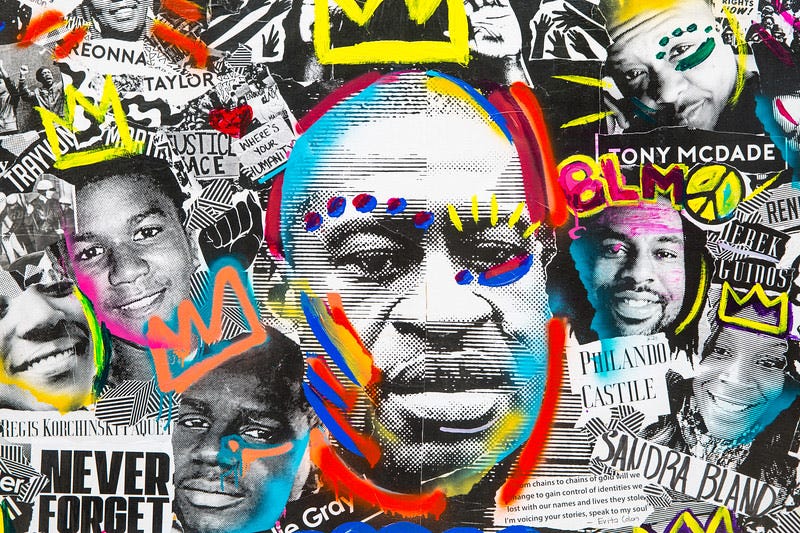
At our “What is Your Why?” workshops way back in 2019 and 2020, we watched a TED talk by Simon Sinek in which he refers to MLK’s “I Have a Dream” speech. Sinek argued that over 200,000 people showed up on the Washington Mall that day in 1967not for Dr. King but for themselves. They showed up because they had already dreamed a dream of racial justice in the U.S. Dr. King’s genius was his ability to articulate a dream that many already shared and to translate that dream into concrete reality.

The purpose of the “What is Your Why?” workshops we shared together with South Church was to invite both of our congregations into a similar “dreaming” process. African Americans have faced and continue to face indescribable suffering due to system racism. The dream of racial justice arose out of that suffering. First Church and South Church are facing our own communal suffering due to diminished human and financial resources to support our ministries. Staff have been cut, beloved events have fallen by the wayside, programs have been discontinued due to lack of participation, volunteers face burnout, members have left, conflict has arisen, fewer people are supporting a greater share of the annual budget, the long term health of our endowments is threatened. The list goes on. Just as a communal dream arose in response to racial injustice, so too, a dream for collaboration and consolidation has arisen in response to decline among the congregational churches in Granby. Godly dreams arise out of real world suffering. Making these dreams real can change the world.

Over the summer six working groups composed of First Church and South Church members have been working on clarifying a dream or dreams of a new, consolidated Granby UCC. Worship at both churches this fall will focus on what it means to dream God’s dream for our lives. The work of dreaming together isn’t for the working groups alone. The dream of a vital, sustainable UCC movement in Granby will become reality when each of us takes up the work of dreaming together. 
What’s Up with Pastor Todd 8-13-21

What’s Up with Pastor Todd 8-13-21

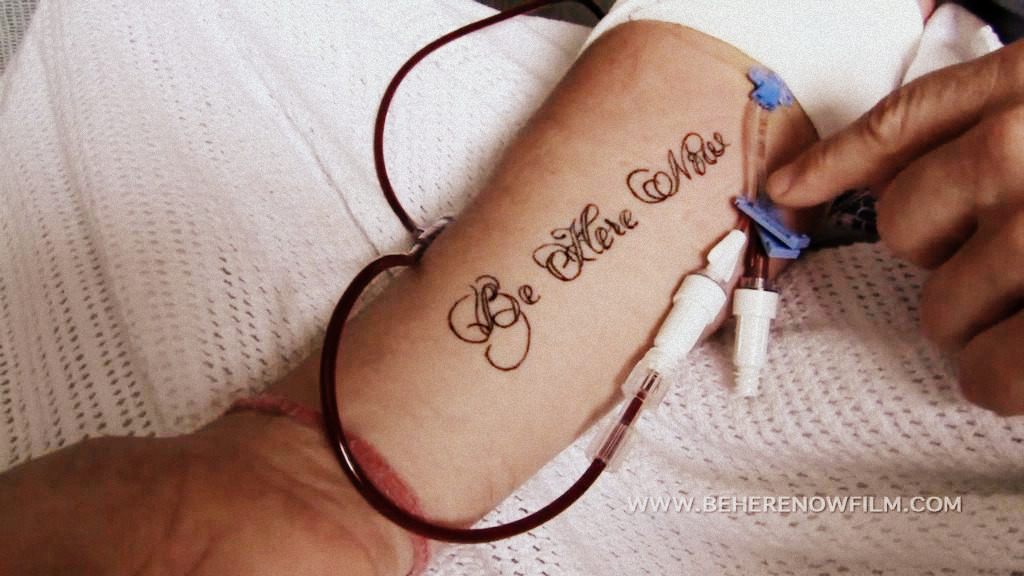
As First Church and South Church face another autumn season with the coronavirus I’m reminded of a time someone jokingly said, “These are the good old days.” This is an important reminder both for us personally and for organizations in transition. As meditation teacher Ram Dass famously said, “Be here now.” Jesus said, “Keep awake!” (Mk. 13:35). Human beings have a tendency to cling to the past and fantasize about the future. Meanwhile, our lives are happening right here, right now. 

When the Israelites were journeying through the wilderness they longed to go back to Egypt even though it meant enslavement. They complained to Moses about his leadership. Moses, in turn, complained to God. Yet, generations later when the prophets found themselves facing the decadence aarnd corruption of an established Kingdom of Israel, they wrote with longing about the simpler times when the Israelites wandered through the desert and worshipped in a tent. “Oh, how close our ancestors were to God!” So, if we find ourselves in a bit of a wilderness time, remember, these are the good old days!

How can we “be here now” in the midst of the pressures and pulls of transition? In a recent article “It takes faith to resist the attention economy,” by Rev. Katherine Willis Pershey writes about the search for groundedness in the midst of a sabbatical in the midst of a pandemic. Her answer is to return to those practices that keep her attention on Jesus, worship being one of them, even when there might be more exciting alternatives to give her attention to. In fact, in this “attention economy” in which social media companies have developed sophisticated algorithms to capture our attention and sell it, devoting our lives to the simple practices of prayer, Scripture, song, and service are courageous acts of resistance to a culture that incentivizes exploitation for profit. Worship, devotion, prayer, and meditation in their many forms can return us to the present moment. Let’s enjoy the good old days while we’re living them!

What’s Up with Pastor Todd 5-28-21

What’s Up with Pastor Todd 5-28-21

“I’m afraid of losing our identity.” This was a response that came up in one of First Church’s transition workshops back in 2019. Transition coach Rev. Dr. Claire Bamberg first led us in a workshop on thecongregational life cycle, then a second on the grief process. We located ourselves on the decline side of the congregational life cycle bell curve, past the point of sustainability. We talked about what that meant for our future and what some of our options might be, including the option that a group from First Church had been working on for some years at this point: consolidation with South Church.

Identity sounds like an abstract, philosophical debate, but, in fact, it’s at the core of some of the most intense conflicts within congregations and in broader society. Take America’s culture wars, for example. The culture wars are a series of conflicts over different aspects of America’s identity, including white nationalism, gender hierarchy, class loyalties, regional identities, “Christian values,” economic systems, and systems for choosing its leaders. Will America stop being America if white people are no longer the dominant race? Will America stop being America if the gap between rich and poor becomes so great that economic mobility is no longer possible? Will America stop being America if Christianity is no longer the dominant religion? As you can see, identity is a big, emotionally fraught issue. Emotions are intense because conflicts over identity are conflicts over power: who has voice and who gets resources.

Conflict over identity defines what it means to be a church in transition, according to sociologist Penny Edgell Becker in her book, Congregations in Conflict: Cultural Models of Local Religious Life. Churches in transition are characterised by what Becker calls “between-frame conflict.” In between-frame conflict, two different visions of identity, that is, “who we are and how we do things here” compete for power, that is, voice and resources.

This is contrasted to “within-frame” conflict, where everyone agrees on identity, that is, “who we are and how we do things here.” The conflict is simply disagreement over approach or interpretation. We have memories of the “good-old days” of “bipartisanship” in the U.S. for example, because for a brief period in the 20th century we were sending leaders to Washington who more or less shared the same “frame.” By contrast, the Civil War was an extreme example of “between-frame” conflict. Between-frame conflicts in churches rarely get violent, but they can be intense.

Between-frame conflict is unavoidable in the consolidation process. We have two distinct congregations with two distinct identities. Does this mean we’re doomed to fight until one identity dominates the other? No. The other option is to expand the frame, or “ABC”: “a bigger container.” We can build a space where diverse voices can be heard and celebrated, where resources can be shared. I’ve witnessed this happen, for example, when a church I served shifted from a white-dominant model to a mutli-racial, multi-cultural model. Some white people were so afraid that we were becoming a “Black church.” Their fears turned out to be unfounded. A new, beautiful identity emerged: neither “Black,” nor “white,” but a celebration of the best in all of us: a slice of heaven on earth.

Worship Resource: 4th Sunday of Easter Year A

The Good Shepherd – John 10:1-16

Opening Prayer                                                                                                                                             

Good Shepherd, teach us to listen for your voice in rumbling traffic, clacking keyboards, complaints, laughter, birdsong, the ringing that remains when all other sounds go silent. Teach us to discern your call amid the myriad voices competing for our attention. Teach us to trust your leading. Amen.

What’s Up with Pastor Todd 4-30-21

What’s Up with Pastor Todd 4-30-21

Last week we began exploring the second half of Weird Church: Welcome to the Twenty-First Century by Paul Nixon and Beth Ann Estock. This section describes 21 models, forms, paradigms for doing church that the authors have observed emerging in the 21st century. There are a lot of unknowns about the church of the 21st century, but one thing Nixon and Estock seem fairly certain of is that the “neighborhood, denominationally-franchised church . . . with a weak local vision and identity” is about to disappear.

As I read through the weird church paradigms, it seems to me that a number of them might be components of a new UCC in Granby: “The Simple Cell,” “The Dinner Party,” “The Soulful Community,” “The Community Enterprise,” “The Pilgrimage,” “The Innovation Lab,” “The Tabernacle,” all might manifest themselves in some way even if they don’t become the dominant or “stand alone” model. The book gives current examples of churches following these models. Which one of these example churches would you like to learn more about? 

My hope is that by the end of this process we will land somewhere with some kind of emerging, distinct local identity that new people can connect with. One of the reasons the denominationally-franchised church is headed for extinction is that too often it tries to be everything to everyone and so ends up unable to connect authentically with anyone. In the Book of Revelation, Jesus says to a “lukewarm” church “I will spit you out of my mouth” (3:16).  Trying not to offend anyone, the church as we have known it has feared being weird. 

I’m reminded of our “What’s Your Why?” training. Simon Sinek makes the point that the successful organization connects with the people who already on some level share the organization’s values. That’s why it’s so important as we go through this process to ask “Who is God calling us to reach next?” Rev. Paul Nickerson sometimes calls this person “unchurched Harry and Mary.” All of the weird church paradigms are targeted toward a specific group of people with particular spiritual, emotional, and social needs.

Several years ago Rev. Traci Blackmon, UCC Executive Minister for Witness and Justice, preached at a meeting of the newly formed Southern New England Conference UCC. Her text was the story of the Crossing of the Jordan God’s people were nearing the end of their forty year wilderness journey. Looking across the Jordan River, they could see the Promised Land. Like God did at the Red Sea forty years earlier, God had promised to part the waters for them so that they could cross over. But the waters didn’t part until the people at the front of the procession actually stepped into the water. A way opened up where there hadn’t been one before, but only after the people were willing to step out in faith.

Time and again I’ve found that to be true. And I’m finding it to be true now. I’ve had several exciting conversations with community members who are aware of our collaboration efforts and are interested in partnering with our congregations in creating something new. Every day has the potential to give rise to a clearer vision for our new combined future as long as we are willing and brave enough to continue moving forward in faith.

What’s Up with Pastor Todd 4-16-21

What’s Up with Pastor Todd 4-16-21

Our transition coach, Claire Bamberg, recommended everyone from First Church and South Church read Weird Church: Welcome to the Twenty-First Century by Paul Nixon and Beth Ann Estock as a resource for envisioning what the new church God is birthing among us as a result of our collaboration might be. In chapter 5, Nixon and Estock write about “shame-based systematic theology” (p. 51), which has been a feature of many Christian churches for centuries. The authors propose a shift away from “shame-based theology” toward an approach to doing church based on love and letting go.

While this may sound a bit abstract mystical, it is not in the least. Some researchers argue that shame is the most powerful force in human psychological, social, and spiritual life. Shame is an emotion. Emotions are made up of thoughts, feelings, and physical sensations. Here I think it’s important to distinguish between what some researchers call “healthy shame” and “toxic” or “chronic” shame. In it’s benign or “healthy” form, shame simply lets us know when we are out of alignment socially. It might be that feeling of “dis-ease” when we enter a room of strangers or that feeling of embarrassment when we make an inappropriate comment. Internally it could arise as a sense that we are not living in alignment with our values. 

Healthy shame can prevent us from doing socially harmful things. This is the kind of shame the Prophet Jeremiah writes about: “They have treated the wound of my people carelessly, saying, “Peace, peace,” when there is no peace. They acted shamefully, they committed abomination; yet they were not ashamed, they did not know how to blush” (6:14). For an in depth study see Shame: Theory, Therapy, Theology by Stephen Pattinson.

When Nixon and Estock are writing about “shame-based theology,” they are referring to “toxic” or “chronic” shame. Toxic/chronic shame is the sense that “there is something fundamentally wrong with me.” Whereas guilt is the sense that “I’ve done bad,” toxic shame is the sense that “I am bad.” Author Brene Brown talks about this as the difference between “feeling shame” and “being shamed.” Listen to her podcast “Shame and Accountability.”

When I moved from my church of origin to the “liberal” UCC I thought I was leaving shame-based theology behind. I discovered that we have our own version. Some call it “toxic wokeness” or “cancel culture.” All of it–whether it’s from the “right” or the “left,” conservative or liberal, “blue,” or “orange,” or “green” stages of spiral dynamics (to use Estock and Nixon’s terminology) arises from a deep-seated desire for purity. It’s a belief that there’s something fundamentally wrong with reality and if we could just eliminate it or “them” everything would be “good.” It’s a worry or a sense or a fear that the declaration of Genesis that “God saw all that God had made and behold it was very good,” no longer applies. 

Toxic shame is a tool of oppression. In her podcast, Brene Brown quotes author and activist Audre Lorde: “You can’t dismantle the master’s house with the master’s tools.” A “weird church” won’t abandon working for justice, but it will avoid using the master’s tools to do so. 

The vision of a theology oriented toward loving and letting go is grounded in a practice of radical acceptance. It looks more like a “yellow” or “turquoise” stage in spiral dynamics. Loving and letting go means letting go of our dreams of purity and meeting the world as it is. Filled with deep faith in the ongoing goodness of creation, we can meet each moment whether pleasant or unpleasant, each person whether loveable or hateful, each situation whether harmful or healing, with fierce tenderness and longsuffering patience because everything we encounter is woven into the seamless fabric of God’s boundless love.

What’s Up with Pastor Todd 4-9-21

What’s Up with Pastor Todd 4-9-21

Our transition coach Claire Bamberg has recommended we read Weird Church: Welcome to the Twenty-First Century by Beth Ann Estock and Paul Nixon. Nixon and Estock are United Methodist ministers and consultants to churches of many different denominations. 

The theoretical framework of the book is called “spiral dynamics,” “a particular theory of human bio/psycho/social evolution developed by Don Beck and Christopher Cowen, rooted in the work of Clare Graves” (p. ix). The gist of the theory, as I understand it from the brief sketch in the introduction to Weird Church, is that human history and culture has evolved through a number of stages beginning 250,000 years ago with the stone age, which in human terms was characterized by a “survival mentality.” 10,000 years ago humanity evolved to a tribal stage of “mutual reciprocity.”  As we transition from ancient to modern times we see the development of an ego-centric stage, a “code of conduct” stage, a stage of “achievement and personal success.” The contemporary moment has given rise to a shift away from the individual toward a concern for the larger community characterized by various justice movements and concern about climate change. Evidence for further evolutionary stages include a stage characterized by a “value system that can respect all perspectives,” and a stage that “experiences the wholeness of existence through mind and spirit with mystical and intuitive sensibilities” (pp. x-xiii). What makes this evolution a spiral is that each succeeding stage includes the one before. The survival mentality persists even in the stage of “mystical wholeness.” 

This framework–“color coded” for convenience–allows the authors to analyze how gaps between congregational cultures and changes in mainstream Western cultural assumptions have resulted in church decline. I had an “aha” moment many years ago when I realized that I had been taught that people don’t attend church because they’re “bad,” when, in fact, many–if not most–don’t attend church because they’re good and they just don’t see church as having any relevance whatsoever to their spiritual lives.

Much of what the authors describe resonates with my experience. The book was published in 2016. I find myself wondering what changes they might make to a 2021 edition. My guess is that they–along with pretty much every other thinker I’ve been reading/listening to over the past 13 months–would say that the pandemic has only greatly accelerated the changes they describe. I encourage everyone to get a copy of the book and read it. 

A word of caution. Predicting the future is a tricky business. Organizations that endure go through periods of expansion and contraction. Darwin’s evolutionary insight about “the survival of the fittest” might be better phrased as “the survival of the adaptable.” While much of our work will inevitably be focused on what changes are needed for our congregations to survive, a more powerful set of questions might be, “How can we build our organization’s capacity for change? What behaviors, structures, values can we weave into the fabric of this new project that will keep the “change muscles” of the congregation strong for generations to come?”