What’s Up with Pastor Todd 10-9-20

What’s Up with Pastor Todd 10-9-20

The news this week of coronavirus’ spread among our top political leaders reminds us that the pandemic is still very much with us. It is unsettling to think of how the virus is compromising the health of the leaders we count on to guide and protect us. While I pray for President Trump and First Lady Melania’s health along with the many White House staff and congressional leaders this outbreak has affected, I am reminded that each of us hold the other’s health in our hands. Compassion demands care. This is not letting the virus “dominate us”–to use the President’s words. This is simply being sensible. Our faith is not about denying reality. We practice our faith by facing reality and then taking wise action to protect the precious lives God has given into our care. I don’t understand why our President and those around him don’t see what is so obvious to me, but this is the difficult, complicated situation we face.

Regarding the difficult, complicated situation we face: I am so proud of our staff both paid and volunteer. I’m proud of our leadership: Church Council, Trustees, Deacons, Tech Team, our program committees (Vitality, Serve, Explore, Connections, Care Team). I am encouraged by the patience and grace I see in all of you. My “star word” this year is “hopefulness.” When I drew that word from the basket during worship that first Sunday in January, I had no idea that global pandemic was in store for 2020. Nevertheless, I find that 10 months into the year I remain hopeful.

My hope is not that everything will be wonderful and pleasant in the coming months. It seems pretty likely that disappointments, difficulties, and dangers will continue to present themselves. The abundant life that Jesus promises to his followers includes disappointments, difficulties, and dangers along with miracles, bliss, and joy. Abundant life embraces everything. 

Psalm 23 says, “Surely goodness and mercy shall follow me all the days of my life.” This is why I’m hopeful: no matter what the coming months and years will bring, God’s goodness and mercy will never abandon me. Neither will they abandon you.

What’s Up with Pastor Todd 9-11-20

What’s Up with Pastor Todd 9-11-20

This coming Sunday is known by many names in the church world: Homecoming Sunday, Rally Day, Christian Education Sunday, or–more recently–Faith Formation Sunday. It’s the Sunday in American churches that marks the beginning of the program year, the return of children to school, the return of families from summer vacation, the fall season of sports, holidays, harvest. 

I’m not sure which of the terms for this coming Sunday I prefer. The UCC, our denomination, calls it Faith Formation Sunday now, so I’ll go with that. In any case, Faith Formation Sunday 2020 is unlike any other I’ve planned and led in my entire career. Kids are going back to school–sort of. Many of our young ones are on a “hybrid schedule,” which means both days distance learning at home and days in the classroom. My college-age daughter, who should be in Los Angeles right now, spends her class time sitting in front of her laptop on our three season porch here in Windsor, CT. 

At First Congregational Church of Granby this Sunday marks the next stage in our gradual reopen process. We are inviting the public to pre-register online to observe the worship livestream in person in the Sanctuary. COVID protocols will be followed to ensure that everyone who chooses to be together in person can do so safely. Last Sunday we successfully celebrated our second outdoor in person worship service. I’m grateful to everyone who worked so hard to make it possible to be together safely. It was moving to see the faces of friends again.

Confirmation class, which was disrupted by the pandemic, will resume on Zoom this Sunday. I will be working together with the Explore Team to figure out our programming for the young ones. I don’t know about you, but I have moments when all of this feels very difficult, stressful, and depressing, but I’ve noticed that those moments, like all moments, pass, and a new thought, feeling, or experience arises. Remaining spiritually grounded through the changes gives me the energy I need to forge ahead. 

Last Sunday after worshipping outside under the trees, feeling the breeze on my skin, seeing the sun above and familiar faces around me, I realized that the sadness I had been carrying with me was gone. In its place was joy. This experience reminds me of a favorite song, one I’ve shared before: Richard Smallwood’s “The Center of My Joy.” I leave you with links to a couple of versions: one from the composer himself, and another . . . well, check it out for yourself. 

What’s Up with Pastor Todd 7-24-20

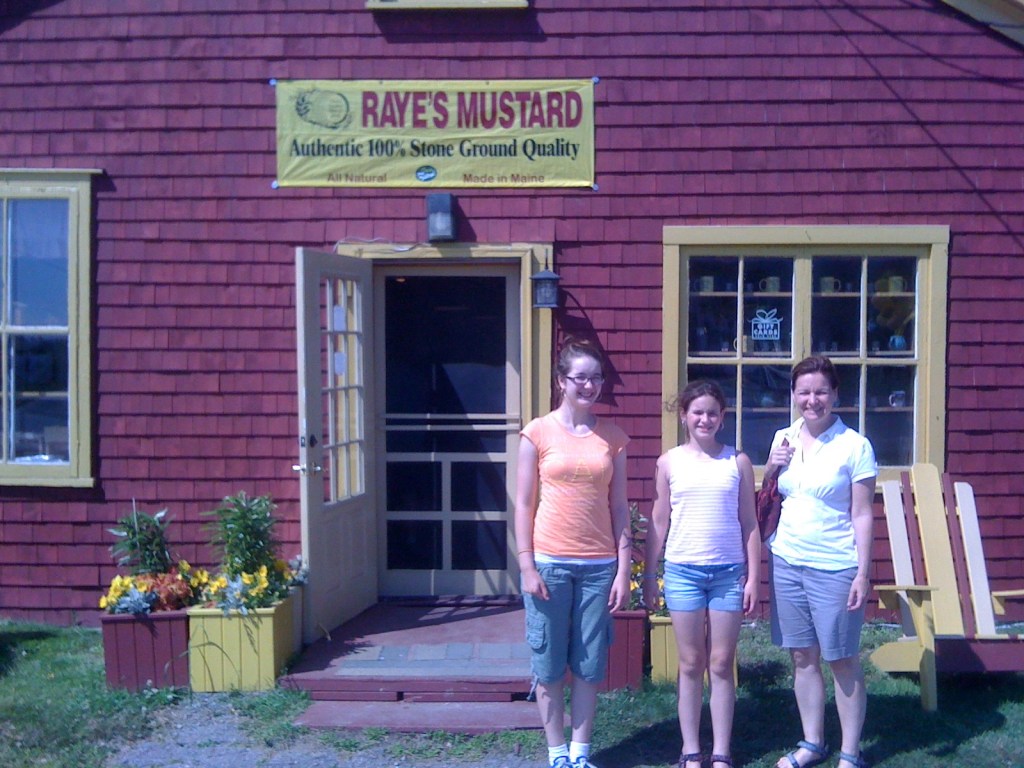
Nicole, Fiona, and Olivia at Raye’s Mustard ca. 2010??

What’s Up with Pastor Todd 7-24-20

Founded in 1900, Raye’s Mustard, located in Lubec, ME, is the oldest, continuously operated stoneground mustard producer in North America. My wife, Nicole, grew up on Raye’s mustard, which she introduced me to when we met many years ago. As a family we’ve been to Raye’s Mustard and toured the facility. It’s amazing to me that they can continue to operate as a profitable business using century-old technology. Inside you can see the giant stones that still turn on the old wooden band and pulley system. I’m a mustard fan, and I’m convinced: Raye’s mustard is the best.

Raye’s Mustard was founded just as the Maine sardine industry was taking off. Mustard was used as a preservative in the canning process, which allowed the perishable fish to be stored for long periods of time without refrigeration. During WWI, the U.S. government needed a storable source of protein for the troops overseas, so it contracted with Maine sardine producers to provide for the troops. Maine sardines packed in Raye’s mustard were shipped all over the world making the cannery owners rich. Nicole’s great-grandfather was one of those cannery owners. For a time, Lubec, ME was a thriving town. Until the war ended and the sardines were fished out. Today, the sardine canneries are gone. In fact, Washington County, where Lubec is located, is one of the poorest counties in the U.S. But Raye’s Mustard has been able to adapt and survive. 

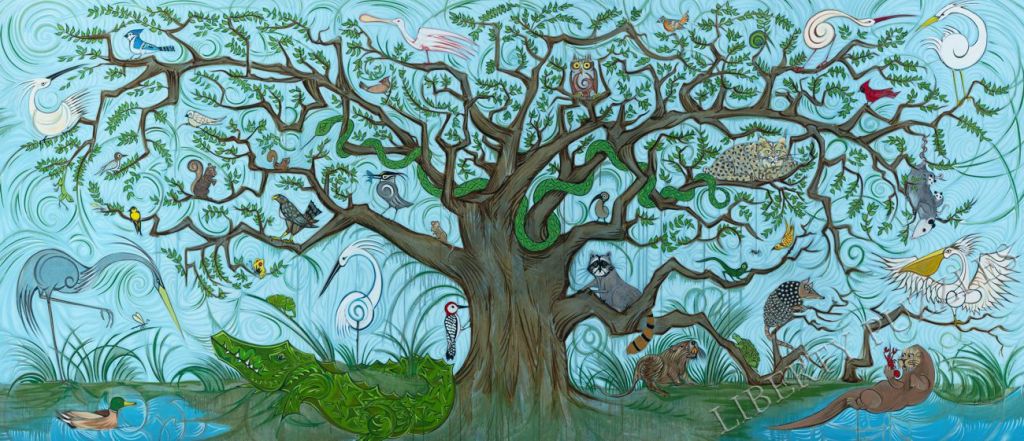
The Scripture for this coming Sunday is Jesus’ parable of the mustard seed: “The kingdom of heaven is like a mustard seed that someone took and sowed in his field; it is the smallest of all the seeds, but when it has grown it is the greatest of shrubs and becomes a tree, so that the birds of the air come and make nests in its branches.” The parable starts off ordinary enough: someone plants a mustard seed. What would Jesus’ first hearers expect to follow? From the mustard seed a mustard plant grows. Mustard is a garden plant. It isn’t a shrub; it isn’t a tree, despite the attempts of later interpreters to fit Jesus’ words into modern categories that “make sense.” The point of the parable is precisely that the kingdom of heaven doesn’t always “make sense”; it doesn’t always follow the “natural order” of things. Sometimes in the kingdom of heaven you plant a mustard seed that becomes “the greatest of shrubs” and then, miraculously, becomes a tree! 

It’s the difference between incremental change and discontinuous change. We tend to like incremental change. With incremental change the mustard plant follows from the mustard seed. With incremental change one thing follows logically from the next. We can know what to expect. We can imagine we’re in control. The kingdom of heaven isn’t always like that. The kingdom of heaven is often more like discontinuous change. One plants a mustard seed; one gets a tree. We tend not to like discontinuous change. But are there blessings to be found even in discontinuity? We wanted mustard but we got a tree. And what a beautiful tree! The birds of the air have found a home in it, and their song is beautiful. Discontinuous change isn’t necessarily bad; it’s just unexpected. 

The invitation of the parable is to accept the gifts of the kingdom of heaven even if they are unexpected. The collapse of the sardine industry was an economic and environmental disaster brought on by human greed, not divine will. Nevertheless, Raye’s accepted the gifts of the moment, such as they were, adapted, and grew. We find ourselves in a similar moment of disruption, and I can see how we’re adapting and growing: particularly through the Vitality Team and the Tech Team. While no one wants the disruption of a pandemic, the parable of the mustard seed invites us to expect big, unexpected, beneficial things to grow out of what is currently a time of disruption and loss. 

The Apostle Paul put it this way: “Now to him who by the power at work within us is able to accomplish abundantly far more than all we can ask or imagine,  21 to him be glory in the church and in Christ Jesus to all generations, forever and ever. Amen.” (Ephesians 3:20-21).

What’s Up with Pastor Todd 6-19-20

What’s Up with Pastor Todd 6-19-20

“If we let it fall apart, what could we do then?” In the early days of the COVID pandemic, I used the phrase “stay safe, stay together” to chart a course through what has been a difficult, scary time. I’m glad to say we’ve done that. 

March 22 was our first livestream only worship service at FCCG. In those early days and weeks, we were in emergency mode–or at least church leadership was. Every day new information about the pandemic was coming out from state and local officials. As a church we had to learn quickly and adapt nimbly to keep everyone safe and everyone together. Folks were frightened and disoriented. We were looking for direction and trying to find our footing.

We adapted quickly. Many of us learned how to use Zoom. We adapted our worship service and upgraded our technology. We learned new routines of working from home, of checking in by phone, of making sure people were safe and supported. We started new programs: weekly Zoom Bible study, “Thank-Goodness-It’s-Zoom” virtual happy hour, online prayer group, daily online devotional. The Vitality Team has really shined in these past months (thanks Beth Lindsay, Ann W, Don S, Anne delC., Dick L, Kerri C, Heather D!) raising money for essential workers, organizing a cheer parade, delivering Easter cheer baskets, thanking postal workers, organizing mask making, organizing gardening supplies and cheer cards for the residents of Meadowbrook, and more. The one thing I love about this COVID time is that it has opened an opportunity to connect with new groups of people beyond our walls–people we have overlooked for too long.

Now we’re at a different place. Summer is upon us. Folks are getting restless. For some, perhaps, the novelty of worshipping from home has worn off. Zoom gatherings that were well attended at first have tapered off, so we’ve discontinued them for now. I hear complaints. The diversity of opinions about whether and how to continue our collaborations with South Church is wide. The weight of grief over what’s been lost over the past months and the worry over what is to come are significant. I’m finding that leading the church from a place of staying safe and staying together is actually becoming more challenging the deeper we move into this pandemic.

One of the things we learn in coaching training is the technique of asking “powerful questions.” Questions that point to the heart of the situation can sometimes shift perspective and remove obstacles to growth, life, happiness. It occurred to me that a powerful question for this moment might be “What if we let it fall apart? What could we do then?” We still need to stay safe. And I think we still want to stay together, but what if we took a breather? What if we relaxed the meeting schedule? What if we let go of our expectations of “going back to normal” and just did the things that brought us life, joy, and energy? What if we focussed on the work of the Vitality Team that is bringing blessing and joy to so many people? 

The Re-Open Team–Lori F, Lisa R, and Sue M–will be beginning their work soon. I’m hoping in the coming weeks we can begin to define when, how, and under what circumstances we can begin some in-person gatherings. Until that time, what do you need to let go of? What do you need to embrace?

What’s Up with Pastor Todd 6-12-20

What’s Up with Pastor Todd 6-12-20

I recently heard on a news podcast that something like 70% of Americans think our country is “out of control.” I don’t know where you’re at, but this statistic points to a feeling we’ve been noticing around us and perhaps feeling ourselves for some months now. The recent protests around the killings of George Floyd, Breonna Taylor, and Ahmaud Arbery just add to the generalized feelings of chaos, uncertainty, and grief that we’ve all been facing.

Recently I was invited to join a cohort of clergy and lay people to receive training on hwo to coach individuals and congregations through the COVID pandemic. Training began this week and will continue (online, of course) through the first half of July. We’ve been learning to identify and contextualize the component parts of the circumstances we’re facing in order to more effectively address them and help people through this time.

There are some practices I’d like to suggest that may be helpful in dealing with feelings of grief and feelings of being “out of control.” When circumstances feel out of control, it’s helpful to find ways to “stay grounded.” Staying grounded is a big reason why I spend an hour every morning sitting still and silent, minding my breath. Literally sitting “on the ground” is an incredibly effective way for me to feel “grounded.” Circumstances can be swirling about me, but I know there is a stable place of rest that is always present–literally beneath my feet. 

How will you “stay grounded?” Another technique for when you feel out of control is to identify and describe in detail five things near you. For me, it’s the IKEA couch supporting my back, the Sisal trunk that I’m resting my feet on, the roar of a motorcycle engine on the street, the sigh of the breeze through the trees, now the sound and smell of rain. Is the world really coming apart? Yes, in some ways the world is coming apart. In others it’s coming together. And through it all like the finest of thread the rhythms of the universe continue completely unbothered by our small concerns. While some things are out of our control, other things are in our control. Sometimes it’s helpful to focus on the things we can control beginning with where we place our attention.

Many of you are probably familiar with the five stages of grief originally identified by Dr. Elisabeth Kubler-Ross some decades ago: denial, anger, depression, bargaining, acceptance. Perhaps you weren’t aware that later in her career she identified a sixth stage: meaning-making. Meaning-making is the stage of grief that produces creative new life out of death. For example, parents of the Sandy Hook shooting victims creating the organization Everytown for Gun Safety. Or Philonise Floyd, brother of George Floyd, who was recently killed in an encounter with police, testifying before congress in support of police reform. 

In the context of our congregational life and our individual lives, I’d like to suggest a powerful question as a tool for meaning-making: “In this time, what are you discovering is ‘essential’ as opposed to merely ‘traditional’?” In other words, what things were we doing before COVID out of mere habit that we’ve found we can do without moving forward? What things have we found we can’t do without that we want to give extra time and attention to moving forward? Loss without a sense of meaning is unbearable. Loss that leads to a simpler, happier, more productive life offers each of us an invaluable opportunity.

What’s Up with Pastor Todd 4-24-20

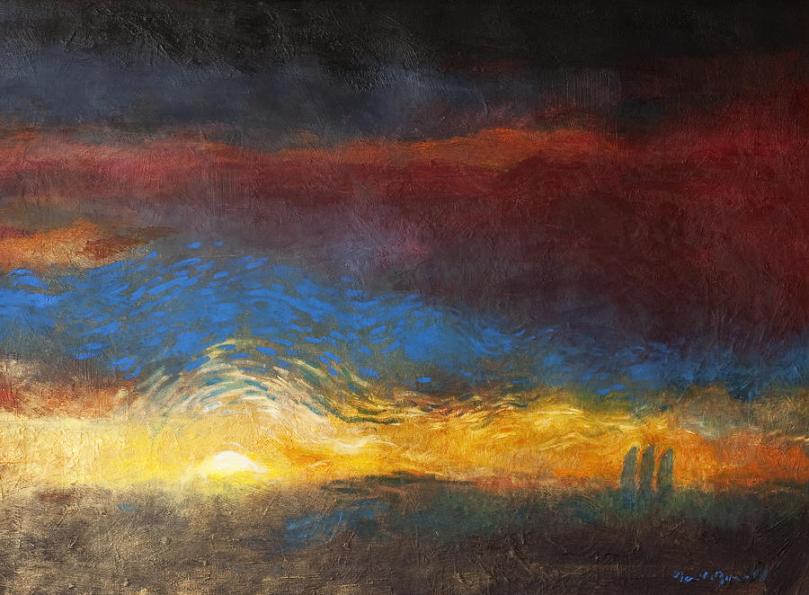
“The Road to Emmaus” by Daniel Bonnell

What’s Up with Pastor Todd 4-24-20

It’s difficult to know what the lessons of the week will be on Monday morning. This is always true. Human beings have a notoriously mixed record in the future-predicting business. Last week was a great example. The first part of the week was what has become “normal schedule.” Monday: get “to do” list from Sue, start at the top with creating Zoom links for the week’s program schedule, write “What’s Up with Pastor Todd,” do the Monday “Daily Devotional,” create staff meeting agenda, write worship for the coming Sunday, and so on. 

By Thursday all my plans for the weekend had been blown out of the water. My oldest daughter, Fiona, got a message from her boyfriend, Riku, that his building was under emergency evacuation. Within 30 minutes Fiona and I were driving to Chicago to pick him up and bring him to Connecticut. This circumstance changed meeting plans, worship plans, sleeping and eating plans. What was up with Pastor Todd on Friday was very different from What was up with Pastor Todd on Monday. Here I am today facing yet another Monday and asking, “What’s Up with Pastor Todd?”

I suppose one solution would be to wait until Friday to write my column, but I’ve found it a helpful discipline to begin the week with a self check-in. And the truth is, even in an unusually disrupted week like the last one, parts of what I had written on Monday were still relevant when it came time to preach the following Sunday. My Monday self check-in ended up being a gift to my very different reality seven days later. 

There’s a common principle of spiritual practice that encourages us to “be here now.” Mindfulness teaches us to “stay in the present moment.” But I find that this doesn’t exclude looking forward and looking back. Rather, it includes both and gives a stable place from which to reflect on the past and anticipate the future.