What’s Up with Pastor Todd 1-23-20

What’s Up with Pastor Todd 1-23-20

The above video is from church planter and consultant, Neil Cole. He is talking about a distinction between “movement” and “institution” that I first encountered in a talk by pastor, author, and activist Brian McLaren when my wife, Nicole, and I were church planters in Indiana.

I forget the details of McLaren’s talk, so I will give you my version of it. A social movement is a “loosely organized but sustained campaign in support of a social goal, typically either the implementation or the prevention of a change in society’s structure or values” (Encyclopedia Brittanica).  An institution is a set of rules, norms, patterned behaviors, and organizational structures designed to sustain the social gains of movements and pass them on to the next generation. 

McLaren argued a dynamic relationship between movements and institutions. Each needs the other. Social movements without institutional structures cannot sustain themselves. Institutions that are not periodically disrupted by social movements eventually lose their vitality and die. A powerful recent example of this dynamic in America is the Civil Rights Movement. 

McLaren’s point is that Christianity can be understood in terms of movements and institutions. The Gospels tell us that Jesus started a movement. It was only many years later when the early Christians came to understand that Jesus wouldn’t be returning within theirs or their children’s lifetimes that the instituional forms of the church began to emerge. And since that time the movement-institution dynamic has been at play in Christian cultures.

Congregational transition engages this movement-institution dynamic in a complex, improvisational way. Often congregations in transition are dealing with institutional structures that are falling apart because they just don’t “work” anymore. Instead of working harder and faster to patch up what is no longer functional, transition work allows much of that structure to fall away. Some of it, however, may have value for the church that is emerging. So we sort through what we’ve inherited and decide what to keep and what to let go of. 

Meanwhile we shift into “movement” mode. We focus on relationships and vision: that is, we build authentic relationships with people who are not yet members of the church, and we share a vision of changing the town of Granby for the better.
What’s Up with Pastor Todd 1-16-20

What’s Up with Pastor Todd 1-16-20

I spent Monday, Tuesday, and Wednesday morning this week on meditation retreat. I came home and took a nap. Why? Because sitting on the floor in silence while maintaining as still a posture as possible for 10 hours a day is, in fact, exhausting. Why do I do it? Scripture says, “Be still and know that I am God.” Humans like to move. We rush around doing this and that. But even if we’re “vegging out,” our minds jump from this thought to that thought. The practice of meditation is stilling the body and mind together to become completely still like water on a pond. It turns out that the Bible is true! I can attest that cultivating stillness does, in fact, create circumstances in which God can be encountered in a profoundly life-changing way.

When asked my purpose, I tend to say “Helping people connect to God.” How can I help people connect to God if I am not myself living out of that connection? As a personal purpose statement, “helping people connect to God” seems to work for me. Working with our transition coach, Rev. Dr. Claire Bamberg, has taught me to ask a different question, namely, what is your “Why?” I realized this week that “helping people connect to God” doesn’t answer the “why” question. Why help people connect to God? Great question!

I don’t know the answer, yet, exactly. Maybe something like this: I know the pain of being separated from one’s deepest longing. I also know the joy of connection. A world of joyful, connected people is a world I want to live in. 

As a congregation articulating a “why” is vital to our future. More important than what we do is being clear why we do it. Claire will be leading us in a congregational conversation about our why. In the meantime, I strongly encourage you to watch these short videos and think about what is your “why” and what is FCC Granby’s “why.” The videos show why the question of “why” is so important.

What’s Up with Pastor Todd 11-13-19

What’s Up with Pastor Todd 11-11-19

I’m sitting in one of the living-rooms-turned-into-conference-rooms of the Edwards House Retreat and Conference Center in Framingham, MA. Edwards House is a giant farm house situated on several acres that serves both as the (now former) Massachusetts Conference UCC headquarters and–as the name would imply–a site for conferences, retreats, meetings and other types of church-related gatherings.

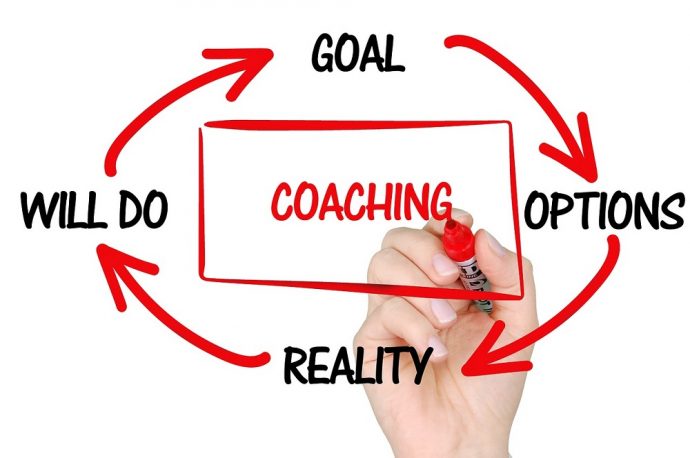
I’m here for a week-long training in leadership coaching. This is the second part of a Lilly Endowment funded program to train an ecumenical group of clergy–who were selected through an application process–in the theory and practice of coaching groups and individuals for the purposes of raising awareness, clarifying values,  and maximizing effectiveness.

Coaching is NOT therapy. It is not spiritual direction or pastoral counselling. It is a way of working with people through deep listening, artful language, and powerful questions that is designed to produce real world, life-changing results.

Coaches work with pastors, lay leaders, congregations, non-profit and for-profit organizations, managers, “C-suite” executives, parents, teachers, and leaders of all types. The idea behind training clergy in leadership coaching is that clergy can, in turn, coach their staff, volunteer leaders, and teams. Coaching is a leadership style that brings out the best in individuals and groups.

I have greatly benefitted from working with a number of coaches over my 20 years of ministry. If it weren’t for the coaches who have encouraged me and helped me grow as a leader, I probably wouldn’t be in ministry today. I’m glad for this opportunity to give back. Once we’re certified, those of us who are being trained are required to donate 50 hours of coaching to churches, teams, and/or individual leaders of the Southern New England Conference UCC.

My training requires that I log 500 hours of coaching for certification. If you are interested in a sample coaching session, email me at pastor@firstchurchgranby.org to learn more.

What’s Up with Pastor Todd 10-30-19

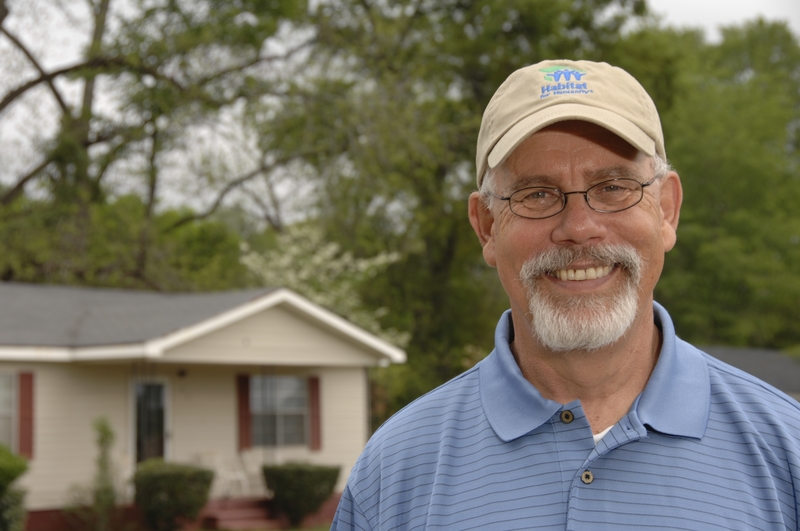
Habitat for Humanity “first volunteer” Clive Rainey

What’s Up with Pastor Todd 10-30-19

This coming Sunday, November 3, First Congregational Church of Granby welcomes guest speaker Clive Rainey to our 10am worship service. Clive is Habitat for Humanity’s “first volunteer. Clive joined founders Millard and Linda Fuller soon after they founded Habitat in 1976. You can read more of Habitat’s story here.  Clive has served in many different capacities and played a key role in the development of the organization. In his 40 + years with Habitat, Clive has lead thousands of builds all over the world. 

When asked “What is the first feeling you have when you put a hammer in your hands?’ Clive responds, “A feeling of power! This hammer is more powerful than guns or bombs or terrorism or dictators; more powerful than poverty or hatred. With this hammer I can change the world! I can begin that change with this house, this family, this neighborhood, this community, this country.” I think Clive would agree that the power he is speaking of does not reside in the hammer itself but in what the hammer represents. In the context of Habitat, the hammer represents a particular approach to changing the world called “partnership housing.”

It’s Habitat’s model of partnership that has made it truly transformative–the kind of organization that high capacity leaders like former president Jimmy Carter would give their lives to. My understanding of the model is that it’s less about charity and more about solidarity. When one is building a house in partnership with a family, a neighborhood, and a community, a context is created in which authentic relationships across race, class, and cultures can emerge. Charity keeps social hierarchies in place. There is the helper and the helped. No matter how the situation of the helped might be changed, the helper maintains her status as “not the helped.” In partnership characterized by solidarity, it’s clear that we’re all in this together. My fate is inextricably linked to yours. In the case of Habitat, clients are literally co-builders with volunteers. This social leveling creates an opportunity–even if for a moment–wherein helper and helped have the opportunity to meet together as equals in an authentic relationship of mutual love and respect. The helped is no longer an “object of charity,” but a full human being, no longer “other,” but, in some sense, me. 

I have found that solidarity can scare the pants off most white, middle class, mainstream Americans. We don’t want to consider the possibility that given different circumstances, we might need housing assistance. We don’t want to consider the possibility that our relative privilege has little to do with our own personal worthiness and much more to do with chance and the fact that we live in an exploitive system that tends to benefit the few at the expense of the many. We don’t want to give up our sense of status and superiority. We don’t want to stand in the place of those who have experienced misfortune, discrimination, or exploitation. My guess is that that’s why there is a lot of charity in the world. Much rarer is true partnership. Habitat has developed an authentic, partnership model.

For me, solidarity, not charity, offers an opportunity for a more authentic walk with Jesus, who “though he was in the form of God, did not regard equality with God as something to be exploited, but emptied himself, taking the form of a slave, being born in human likeness. And being found in human form, he humbled himself” (Philippians 2:7-8). It turns out that the model of authentic partnership is also a model for authentic Christianity.

For critiques of the charity model read Winners Take All: The Elite Charade of Changing the World by Anand Giridharadas and Toxic Charity: How Churches and Charities Hurt Those They Help, And How to Reverse It by Robert D. Lupton. I hope you will join us this Sunday to meet Clive and learn the meaning of authentic partnership.

What’s Up with Pastor Todd 10-23-19

What’s Up with Pastor Todd 10-22-19

Following worship this past Sunday we had the second installment of our monthly “Working Lunch” program at First Congregational Church of Granby. This month we focused on a report of our Meet the Minister meetings. 47 church members participated in five Meet the Minister meetings over a period of several weeks. An intentional effort was made to invite the participating of both more active and less active members. Each meeting addressed four questions:

  1. What brought you to FCC Granby?
  2. What keeps you at FCC Granby?
  3. What would you like FCC Granby to be in 3-5 years?
  4. What steps might we take to get from here to there?

Responses were recorded and then tabulated through a method of qualitative analysis. You can read a full report of the results here.

Top line summary: 

  1. What brought you to FCC Granby? Sunday school for our kids (17 mentions).
  2. What keeps you at FCC Granby? Frienships/”people” (13 mentions).
  3. What would you like FCC Granby to be in 3-5 years? Merge South Church and First Church/a new combined church with new pastors, new mission, new space more that fits new mission (11 mentions).
  4. What steps might we take to get from here to there? Get out in community/Invite people (9 mentions).

The response to the first question is easy to understand in light of what FCC Granby and the wider culture used to be. Most participants joined the church when they were young parents. It was generally thought in the wider culture that some sort of exposure to religion was a good thing for children. So they looked for a vibrant Sunday school program and found one at FCC Granby. Now those kids are adults and are either moved away or no longer find church relevant. Newer generations have little or no exposure to church. The wider culture no longer values religion the way it used to. Today we can no longer count on young families with children to find us. We need to put in the hard work of connecting with them.

The response to question two is important. Declining churches are often faced with hard choices due to limited resources. This raises a foundational question: What is the “church?” If a church decides that what it really is is the building, its options for creating a sustainable future are severely limited. Too often, the church ends up closing and selling its beautifully maintianed building to someone else. If the church, however, is the people, for whom the building is a resource for ministry, the church has many more options for creating a future for itself.

The response to question three inspires me. It says that many in the core, active membership of the church see the need to do something big to fundamentally change the decline trajectory of the church. Merger is the most obvious option, but what shape that might take remains unclear.

Response to question four may seem at odds with the response to question three, but I don’t see it that way. I don’t see a merger possibility as “throwing in the towel,” so to speak. I’ll say it again, if the vision of merger is tying one “Titanic” to another “Titanic,” we’re wasting our time. If, however, it is combining resources to create a new mission of reaching new people and having a greater impact on Granby and beyond, then it’s worth it. The time to begin building that new mission is now.

What’s Up with Pastor Todd 9-23-19

What’s Up with Pastor Todd 9-19-19

    The path to congregational sustainability is a paradoxical process of reaching out and reaching in. This past weekend we began training in the “reaching out” piece. 11 folks from First Congregational Church of Granby participated in a workshop entitled “Reaching New People” hosted at First Church in Windsor and led by Rev. Paul Nickerson, a UCC pastor who consults with scores of congregations across the country around issues of church vitality. First Church in Windsor participated with a team of about 20. FCC Wallingford and South Congregational Church of Granby also had representatives present.

During this intense 9 hour workshop over two days, we learned how changes in the wider culture have made the “attraction model” of reaching new people ineffective. We learned best practices of getting out into our community and inviting people into authentic relationships. This is the basis for reaching new people in the 21st century. We wrapped up the workshop by developing a plan for implementing these new strategies and identifying people who could serve on a Vitality Team to work with the congregation so that together we can use our limited resources to greatest effect in growing the church. The Vitality Team will be supported by ongoing coaching from Rev. Nickerson. Reaching new people isn’t just the job of a few. It’s everyone’s responsibility to learn how to be good inviters. If each person in worship invited one friend to worship every week, we’d instantly double our attendance. Imagine that!

I have already begun leading the “reaching in” process. “Reaching in” is another way of saying “building organizational health.” I have been meeting with staff and team leaders, refining and implementing church policies, casting a vision for a range of possible futures for the congregation, modeling healthy leadership that honors FCC Granby’s Behavioral Covenent, reporting to the appropriate committees, and doing a lot, I mean a lot, of listening. Reaching in is a slow, deliberate process whereby we create safe space in which difficult truths can be spoken and heard in love. No congregation is perfect. Every congregation has baggage from the past that needs to be brought into the light, examined, healed, and released. Every congregation can improve its ability to listen deeply, communicate clearly, and engage differing perspectives in ways that draw people together instead of driving them apart. Most often an intentional congregational process led by a neutral expert (not the pastor) who knows the congregation but has no vested interest in particular outcomes is the most effective way to accomplish these goals.

As a congregation we need to tend our wounds, atone for our mistakes, and build a culture of hope so that we can welcome newcomers and weave them into our congregational life. As a congregation we need to let go of past hurts that weigh us down so that when the storms of change wash over our tiny boat, instead of sinking to the bottom, we can ride the waves. We need to learn how to be vulnerable and trusting with each other so that whatever the future holds we can face it with joy. 

How is this related to our conversations with South Church? As I’ve said before, we need to fix the holes in our boat because if we tie one leaky life raft to another leaky life raft, where does that get us? We’re all still going down. Or think of it this way: what marriage is most likely to succeed? One in which the partners are stressed out, depressed, and dying or one in which the partners are happy, hopeful, secure in their identities, and looking to the future? 

Whatever our future, the process of reaching out and reaching in will take us where God and the Town of Granby need us to be.

What’s Up with Pastor Todd 9-4-19

What’s Up with Pastor Todd 9-4-19

One of the hottest topics at FCC Granby has to do with the question, “How do we reach new people?” My first response “I don’t know.” Those of you know me will know that that’s a bit of a joke. The fact is that I was put on this earth to help people connect to God. It’s the one thing I seem to be able to do. But, a key to reaching new people is starting in exactly this place of “not knowing.”

Each person is unique and is in a different place on their spiritual journeys. In order to reach that person who is right in front of us, we start from a place of complete openness and not knowing. “Who are you?” “What makes you tick?” “What are your loves?” “What are your fears?” “What do you long for?” Now, you wouldn’t necessarily ask these questions to a complete stranger. They would think you’re weird or inappropriate. But in our minds and attitudes that’s where we begin. Great spiritual teacher Shunryu Suzuki calls this “beginner’s mind.” It is a mind of love, of radical compassion, and limitless possibility. An expert already knows the answer. A beginner is a friend who shares your questions and is excited to search with you for the answers.

This is very different from charity. I have found that in UCC churches, we confuse “reaching new people” with charity. We call it “outreach.” “We do tons of outreach,” people tell me. We feed homeless people at the shelter and collect food for the foodbank and donate diapers to the womens’ shelter. All of these are worthy causes. A helpful way to think of them is as “mission to.” We have a “mission to” the homeless community or a “mission to” victims of abuse or a “mission to” refugees. We offer them a service, but we don’t usually put the future of our church in their hands. 

Charity–at least as congregations practice it–tends to have a “mission to” approach. By contrast, reaching new people requires a “mission with” approach. A “mission with” approach seeks to make spiritual connections with people for the purpose of helping all of us connect to God. It is sharing your faith with your neighbors. It is inviting your friends to a church barbeque. It is starting a lunch time Bible study in your office or in your home. It is praying with a family member. It is attending community events and supporting community initiatives. It is asking town leaders, “If you were to create a church from scratch, what would it look like?” And then designing worship, program, building, staffing, everything around not what we would prefer but around what the community truly needs.

Beginner’s mind is a humble mind that admits that perhaps we are declining as a congregation because we don’t know how to do church as well as we think we do. A beginner’s mind is willing to consider that perhaps instead of trying to convince people that they should come to us, we should go to them.

Today I had a touching conversation with Robin, whose son owns the Village Cork and Keg. She’s stressed out working multiple jobs and helping out her son at his business. I offered to pray for her. We had a profound moment of spiritual connection right there in the package store. That’s where we were. That’s where we met. Reaching new people means reaching people where they are. When we reach out to others with a beginners mind and the intention of being in “mission with” them rather than doing a “mission to” them, we might find, to our surprise, a divine presence reaching back.

What’s Up with Pastor Todd 8-28-19

What’s Up with Pastor Todd 8-27-19

Part of transition work is working with staff transitions. In congregational life, staff, including clergy, come and go for all kinds of reasons. What is true for us on a personal level is also true on a professional level: none of us is permanent. Everyone, no matter what their title or role, is temporary. Staff relocate. They take other jobs. They resign to attend to personal or family matters. Sometimes the congregation has to reduce its staff because of finances. Sometimes the staffing needs of the congregation have changed because the congregation has changed. Sometimes staff that were hired to “maintain” the congregation “as it is” do not have the skills to engage in a transition process. Sometimes there are performance issues. Sometimes staff retire. These transitions are almost always messy, but they create opportunities for congregations to reflect on mission, vision, and values. What do we really want? Is what we’re doing now actually going to get us there? 

At FCC Granby we are navigating two staff transitions. In December 2018, Rev. Dr. Ginny McDaniel retired after serving seven years as Senior Minister. This past Sunday, Rev. Rebecca Brown retired after serving four years as Minister for Children and Youth. Each minister has been honored by the congregation for her service. Each minister has made a lasting difference for the good of the congregation. We are grateful for who they are and what they’ve done. Ginny has gone through a process of leave-taking following the United Church of Christ “Ethical Guidelines for Ministers Departing from Congregations.” Rebecca is currently in that process. It is a multi-layered process that involves public liturgy, compiling and handing over work product (such as lists of pastoral needs, event calendars, contact information, meeting notes, etc), participating in an exit interview, dealing with the administrative details of changing employment status with the denomination. All of these are steps in a larger transition that involves a change in identity: from pastor to former pastor. This change in identity is attended by a shift in how former pastor and former congregation relate to each other. The “Ethical Guidelines” are intended to ensure that this transition happens and that it happens in a healthy way.

Here’s a refresher on transition and change: transition and change are different. Change is situational. Transition is psychological. Change is some new guy is doing the preaching now. Transition is letting go of one pastoral relationship and building another. William Bridges in his book Managing Transitions writes, “It’s not the change that will do you in, it’s the transition.” Transition “is a three-phase process (letting go, chaos, new beginning) that people go through as they internalize and come to terms with the details of the new situation that the change brings about.” As a congregation, we are definitely still “internalizing” and “coming to terms with the details” of shifting from a settled minister to transitional minister, from a minister for youth and children to a new staffing configuration for Christian Education which may, at some point, involve a partnership with South Church. 

On some level, for each of us, transition involves building a new identity. For example, I am no longer the Transitional Senior Minister of FCC Stamford. As much as I love the people there, I’ve had to let those relationships go so that I can be fully present to my new call as Transitional Senior Minister of FCC Granby. Without letting go, there is no new beginning. In a similar way the members of FCC Granby are no longer Ginny’s or Rebecca’s parishioners and Ginny and Rebecca are no longer FCC Granby’s pastors. It’s not that those relationships are ended. Cut off is rarely helpful. But there needs to be a release. I’m a Gen-Xer, so my popular culture reference for this is Sting’s song, “If you love somebody, set them free.”

It’s natural for this shift in identity to generate resistance, but that’s the reality of congregational life. Identity shifts also generate grief to which we all need to tend carefully. Ginny’s circumstance is special given her health circumstance. Linda Betsch will be coordinating care for her. But the fact remains: none of us is permanent; everyone is temporary. Which makes our time together all the more precious. Now, for better or for worse, we belong together–transitional minister and congregation. Let’s make the most of the time we have. Time passes swiftly. Opportunity is lost. And God has big plans for us.