What’s Up with Pastor Todd 5-15-20

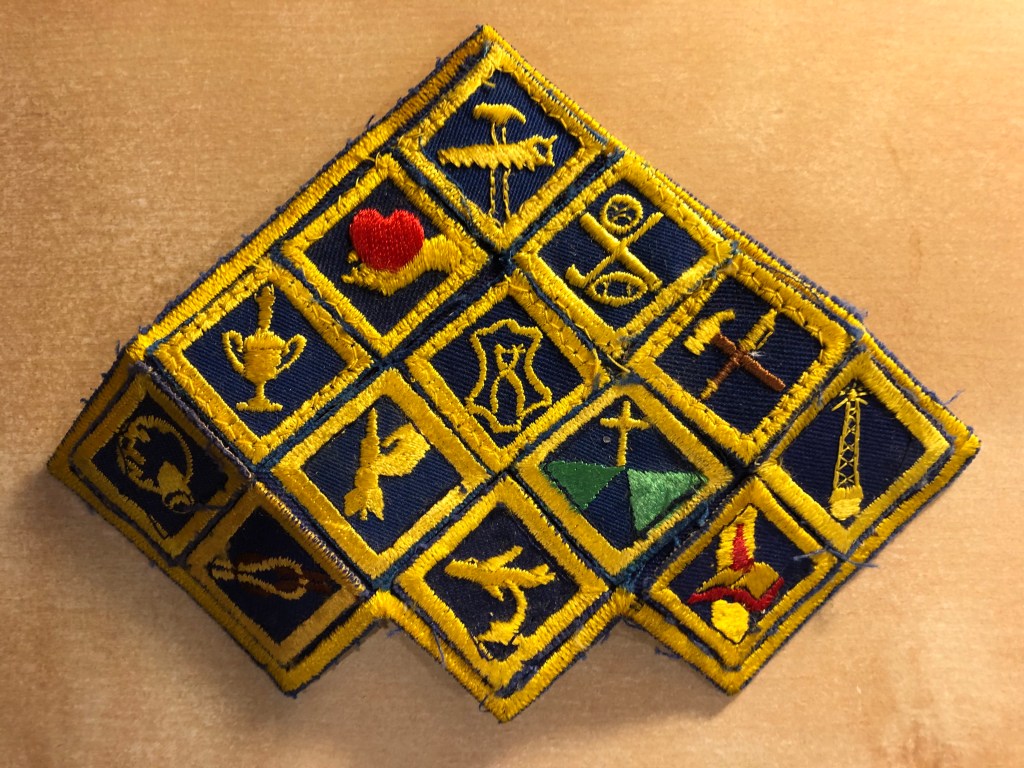
My Cadets merit badge sash circa 1980-something

What’s Up with Pastor Todd 5-15-20

Every Wednesday evening from third grade through eighth grade I would put on my uniform–including the merit badge sash, which I was very proud of–go to church, line up in the “Fellowship Hall” with the other boys according to our grades, and go through the opening exercises of “Cadets,” my church’s more Jesus-y version of Boy Scouts. 

The opening exercises included reciting the Cadet’s Pledge, singing the Cadet’s Song (“Living for Jesus”), and reciting the Cadet’s Scripture verse, “If you love me, you will keep my commandments (John 14:15).” I liked Cadets. I liked earning the different merit badges for knot tying, wood working, electronics, etc. Of course there was a “Bible” merit badge. One of the things I had to do to earn it was memorize the names of the books of the Bible in order–a helpful skill that I use to this day! I liked the campouts, the fundraising, cameraderie, and I’m grateful to the men who gave their time and resources to mentor young boys like me. 

I thought of Cadets when reading the Gospel lectionary for the sixth Sunday of Easter. John 14:15-21 continues Jesus’ “farewell discourse,” which we began studying last Sunday. It’s the Gospel of John’s version of Jesus’ final instructions to his disciples before his crucifixion. We study texts like this during the Easter Season to prepare ourselves–as Jesus prepared his followers–to be Christ’s hands and heart for the world. The historical Jesus is a memory. The living Christ is you and I. Contrary to popular belief, loving Jesus is not primarily an emotion. Emotions come and go. Loving Jesus is an action. More importantly, it’s a repeated action. We call repeated action directed toward the object of devotion “spiritual practice.” Worship is spiritual practice, cleaning the kitchen–if it’s done with an awareness of Christ’s presence–can be spiritual practice, donating to the food pantry is spiritual practice, walking the dog can be spiritual practice. 

Mother Teresa famously said, “Not all of us can do great things, but we can do small things with great love.” Whatever we do–if we do it as Christ’s hands and heart–has the potential to bring us deeper into communion with God and all of life. This is loving Jesus. This is keeping his commandments.

What’s Up with Pastor Todd 4-24-20

“The Road to Emmaus” by Daniel Bonnell

What’s Up with Pastor Todd 4-24-20

It’s difficult to know what the lessons of the week will be on Monday morning. This is always true. Human beings have a notoriously mixed record in the future-predicting business. Last week was a great example. The first part of the week was what has become “normal schedule.” Monday: get “to do” list from Sue, start at the top with creating Zoom links for the week’s program schedule, write “What’s Up with Pastor Todd,” do the Monday “Daily Devotional,” create staff meeting agenda, write worship for the coming Sunday, and so on. 

By Thursday all my plans for the weekend had been blown out of the water. My oldest daughter, Fiona, got a message from her boyfriend, Riku, that his building was under emergency evacuation. Within 30 minutes Fiona and I were driving to Chicago to pick him up and bring him to Connecticut. This circumstance changed meeting plans, worship plans, sleeping and eating plans. What was up with Pastor Todd on Friday was very different from What was up with Pastor Todd on Monday. Here I am today facing yet another Monday and asking, “What’s Up with Pastor Todd?”

I suppose one solution would be to wait until Friday to write my column, but I’ve found it a helpful discipline to begin the week with a self check-in. And the truth is, even in an unusually disrupted week like the last one, parts of what I had written on Monday were still relevant when it came time to preach the following Sunday. My Monday self check-in ended up being a gift to my very different reality seven days later. 

There’s a common principle of spiritual practice that encourages us to “be here now.” Mindfulness teaches us to “stay in the present moment.” But I find that this doesn’t exclude looking forward and looking back. Rather, it includes both and gives a stable place from which to reflect on the past and anticipate the future. 

Ash Wednesday Homily 2020

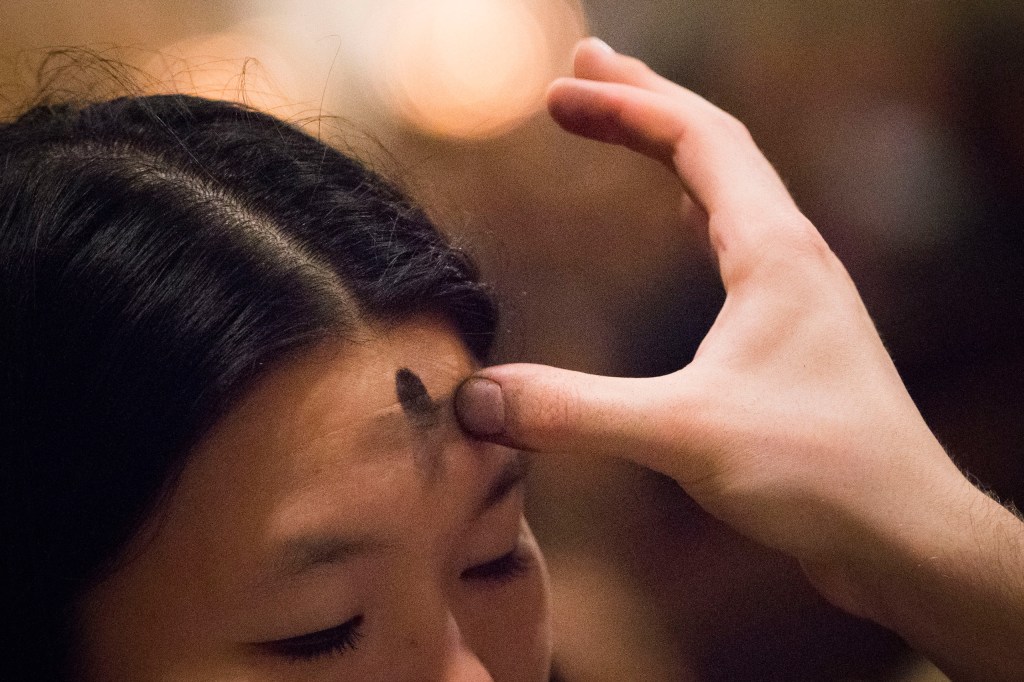
A woman receives ashes at Saint Patrick’s Cathedral on Ash Wednesday in New York February 13, 2013. REUTERS/Adrees Latif (UNITED STATES – Tags: RELIGION ANNIVERSARY) – RTR3DQUC
Sermon by Rev. Dr. Todd Grant Yonkman at First Congregational Church of Granby 26 February 2020

What’s Up with Pastor Todd 1-7-20

What’s Up with Pastor Todd 1-7-20

My family and I had a wonderful holiday together in Windsor. We took some time off to focus on reconnecting. Fiona and her boyfriend (who is from Tokyo and stayed with us this winter break) cooked for us. My sister and her family of 6 (!) stayed with us for a week. They filled our sleeper sofas and bunk beds. Olivia directed the Christmas pageant here at FCC Granby and worked lifeguarding shifts at the Jewish Community Center. Even in this age of virtual reality and social media, there is no substitute for simply sharing space. While physical proximity does not guarantee intimacy, it is a key factor for cultivating closeness. (Which, just to drive the point home, is why there is no substitute for dragging your _____ to worship on Sunday morning.)

This week I’ve been settling back into a work rhythm. The answer to “What’s Up with Pastor Todd?” is “a lot.” I’m sitting in my office with the “to do” list Office Manager Sue prepares for me every week, to which I typically add a dozen or so more items. My view is that if my “to do” list doesn’t exceed my ability to complete it, I’m not living big enough. How do I avoid a constant state of overwhelm? Prioritizing and letting go. Even so, sometimes it’s difficult to prioritize. So many things demand attention. In these moments I use a tool I’ve learned in many years of meditation practice: focus on what’s in front of you. Sounds simple enough. But then the question becomes How do I get the things in front of me that are most consistent with my goals and values? This brings me back to the practices of inviting Sue to partner with me in creating a “to do” list and literally putting it on my desk where I will see it. This brings me back to the “big rocks” of Scripture study, sermon preparation, writing liturgy, namely, the spiritual practices that ground me in what is of ultimate importance.

One of my favorite Buddhist Scriptures is called “The Five Remembrances.” It’s part of an ancient text attributed to the Buddha entitled “Subjects for Contemplation.” The fifth remembrance is this: “My deeds are my closest companions. I am the beneficiary of all my deeds. My deeds are the ground on which I stand.” The only place to act is here. The only time to act is now. What are you doing right here, right now? What practices help you align your deeds with your values? Who are your “closest companions?” Are they hindering you on your spiritual journey or propelling you forward? What is your “ground?” Is it a solid place on which to stand?

Renunciation and Repentance: Presentation to National Council of Churches Buddhist-Christian Dialogue

Presentation by Rev. Dr. Todd Grant Yonkman to National Council of Churches Buddhist-Christian Dialogue at Hsi Lai Temple, Hacienda Heights, CA 11/5/19

What’s Up with Pastor Todd 3-27-19

What’s Up with Pastor Todd 3-27-19

This column began at the suggestion of the Vision Support Team (VST) during a meeting in my Stamford apartment in April 2016. The VST was a group of FCC members committed to support the congregation’s vision for our transitional ministry. Team members at that time included Maureen Matthews, Ellen Taylor, Peter Birch, Jean Meyer, Pam Shadford, Kathie Laug.

Our transitional goals were 1) Simplifying governance and By-laws including financial record keeping and reporting; 2) Becoming more welcoming and engaging; 3) Developing more meaningful relationships with one another; 4) Offering more varied opportunities for spiritual development and leadership development; 5) Continuing to expand upon our strong community service work; 6) Communicate more effectively and civilly–both internally and externally. I mention them simply to appreciate how far we’ve come over the past three years.

We have left many things behind as together we have moved into God’s future. But we are also carrying some things forward. Personally, besides carrying forward all of you, the memories of all we’ve been through, and all of the things I’ve learned, I think I’m also going to continue this column in my new setting. What’s up with Pastor Todd? What is up with that guy? That question is a helpful spiritual discipline for me to ask week after week. If ever you should wonder, you can check in at www.todd-grant-yonkman.net. This is goodbye for now, not forever.

What’s Up with Pastor Todd 3-19-19


This work of leave-taking is exhausting. Those of you who have walked the path of grieving before are likely not surprised. Too often our wider culture discounts emotional work. It’s not “real” work the way taking meetings or building widgets or producing content or selling products or generating wealth is. Instead of tools for doing emotional work, our culture offers us ways of escaping it through distractions and entertainments or ways of numbing ourselves to it through addictions of various kinds. Much of the outrage we pollute our social spaces with is simply a means of avoiding grief work that the powerful have cleverly found ways to monetize. As a congregation we know from our own experience that neglecting difficult emotional work is perilous to our personal health and the health of the community. The only way to heal emotional suffering is to face it together with a skilled guide. So two things:

  1. In the next two weeks find moments for intentional rest. Not burying your face in your favorite distraction, but finding your upright posture, connecting to your breath, and bringing your energy down to your heart. That’s one way to do it. Whatever your spiritual practice, stay with it.
  2. Make it a priority to show up for Sunday worship. This Sunday, for example, Rev. Margaret Keyser will be joining us. Following worship she will be leading us in some healing work.

Our leave-taking is not a tragedy. It’s an opportunity to experience God’s healing love in ways you haven’t yet imagined.

Pastor’s Page January 2019

Pastor’s Page January 2019

While in the past new years have brought sweeping changes to my personal life–new jobs, new houses, relocations, graduations, births, deaths, and the like–they have not often brought sweeping changes to the churches I’ve served. For better or for worse, congregational changes tend to be incremental, if there is any perceptible change at all. And perhaps we have come to depend on that: while the world around us swirls, there’s something reliable about the predictability and routine nature of Sunday after Sunday, season after season.

2019 is not going to be like that for First Congregational Church of Stamford. Our building is sold. There is no turning back from that fact. We have 12 months max to find a new home. Additionally, we will be searching for a restart pastor to launch what I’m provisionally calling New Church Stamford. There will still be Sundays and there will still be seasons, but–out of necessity–we will be inventing new ways to mark them, new rhythms to celebrate them, and new eyes to notice the spirit of God moving among us and our community.

This may come as a surprise to you, but I don’t do change well. My natural inclination is to resist. But I’ve found that fighting change–at least change that God is bringing about–is exhausting and fruitless. I’ve found that the key to surviving and even thriving in the midst of sweeping change is to focus on my spiritual practice. For me, this is prayer, meditation, worship, Scripture study, physical exercise, community, and service.

Change is difficult, but I’m convinced that change is simply the nature of reality. Nothing in this world is exempt–not even church. So my invitation to you is to step boldly into 2019. As a church we have a direction, we have a plan, and we have resources. These three things are huge items in our “plus” column. Most churches I know don’t have any of these things. They tend to wander around in circles making incremental change after incremental change that don’t really take them anywhere. We, at least, are a congregation with a vision and a congregation with a goal: to become the church Stamford needs us to be. Though at times the work may feel overwhelming, remember, nothing is impossible with God.

What’s Up with Pastor Todd 12/25/18

What’s Up with Pastor Todd 12/25/18

On the church’s liturgical calendar, the Season of Christmas lasts from Christmas Day until the celebration of Epiphany on January 6. Popular culture has found many ways to fill this space: after Christmas sales, top 10 lists, retrospectives on the previous year, forecasts for the next. For Christians it can be a time to bask in the afterglow and adjust to a new reality.

I remember after each of our children were born, the weeks after labor and delivery were a time of being together as a family, welcoming the newcomer, learning her particular quirks and needs, adjusting to the increased responsibility of a new child. It was a busy time, but also a quiet time, an inward-focused time.

I invite us in this Christmas season to gather ourselves, to take the backward step and inward turn. The office will be closed between Christmas and New Year’s. Take advantage of this moment to re-energize because 2019 is going to be a big year!