What’s Up with Pastor Todd 5-14-21

What’s Up with Pastor Todd 5-14-21

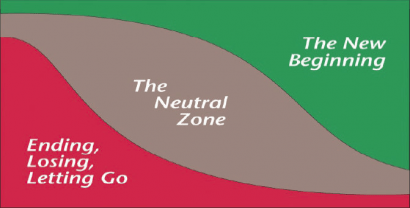
In Managing Transitions: Making the Most of Change author William Bridges writes about “using the Neutral Zone creatively.” The “Neutral Zone” is also known as “wilderness time.” It’s the time between the ending of the old way of doing things and the hoped for new beginning. This is the shape of transition: ending–neutral zone–new beginning. In Biblical language there’s “crossing the Red Sea” (ending of enslavement), “wandering in the wilderness” (neutral zone), and “crossing the Jordan River” (new beginning in the Promised Land.)

The Neutral Zone is a tricky part of the transition journey. Much of the work is “below the green line”–that is, it has to do with intangibles such as “information,” “relationships,” and “identity.” It is the inner work that is necessary for something truly new to emerge. It’s sometimes said that at the Red Sea God took God’s people out of slavery. During the wilderness journey, God took slavery out of the people. On the one hand people can become impatient in the Neutral Zone because it seems like “nothing is happening.” On the other hand there’s a danger of becoming stuck in the Neutral Zone. Transitions aren’t meant to last forever.

How can we–in Bridges’ words–”use the Neutral Zone creatively?” Here are two of Bridges’ suggestions. I invite you to share yours:

  1. Consider: “what new roles, reporting relationships, or configurations of the organizational chart do you need to develop to get through this time in the wilderness?” (p.46). One possible org chart change: consider combining committees where appropriate. It’s natural for the old way of doing things to begin to fall apart in the neutral zone. For example, in the wilderness God’s people had to adjust to spending their nights in tents instead of in houses and their days walking instead of making bricks for Pharaoh. One of the things that happens in the Neutral Zone (if things are moving forward in a natural way) is that long time, established leadership will begin to step back, which makes space for new leadership to emerge. What if that new leadership hasn’t emerged yet? My suggestion: combine First Church and South Church teams and rotate leadership or establish co-leadership. Deacons, for example, might consider this. Also the music ministries. Perhaps also the Finance Teams. Rather than try to patch something together, let it fall apart to make space for the new.
  1. “Step back and take stock” (p. 50). This is one of Bridges’ suggestions. I would love to hear your perspective on how things are going thus far. Give me a call (860-990-1073), or send me an email pastor@firstchurchgranby.org. You call also schedule a time on my calendar through our office administrator (sue@firstchurchgranby.org). I’m a data guy and you have data on how things are going. The data are your thoughts, feelings, perspectives, and experiences of this transition time.

What’s Up with Pastor Todd 5-7-21

What’s Up with Pastor Todd 5-7-21

In a “Union Service” on April 25, First Church and South Church commissioned six working groups composed of both First Church and South Church members whose purpose is to “imagine a new entity, including: its sense community; its infrastructure; telling its history; its program; its property and its staff and technological communications.” Each of these working groups will be assigned its own coach, who will be meeting with the groups to support their work. 

Many of us are familiar with coaching through our work with Rev. Dr. Claire Bamberg and/or Rev. Paul Nickerson. My transitional ministry contract includes the expectation that I will provide “coaching where appropriate.” But what do we mean by “coaching?”

People use the term “coaching” in many different ways. The definition that Claire and I use comes from the International Coach Federation (ICF), which sets global industry standards for professional coaching. Methodist pastor J. Val Hastings, Founder and President Coaching4Clergy, puts the ICF approach this way: “Here is how I define coaching: As a coach, I help people get the results they want by bringing out the best in them. I’ll also explain that coaching isn’t about fixing people or solving problems, rather coaching is a developmental or discovery-based process. Similar to athletic coaches, we further develop the skill and talent already inherent in the people we coach.”

Coaching is often confused with “consulting.” Consultants tend to “tell you what to do.” They have expertise in a particular field and apply that expertise to your particular situation. Paul Nickerson, for example, uses more of a consultant model. Consulting is helpful. That’s why consulting is such a big business.

Coaching in the ICF model relies on deep listening, powerful questions, and something called “artful language” (which is a discipline of atuning oneself to the client’s preferred vocabulary and style of expression.) These are the basic tools that when deployed effectively can lead to “a-ha” moments of discovery on the part of individuals and groups.

What are some “a-ha” moments that you have noticed in our coaching work so far? Perhaps you’ve had a personal moment of insight. I would love to hear it. Perhaps you’ve noticed a moment in a meeting or one of our Sharing Services in which heads were nodding and there was a feeling of connectedness. The word cloud exercise we did last year that revealed a common “Why” around the words “inspire” and “love” was an “a-ha” moment for many. Discovering these insights and then building an action plan around them is what coaching is designed to do.

We are so blessed to have access to have this much coaching for our project. I’m not aware of any other consolidation projects that have coaches assigned to each working group. I encourage all of us to engage the process wholeheartedly. 

What’s Up with Pastor Todd 4-30-21

What’s Up with Pastor Todd 4-30-21

Last week we began exploring the second half of Weird Church: Welcome to the Twenty-First Century by Paul Nixon and Beth Ann Estock. This section describes 21 models, forms, paradigms for doing church that the authors have observed emerging in the 21st century. There are a lot of unknowns about the church of the 21st century, but one thing Nixon and Estock seem fairly certain of is that the “neighborhood, denominationally-franchised church . . . with a weak local vision and identity” is about to disappear.

As I read through the weird church paradigms, it seems to me that a number of them might be components of a new UCC in Granby: “The Simple Cell,” “The Dinner Party,” “The Soulful Community,” “The Community Enterprise,” “The Pilgrimage,” “The Innovation Lab,” “The Tabernacle,” all might manifest themselves in some way even if they don’t become the dominant or “stand alone” model. The book gives current examples of churches following these models. Which one of these example churches would you like to learn more about? 

My hope is that by the end of this process we will land somewhere with some kind of emerging, distinct local identity that new people can connect with. One of the reasons the denominationally-franchised church is headed for extinction is that too often it tries to be everything to everyone and so ends up unable to connect authentically with anyone. In the Book of Revelation, Jesus says to a “lukewarm” church “I will spit you out of my mouth” (3:16).  Trying not to offend anyone, the church as we have known it has feared being weird. 

I’m reminded of our “What’s Your Why?” training. Simon Sinek makes the point that the successful organization connects with the people who already on some level share the organization’s values. That’s why it’s so important as we go through this process to ask “Who is God calling us to reach next?” Rev. Paul Nickerson sometimes calls this person “unchurched Harry and Mary.” All of the weird church paradigms are targeted toward a specific group of people with particular spiritual, emotional, and social needs.

Several years ago Rev. Traci Blackmon, UCC Executive Minister for Witness and Justice, preached at a meeting of the newly formed Southern New England Conference UCC. Her text was the story of the Crossing of the Jordan God’s people were nearing the end of their forty year wilderness journey. Looking across the Jordan River, they could see the Promised Land. Like God did at the Red Sea forty years earlier, God had promised to part the waters for them so that they could cross over. But the waters didn’t part until the people at the front of the procession actually stepped into the water. A way opened up where there hadn’t been one before, but only after the people were willing to step out in faith.

Time and again I’ve found that to be true. And I’m finding it to be true now. I’ve had several exciting conversations with community members who are aware of our collaboration efforts and are interested in partnering with our congregations in creating something new. Every day has the potential to give rise to a clearer vision for our new combined future as long as we are willing and brave enough to continue moving forward in faith.

What’s Up with Pastor Todd 4-25-21

What’s Up with Pastor Todd 4-25-21

The second half of Weird Church: Welcome to the 21st Century by Paul Nixon and Beth Ann Estock consists of nineteen short chapters describing different models, approaches, and forms of 21st century church that the authors have observed. As First Church and South Church consider consolidation I encourage you to read these chapters and mind your heart. Do any of these descriptions grab your interest? Do you feel energized? Do you find yourself thinking about how we could do that kind of church here in Granby? One of the keys to success in finding a sustainable future is “following the energy.” 

I find very helpful the “notes of caution” scattered throughout the descriptions. In the weird church era, there are more failures than there are successes. Wise leaders learn from the mistakes of others. One small example that resonated with me: the coffee house church. Back in the aughts I was on a Church Development Committee that oversaw a church restart. The church decided to restart as a coffee shop. We found what Nixon and Estock also discovered: if people want coffee, they will go to a coffee shop, not a church disguised as a coffee shop. Our project ended up failing spectacularly. We also discovered that coffee shop church can succeed when it is supported by a larger organization. Not every creative idea results in a self-sustaining congregation. It’s helpful to be aware of diverse ministry models and the kinds of funding streams they are likely to require. 

As I read through the second half of the book, I realized that I’ve had personal experience with a number of types of weird church. My encouragement is that First Church and South Church folks get out there and visit, experience, and interview people representing as many of these different types as we can. A first step in creating something new is getting a sense of what’s already out there.

For example: “The Neighborhood.” Broadway United Methodist Church in Indianapolis is one of the more famous examples. I met the pastor, Rev. Mike Mather, when I was a church planter in Indiana. I recommend his book Having Nothing, Possessing Everything: Finding Abundant Communities in Unexpected Places. You can listen to a podcast of his approach to “The Neighborhood” here. Closer to home First Congregational Church of Stamford has adopted some of Rev. Mather’s strategies in their restart project. I’m glad to ask if Rev. Mather and/or the folks from FCC Stamford would be willing to chat with us.

There are at least two examples of the “Community Space” type right here in CT. Rev. Dr. Shelly Best is the founder and director of 224 Ecospace in Hartford. I’ve met with Dr. Best and toured the space. She is an amazing person from whom we could learn a lot. The second example:  United Congregational Church of Bridgeport sold their historic building a number of years ago and moved into a community space in which they are developing multiple ministries and income streams. Rev. Sara Smith was very helpful with FCC Stamford and I’m sure would be glad to talk with us. 

I’m aware of a number of other examples of weird churches that we could visit and talk with, but I will save those for the coming weeks.

What’s Up with Pastor Todd 4-16-21

What’s Up with Pastor Todd 4-16-21

Our transition coach, Claire Bamberg, recommended everyone from First Church and South Church read Weird Church: Welcome to the Twenty-First Century by Paul Nixon and Beth Ann Estock as a resource for envisioning what the new church God is birthing among us as a result of our collaboration might be. In chapter 5, Nixon and Estock write about “shame-based systematic theology” (p. 51), which has been a feature of many Christian churches for centuries. The authors propose a shift away from “shame-based theology” toward an approach to doing church based on love and letting go.

While this may sound a bit abstract mystical, it is not in the least. Some researchers argue that shame is the most powerful force in human psychological, social, and spiritual life. Shame is an emotion. Emotions are made up of thoughts, feelings, and physical sensations. Here I think it’s important to distinguish between what some researchers call “healthy shame” and “toxic” or “chronic” shame. In it’s benign or “healthy” form, shame simply lets us know when we are out of alignment socially. It might be that feeling of “dis-ease” when we enter a room of strangers or that feeling of embarrassment when we make an inappropriate comment. Internally it could arise as a sense that we are not living in alignment with our values. 

Healthy shame can prevent us from doing socially harmful things. This is the kind of shame the Prophet Jeremiah writes about: “They have treated the wound of my people carelessly, saying, “Peace, peace,” when there is no peace. They acted shamefully, they committed abomination; yet they were not ashamed, they did not know how to blush” (6:14). For an in depth study see Shame: Theory, Therapy, Theology by Stephen Pattinson.

When Nixon and Estock are writing about “shame-based theology,” they are referring to “toxic” or “chronic” shame. Toxic/chronic shame is the sense that “there is something fundamentally wrong with me.” Whereas guilt is the sense that “I’ve done bad,” toxic shame is the sense that “I am bad.” Author Brene Brown talks about this as the difference between “feeling shame” and “being shamed.” Listen to her podcast “Shame and Accountability.”

When I moved from my church of origin to the “liberal” UCC I thought I was leaving shame-based theology behind. I discovered that we have our own version. Some call it “toxic wokeness” or “cancel culture.” All of it–whether it’s from the “right” or the “left,” conservative or liberal, “blue,” or “orange,” or “green” stages of spiral dynamics (to use Estock and Nixon’s terminology) arises from a deep-seated desire for purity. It’s a belief that there’s something fundamentally wrong with reality and if we could just eliminate it or “them” everything would be “good.” It’s a worry or a sense or a fear that the declaration of Genesis that “God saw all that God had made and behold it was very good,” no longer applies. 

Toxic shame is a tool of oppression. In her podcast, Brene Brown quotes author and activist Audre Lorde: “You can’t dismantle the master’s house with the master’s tools.” A “weird church” won’t abandon working for justice, but it will avoid using the master’s tools to do so. 

The vision of a theology oriented toward loving and letting go is grounded in a practice of radical acceptance. It looks more like a “yellow” or “turquoise” stage in spiral dynamics. Loving and letting go means letting go of our dreams of purity and meeting the world as it is. Filled with deep faith in the ongoing goodness of creation, we can meet each moment whether pleasant or unpleasant, each person whether loveable or hateful, each situation whether harmful or healing, with fierce tenderness and longsuffering patience because everything we encounter is woven into the seamless fabric of God’s boundless love.

What’s Up with Pastor Todd 4-9-21

What’s Up with Pastor Todd 4-9-21

Our transition coach Claire Bamberg has recommended we read Weird Church: Welcome to the Twenty-First Century by Beth Ann Estock and Paul Nixon. Nixon and Estock are United Methodist ministers and consultants to churches of many different denominations. 

The theoretical framework of the book is called “spiral dynamics,” “a particular theory of human bio/psycho/social evolution developed by Don Beck and Christopher Cowen, rooted in the work of Clare Graves” (p. ix). The gist of the theory, as I understand it from the brief sketch in the introduction to Weird Church, is that human history and culture has evolved through a number of stages beginning 250,000 years ago with the stone age, which in human terms was characterized by a “survival mentality.” 10,000 years ago humanity evolved to a tribal stage of “mutual reciprocity.”  As we transition from ancient to modern times we see the development of an ego-centric stage, a “code of conduct” stage, a stage of “achievement and personal success.” The contemporary moment has given rise to a shift away from the individual toward a concern for the larger community characterized by various justice movements and concern about climate change. Evidence for further evolutionary stages include a stage characterized by a “value system that can respect all perspectives,” and a stage that “experiences the wholeness of existence through mind and spirit with mystical and intuitive sensibilities” (pp. x-xiii). What makes this evolution a spiral is that each succeeding stage includes the one before. The survival mentality persists even in the stage of “mystical wholeness.” 

This framework–“color coded” for convenience–allows the authors to analyze how gaps between congregational cultures and changes in mainstream Western cultural assumptions have resulted in church decline. I had an “aha” moment many years ago when I realized that I had been taught that people don’t attend church because they’re “bad,” when, in fact, many–if not most–don’t attend church because they’re good and they just don’t see church as having any relevance whatsoever to their spiritual lives.

Much of what the authors describe resonates with my experience. The book was published in 2016. I find myself wondering what changes they might make to a 2021 edition. My guess is that they–along with pretty much every other thinker I’ve been reading/listening to over the past 13 months–would say that the pandemic has only greatly accelerated the changes they describe. I encourage everyone to get a copy of the book and read it. 

A word of caution. Predicting the future is a tricky business. Organizations that endure go through periods of expansion and contraction. Darwin’s evolutionary insight about “the survival of the fittest” might be better phrased as “the survival of the adaptable.” While much of our work will inevitably be focused on what changes are needed for our congregations to survive, a more powerful set of questions might be, “How can we build our organization’s capacity for change? What behaviors, structures, values can we weave into the fabric of this new project that will keep the “change muscles” of the congregation strong for generations to come?”

What’s Up with Pastor Todd 4-2-21

What’s Up with Pastor Todd 4-2-21

In light of the February 14 decision by First Church and South Church to pursue a path of collaboration, I met with leadership to revise the addendum to my transitional call agreement. This addendum spells out “micro-plans” and “big picture goals” for our ministry together. One of the things that makes transitional ministry different from settled ministry is the inclusion of specific ministry goals in the contracting process.

Our assistant moderator, Lisa Reinhardt, is writing a piece this week on the updated goals for the transitional minister. The first of the updated “micro-plans” is to “remind people of the role of the transition pastor to the congregation.” 

After nearly two years of serving together, my guess is most of us have a pretty good sense of the role of the transition pastor in the congregation. A transitional minister contracts with a congregation for a certain period of time in order to get a certain piece of work done, which the transitional minister and congregation define together. In our case, the piece of work was to find a sustainable future.

For about 18 months we explored a number of options. Six weeks ago we decided to pursue consolidation. The reason for updating the addendum at this point was so that it reflected a focus on the consolidation path. In terms of worship, this will mean more energy focused on worshipping together with South Church and developing a common worship liturgy. In terms of program, it will mean focusing more energy on developing collaborative projects with South Church. In terms of pastoral care, it will mean focusing more energy on working through whatever grief may arise as certain familiar aspects of what it means to be First Congregational Church are let go so that new, vital ministries have the space to sprout and grow.

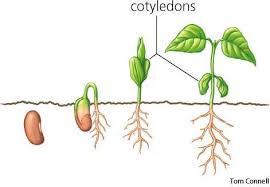
Years ago in one of our conversations my spiritual director refered to a poem by Richard Wilbur entitled “Seed Leaves.” I keep a copy of it pinned to bulletin boards in both my home and my church offices. To me the poem speaks about the hard choices the path to maturity demands of each of us. When we try to be everything to everyone we often end up being of no use to anyone. Wilbur writes:

“This plant would like to grow 

And yet be embryo; 

Increase, and yet escape 

The doom of taking shape;”

Yet the “stubborn” life force demands the plant take shape. A maple tree becomes a maple tree with its distinct characteristics. It can’t be an oak. Like a tree if we are to grow we can’t escape the doom of taking shape.

The great blessing of transitional ministry is the opportunity it creates for new, distinctive, and focused ministry to take shape.

What’s Up with Pastor Todd 3-26-21

What’s Up with Pastor Todd 3-26-21

“To Improve Your Team, First Work on Yourself” is the title of a 2019 Harvard Business Review article that caught my attention this week. This concept is the foundation of my approach to ministry for the past 25 years. It is the bedrock on which family systems theory is built. Family systems theory, first developed by psychiatrist Murray Bowen and adapted for congregations by Rabbi Ed Friedman, has had a huge influence on generations of clergy. This includes my counterpart in the First Church/South Church consolidation effort, Rev. Denny Moon, and our consolidation coach, Rev. Dr. Claire Bamberg. I encourage you to check out the short article both for your own personal edification and as a springboard for conversation as First Church and South Church move into our next stage of work together.

GUCCI, the steering team for the First Church and South Church consolidation effort, is organizing work groups to lead the next stage of our work. The work groups are: 1) “Getting to Know Each Other,” 2) “Nuts and Bolts,” 3) “Properties and Memorial Gardens,” 4) “Staffing, Technology, and Communications,” 5) “History,” and 6) “Program.” 

Considerable thought is being put into the size and composition of these work groups as well as how to build a culture of healthy communication in the work groups so that our time together is productive and to build a healthy foundation for a future congregation.

Which brings me back to the Harvard Business Review article. The author recommends teams master three “foundational capabilities” to improve their functioning: “internal self-awareness, external self-awareness, and personal accountability.”

Internal self-awareness involves understanding your feelings, beliefs, and values — your inner narrative.” The article goes on to give examples of how increasing internal self-awareness affects interactions. For more details on building self-awareness see this HBR article. I have found maintaining a daily meditation practice key to building self-awareness. Coaching and therapy are also incredibly effective modalties for increasing this “foundational capability.”

“External self-awareness involves understanding how our words and actions impact others.” How do we understand how our words and actions impact others? Ask! I have observed the most effective leaders, including Claire, pause a meeting to ask about body language: “You just scrunched up your face. What was happening in you then?” Or repeating what was said and asking, “Did I get that right?” Or “Are you getting what you need out of this conversation?” It can feel risky to ask for feedback, but all of the best leaders do it.

As for accountability: “When we think of accountability, we typically think of holding others accountable. But the most effective leaders and teammates are more focused on holding themselves accountable.”

Years ago I was meeting with a group of church leaders. We were trying to revitalize a dying downtown congregation that had once been the largest in the state. The team had been attempting to engage the wider congregation in the turnaround effort with little success. The meeting devolved into a complaint session about how we had a congregation of freeloaders who needed an attitude adjustment. By some miracle the conversation shifted to looking at our own attitudes and behaviors as leaders. Finally the light bulb went on and the team leader said with conviction: “Nothing will change until we change.” Long story short: after seven years of hard effort, the congregation was completely transformed. Moral of the story: “If you want to improve your team, first work on yourself.” 

What’s Up with Pastor Todd 3-19-21

Marvel Superhero “Vision”

What’s Up with Pastor Todd 3-19-21

Part of our discussion at GUCCI (Granby UCC Initiative) this week was the formation of work groups that will be tasked with visioning a new, unified UCC congregation in Granby.

One of the points we emphasized was that the work groups should be led by visionaries who are clear that their job isn’t to recreate the past but to imagine something new. This can be trickier than it sounds. It is a natural human tendency to stick with what we know. We all want to be experts. None of us wants to fail or look foolish. As the old saying goes, the safest place for the sailboat is in the harbor, but that’s not what it’s made for. That’s not what the church is made for.

In their research of hundreds of church consolidations, Tomberlin and Warren have found that a–perhaps the–key to success of any consolidation is a forward looking, outward facing vision (Better Together: Making Church Mergers Work). What does it take to discover God’s vision for our future?

I suggest we start with some study, reflection, prayer, and conversation. Start with study of vision passages in Scripture. Some that come to mind are God’s promise to Abraham to make of him and Sarah “a great nation.” God showed Abraham a vision of the stars. God says, “Look toward the heavens, so shall your descendants be (Gen. 15). In Isaiah. 43:19 God says, “I am about to do a new thing; now it springs forth, do you not perceive it? I will make a way in the wilderness and rivers in the desert.” Or Jer. 29:11: “For surely I know the plans I have for you, says the LORD, plans for your welfare and not for harm, to give you a future with hope.”

A key question for developing an outward focused vision is asking NOT what kind of church do I prefer, but what kind of church does this town need? There are many resources for this. Please check out the detailed demographic data for the town of Granby from MissionInsight and posted to http://www.firstchurchgranby.org. Also important is developing a survey and interviewing leaders, neighbors, and friends. YOU CAN HELP. Just say to your neighbor, “If you were to go to church, what kind of church would you go to?” Or some such similar question. You will find that many folks will be eager to share their opinions with you. Please document your findings and share with GUCCI. 

Finally, gather a prayer group, dedicate time to pray personally, or make a prayer request during worship for God’s vision. The Bible promises that if we humble ourselves, pray, and “seek God’s face,” God will hear our prayers, provide healing and hope. 

What’s Up with Pastor Todd 3-12-21

What’s Up with Pastor Todd 3-14-21

“Communication” is a perennial concern for congregations. It is also the one and only landmine of the “engagement” phase of church consolidation (Better Together, p. 133). Communication is the means by which information is shared. Communication can blow up a consolidation process because–as we have learned from “below the green line” organizational theory–”information is like oxygen in a system. In its absence, people will “make it up” in an effort to keep moving forward. Access to information greatly minimizes the negative rumors that can occur within organizations” (“Leading for Equity”). If information is oxygen, communication is the circulatory system. If there is a blockage in the circulatory system, I think we all know what happens: heart attack! (OK. So now we’re mixing metphors, but I’m hopeful you get the idea.)

The circulation system metaphor fits well with St. Paul’s metaphor of the church as the “the body of Christ.” It is critical, then, that enough “oxygen/information” “circulates/is communicated” throughout all parts of the body continually. Just as the body regulates oxygen flow in the bloodstream, so, too, information needs to be “regulated”–that is, accurate information needs to get to the appropriate people. There are areas of church life governed by confidentiality, but those are very small. In general, the encouragement, especially in the “engagement” phase of consolidation is to overcommunicate! The feedback I’m getting from folks at FCCG is that they need more communication about the consolidation process. Not less. And I’m beginning to notice the “make it up” dynamic happening due to this perceived lack of information.

There is communication happening, though it may not be circulating as widely as needed at this point. GUCCI, the steering team for this project, has created a shared Google drive to store common documents. There is, of course, the Granby UCC Facebook page. The GUCCI FAQ. A joint website has also been discussed. A summary of the February GUCCI meeting is available on the FCC website. A summary of the March meeting will be available soon.

In his book The Eighth Habit: From Effectiveness to Greatness, Stephen Covey writes about “the speed of trust.” When there is adequate trust among members of an organization, it’s easy to speak with one voice. Decisions are made quickly. Communication is timely and accurate. This is because we can trust that we all share the same values, are working toward the same goal, and will follow through with our commitments. I’m wondering if some are sensing that our communication is a little anemic because trust levels among the congregations are not quite where they need to be. Of course, effective communication builds trust, so it’s a little bit of chicken and egg here. But in my mind this means the congregations need more face time. I realize–pandemic and everything–but interacting together as much as possible seems absolutely critical at this moment. Communication is not just about reports. It’s about hanging out, worshipping together, working side-by-side, making decisions together. Let’s locate whatever “circulation system” blockages there may be and “go with the flow!”