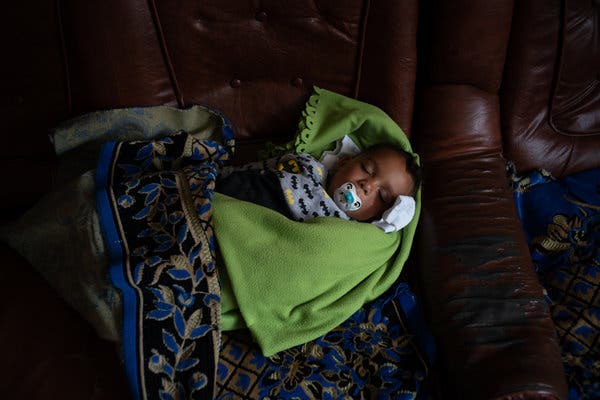
While Quirinius was Governing Syria



What’s Up with Pastor Todd 11-6-19
I’m sitting in the Burbank Hollywood Airport waiting for my flight to Hartford. The screen on the wall chatters with a morning show. Around me people take, then vacate the seats at the gate as their flights board. My flight to Hartford isn’t for a couple of hours, so I have an opportunity to let you know what’s up!
I’m returning after spending a couple of days in Los Angeles. My trip had a dual purpose. The primary purpose was to serve as the UCC delegate to the National Council of Churches Buddhist-Christian dialogue, which took place on Tuesday at Hsi Lai Temple, a Chan Buddhist temple, in Hacienda Heights. The secondary (although a very close second) was to visist my daughter, Olivia, who is a freshman at Occidental College in Los Angeles.
The dialogue was interesting. This is our second time meeting. This is how it goes. About twenty of us, Buddhists and Christians of different flavors, sit at a large oval table in a conference room and listen while members of the group make presentations on different topics that the group has previously identified. I was asked to speak to the topic of “Renunciation and Repentance.” Others topics for this dialogue included Buddhist and Christian perspectives on social justice and Buddhist and Christian perspectives on “ultimate reality.” I could tell that the group was going deeper compared to last dialogue because this time “difference” was allowed to arise in the group.
What do I mean by “difference was allowed to arise?” At one point we were talking about Buddhist reincarnation as it relates to Christian salvation. One of the Christians tried to make a connection between the two concepts. The Buddhist presenter shook his head and said, “No, they are not the same.” The conversation then shifted to a discussion of language and its limitations when faced with ultimate reality, which, by definition, is unspeakable.
The purpose of the Buddhist-Christian dialogue is to build connections across religious differences. The first impulse in building connections is to look for commonalities. We naturally do this when we meet someone new. “Where are you from?” one might ask. “Sacramento,” she says. “Oh, my cousin lives near there,” you say. And on it goes. We relax. There’s a good feeling. We’re not so different after all. And we aren’t. A foundational claim for both Buddhists and Christians is that all of life is connected. But if we stay in this easy place of “we’re all the same,” are we really getting at the truth?
Recognizing difference is vital to genuine connection. Integrity has boundaries. It is able to say both “yes” and “no.” Difference gives energy, variety, and beauty to life because difference is also truth. The English Romantic poet John Keats wrote, “Beauty is truth, truth beauty,—that is all/Ye know on earth, and all ye need to know.” Difference can feel sharp. It can feel scary. “What’s happening? Will we lose our connection? Will we argue? Will we fight?” Healthy dialogue allows both commonalities and differences to arise without getting caught in any of them. Instead, we calmly apprise and appreciate them. Commonality and difference. Connection and disconnection. This is the path to truth and beauty. This is the way of the unspeakable.

What’s Up with Pastor Todd 10-3-19
At First Congregational Church of Granby we’ve been having some wonderful conversations over the past several weeks. We’ve had four “Meet the Minister” meetings with about 40 total attendance with one more to go. This covers close to our active membership. Great participation! In those meetings we have addressed four questions: 1) What brought you to FCC? 2) What keeps you at FCC? 3) What is your vision for the next 3-5 years? 4) What next steps might we take to get there? There have been a wide range of responses, honest and heartfelt, and most have left the meetings feeling a mixture of grief over what was and hope for what might be. I will be compiling the responses and making a presentation at our next “Working Lunch” Sunday, October 20, in Cook Hall following worship. I’m looking forward to deepening the conversation in this time of transition.
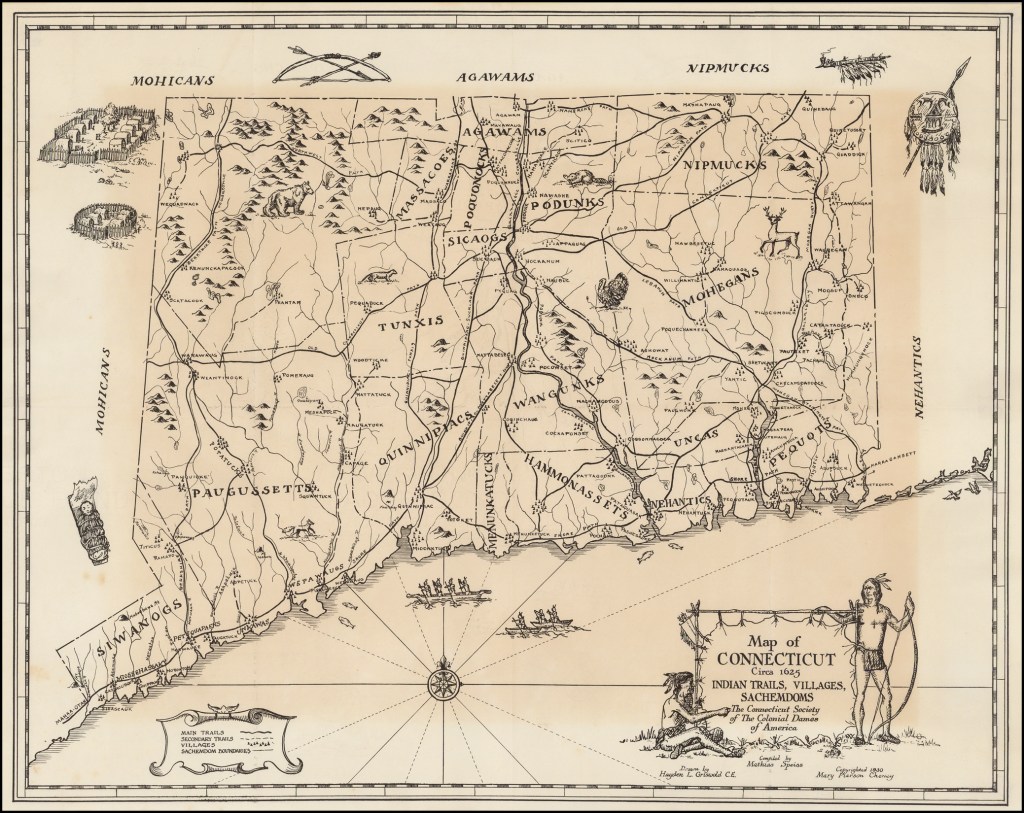
Speaking of “Working Lunch” . . . We had our first Working Lunch this past Sunday, September 29 in Cook Hall. Ann Wilhelm and crew prepared a delicious lunch. Thank you so much! After lunch a group of about 25 church members created a timeline of significant events in the life of the church, in the town of Granby, in the United States, and in our world. We also included our own personal significant events such as baptisms, funerals, weddings, confirmation, and other life moments. It was helpful to take a 30,000 foot view of the movement of events and their interconnection.
Following the creation of the timeline, we made observations, including highlights, lowlights, patterns, things we would like to see continue into the future, and things we might not want to repeat. There were many insightful comments but one that struck me came from Emily Messenger. After reflecting on how people at FCC and other congregational churches tend to get upset and leave, she commented that we should be “learning to make conflict as a way of growing rather than splitting apart.” I thought that was incredibly insightful.
Conflict is normal. God created each of us different with differing perspectives, opinions, and life experiences. If we were all the same, life would be boring. Sometimes churches tell me they have no conflict. To me, this indicates one of three possibilities: 1) They are lying; 2) They aren’t doing anything of any significance; 3) They’re dead. It is also true that conflict handled in an unhealthy manner is the number one reason for decline in congregations. The good news is that we can learn healthy communication practices that will indeed enable us to use conflict as a way of growing rather than splitting apart. The Church Council is recommending we hire consultant and coach Rev. Claire Bamberg to help us with that work. You will have the chance to meet her Sunday, November 17, when she will be preaching and leading worship.
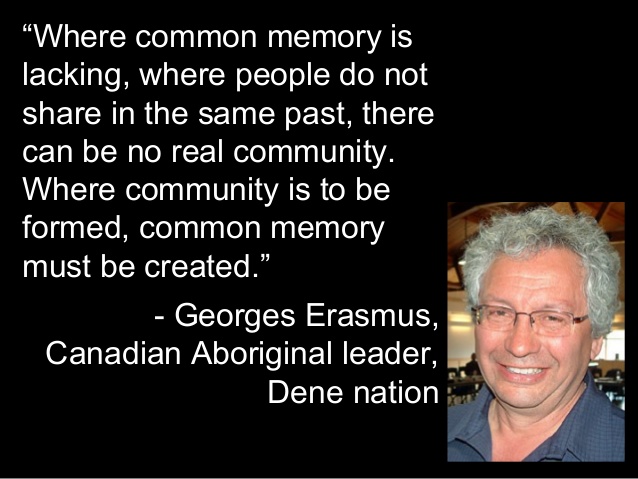
The point of the timeline exercise is to create common memory. Georges Erasmus, a respected Aboriginal leader from Canada, said, “Where common memory is lacking, where people do not share in the same past, there can be no real community. Where community is to be formed, common memory must be created.” Our history is full of ups and downs, but the good news is we can learn from it. And with new learning comes new opportunity for new life.
 Todd Grant Yonkman