
Category: change
What’s Up with Pastor Todd 7-24-20
What’s Up with Pastor Todd 7-24-20
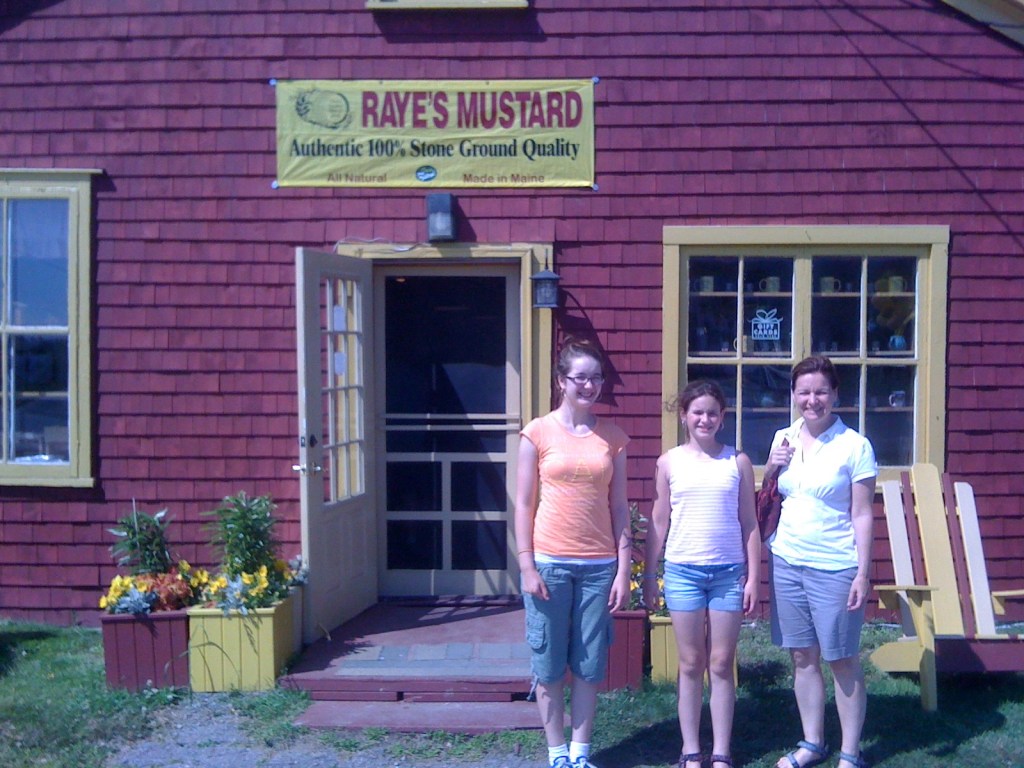
Founded in 1900, Raye’s Mustard, located in Lubec, ME, is the oldest, continuously operated stoneground mustard producer in North America. My wife, Nicole, grew up on Raye’s mustard, which she introduced me to when we met many years ago. As a family we’ve been to Raye’s Mustard and toured the facility. It’s amazing to me that they can continue to operate as a profitable business using century-old technology. Inside you can see the giant stones that still turn on the old wooden band and pulley system. I’m a mustard fan, and I’m convinced: Raye’s mustard is the best.
Raye’s Mustard was founded just as the Maine sardine industry was taking off. Mustard was used as a preservative in the canning process, which allowed the perishable fish to be stored for long periods of time without refrigeration. During WWI, the U.S. government needed a storable source of protein for the troops overseas, so it contracted with Maine sardine producers to provide for the troops. Maine sardines packed in Raye’s mustard were shipped all over the world making the cannery owners rich. Nicole’s great-grandfather was one of those cannery owners. For a time, Lubec, ME was a thriving town. Until the war ended and the sardines were fished out. Today, the sardine canneries are gone. In fact, Washington County, where Lubec is located, is one of the poorest counties in the U.S. But Raye’s Mustard has been able to adapt and survive.
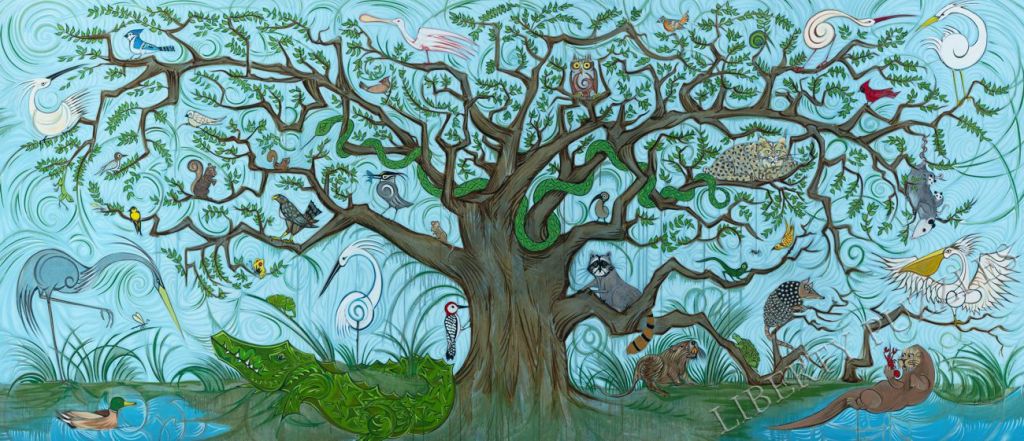
The Scripture for this coming Sunday is Jesus’ parable of the mustard seed: “The kingdom of heaven is like a mustard seed that someone took and sowed in his field; it is the smallest of all the seeds, but when it has grown it is the greatest of shrubs and becomes a tree, so that the birds of the air come and make nests in its branches.” The parable starts off ordinary enough: someone plants a mustard seed. What would Jesus’ first hearers expect to follow? From the mustard seed a mustard plant grows. Mustard is a garden plant. It isn’t a shrub; it isn’t a tree, despite the attempts of later interpreters to fit Jesus’ words into modern categories that “make sense.” The point of the parable is precisely that the kingdom of heaven doesn’t always “make sense”; it doesn’t always follow the “natural order” of things. Sometimes in the kingdom of heaven you plant a mustard seed that becomes “the greatest of shrubs” and then, miraculously, becomes a tree!
It’s the difference between incremental change and discontinuous change. We tend to like incremental change. With incremental change the mustard plant follows from the mustard seed. With incremental change one thing follows logically from the next. We can know what to expect. We can imagine we’re in control. The kingdom of heaven isn’t always like that. The kingdom of heaven is often more like discontinuous change. One plants a mustard seed; one gets a tree. We tend not to like discontinuous change. But are there blessings to be found even in discontinuity? We wanted mustard but we got a tree. And what a beautiful tree! The birds of the air have found a home in it, and their song is beautiful. Discontinuous change isn’t necessarily bad; it’s just unexpected.
The invitation of the parable is to accept the gifts of the kingdom of heaven even if they are unexpected. The collapse of the sardine industry was an economic and environmental disaster brought on by human greed, not divine will. Nevertheless, Raye’s accepted the gifts of the moment, such as they were, adapted, and grew. We find ourselves in a similar moment of disruption, and I can see how we’re adapting and growing: particularly through the Vitality Team and the Tech Team. While no one wants the disruption of a pandemic, the parable of the mustard seed invites us to expect big, unexpected, beneficial things to grow out of what is currently a time of disruption and loss.
The Apostle Paul put it this way: “Now to him who by the power at work within us is able to accomplish abundantly far more than all we can ask or imagine, 21 to him be glory in the church and in Christ Jesus to all generations, forever and ever. Amen.” (Ephesians 3:20-21).
What’s Up with Pastor Todd 6-12-20
What’s Up with Pastor Todd 6-12-20
I recently heard on a news podcast that something like 70% of Americans think our country is “out of control.” I don’t know where you’re at, but this statistic points to a feeling we’ve been noticing around us and perhaps feeling ourselves for some months now. The recent protests around the killings of George Floyd, Breonna Taylor, and Ahmaud Arbery just add to the generalized feelings of chaos, uncertainty, and grief that we’ve all been facing.
Recently I was invited to join a cohort of clergy and lay people to receive training on hwo to coach individuals and congregations through the COVID pandemic. Training began this week and will continue (online, of course) through the first half of July. We’ve been learning to identify and contextualize the component parts of the circumstances we’re facing in order to more effectively address them and help people through this time.
There are some practices I’d like to suggest that may be helpful in dealing with feelings of grief and feelings of being “out of control.” When circumstances feel out of control, it’s helpful to find ways to “stay grounded.” Staying grounded is a big reason why I spend an hour every morning sitting still and silent, minding my breath. Literally sitting “on the ground” is an incredibly effective way for me to feel “grounded.” Circumstances can be swirling about me, but I know there is a stable place of rest that is always present–literally beneath my feet.
How will you “stay grounded?” Another technique for when you feel out of control is to identify and describe in detail five things near you. For me, it’s the IKEA couch supporting my back, the Sisal trunk that I’m resting my feet on, the roar of a motorcycle engine on the street, the sigh of the breeze through the trees, now the sound and smell of rain. Is the world really coming apart? Yes, in some ways the world is coming apart. In others it’s coming together. And through it all like the finest of thread the rhythms of the universe continue completely unbothered by our small concerns. While some things are out of our control, other things are in our control. Sometimes it’s helpful to focus on the things we can control beginning with where we place our attention.
Many of you are probably familiar with the five stages of grief originally identified by Dr. Elisabeth Kubler-Ross some decades ago: denial, anger, depression, bargaining, acceptance. Perhaps you weren’t aware that later in her career she identified a sixth stage: meaning-making. Meaning-making is the stage of grief that produces creative new life out of death. For example, parents of the Sandy Hook shooting victims creating the organization Everytown for Gun Safety. Or Philonise Floyd, brother of George Floyd, who was recently killed in an encounter with police, testifying before congress in support of police reform.
In the context of our congregational life and our individual lives, I’d like to suggest a powerful question as a tool for meaning-making: “In this time, what are you discovering is ‘essential’ as opposed to merely ‘traditional’?” In other words, what things were we doing before COVID out of mere habit that we’ve found we can do without moving forward? What things have we found we can’t do without that we want to give extra time and attention to moving forward? Loss without a sense of meaning is unbearable. Loss that leads to a simpler, happier, more productive life offers each of us an invaluable opportunity.
Revitalization, Redevelopment, Restart
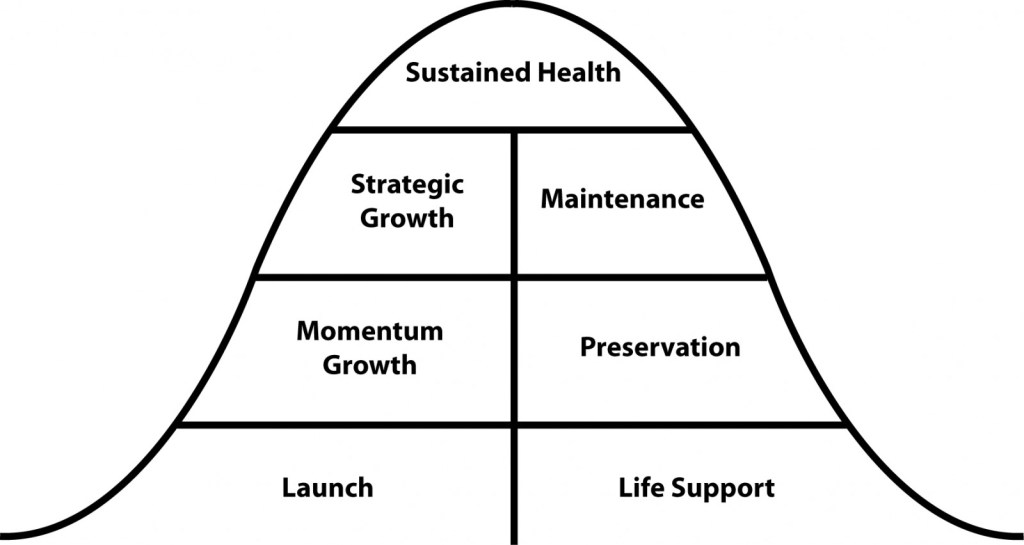
Recently a colleague asked if there is a resource that deals with the topics of church redevelopment, church revitalization, and church restart. I’m not aware of any that bring all of these interventions together in one place, so here is my attempt at a (very) quick summary with references for further reading.
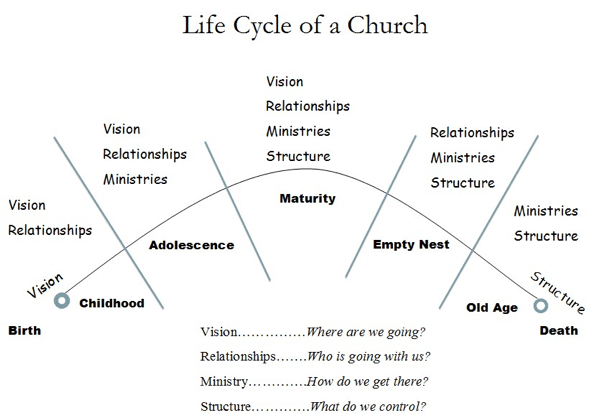
1. Church revitalization, church redevelopment, turnaround are all terms used for interventions with congregations on the decline side of the congregational life-cycle. The level of intervention depends upon how far along the decline path the congregation is. As the congregation moves further along the decline path the options for shifting to a growth trajectory become fewer and more dramatic. The lesson: don’t wait to make the changes needed for growth. The avoidance of a little discomfort now only means you’re compounding pain in the future. For more details on these dynamics see:
Can Our Church Live? Redeveloping Congregations in Decline by Alice Mann
Reconstructing Church: Tools for Turning Your Congregation Around by Todd Grant Yonkman
2. Church Restart. At a certain point on the decline-side of the church lifecycle a congregation reaches a “point of no return” where the financial and human resources are depleted to the point that turning the church around is no longer possible. The good news is that resurrection is still possible. Death is inevitable, but depending on local circumstances and how the dying process is managed, a range of rebirth possibilities is available. For more details on different models of church restart see:
Dying to Restart by Weins and Turner
What’s Up with Pastor Todd 4-24-20

What’s Up with Pastor Todd 4-24-20
It’s difficult to know what the lessons of the week will be on Monday morning. This is always true. Human beings have a notoriously mixed record in the future-predicting business. Last week was a great example. The first part of the week was what has become “normal schedule.” Monday: get “to do” list from Sue, start at the top with creating Zoom links for the week’s program schedule, write “What’s Up with Pastor Todd,” do the Monday “Daily Devotional,” create staff meeting agenda, write worship for the coming Sunday, and so on.
By Thursday all my plans for the weekend had been blown out of the water. My oldest daughter, Fiona, got a message from her boyfriend, Riku, that his building was under emergency evacuation. Within 30 minutes Fiona and I were driving to Chicago to pick him up and bring him to Connecticut. This circumstance changed meeting plans, worship plans, sleeping and eating plans. What was up with Pastor Todd on Friday was very different from What was up with Pastor Todd on Monday. Here I am today facing yet another Monday and asking, “What’s Up with Pastor Todd?”
I suppose one solution would be to wait until Friday to write my column, but I’ve found it a helpful discipline to begin the week with a self check-in. And the truth is, even in an unusually disrupted week like the last one, parts of what I had written on Monday were still relevant when it came time to preach the following Sunday. My Monday self check-in ended up being a gift to my very different reality seven days later.
There’s a common principle of spiritual practice that encourages us to “be here now.” Mindfulness teaches us to “stay in the present moment.” But I find that this doesn’t exclude looking forward and looking back. Rather, it includes both and gives a stable place from which to reflect on the past and anticipate the future.
Daily Devotional 4-3-20
What’s Up with Pastor Todd 1-23-20
What’s Up with Pastor Todd 1-23-20
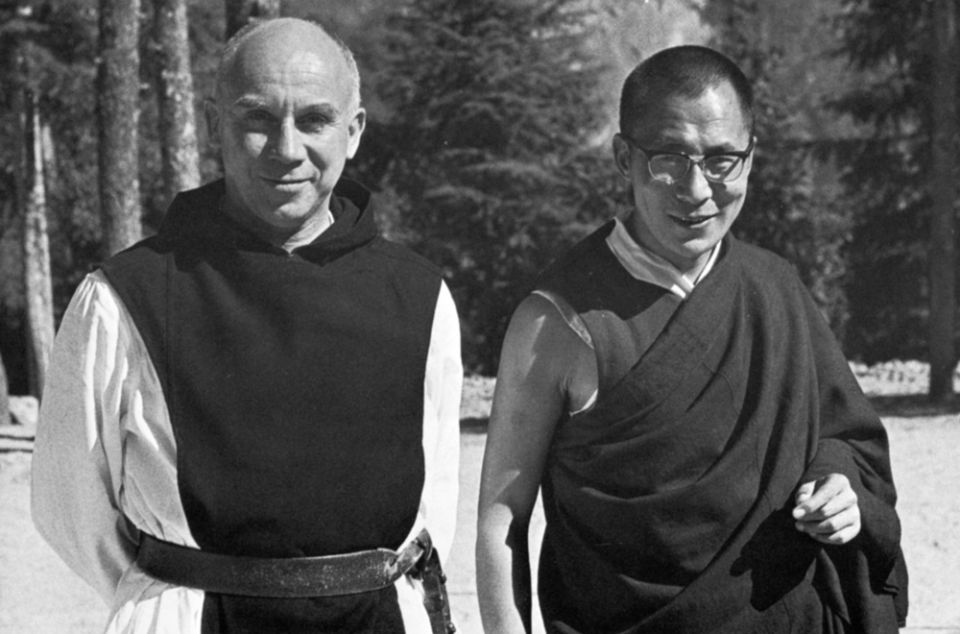
The above video is from church planter and consultant, Neil Cole. He is talking about a distinction between “movement” and “institution” that I first encountered in a talk by pastor, author, and activist Brian McLaren when my wife, Nicole, and I were church planters in Indiana.
I forget the details of McLaren’s talk, so I will give you my version of it. A social movement is a “loosely organized but sustained campaign in support of a social goal, typically either the implementation or the prevention of a change in society’s structure or values” (Encyclopedia Brittanica). An institution is a set of rules, norms, patterned behaviors, and organizational structures designed to sustain the social gains of movements and pass them on to the next generation.
McLaren argued a dynamic relationship between movements and institutions. Each needs the other. Social movements without institutional structures cannot sustain themselves. Institutions that are not periodically disrupted by social movements eventually lose their vitality and die. A powerful recent example of this dynamic in America is the Civil Rights Movement.
McLaren’s point is that Christianity can be understood in terms of movements and institutions. The Gospels tell us that Jesus started a movement. It was only many years later when the early Christians came to understand that Jesus wouldn’t be returning within theirs or their children’s lifetimes that the instituional forms of the church began to emerge. And since that time the movement-institution dynamic has been at play in Christian cultures.
Congregational transition engages this movement-institution dynamic in a complex, improvisational way. Often congregations in transition are dealing with institutional structures that are falling apart because they just don’t “work” anymore. Instead of working harder and faster to patch up what is no longer functional, transition work allows much of that structure to fall away. Some of it, however, may have value for the church that is emerging. So we sort through what we’ve inherited and decide what to keep and what to let go of.
Meanwhile we shift into “movement” mode. We focus on relationships and vision: that is, we build authentic relationships with people who are not yet members of the church, and we share a vision of changing the town of Granby for the better.
What’s Up with Pastor Todd 11-26-19
What’s Up with Pastor Todd 11-25-19
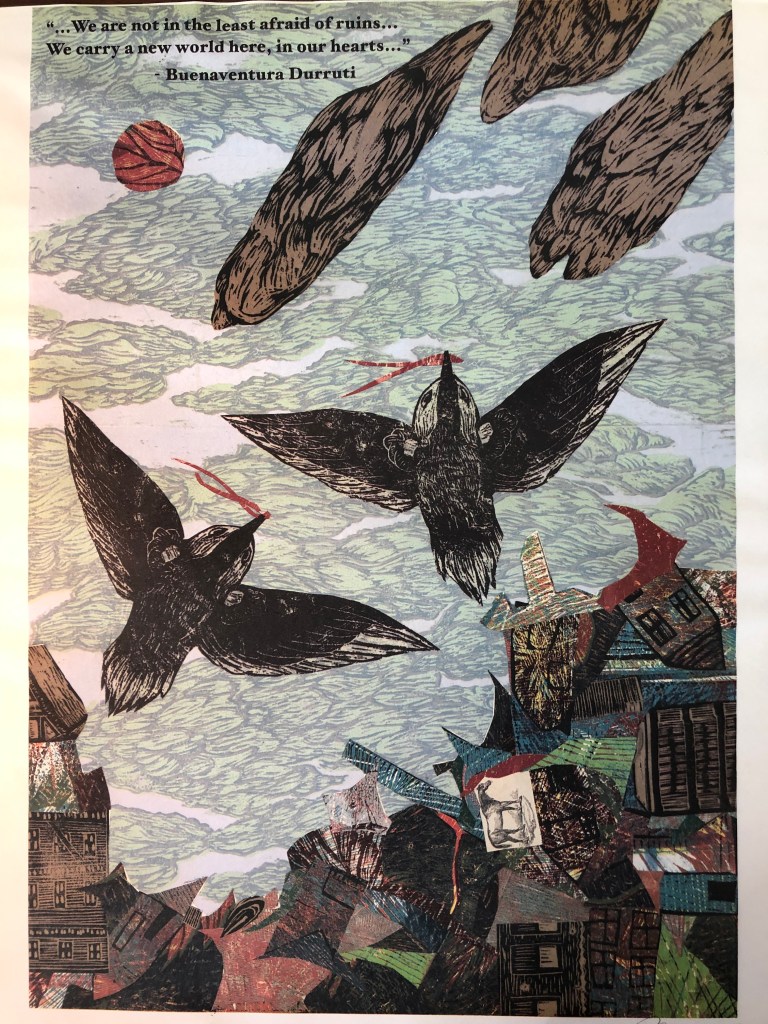
A print of bricolage artwork that hangs on the wall of my church office speaks to my understanding of hope. It shows two sparrows with twigs in their beaks flying above a jumble of houses and buildings, some tipped over. The landscape is jagged clump of fragments above which float fluffy green-gray clouds and an orange sun that looks a bit like a basketball. (I don’t know what the weird, brown, rock-looking things in the sky are. Giant meteors?) It’s not a particularly attractive piece. I bought it primarily for the quotation at the top: “. . . We are not in the least afraid of ruins . . . We carry a new world here in our hearts . . . .”
The quote is from Buenaventura Durruti. I didn’t know who Durruti was when I purchased the print from a funky little craft store in downtown Providence. At the time I was pastoring a dying congregation through a major transition, and the words along with the image resonated with me. The congregation knew that things were falling apart. They saw all the empty pews every Sunday. And they were afraid. Their fear, however, just made things worse. The more they tried to control the situation, the faster things deteriorated. Part of my job was to help the congregation calm down, step back, and accept that things would never be the way they were. The spiritual practice of simply sitting in the ruins of what once was creates a space in which a new world can arise. Later I learned that Durruti died fighting Facists during the Spanish Civil War. Key to Durruti’s struggle for a more just world was the ability to courageously face the ruins while carrying a new world in his heart.
The sparrows in the bricolage remind me of Jesus’ teachings on fear. In the Gospel of Matthew he says: “Are not two sparrows sold for a penny? Not one of them will fall to the ground apart from your Father . . . So do not be afraid; you are of more value than many sparrows” (10:29, 31). Durruti also found courage in Jesus’ words, specifically the promise that “the meek shall inherit the earth.” Durruti could face the ruins because he trusted the promises.
Once in a while as I work with a church in transition a member uncomfortable with change will say, “You are ruining my church.” That is 100% untrue. All I am doing is facing the falling apart that is already underway and inviting others to do the same. Why? Because I am committed to living not some fantasy world where nothing ever changes but in the reality that a new world is possible if we get out of the way long enough to let God bring it forth.
A new world is absolutely possible. It can’t be controlled. It can’t be manufactured. It emerges on it’s own timetable and in it’s own form. Our job as Christians is to observe and nurture it. That is difficult to do if we allow either despair or anxiety to take over.
Hope is the theme for the first Sunday in Advent. The difference between Biblical hope and false hope is that Biblical hope courageously faces the impermance of every human endeavor. There are always ruins to face because always somewhere something is falling apart. Biblical hope as opposed to false hope trusts not humanity’s ability to create the world we long for but in God’s ability to keep God’s promises and our ability to cooperate with God’s work in our world. In the immortal words of songwriter Leonard Cohen:
Ring the bells that still can ring
Forget your perfect offering
There is a crack in everything
That’s how the light gets in
Maybe your new world isn’t in some far off place at some far off time. What if it’s shining through the ruins right now? Will you notice it? Will you nurture it? Will you, even now, celebrate the abundance to come?
What’s Up with Pastor Todd 10-30-19
What’s Up with Pastor Todd 10-30-19
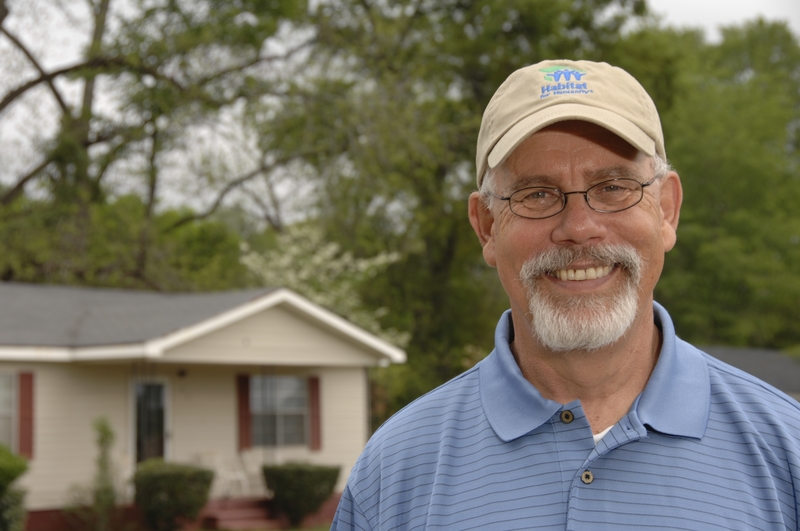
This coming Sunday, November 3, First Congregational Church of Granby welcomes guest speaker Clive Rainey to our 10am worship service. Clive is Habitat for Humanity’s “first volunteer. Clive joined founders Millard and Linda Fuller soon after they founded Habitat in 1976. You can read more of Habitat’s story here. Clive has served in many different capacities and played a key role in the development of the organization. In his 40 + years with Habitat, Clive has lead thousands of builds all over the world.
When asked “What is the first feeling you have when you put a hammer in your hands?’ Clive responds, “A feeling of power! This hammer is more powerful than guns or bombs or terrorism or dictators; more powerful than poverty or hatred. With this hammer I can change the world! I can begin that change with this house, this family, this neighborhood, this community, this country.” I think Clive would agree that the power he is speaking of does not reside in the hammer itself but in what the hammer represents. In the context of Habitat, the hammer represents a particular approach to changing the world called “partnership housing.”
It’s Habitat’s model of partnership that has made it truly transformative–the kind of organization that high capacity leaders like former president Jimmy Carter would give their lives to. My understanding of the model is that it’s less about charity and more about solidarity. When one is building a house in partnership with a family, a neighborhood, and a community, a context is created in which authentic relationships across race, class, and cultures can emerge. Charity keeps social hierarchies in place. There is the helper and the helped. No matter how the situation of the helped might be changed, the helper maintains her status as “not the helped.” In partnership characterized by solidarity, it’s clear that we’re all in this together. My fate is inextricably linked to yours. In the case of Habitat, clients are literally co-builders with volunteers. This social leveling creates an opportunity–even if for a moment–wherein helper and helped have the opportunity to meet together as equals in an authentic relationship of mutual love and respect. The helped is no longer an “object of charity,” but a full human being, no longer “other,” but, in some sense, me.
I have found that solidarity can scare the pants off most white, middle class, mainstream Americans. We don’t want to consider the possibility that given different circumstances, we might need housing assistance. We don’t want to consider the possibility that our relative privilege has little to do with our own personal worthiness and much more to do with chance and the fact that we live in an exploitive system that tends to benefit the few at the expense of the many. We don’t want to give up our sense of status and superiority. We don’t want to stand in the place of those who have experienced misfortune, discrimination, or exploitation. My guess is that that’s why there is a lot of charity in the world. Much rarer is true partnership. Habitat has developed an authentic, partnership model.
For me, solidarity, not charity, offers an opportunity for a more authentic walk with Jesus, who “though he was in the form of God, did not regard equality with God as something to be exploited, but emptied himself, taking the form of a slave, being born in human likeness. And being found in human form, he humbled himself” (Philippians 2:7-8). It turns out that the model of authentic partnership is also a model for authentic Christianity.
For critiques of the charity model read Winners Take All: The Elite Charade of Changing the World by Anand Giridharadas and Toxic Charity: How Churches and Charities Hurt Those They Help, And How to Reverse It by Robert D. Lupton. I hope you will join us this Sunday to meet Clive and learn the meaning of authentic partnership.
What’s Up with Pastor Todd 10-23-19

What’s Up with Pastor Todd 10-22-19
Following worship this past Sunday we had the second installment of our monthly “Working Lunch” program at First Congregational Church of Granby. This month we focused on a report of our Meet the Minister meetings. 47 church members participated in five Meet the Minister meetings over a period of several weeks. An intentional effort was made to invite the participating of both more active and less active members. Each meeting addressed four questions:
- What brought you to FCC Granby?
- What keeps you at FCC Granby?
- What would you like FCC Granby to be in 3-5 years?
- What steps might we take to get from here to there?
Responses were recorded and then tabulated through a method of qualitative analysis. You can read a full report of the results here.
Top line summary:
- What brought you to FCC Granby? Sunday school for our kids (17 mentions).
- What keeps you at FCC Granby? Frienships/”people” (13 mentions).
- What would you like FCC Granby to be in 3-5 years? Merge South Church and First Church/a new combined church with new pastors, new mission, new space more that fits new mission (11 mentions).
- What steps might we take to get from here to there? Get out in community/Invite people (9 mentions).
The response to the first question is easy to understand in light of what FCC Granby and the wider culture used to be. Most participants joined the church when they were young parents. It was generally thought in the wider culture that some sort of exposure to religion was a good thing for children. So they looked for a vibrant Sunday school program and found one at FCC Granby. Now those kids are adults and are either moved away or no longer find church relevant. Newer generations have little or no exposure to church. The wider culture no longer values religion the way it used to. Today we can no longer count on young families with children to find us. We need to put in the hard work of connecting with them.
The response to question two is important. Declining churches are often faced with hard choices due to limited resources. This raises a foundational question: What is the “church?” If a church decides that what it really is is the building, its options for creating a sustainable future are severely limited. Too often, the church ends up closing and selling its beautifully maintianed building to someone else. If the church, however, is the people, for whom the building is a resource for ministry, the church has many more options for creating a future for itself.
The response to question three inspires me. It says that many in the core, active membership of the church see the need to do something big to fundamentally change the decline trajectory of the church. Merger is the most obvious option, but what shape that might take remains unclear.
Response to question four may seem at odds with the response to question three, but I don’t see it that way. I don’t see a merger possibility as “throwing in the towel,” so to speak. I’ll say it again, if the vision of merger is tying one “Titanic” to another “Titanic,” we’re wasting our time. If, however, it is combining resources to create a new mission of reaching new people and having a greater impact on Granby and beyond, then it’s worth it. The time to begin building that new mission is now.
 Todd Grant Yonkman