What’s Up with Pastor Todd 4-3-30

What’s Up with Pastor Todd 4-3-20

It’s week two of the stay at home order for the State of Connecticut. I’m sitting on the three season porch where I’ve spent the day in Zoom meetings. Late this afternoon I spent an hour on what has been a four year project of cleaning up our overgrown backyard. Otherwise these four walls have defined the limits of my physical movements. Spiritually, I’ve been preparing for Palm Sunday.

When I was a kid, Palm Sunday was the warm up for Easter. I remember lining up before worship in the Narthex with dozens of other kids waiting to receive my palm branch. When the congregation stood and the organ played the introduction to “All Glory, Laud, and Honor,” our Sunday school teachers led us in a palm parade down the center aisle. The celebration was loud, grand, and performed with a packed house. It felt like the time my daughter’s fifth grade team won the Downeast Maine girls basketball tournament. Following the championship game the town firetruck led a parade down Main Street. Folks lined frigid streets, dark already at 4pm, to cheer the victors. There’s nothing so grand as supporting the winning team. And there’s nothing so innocent and blissful as children leading the parade.

I love the blissful innocence of the children’s Palm parade. But I can’t shake the heartbreaking irony of the Palm Sunday story. The same cheering crowds would be calling for Jesus’ crucifixion just days later. So if the Palm Sunday story is the story of Jesus’ “Truimphal Entry” into Jerusalem, the lesson seems to be that, at least in human terms, utter defeat can follow closely on triumph’s heels. But if we sit with the story for a while–for me that “while” is closing in on 50 years–we might widen our view and consider the possibility that God’s activity to redeem humanity extends beyond our conventional, self-centered definitions of triumph and defeat.

In this time of global pandemic the range of human potential is being put on display much the way it was that holy week when Jesus made his final journey to Jerusalem. We bear witness to heroic doctors, nurses, caregivers, healthworkers, and first responders putting their lives on the line for the sake of others. We notice common kindnesses among neighbors. Many of us are making an extra effort to connect, to help, and to encourage. Sadly, but perhaps not surprisingly, we also witness humanity’s less attractive tendencies: the tendencies of politicans to posture, the tendencies of rich people to use their privilege to serve themselves, and the tendencies of rest of us common folks to hoard toilet paper and Lysol wipes. 

Our job as Christians approaching Palm Sunday is to widen our view and to deepen our understanding: to cheer with the children, to let our hearts break as we recognize ourselves in the crowds that so quickly turned on Jesus once they figured out he wasn’t bringing the conventional, human triumph they expected, and to step beyond our limited ideas about triumph and defeat into the boundless, redeeming love of God. 

What’s Up with Pastor Todd 3-13-20

What’s Up with Pastor Todd 3-13-20

Congratulations! You’ve made it to the third week of Lent! We’re haflway through our season of fasting and prayer that ends Easter Sunday! How’s your practice been going? Last Sunday Connecticut shifted to Daylight Savings Time, so now when I get up for my 35 minutes of meditation-prayer, it’s not only quiet but also dark in the house. The pets scamper and wag until I fill their bowls with breakfast. Then I sit on my cushion while morning light slowly fills the sunporch. It sounds lovely. And it is lovely. But while the universe simply does it’s thing without anxiety or self-centered thought, I’m faced with my racing mind. I rehearse conversations I had the night before: “I should have said this!” I write sermons. I add to my to do list. Part of the value of sitting still in silence is accepting the mess that is my own mind. This is important because accepting my own mess is the first step in taking responsibility for it. 

While I sit as still as possible I bring my attention to the breath. (Remember: “breath” and “spirit” are the same word in the Bible’s original languages!) My mind inevitably scampers away like a puppy that isn’t yet housebroken, but that’s OK. Puppies scamper. Minds wander. That’s just the nature of puppies and minds. Nevertheless, eventually attention returns to the breath. The longer I remain still, the longer attention remains on the breath. Mind stills. The puppy settles down. I notice a clear, calm space near my heart center. Not everything’s a mess after all. A pure, unchanging oasis exists. I can access it. And so can you.

When my youngest daughter, Olivia, was old enough, Nicole and I invited her to take responsibility for tidying up her own bedroom. Mostly this meant putting her toys in the toybox and books on the bookshelf. Nicole and I did this not because we were trying to be mean, horrible parents, but because we believed (and still believe) that learning to take responsibility for your own mess is a key piece of becoming a mature adult. Nevertheless, Olivia spent hours sitting in the middle of her mess screaming and crying and yelling, “I can’t do it, daddy.” Hoping that Nicole or I would relent and clean up her mess for her. It was tempting. Who wants to listen to a child scream for hours on end? 

Instead, I would sit with her in her mess, point to a toy, and say, “Pick up that toy and put it in the box.” When she was truly and finally convinced that I would not clean up her mess for her, Olivia might venture to put a toy in the toybox. Then I’d point to another and repeat the process. It was excruciating and time consuming. No doubt it would have been quicker for me to clean her room for her. But I loved her, and I wanted her to grow into an adult that could take care of herself, so I persisted.

Our Scripture for this coming Sunday comes from Exodus 17. It is one of many “complaint” stories from the Israelites’ wilderness journey. Compared to the reliably brutal structure of Egyptian slavery, freedom in the wilderness was messy and anxiety provoking. The Israelites complained against Moses saying they would rather go back to Egypt than continue through the wilderness to the Promised Land. God’s response to the people’s complaints varied from providing for them to punishing them for their lack of faith.

A key to successful transition is handling anxiety and the resulting complaints. Some complaints express legitimate needs of the community. Even though Olivia was old enough to clean her room, she was not old enough to make her own supper. The need for supper was a legitimate need, so Nicole and I fed her supper, of course. Sometimes, however, complaints arise from emotional or spiritual immaturity. In this case, it is incredibly important for leadership NOT to give in to complaints. Rather, compassionate leadership will equip individuals with the tools to tend to their own mess. Just like each of us has a role to play in maintaining a safe space in church by taking responsibility for washing our own hands and managing our own health, each of us has a role to play in maintaining a safe emotional space by finding effective ways to manage our own anxiety.

Worship Resource for Epiphany 5A based on Matthew 5:13-20

God of love,

God of light,

God of life,

You made us light. You made us for love. Nothing can change that. Sometimes we lose touch with who we are. Sometimes we forget why we’re here. Teach us simply to open. Scrape away the layers of anger, doubt, and bitterness so that our light can shine before others. Amen.

How to Handle Anger

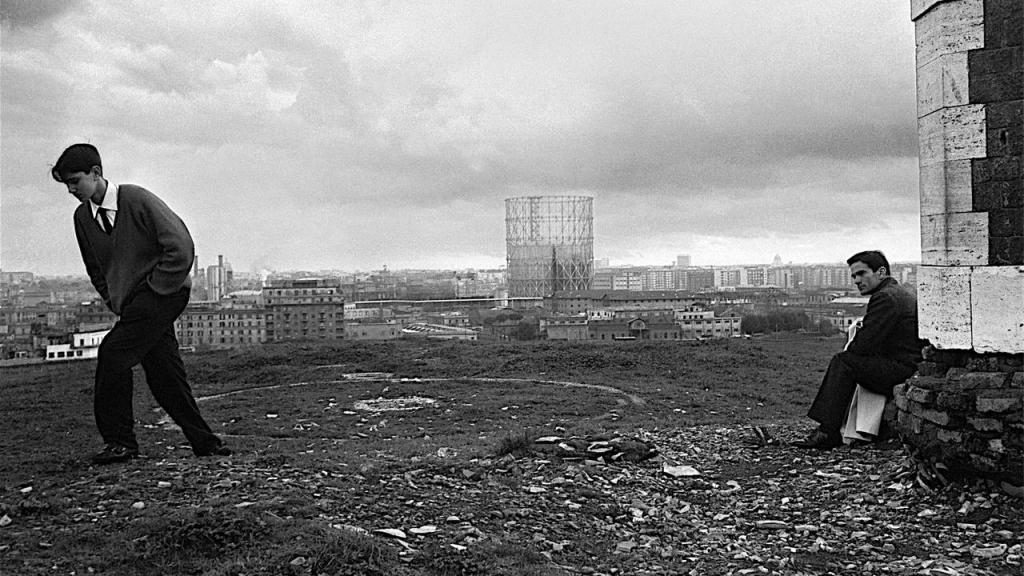
 A still from Amore e rabbia (Love and Anger), a 1969 Italian-French anthology film
Sermon by Rev. Dr. Todd Grant Yonkman at First Congregational Church of Granby 16 February 2020

Worship Resources for Epiphany 6A based on Matthew 5:21-37

Call to Worship                                                                                      

Jesus said, “Love God with all your heart, soul, mind, and strength.”

Jesus said, “Love your neighbor as yourself.”

We do our best to love others.

Sometimes we become angry, even with those we love.

Holy God, teach us how to handle anger.

Teach us how to speak the truth in love.

Prayer of Dedication                                                                            

Holy God, we dedicate our offerings in service of love and justice. Amen.

What’s Up with Pastor Todd 2-14-20

What’s Up with Pastor Todd 2-14-20

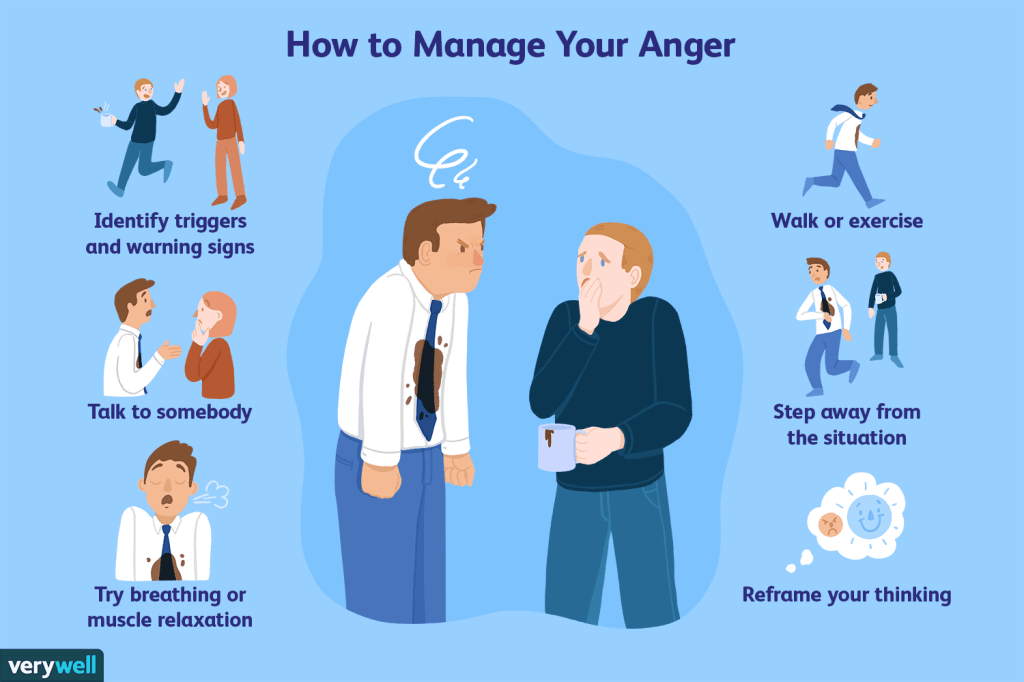
Handling anger is difficult to do well. Buddhism, for example, identifies anger (along with greed and ignorance) as one of the “three poisons.” In the Sermon on the Mount, Jesus says, “everyone who becomes angry with his brother is liable to judgment.” Anger is a human emotion. We feel it, often before we’re consciously aware of it. Anger “overcomes” us, floods our neurotransmitters, narrows our vision, sets our hearts racing, “boils” in our guts. It activates the “fight or flight” response in the most primitive parts of our brain. Anger can be incredibly destructive whether we express it outwardly in hurtful words and actions or turn it inward where it manifests as depression, bitterness, and physical ailments. So how do we handle it?

Although I doubt they intended to, my family taught me that anger was scary and shameful. They didn’t teach me this explicitly. Like all children, I learned my lessons on anger by watching my caregivers (who, in turn, learned how to handle anger from their caregivers.) We were a Dutch immigrant family that tended toward emotional reserve. As an adult I can see that there was a lot of anger under the surface. I’m grateful I didn’t witness any physical violence or verbal abuse. Instead rage seethed underneath and manifested as physical absence, cutting remarks, alcoholism, infidelity, lying, and other passive-agressive behaviors. This disconnect between how we as a family presented ourselves publicly as happy and healthy and the chaos churning behind closed doors created its own challenges for me as I became an adult.

As an adult I’m still very much learning how best to handle my anger. For me, meeting the reality of anger begins and ends with awareness. It was a huge shift for me simply to admit that I’m incredibly angry . . . for all kinds of reasons. These days most of my anger is in the form of “moral outrage.” I anger myself when I notice my own failings as a Christian. I notice loving churches that have so much to offer their communities “hiding their light under a bushel” while mean, vengeful, and bigoted Christians spread their message far and wide and I get very, very angry. Mostly I’m exhausted by the moral outrages of our current politics, but when our government puts children in cages or when 26 first-graders are gunned down in their classroom and politicians cry “2nd amendment” or when I notice the casual, day-to-day violence and racism that implicate all of us who vote, pay taxes, and work for the improvement of our communities, my anger flares up, and I say something.

Just creating the psychic space where anger can come into view increases the likelihood that I can engage it productively. It’s become a joke around our house when I’m moping and acting out of sorts for my wife to say to me, “Now Todd, use your words.” Just saying “I’m angry” opens the door for conversation that can create the conditions whereby anger, which is simply a form of psychic energy, can be directed toward fixing a situation that is not as good as it could be.

Anger arises in the context of love. Mr. Rogers put it this way, “It’s the people we love the most who can make us feel the gladdest and the maddest! Love and anger are such a puzzle!” Jesus’ command to “love your neighbor as yourself” is the context for his teaching on anger. This week at First Congregational Church of Granby we will stand close enough to the flame of anger to benefit from its warmth and energy yet at a respectful enough distance that none gets burned.