Pastor’s Page February 2020

Pastor’s Page Feb. 2020

February is discernment month for First Church Granby. Feb. 9 following worship will be our annual congregational “discernment” meeting. I think it’s great that FCCG has one meeting a year devoted to the spiritual practice of discernment. There are many different approaches to discernment. You can find a number of different examples in the Bible: prayer and fasting, casting lots, consulting prophets, rituals involving sacrifice, pilgrimage. Gideon famously put fleece outside overnight to discern what God wanted him to do in battle. Moses ascended Mount Sinai to receive the 10 commandments. We won’t be doing any of these things. We will be doing prayer and conversation. But what all these have in common is the ancient human attempt to determine what God wants or what God is up to, in more formal language, “divine will.” 

Divine will is a notoriously difficult thing to determine. The Bible is full of stories of individuals who claimed to know the divine will when, it turns out, they didn’t. The results are usually unpleasant. So humility is the first and most important quality to bring to discernment. The second is patience. Scripture says that “the Spirit moves where it will.” God answers in God’s good time. And sometimes the answer is silence. In which case, we might decide to sit with the question a while longer. But I want to encourage us that it is indeed possible to discern God’s deepest longing for us. I’ve experienced it. I’ve witnessed it happen in congregations. We’ll know we’ve nailed it when there is a moment of connection, joy, and release. God’s will may not be pleasant. God may not be inviting us to do something we particularly want to do. But there is joy and release knowing it’s the right thing to do. There is a deep sense of connection knowing that in the long run discerning and doing God’s will leads to abundant life in this world, and eternal life in the world to come.

So don’t miss worship Feb. 9 and stay for the meeting after. Our transition coach, Claire Bamberg will be joining us and facilitating a discernment discussion on the topic of “What is Your ‘Why’?”

What’s Up with Pastor Todd 1-23-20

What’s Up with Pastor Todd 1-23-20

The above video is from church planter and consultant, Neil Cole. He is talking about a distinction between “movement” and “institution” that I first encountered in a talk by pastor, author, and activist Brian McLaren when my wife, Nicole, and I were church planters in Indiana.

I forget the details of McLaren’s talk, so I will give you my version of it. A social movement is a “loosely organized but sustained campaign in support of a social goal, typically either the implementation or the prevention of a change in society’s structure or values” (Encyclopedia Brittanica).  An institution is a set of rules, norms, patterned behaviors, and organizational structures designed to sustain the social gains of movements and pass them on to the next generation. 

McLaren argued a dynamic relationship between movements and institutions. Each needs the other. Social movements without institutional structures cannot sustain themselves. Institutions that are not periodically disrupted by social movements eventually lose their vitality and die. A powerful recent example of this dynamic in America is the Civil Rights Movement. 

McLaren’s point is that Christianity can be understood in terms of movements and institutions. The Gospels tell us that Jesus started a movement. It was only many years later when the early Christians came to understand that Jesus wouldn’t be returning within theirs or their children’s lifetimes that the instituional forms of the church began to emerge. And since that time the movement-institution dynamic has been at play in Christian cultures.

Congregational transition engages this movement-institution dynamic in a complex, improvisational way. Often congregations in transition are dealing with institutional structures that are falling apart because they just don’t “work” anymore. Instead of working harder and faster to patch up what is no longer functional, transition work allows much of that structure to fall away. Some of it, however, may have value for the church that is emerging. So we sort through what we’ve inherited and decide what to keep and what to let go of. 

Meanwhile we shift into “movement” mode. We focus on relationships and vision: that is, we build authentic relationships with people who are not yet members of the church, and we share a vision of changing the town of Granby for the better.

What’s Up with Pastor Todd 1-16-20

What’s Up with Pastor Todd 1-16-20

I spent Monday, Tuesday, and Wednesday morning this week on meditation retreat. I came home and took a nap. Why? Because sitting on the floor in silence while maintaining as still a posture as possible for 10 hours a day is, in fact, exhausting. Why do I do it? Scripture says, “Be still and know that I am God.” Humans like to move. We rush around doing this and that. But even if we’re “vegging out,” our minds jump from this thought to that thought. The practice of meditation is stilling the body and mind together to become completely still like water on a pond. It turns out that the Bible is true! I can attest that cultivating stillness does, in fact, create circumstances in which God can be encountered in a profoundly life-changing way.

When asked my purpose, I tend to say “Helping people connect to God.” How can I help people connect to God if I am not myself living out of that connection? As a personal purpose statement, “helping people connect to God” seems to work for me. Working with our transition coach, Rev. Dr. Claire Bamberg, has taught me to ask a different question, namely, what is your “Why?” I realized this week that “helping people connect to God” doesn’t answer the “why” question. Why help people connect to God? Great question!

I don’t know the answer, yet, exactly. Maybe something like this: I know the pain of being separated from one’s deepest longing. I also know the joy of connection. A world of joyful, connected people is a world I want to live in. 

As a congregation articulating a “why” is vital to our future. More important than what we do is being clear why we do it. Claire will be leading us in a congregational conversation about our why. In the meantime, I strongly encourage you to watch these short videos and think about what is your “why” and what is FCC Granby’s “why.” The videos show why the question of “why” is so important.

What’s Up with Pastor Todd 1-7-20

What’s Up with Pastor Todd 1-7-20

My family and I had a wonderful holiday together in Windsor. We took some time off to focus on reconnecting. Fiona and her boyfriend (who is from Tokyo and stayed with us this winter break) cooked for us. My sister and her family of 6 (!) stayed with us for a week. They filled our sleeper sofas and bunk beds. Olivia directed the Christmas pageant here at FCC Granby and worked lifeguarding shifts at the Jewish Community Center. Even in this age of virtual reality and social media, there is no substitute for simply sharing space. While physical proximity does not guarantee intimacy, it is a key factor for cultivating closeness. (Which, just to drive the point home, is why there is no substitute for dragging your _____ to worship on Sunday morning.)

This week I’ve been settling back into a work rhythm. The answer to “What’s Up with Pastor Todd?” is “a lot.” I’m sitting in my office with the “to do” list Office Manager Sue prepares for me every week, to which I typically add a dozen or so more items. My view is that if my “to do” list doesn’t exceed my ability to complete it, I’m not living big enough. How do I avoid a constant state of overwhelm? Prioritizing and letting go. Even so, sometimes it’s difficult to prioritize. So many things demand attention. In these moments I use a tool I’ve learned in many years of meditation practice: focus on what’s in front of you. Sounds simple enough. But then the question becomes How do I get the things in front of me that are most consistent with my goals and values? This brings me back to the practices of inviting Sue to partner with me in creating a “to do” list and literally putting it on my desk where I will see it. This brings me back to the “big rocks” of Scripture study, sermon preparation, writing liturgy, namely, the spiritual practices that ground me in what is of ultimate importance.

One of my favorite Buddhist Scriptures is called “The Five Remembrances.” It’s part of an ancient text attributed to the Buddha entitled “Subjects for Contemplation.” The fifth remembrance is this: “My deeds are my closest companions. I am the beneficiary of all my deeds. My deeds are the ground on which I stand.” The only place to act is here. The only time to act is now. What are you doing right here, right now? What practices help you align your deeds with your values? Who are your “closest companions?” Are they hindering you on your spiritual journey or propelling you forward? What is your “ground?” Is it a solid place on which to stand?

What’s Up with Pastor Todd 12-24-19

What’s Up with Pastor Todd 12-24-19

This Advent season we’ve explored ways to cultivate hope, peace, joy, and love in our lives. The cultivation of these qualities creates an optimal environment for the Spirit of Christ to be born in our lives. That’s the idea, anyway. This, of course, isn’t a one time or even an annual process. The cultivation of hope, peace, joy, and love is a practice we as Christians are invited to continue every day because our circumstances are continually changing and every day is an opportunity to refresh these qualities in our lives.

Nevertheless, as I prepare for Christmas Eve services, I’m faced with the question, What is this “Christ-event”–as some theologians call it–anyway? What am I preparing for? 

Jesus the Christ was a real, historical person who was born some two millennia ago around 6 A.D., most scholars think. Only two of the four gospels contain birth narratives. Both birth narratives contain a mix of historical and mythological details told not primarily for the purpose of documenting historical “truth” in the modern sense but for the purpose of expressing theological truth rooted in human experience that we can access today, in this very moment, in fact.

For me, the theological truth of Jesus’ birth is that God is being born each and every moment in my experience. Each moment is a precious gift to be welcomed, nurtured, attented to, prized, and shared. 

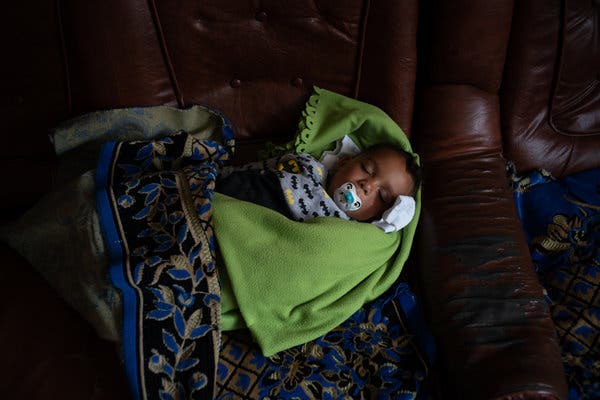
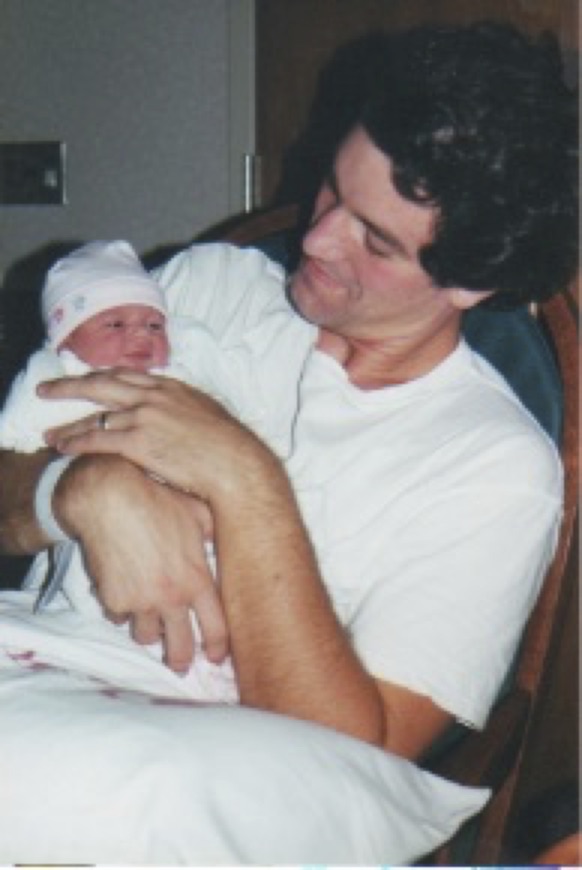
Is every moment pleasant? No. Absolutely not. I remember early one morning after our second child, Olivia, was born. She woke up screaming to be fed. It was my turn to do the night feeding, so I got up, warmed up some breast milk from the fridge, picked up the screaming child from her crib, and sat down in the rocking chair to feed her. Not thirty seconds later, her older sister, Fiona, who was three at the time, was standing next to me in tears because Olivia had woken her up. Fiona wailed that she wanted me to rock her. Then Olivia started crying again. This routine had been going on for weeks. I was delirious with exhaustion. I distinctly remember having the thought, “This is going to kill me.” 

But it didn’t, of course. Somehow I managed to handle the situation by myself. My wife, Nicole, got her sleep. And now those screaming children are beautiful adults. 

Can you tend your life like you would a precious infant? Can you welcome the screaming with patience? Can you welcome the smiles with joy? Can you savor that newborn scent even if the air its carried on is bitter cold? 

I am so glad to share this one precious life with you. My wish for us this Christmas is greater strength and deeper tenderness to welcome all the moments of 2020, no matter what shape they take, no matter what opportunities they bring.

What’s Up with Pastor Todd 12-18-19

What’s Up with Pastor Todd 12-18-19

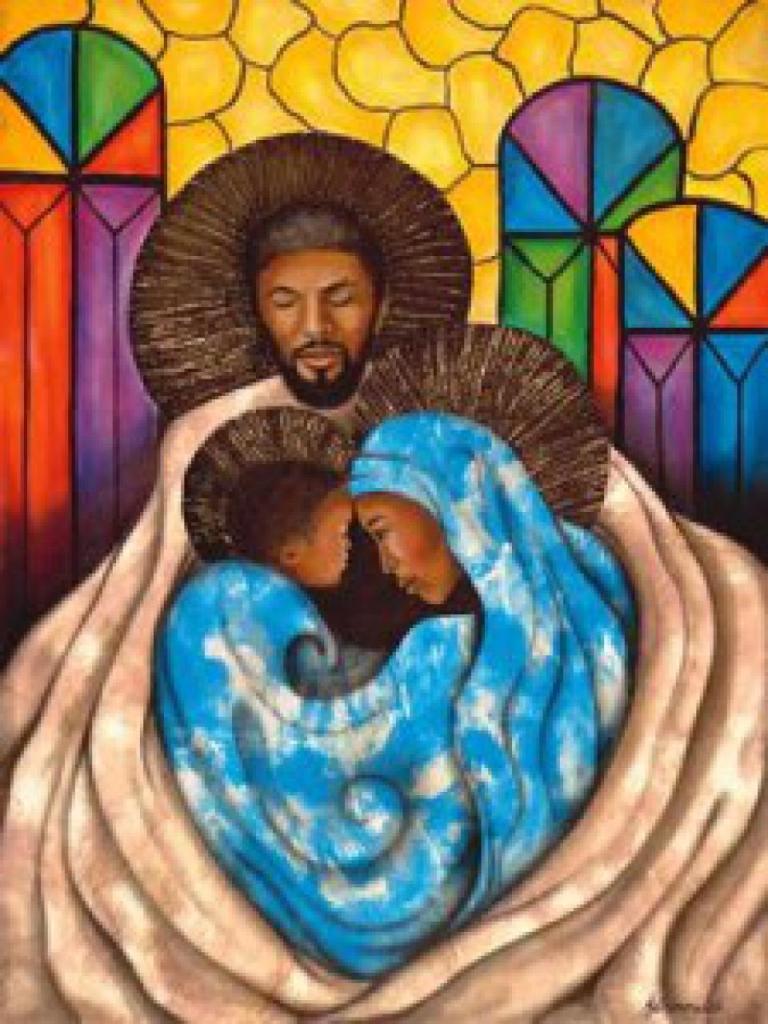
“Joseph, son of David, do not be afraid to take Mary as your wife . . . .” (Matthew 1:20)

When Joseph found out his fiance Mary was pregnant and he wasn’t the father, an angel says to him, “Do not be afraid.” It’s interesting that the emotion attributed to Joseph at this point is fear. I might have thought anger because from a human standpoint, the assumption would be that Mary had cheated on him. But anger isn’t named. The emotion that needs to be released in order for the holy wedding to take place is fear.

The thought of marriage scared the pants off me when Nicole and I were dated. My parents were in the process of an ugly divorce. Her parents had also had an acrimonious divorce. Our families’ recent track records were not good. Who could say we would do any better? In the end, with fear and trembling, I asked, and she said, “Yes.” Twenty-three years later we’re still together! For me, it has less to do with anything special about us. It has more to do with God’s grace and an amazing support system. And even after all these years, I am deeply aware of how fragile it all is.

The Apostle John writes that “perfect love casts out fear.” This suggests that love and fear go together. True love demands vulnerability, vulnerability brings risk, risk often gives rise to fear. “Will I be rejected?” “Will I be taken advantage of?” “Will my loved one leave or die?” Human love is imperfect, so fear goes with the territory. That’s why for me a key to making human love work is grounding myself everyday in God’s perfect love. If you’re not at least a little afraid, you may not be risking true love. If you find yourself afraid to, for example, share your feelings, be honest, meet a neighbor, share a gift, make a friend, commit to a relationship, instead of ignoring the fear, you might sit with it for a bit, invite divine love to shed some light on the situation, and then step forward with courage.