How to Handle Anger


What’s Up with Pastor Todd 2-23-20
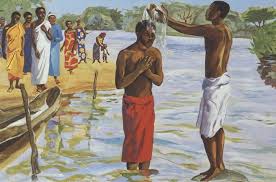
I didn’t know it at the time, but looking back I can see that my childhood was filled with stories of what I would now call “mystical experiences,” that is, encounters with God. I sat on mom’s lap as she read from my Children’s Story Bible about God’s search for Adam and Eve in the Garden of Eden. I remember illustrations of Abraham’s meeting with the three strangers under the Oaks of Mamre. I was fascinated and frightened by the mysterious angel who wrestled through the night with Jacob on the banks of the River Jabbok. Equally scary but in a different way was Moses’ encounter with God on Sinai. I remember the visions of the prophets: Isaiah’s throne; Ezekiel’s vision of wheels within wheels was something out of a Marvel comic book, and his vision of the valley of dry bones was spooky. Then there was Jesus’ vision of the Holy Spirit at his baptism. Peter, James, and John climb with Jesus to a mountaintop where Jesus is transfigured before their eyes. Paul encounters the risen Christ on the Road to Damascus. “Mystical” in the religious context has come to mean a direct experience of ultimate reality.
I don’t explicitly talk about mysticism very often because it’s famously difficult to do. God is, as the hymn says, “beyond all knowledge and all thought.” From a mystical standpoint, God is “unspeakable.” Simply saying the word “God” is already missing God. “God” is a placeholder for that which is by definition incomprehensible. Nevertheless, inadequate though it is, language is a tool we use to point toward a direct experience of–you pick your expression–God, Jesus, Holy Spirit, Higher Power, the Divine, Ultimate Reality, Awakening, Buddha Nature, Allah, HaShem. The names are many.
Another reason I don’t explicitly talk about mysticism is the term carries with it all kinds of unhelpful baggage. People expect bright lights and heavenly voices and strange sensations. When these don’t manifest, they imagine either that it’s all just a bunch of hooey or that they are lacking the special whatever-it-is that one needs to have a mystical experience. Neither of these conclusions is true. It’s not a bunch of hooey. Have you ever had an “Aha” moment? Have you ever been moved to tears? These and other everyday experiences of “breakthrough” are what mystics consider “divine encounters.” And everyone has them or has the capacity to recognize them. So you are a mystic! Some breakthroughs are big and life-altering. More often they’re small and go unrecognized.
Church is a community gathered around the intention to recognize, name, and ever more deeply live out of these unspeakable mystical encounters.

Opening Prayer
Unspeakable God our words fail us. We go about our ordinary lives mostly unaware of your presence. Then suddenly you shine through, and we are dumbstruck. We’re embarrassed by our confusion, but you respond with love. This is how it is. This is our confession: you come to us, share our common lot, and invite us to join the people of your new age. Our trembling hearts answer “Yes.” So let it be.
Prayer of Dedication
Holy God, we dedicate our lives and our offerings to your glory. Amen.

Pastoral Prayer
God of sheer silence,
We quiet our minds and open our hearts to you. We await an encounter. Our ears alert to an authentic word of life. We recognize the fragility of existence. Life and death are of extreme importance. Time passes quickly and opportunity is lost, so we strive to awaken. We fear dropping our defenses, but the danger is really only a danger to our ego, our pride is threatened, or narrow sense of self, our old, tired stories: I’m alone, no one will help me, all is lost. We step past all of these fears.
The only thing lost is scarcity thinking. The only thing lost is self-pity. The only thing lost is the sweet drug of defeat. Instead of indulging our whining, you invite us, even command us to get up and get busy building your kingdom. With the slightest breeze you breathe us to life.
Opening Prayer
Loving God, as children we learn to ask Why? Why is the sky blue? Why do ducks quack? Why do I have to go to bed? Why do I have to share my toys? “Why” is how we learn about our world and our place in it. God of “Why,” you have told us that unless we become like one of these little children, we will not enter your kingdom. Teach us to never stop asking Why. Teach us to never stop trusting your answer. Amen.
Prayer of Dedication
We dedicate our gifts and our lives to your holy purpose, O God. Amen.
*Opening Prayer
God of unconditional love, you tell us that heaven is a banquet where everyone has a place at the table. We look forward to that banquet in the world to come. But what if we could taste it right here, right now? What if we lived that reality today? What if we experienced that unbounded joy? It seems impossible, but you tell us that with you, all things are possible. We confess we live too much in our worries and fears. We worry that if more people join us at the table, there may not be room for us. We’re afraid that someone might take our place. Teach us a deeper truth. Teach us the reality that your love is limitless and that as we share it we will see that there is room at the table for everyone. Give us the tools to love people in the ways they need not the ways we would prefer because we know that love is the highest worship. Amen.
*Prayer of Dedication
We dedicate our offerings to the work of making room at the table so that more and more our earthly reality might reflect the heavenly one. Amen.

Pastor’s Page Feb. 2020
February is discernment month for First Church Granby. Feb. 9 following worship will be our annual congregational “discernment” meeting. I think it’s great that FCCG has one meeting a year devoted to the spiritual practice of discernment. There are many different approaches to discernment. You can find a number of different examples in the Bible: prayer and fasting, casting lots, consulting prophets, rituals involving sacrifice, pilgrimage. Gideon famously put fleece outside overnight to discern what God wanted him to do in battle. Moses ascended Mount Sinai to receive the 10 commandments. We won’t be doing any of these things. We will be doing prayer and conversation. But what all these have in common is the ancient human attempt to determine what God wants or what God is up to, in more formal language, “divine will.”
Divine will is a notoriously difficult thing to determine. The Bible is full of stories of individuals who claimed to know the divine will when, it turns out, they didn’t. The results are usually unpleasant. So humility is the first and most important quality to bring to discernment. The second is patience. Scripture says that “the Spirit moves where it will.” God answers in God’s good time. And sometimes the answer is silence. In which case, we might decide to sit with the question a while longer. But I want to encourage us that it is indeed possible to discern God’s deepest longing for us. I’ve experienced it. I’ve witnessed it happen in congregations. We’ll know we’ve nailed it when there is a moment of connection, joy, and release. God’s will may not be pleasant. God may not be inviting us to do something we particularly want to do. But there is joy and release knowing it’s the right thing to do. There is a deep sense of connection knowing that in the long run discerning and doing God’s will leads to abundant life in this world, and eternal life in the world to come.
So don’t miss worship Feb. 9 and stay for the meeting after. Our transition coach, Claire Bamberg will be joining us and facilitating a discernment discussion on the topic of “What is Your ‘Why’?”
What’s Up with Pastor Todd 1-16-20
I spent Monday, Tuesday, and Wednesday morning this week on meditation retreat. I came home and took a nap. Why? Because sitting on the floor in silence while maintaining as still a posture as possible for 10 hours a day is, in fact, exhausting. Why do I do it? Scripture says, “Be still and know that I am God.” Humans like to move. We rush around doing this and that. But even if we’re “vegging out,” our minds jump from this thought to that thought. The practice of meditation is stilling the body and mind together to become completely still like water on a pond. It turns out that the Bible is true! I can attest that cultivating stillness does, in fact, create circumstances in which God can be encountered in a profoundly life-changing way.
When asked my purpose, I tend to say “Helping people connect to God.” How can I help people connect to God if I am not myself living out of that connection? As a personal purpose statement, “helping people connect to God” seems to work for me. Working with our transition coach, Rev. Dr. Claire Bamberg, has taught me to ask a different question, namely, what is your “Why?” I realized this week that “helping people connect to God” doesn’t answer the “why” question. Why help people connect to God? Great question!
I don’t know the answer, yet, exactly. Maybe something like this: I know the pain of being separated from one’s deepest longing. I also know the joy of connection. A world of joyful, connected people is a world I want to live in.
As a congregation articulating a “why” is vital to our future. More important than what we do is being clear why we do it. Claire will be leading us in a congregational conversation about our why. In the meantime, I strongly encourage you to watch these short videos and think about what is your “why” and what is FCC Granby’s “why.” The videos show why the question of “why” is so important.
 Todd Grant Yonkman