What’s Up with Pastor Todd 6-19-20

What’s Up with Pastor Todd 6-19-20

“If we let it fall apart, what could we do then?” In the early days of the COVID pandemic, I used the phrase “stay safe, stay together” to chart a course through what has been a difficult, scary time. I’m glad to say we’ve done that. 

March 22 was our first livestream only worship service at FCCG. In those early days and weeks, we were in emergency mode–or at least church leadership was. Every day new information about the pandemic was coming out from state and local officials. As a church we had to learn quickly and adapt nimbly to keep everyone safe and everyone together. Folks were frightened and disoriented. We were looking for direction and trying to find our footing.

We adapted quickly. Many of us learned how to use Zoom. We adapted our worship service and upgraded our technology. We learned new routines of working from home, of checking in by phone, of making sure people were safe and supported. We started new programs: weekly Zoom Bible study, “Thank-Goodness-It’s-Zoom” virtual happy hour, online prayer group, daily online devotional. The Vitality Team has really shined in these past months (thanks Beth Lindsay, Ann W, Don S, Anne delC., Dick L, Kerri C, Heather D!) raising money for essential workers, organizing a cheer parade, delivering Easter cheer baskets, thanking postal workers, organizing mask making, organizing gardening supplies and cheer cards for the residents of Meadowbrook, and more. The one thing I love about this COVID time is that it has opened an opportunity to connect with new groups of people beyond our walls–people we have overlooked for too long.

Now we’re at a different place. Summer is upon us. Folks are getting restless. For some, perhaps, the novelty of worshipping from home has worn off. Zoom gatherings that were well attended at first have tapered off, so we’ve discontinued them for now. I hear complaints. The diversity of opinions about whether and how to continue our collaborations with South Church is wide. The weight of grief over what’s been lost over the past months and the worry over what is to come are significant. I’m finding that leading the church from a place of staying safe and staying together is actually becoming more challenging the deeper we move into this pandemic.

One of the things we learn in coaching training is the technique of asking “powerful questions.” Questions that point to the heart of the situation can sometimes shift perspective and remove obstacles to growth, life, happiness. It occurred to me that a powerful question for this moment might be “What if we let it fall apart? What could we do then?” We still need to stay safe. And I think we still want to stay together, but what if we took a breather? What if we relaxed the meeting schedule? What if we let go of our expectations of “going back to normal” and just did the things that brought us life, joy, and energy? What if we focussed on the work of the Vitality Team that is bringing blessing and joy to so many people? 

The Re-Open Team–Lori F, Lisa R, and Sue M–will be beginning their work soon. I’m hoping in the coming weeks we can begin to define when, how, and under what circumstances we can begin some in-person gatherings. Until that time, what do you need to let go of? What do you need to embrace?


What’s Up with Pastor Todd 4-24-20

“The Road to Emmaus” by Daniel Bonnell

What’s Up with Pastor Todd 4-24-20

It’s difficult to know what the lessons of the week will be on Monday morning. This is always true. Human beings have a notoriously mixed record in the future-predicting business. Last week was a great example. The first part of the week was what has become “normal schedule.” Monday: get “to do” list from Sue, start at the top with creating Zoom links for the week’s program schedule, write “What’s Up with Pastor Todd,” do the Monday “Daily Devotional,” create staff meeting agenda, write worship for the coming Sunday, and so on. 

By Thursday all my plans for the weekend had been blown out of the water. My oldest daughter, Fiona, got a message from her boyfriend, Riku, that his building was under emergency evacuation. Within 30 minutes Fiona and I were driving to Chicago to pick him up and bring him to Connecticut. This circumstance changed meeting plans, worship plans, sleeping and eating plans. What was up with Pastor Todd on Friday was very different from What was up with Pastor Todd on Monday. Here I am today facing yet another Monday and asking, “What’s Up with Pastor Todd?”

I suppose one solution would be to wait until Friday to write my column, but I’ve found it a helpful discipline to begin the week with a self check-in. And the truth is, even in an unusually disrupted week like the last one, parts of what I had written on Monday were still relevant when it came time to preach the following Sunday. My Monday self check-in ended up being a gift to my very different reality seven days later. 

There’s a common principle of spiritual practice that encourages us to “be here now.” Mindfulness teaches us to “stay in the present moment.” But I find that this doesn’t exclude looking forward and looking back. Rather, it includes both and gives a stable place from which to reflect on the past and anticipate the future. 

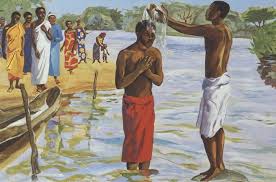
Living Water

Facebook livestream 15 March 2020 of adapted/abbreviated worship with congregation joining in from their homes due to coronavirus precautions. Audio starts at about the 10 minute mark!
Sermon by Rev. Dr. Todd Grant Yonkman at First Congregational Church of Granby 15 March 2020

What’s Up with Pastor Todd 3-13-20

What’s Up with Pastor Todd 3-13-20

Congratulations! You’ve made it to the third week of Lent! We’re haflway through our season of fasting and prayer that ends Easter Sunday! How’s your practice been going? Last Sunday Connecticut shifted to Daylight Savings Time, so now when I get up for my 35 minutes of meditation-prayer, it’s not only quiet but also dark in the house. The pets scamper and wag until I fill their bowls with breakfast. Then I sit on my cushion while morning light slowly fills the sunporch. It sounds lovely. And it is lovely. But while the universe simply does it’s thing without anxiety or self-centered thought, I’m faced with my racing mind. I rehearse conversations I had the night before: “I should have said this!” I write sermons. I add to my to do list. Part of the value of sitting still in silence is accepting the mess that is my own mind. This is important because accepting my own mess is the first step in taking responsibility for it. 

While I sit as still as possible I bring my attention to the breath. (Remember: “breath” and “spirit” are the same word in the Bible’s original languages!) My mind inevitably scampers away like a puppy that isn’t yet housebroken, but that’s OK. Puppies scamper. Minds wander. That’s just the nature of puppies and minds. Nevertheless, eventually attention returns to the breath. The longer I remain still, the longer attention remains on the breath. Mind stills. The puppy settles down. I notice a clear, calm space near my heart center. Not everything’s a mess after all. A pure, unchanging oasis exists. I can access it. And so can you.

When my youngest daughter, Olivia, was old enough, Nicole and I invited her to take responsibility for tidying up her own bedroom. Mostly this meant putting her toys in the toybox and books on the bookshelf. Nicole and I did this not because we were trying to be mean, horrible parents, but because we believed (and still believe) that learning to take responsibility for your own mess is a key piece of becoming a mature adult. Nevertheless, Olivia spent hours sitting in the middle of her mess screaming and crying and yelling, “I can’t do it, daddy.” Hoping that Nicole or I would relent and clean up her mess for her. It was tempting. Who wants to listen to a child scream for hours on end? 

Instead, I would sit with her in her mess, point to a toy, and say, “Pick up that toy and put it in the box.” When she was truly and finally convinced that I would not clean up her mess for her, Olivia might venture to put a toy in the toybox. Then I’d point to another and repeat the process. It was excruciating and time consuming. No doubt it would have been quicker for me to clean her room for her. But I loved her, and I wanted her to grow into an adult that could take care of herself, so I persisted.

Our Scripture for this coming Sunday comes from Exodus 17. It is one of many “complaint” stories from the Israelites’ wilderness journey. Compared to the reliably brutal structure of Egyptian slavery, freedom in the wilderness was messy and anxiety provoking. The Israelites complained against Moses saying they would rather go back to Egypt than continue through the wilderness to the Promised Land. God’s response to the people’s complaints varied from providing for them to punishing them for their lack of faith.

A key to successful transition is handling anxiety and the resulting complaints. Some complaints express legitimate needs of the community. Even though Olivia was old enough to clean her room, she was not old enough to make her own supper. The need for supper was a legitimate need, so Nicole and I fed her supper, of course. Sometimes, however, complaints arise from emotional or spiritual immaturity. In this case, it is incredibly important for leadership NOT to give in to complaints. Rather, compassionate leadership will equip individuals with the tools to tend to their own mess. Just like each of us has a role to play in maintaining a safe space in church by taking responsibility for washing our own hands and managing our own health, each of us has a role to play in maintaining a safe emotional space by finding effective ways to manage our own anxiety.

What’s Up with Pastor Todd 1-23-20

What’s Up with Pastor Todd 1-23-20

The above video is from church planter and consultant, Neil Cole. He is talking about a distinction between “movement” and “institution” that I first encountered in a talk by pastor, author, and activist Brian McLaren when my wife, Nicole, and I were church planters in Indiana.

I forget the details of McLaren’s talk, so I will give you my version of it. A social movement is a “loosely organized but sustained campaign in support of a social goal, typically either the implementation or the prevention of a change in society’s structure or values” (Encyclopedia Brittanica).  An institution is a set of rules, norms, patterned behaviors, and organizational structures designed to sustain the social gains of movements and pass them on to the next generation. 

McLaren argued a dynamic relationship between movements and institutions. Each needs the other. Social movements without institutional structures cannot sustain themselves. Institutions that are not periodically disrupted by social movements eventually lose their vitality and die. A powerful recent example of this dynamic in America is the Civil Rights Movement. 

McLaren’s point is that Christianity can be understood in terms of movements and institutions. The Gospels tell us that Jesus started a movement. It was only many years later when the early Christians came to understand that Jesus wouldn’t be returning within theirs or their children’s lifetimes that the instituional forms of the church began to emerge. And since that time the movement-institution dynamic has been at play in Christian cultures.

Congregational transition engages this movement-institution dynamic in a complex, improvisational way. Often congregations in transition are dealing with institutional structures that are falling apart because they just don’t “work” anymore. Instead of working harder and faster to patch up what is no longer functional, transition work allows much of that structure to fall away. Some of it, however, may have value for the church that is emerging. So we sort through what we’ve inherited and decide what to keep and what to let go of. 

Meanwhile we shift into “movement” mode. We focus on relationships and vision: that is, we build authentic relationships with people who are not yet members of the church, and we share a vision of changing the town of Granby for the better.

What’s Up with Pastor Todd 12-5-19

What’s Up with Pastor Todd 12-5-19

I’m swamped. The theme for the Second Sunday of Advent is peace, but how does one cultivate peace in the midst of chaos, conflict, and the everyday pressures of a to-do list that only gets longer? This is not a rhetorical question. Let me know!

Too often in popular culture peace tends toward the kitschy and clichéd: quiet woods, sandy beaches, laughing children, sleeping puppies, lamp-lit snow-covered villages. Bourgeois fantasies of escape tinged by nostalgia. Those aren’t particularly Biblical images of peace, thank God. While I love a walk in the woods or on a beach as much as the next person, I need peace when I’m sitting in front of my laptop or in a meeting with leadership. 

The prophet Isaiah writes, “A shoot shall come out from the stump of Jesse, and a branch shall grow out of his roots.” Isaiah then goes on to describe a divine king who will “with righteousness judge the poor, and decide with equity for the meek of the earth.” This king’s power will be such that it extends beyond the human sphere to bring an end to violence among animals and between animals and humans. 

Peace begins with a stump and a shoot. What made the stump? In the context of Isaiah, the stump is an image of the Davidic lineage cut down by exile. This suggests to me that peace is an expression of a life force that the devastating violence of human empire will never be able to eradicate. 

Nicole and I bought our current house on short sale. The backyard was overgrown with trees of all kinds. The health of our backyard mini-forest required that we thin the trees, so we had a bunch of the smaller ones cut down. The next spring, of course, the stumps started sending up new shoots. So I rented a chainsaw and a stump grinder and ground the stumps below the soil line. Even after that, many of the ground down stumps continued to send up shoots. So I dug around the stumps and cut them out by the roots. Oh my goodness, so much work. Peace is a stubborn pain in the ass!

Isaiah concludes his vision of peace with another powerful image: “They will not hurt or destroy on all my holy mountain; for the earth will be full of the knowledge of the LORD as the waters cover the sea.” Biblical peace isn’t primarily a sandy beach or a snowy woods. It’s the bone deep knowledge that you, I, and the entire universe, no matter what devastation we may face can be cut off from life in God.