“Joseph, son of David, do not be afraid to take Mary as your wife . . . .” (Matthew 1:20)
When Joseph found out his fiance Mary was pregnant and he wasn’t the father, an angel says to him, “Do not be afraid.” It’s interesting that the emotion attributed to Joseph at this point is fear. I might have thought anger because from a human standpoint, the assumption would be that Mary had cheated on him. But anger isn’t named. The emotion that needs to be released in order for the holy wedding to take place is fear.
The thought of marriage scared the pants off me when Nicole and I were dated. My parents were in the process of an ugly divorce. Her parents had also had an acrimonious divorce. Our families’ recent track records were not good. Who could say we would do any better? In the end, with fear and trembling, I asked, and she said, “Yes.” Twenty-three years later we’re still together! For me, it has less to do with anything special about us. It has more to do with God’s grace and an amazing support system. And even after all these years, I am deeply aware of how fragile it all is.
The Apostle John writes that “perfect love casts out fear.” This suggests that love and fear go together. True love demands vulnerability, vulnerability brings risk, risk often gives rise to fear. “Will I be rejected?” “Will I be taken advantage of?” “Will my loved one leave or die?” Human love is imperfect, so fear goes with the territory. That’s why for me a key to making human love work is grounding myself everyday in God’s perfect love. If you’re not at least a little afraid, you may not be risking true love. If you find yourself afraid to, for example, share your feelings, be honest, meet a neighbor, share a gift, make a friend, commit to a relationship, instead of ignoring the fear, you might sit with it for a bit, invite divine love to shed some light on the situation, and then step forward with courage.
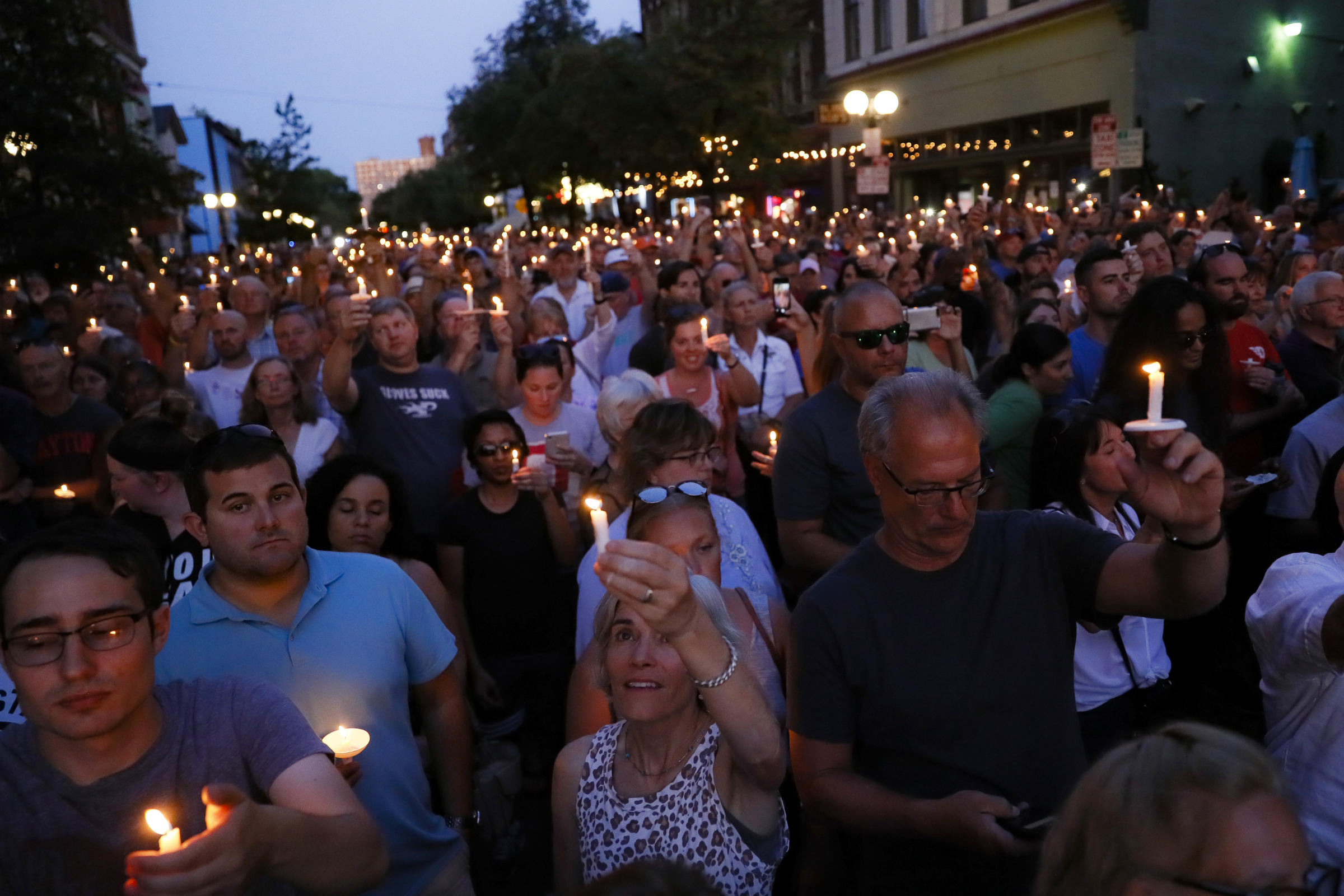
Mourners gather for a vigil at the scene of a mass shooting, Sunday, Aug. 4, 2019, in Dayton, Ohio. Multiple people in Ohio were killed in the second mass shooting in the U.S. in less than 24 hours. (AP Photo/John Minchillo)
What’s Up with Pastor Todd 8-6-19
Three days ago, Saturday morning, August 3, a gunman opened fire at a Walmart in El Paso, Texas, killing at least 20 and injuring many more. A manifesto thought to be written by the killer declared his intention to kill as many Latinos as possible. The Cielo Vista Mall Walmart is one of the busiest in the country. It is near the border with Mexico. It welcomes customers from both El Paso and Cuidad Juarez, which lies just across the border in Mexico. El Paso is a majority Latino city and one of the safest cities in the U.S. The gunman drove 9 hours from his residence in the Dallas suburbs to commit this heinous act of violence. Echoing hateful language that is poisoning our political discourse, the gunman wrote that he was responding to “the Hispanic invasion of Texas.”
13 hours later a gunman in body armor opened fire at a bar in the Oregon District of Dayton, OH, killing 9 including his sister–this carnage despite the fact that police were able to respond and kill the shooter in 30 seconds. The amount of death he was able to inflict was likely due in part to the fact that he was armed with an automatic rifle and a 100 round barrel magazine.
An El Paso leader summed up the situation well: “We have a gun problem, and we have a hate problem.”
I know that at FCC Granby we have a diversity of opinion on these issues. This much was evident in the conversation at the “Thank Goodness it’s Friday” social supper just hours before the first shooting. It so happened that the topics of both race and guns came up, and there was disagreement on both issues. This was also evident Sunday morning during the sharing of joys and concerns. Some prayed for a change in gun laws. Some prayed for access to mental health services and social “connection.” I suppose in this way we are simply a microcosm of the country as a whole.
While any and all of these may or may not be helpful responses, it seems to me that as followers of Jesus we are called to respond to acts of violence and the trauma they cause. As James Baldwin wrote, “Not everything that is faced can be changed, but nothing can be changed unless it is faced.” As a follower of Jesus, it seems to me the height of immorality to turn away from the suffering we are inflicting upon each other with these repeated mass shootings. We must face who we are and what we are doing because what we are doing has to change. I can’t believe that this is the world God would want us to create.
We have a gun problem. So fix it. Stop blaming others. Start taking action. I’m not a legislator. I’m not a policy expert. I’m not interested in excuses. I’m interested in results. Don’t tell me what won’t work. Show me something that will. I stand with the people of Dayton who are calling on their governor to “do something.”
We have a hate problem. This goes much deeper. It goes to the heart of our history as a nation that has committed genocide against Native Americans and enslaved Africans. Our ancestors laid the groundwork for hate based on the Doctrine of Discovery and the false ideology of white supremacy. It is what theologian Jim Wallis calls America’s “original sin.”
Both of these shooters were not only white but also men. Why are the perpetrators of mass shootings predominantly men? I wonder whether patriarchy–the idea that men are entitled to priviledged status–could also be a factor. I do not believe that men are inherently more violent than women. I believe that men in our country are socialized in such a way that for too many, violence is seen as a legitimate form of resolving differences and expressing feelings.
Pinning all of this on “mental health” is not helpful. Yes, by all means provide better access to mental health care. By all means enact red flag laws. But many factors make treating mental illness difficult. A big challenge is stigmatization. And putting the blame for mass shootings on mental illness, only further stigmatizes those who already feel the stigma of their mental health status. It also allows us to dismiss those who commit violence as somehow fundamentally unlike us “sane” people. In this way we are conviently let off the hook from examining the roots of hatred and violence in our own hearts.
While I am not a legislator or a policy expert, I am a Christian who has, despite spectacular and ongoing failures, committed himself to the way of love. And I believe you, my fellow members of FCC Granby, despite our differences of life experience, political opinion, social location, economic class, age, gender, sexual orientation, gender expression, country of origin, race, ethinicity, etc., are also committed to the way of love. We can do something about this hate problem right here and right now. We can extend love. We can have honest conversations about difficult things. We can repent. We can mourn. We can be instruments of peace. Remember what Dr. King said, “Darkness cannot overcome darkness, only light can do that. Hate cannot overcome hate. Only love can do that.”
Rev. Dr. Todd Grant Yonkman, Transitional Senior Minister
First Congregational Church of Granby
Funeral for Gerald Dickerson
13 July 2019
Gerald A. Dickerson was born in Dickinson, ND December 3, 1932. He on June 30–just over a week ago–after an 8 year battle with Alzheimer’s disease. Jerry grew up poor in rural Montana. He and his brother were raised by a single mom who worked tirelessly to provide for her boys. Life was hard. Opportunities were few. Corrine commented that it was a miracle Jerry and his brother Dale didn’t end up in jail. Work provided the structure Jerry needed to move forward in his life. He was hardworking, high energy, and had a love baseball. In fact, he was a top pitching prospect until pleurisy, which he developed while working at a dry cleaner, ended his baseball career.
Jerry graduated Brooklyn High School, Brooklyn, OH, Class of 1940. After that he went to Baldwin Wallace College where he joined the Reserve Officers Training Corps. After graduation from college, Jerry was commissioned as an officer in the United States Marine Corps. He served in the USMC for over 20 years until his retirement in 1992. After his retirement, he worked with The Hartford Insurance Company and then Farmers and Trader’s Insurance Company in insurance sales and as a general manager.
Jerry is remembered as a fun and intelligent man, if not always super handy around the house. For example, one time he purchased a new lawn mower. He brought it home, got it out of the car, set it up in the lawn, and yanked on the pull cord ‘til his arm was sore. Frustrated, he called the place where he purchased it. They sent a service guy out to see what was wrong with the brand new mower. The service guy looked it over. Nothing wrong. Then he turned to Jerry, “Did you put gas in it?” You know what happens next.
Jerry had a large, loving family. His wife, Corrine. Five children, 11 grandchildren, and four great-grandchildren, who will miss him very much.
Earlier in the service Brenna read to us from Ecclesiastes. It’s a relatively well known piece of Scripture as far as Scripture goes. My guess this is due primarily to Pete Seeger, who wrote the song “Turn! Turn! Turn!” based on this text back in the 1950s, which the Byrds then covered and made it into a hit.
What is it about this text that we love so much? It seems so matter of fact. No earth shattering truths here. “For everything there is a season, and a time for every matter under heaven:
2 a time to be born, and a time to die;
a time to plant, and a time to pluck up what is planted;
3 a time to kill, and a time to heal;
a time to break down, and a time to build up;
4 a time to weep, and a time to laugh;
a time to mourn, and a time to dance . . .” and so on.
For me, what this text does is invite us to be present every moment to this very moment, to face whatever it is we’re facing, to feel whatever it is we’re feeling, to accept whatever gift the universe is offering us and embrace it as our life, our one precious life, to drink deeply, to live fully, to love completely, and then let go trusting that whatever season we find ourselves in–whether its a season of joy or grief of building up or breaking down, or planting or plucking up, of living or of dying, it is in this very season that we will find God.
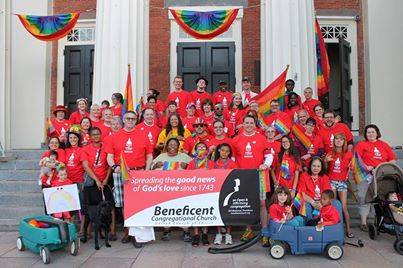
2013 Pride Parade Beneficent Church, Providence, Rhode Island
Rev. Dr. Todd Grant Yonkman, Transitional Senior Minister
First Congregational Church of Granby
Sermon for Open and Affirming Sunday
30 June 2019
Text: Luke 9:51-62
No Looking Back
Many of you know my story. But for those who are new I’ll do a quick refresher. I was born and raised in Grand Rapids, Michigan. My family and all our relatives belonged to a conservative Christian denomination called the Christian Reformed Church. I went to Christian schools and graduated from a Christian college. On the surface we were a model family. Dad had a good job. Mom stayed at home and raised us kids. We went to church twice on Sunday. We lived in a nice, new house in a nice new subdivision. Mom and dad led Marriage Encounter weekends during which they coached other couples on how to make their marriages more loving, healthy, and intimate. Years later, after my dad came out as gay and my parents divorced, one of my high school friends who knew my family well put it this way: “The Oscar for best performance in a marriage goes to Bill and Jayne Yonkman.” Open and Affirming Sunday is many things to many people, but for me it’s this: Be out. Be proud. The only Oscars any of us should get are for the work we do in Hollywood, not the lives we live at home or in the church.
Open and Affirming originated with a 1985 resolution to the United Church of Christ General Synod that the denomination encourage all of its member churches to welcome LGBTQ people into all areas of congregational life including lay leadership and ordination. Since then 1400 UCCs have become Open and Affirming. Other denominations have followed the UCC lead in welcoming gay people including the Episcopal Church, the Presbyterian Church (USA), the Disciples of Christ, the Evangelical Lutheran Church in America, some Baptist denominations, some Pentecostal denominations, the United Church of Canada, and other denominations in Europe, Asia, Africa, Australia, and New Zealand. Same sex marriage has been legalized throughout much of Europe, in some Latin American countries, and here in the U.S. Much has changed since my dad was growing up gay and shamed in 1950s rural Michigan. Open and Affirming Sunday celebrates the progress we’ve made as Christians and human beings on this planet to embrace our LGBTQ brothers and sisters. It also recognizes how fragile this progress is and how far we have to go.
Open and Affirming is the UCC’s way of recognizing what the gay rights movement calls “pride.” The modern gay rights movement began at 1:20 am on June 28, 1969, when the police raided the Stonewall Inn, a gay bar in NYC. This was a common occurrance at the time because New York, like most places in the U.S. at the time, had laws against almost any type of gay expression even in private. The affect, if not the point, of these laws was to shame LGBTQ people.
In order to be gay in 1969, you had to sneak. And what does sneaking do to the soul? What did the “Saint of Dry Creek” tell his son? “If you sneak, it means you think you’re doing the wrong thing, and if you run around your whole life thinking you’re doing the wrong thing, you’ll ruin your immortal soul.” In 1959 the Saint of Dry Creek told his son to be proud of himself and not to sneak. On June 28, 1969 the patrons of the Stonewall Inn resisted the police raid on their safe and sacred space, and out of that resistance, the modern gay rights movement was born. When an entire culture is set on shaming you, how do you resist? With pride. You resist shame by stopping sneaking and stepping into the light.
That was the power of the first “gay liberation march” organized a year after the Stonewall uprising in June of 1970. Several thousand LGBTQ people marched from the Stonewall Inn 51 blocks up 7th Avenue to Central Park in the middle of the day with signs and flags and chants–during the day. Even then, many felt like they had to wear masks in case their employers found out and they would be fired. In Central Park, they had a “gay-in.” It was basically a gay version of a “be-in, which was a hippie way to make a political statement by hanging out and be visible in this case as gay people. Every year since 1970 the NYC Pride parade and the LGBTQ rights movement has grown. Now Pride is worldwide. In many places around the world homosexuality remains a crime often punishable by death. Nevertheless, people once forced to live in the shadows are stepping out into the light risking their lives and livelihoods because they know that hiding, while it might preserve your privilege and in some cases be necessary to preserve your life, ultimately ruins the soul.
Open and Affirming in the UCC begins with the recognition of the negative effects that Christian teachings and behavior have had on LGBTQ people. We’ve been telling LGBTQ people to sneak when Jesus clearly invites all people to be true. You can’t do anything if you can’t be honest about who you are. To my LGBTQ brothers and sisters I want to say on behalf of the church that I’m sorry.
Unfortunately many of our brothers and sisters in Christ around the world continue to ruin souls by telling people–particularly LGBTQ people–that God wants you to sneak. So what do we say to those people?
In 2013 my wife and I had the opportunity to join Marriage Equality Rhode Island in bringing marriage equality to the state. As a part of that effort, I testified before the Senate Judiciary Committee. The testimony lasted through the day, into the evening, and on into the early hours of the next morning. Many people spoke both for and against marriage equality. Amont those against it, I heard some of the many of the vile and hurtful slanders against gay people that I thought we as a society had left behind. But there they were, people shaming and dehumanizing other human beings in public in the name of Jesus. Needless to say, it was disturbing.
When my turn to speak came in the wee hours, I sat across from a state senator whom I knew personally, who was a Christian, and who himself said many of the hurtful things others had been saying. I shared my family’s story. I share my message to him with you as something you can say to Christians who do not share our Open and Affirming values. Here’s what I say: “I am a Christian. That means I follow Christ. Not Paul. Not Moses. I follow Jesus. And Jesus gave Christians one command: love everyone, period. You can’t both love someone and call them an abomination at the same time. If you are telling people that loving someone of the same sex is sinful, you are not loving them, you are shaming them, and in shaming them, you are not saving their soul, you are destroying it.” The result of that hearing and the work of many in the Marriage Equality Rhode Island coalition is that we won marriage equality for Rhode Island!
My family gave me the opportunity to experience the devastating effects of LGBTQ shaming up close and personal. I can say from my own experience that when you shame an LGBTQ person, when you demand that they sneak in order to survive, you commit spiritual malpractice not only against the individual but also against their families and everyone they love. The shame runs deep, and it takes a lifetime to heal. I’m still trying to heal from having a shame-filled dad who spent two-thirds of his life sneaking.
The good news is that healing is possible. And the irony is that I have found healing in the very Christianity whose institutions shamed my father and hurt my family. I had to leave the church of my childhood, but I’ve found welcome in the UCC, and for that I’m grateful. And a part of my ministry in the UCC is creating truly open and affirming spaces for LGBTQ people.
Jesus said, “No one who puts their hand to the plow and looks back is fit for the kingdom of God.” I am grateful Jesus has called me to this work of creating open and affirming congregations. I have put my hand to the plow. I am not looking back. I have left the small, comfortable world of my childhood where we pretended LGBTQ people didn’t exist. I’ve stepped into God’s wide world of love. And I hope you will, too. There is no place for shame in God’s house. That’s why it’s so important that we stand together as a faith family–gay, straight, and in-between–and take pride. Let’s raise the rainbow flag and step into the light with pride. There’s no looking back.
The origins of Father’s Day are complicated. As our fathers tend to be. If you thought Father’s Day was a response to Mother’s Day, you’d be right. Though it doesn’t seem like a simple reassertion of patriarchy. In fact, a significant number of men resisted it for years. They had seen how Mother’s Day, originally conceived as an opportunity for women’s empowerment in response to the horrors of the Civil War, became commercialized and sentimentalized, and they didn’t want any part of it. Because of this resistance, Father’s Day didn’t become an official national holiday until 1972.
62 years earlier, in 1910, Sonora Smart Dodd organized one of the first Father’s Days in honor of her father, a Civil War veteran and widower who had raised his children as a single dad. William Jackson Smart took on parenting roles that were not conventional for men at the time. One of the origins of Father’s Day was a celebration of men who were willing to step out of conventional gender roles to care for their families.
At about the same time, a Father’s Day celebration was organized in West Virginia to honor the 362 men who had died in a coal mining explosion the previous year. This origin of Father’s Day reminds us of others experiences of fatherhood: grief over the fathers who are absent for whatever reason, and the expendability of men’s bodies, particularly the bodies of poor and workingclass men.
My dad was a gay man. He grew up on a small dairy farm in northern Michigan. Though the family wasn’t poor, they didn’t have much. He was the first in his family to receive a college education. He married a woman because that’s what his conservative Christian upbringing told him to do. He raised four children and was grandfather to 11 grandchildren by the time he died of AIDS in 2012. He was a successful businessman with a genius level IQ. He was also an adulterous alcoholic bully with a criminal record who repeatedly put his family in danger. He did provide for us children. He did choose recovery eventually. He did come out and live the most honest version of his life that he could. He did love us with his version of love. Perhaps every human love leave wounds. As I said at the outset, fathers can be complicated.
I am father to two amazing young women. It is the greatest blessing of my life. And if I’m honest, day to day I have no idea what I’m doing. I realize that might make me sound incompetent or irresponsible to some. I do indeed make it my business to learn what I can about best parenting practices. My wife and I spend significant time, energy, and financial resources making the best decisions we can for our children. But I am acutely aware that the models of fatherhood that I have inherited, for better or for worse, too often seem inadequate for the times. Especially as they grow older, my children simply know a lot of things about the world that I don’t. Their experiences are different from mine. Their contexts are different. And in significant ways their futures will be different, once again, for better or for worse, than mine.
What do I fall back on? The things I do know: that deepest love is bare attention, unconditional availability, unwavering presence. Wherever life takes my children, my heart is with them, and I am ready to leap to their aid, if aid is what’s called for. My deepest practice is the practice of letting go. When first Fiona–21 years ago–and then Olivia–17 years ago– were born it was as if my soul or some piece of it separated from me and became enfleshed in another, fragile being over whom I knew my protection would always in some sense be limited and who one day likely would leave my protective care entirely. How can I entrust my precious one’s to this dangerous and difficult world where they will continue to meet both unimagined joy and devastating disappointment?
These days fatherhood for me is calmly sitting in the passenger seat while Olivia learns to drive. Dropping Fiona off at the airport for her summer job in Chicago. Preparing for Olivia’s move to Los Angeles where she will begin her college education. And savoring every moment they are home.
Scripture reminds us that we are all connected. Scripture teaches us that we are already complete. Scripture shows us that our true nature is freedom. Worship is the way we remind ourselves of what we already know: we are bound together in God’s limitless love. Let’s worship God.
Prayer of Confession
Holy God, we live distracted, fragmented lives. On our own, we are powerless to put ourselves back together. We believe the lie that we are hopelessly alone. We allow ourselves to be seduced by the claim that life is a relentless war for dominance. Send your spirit upon us. Calm our fears. Heal our hearts. Give us the quiet confidence to boldly proclaim your everlasting love. Amen.
Prayer of Dedication
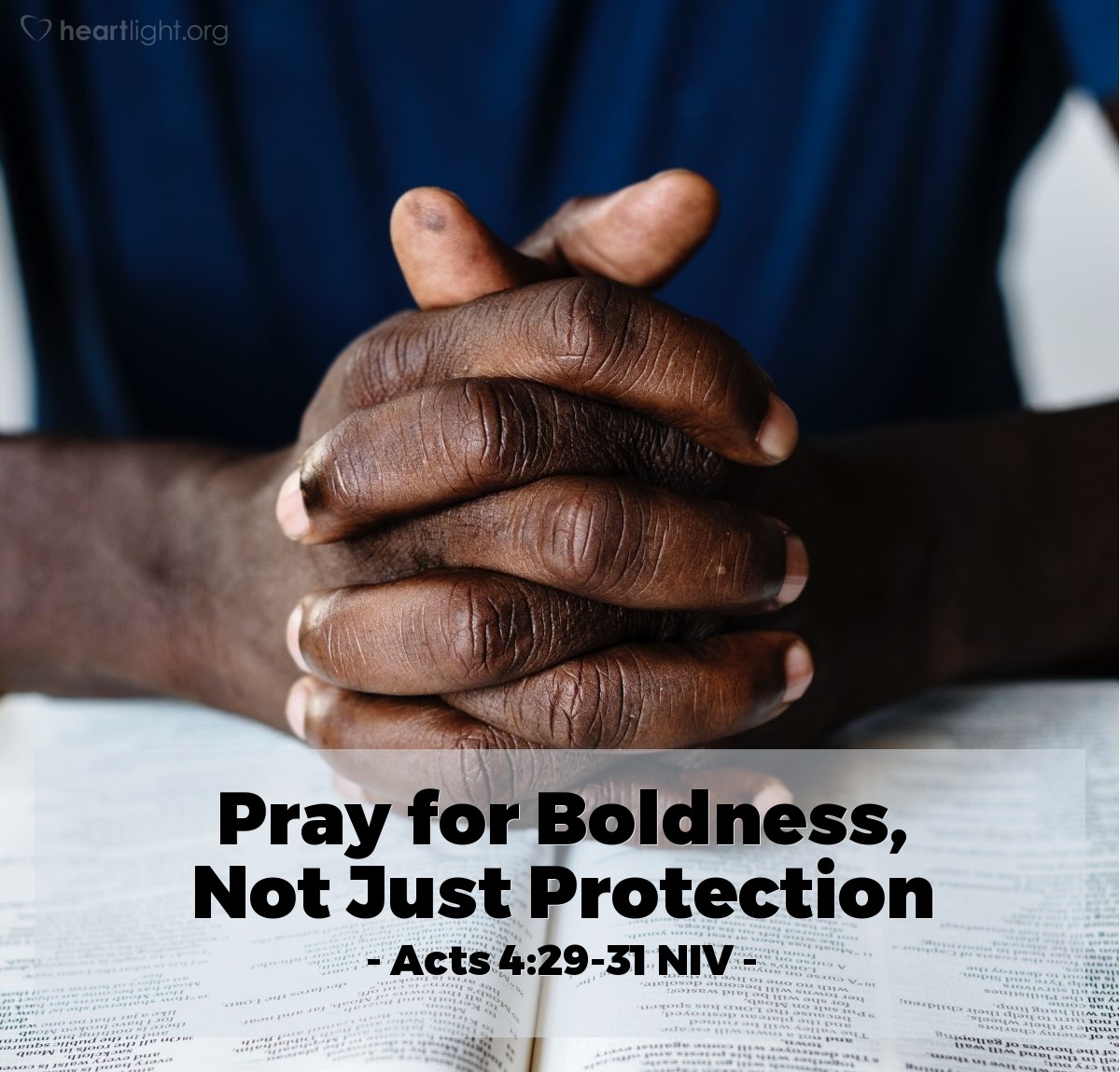
Holy God, we pray for boldness, not just protection, as we offer our lives and resources in service of the gospel. We dedicate these offerings to the healing of the world. Amen.
Years ago, Dr. Martin Luther King, Jr. preached a sermon called “Love Your Enemies.” This was not the first time he had preached on this topic. Year after year he preached “Love Your Enemies.” And then by his example, he showed us what love your enemies means. Most of us are not called to the level of sacrifice Dr. King made, but every one of us is called to break the chain of hate with the disruptive power of love. Worship is our radical act of disruptive love. Let’s get to it.
Prayer of Confession
God, we are so conditioned to respond in kind. We are so worried that when the reckoning comes, we will find ourselves left with the short end of the stick. And not without reason. The powerful take and take and lie and lie and oppress and oppress seemingly without consequence. Teach us to love with skill. Teach us to love with precision. Teach us to love with abandon, trusting that when we step into the ocean of your abundant love we will receive the blessings of your abundant life. Amen.
*Prayer of Dedication
Holy God, we bring before you tokens of our intention to break the chains of hate with the power of love. Help us to grow in our giving so that we will continue to grow in our loving and in our living. Amen.
The theme for the 4th Sunday of Advent is love. Love is the heart of Christian belief and practice. 1 John 4:8 puts it succinctly: “God is love.” But what is love? In preparation for Sunday worship I did my usual practice of searching the Internet for quotations, images, and videos related to this week’s theme. Not surprisingly there were countless references to love: stories about love, images of love, theories of love, love advice, love humor . . . everything you can think of. Relevant for our context is a Christian approach to love. The Apostle Paul gives us a good starting place:
Love is patient; love is kind; love is not envious or boastful or arrogant 5 or rude. It does not insist on its own way; it is not irritable or resentful; 6 it does not rejoice in wrongdoing, but rejoices in the truth. 7 It bears all things, believes all things, hopes all things, endures all things. Love never ends. (1 Corinthians 13:4-8)
Christian love is modeled after God’s love, which we find expressed in myriad forms in the Bible. It encompasses the many human forms of love–romantic, familial, love among friends, even love that we have for pets or communities or causes close to our hearts–and puts them in the larger context of what in Greek is called agape or self-emptying love. Once again, Paul expresses this love, this time through the example of Christ:
who, though he was in the form of God,
did not regard equality with God
as something to be exploited,
7 but emptied himself,
taking the form of a slave,
being born in human likeness.
And being found in human form,
8 he humbled himself. (Philippians 2:6-8)
There are cautions that come along with agape. After all, God is God. You and I are not. God is infinite. We are limited. Though we are limited, our capacity for self-deception is endless. So we need the help of good teachers, friends, and a faith community to help us see whether our agape is genuine or simply ego-centered martyrdom. Paul warns: “If I give away all my possessions, and if I hand over my body so that I may boast, but do not have love, I gain nothing,” (1 Corinthians 13:3).
The Advent season has been leading us to love and the powerful image of Jesus’ birth to Mary and Joseph in a stable in Bethlehem 2000 years ago. I invite us to meditate on the many images of love and let them inform our every encounter in this hurting and hope-filled world.
Scripture tells us that “God is love” and if we don’t love, we don’t know God. But what is love? What does it mean to love someone? What does it mean to love God? Jesus shows us by his example. The prophet Isaiah says of that day when love shall reign supreme that “a little child shall lead them. This morning we will share the story of God’s love come to earth as a baby. And our children will lead us in telling that story. Let’s worship God!




 Todd Grant Yonkman