
What’s Up with Pastor Todd 7-23-19

What’s Up with Pastor Todd 7-22-19

This week’s favorite Scripture comes to us from Nancy Dow. Revelation 22 is the last chapter of the Bible, and the last chapter concludes with the refrain “Come”:

The Spirit and the bride say, “Come.”

And let everyone who hears say, “Come.”

And let everyone who is thirsty come.

Let anyone who wishes take the water of life as a gift. 

The one who testifies to these things says, “Surely I am coming soon.”

Amen. Come, Lord Jesus! (Revelation 22:17, 20).

Nancy chose this Scripture because, she says, “It’s important for us to focus on the goal,” which I take to mean the goal of the spiritual life. 

When I hear the word “come” in this context I imagine a posture of welcome, accepting everything, facing everything, rejecting nothing. “Come” speaks to me of God’s posture toward the universe and our faithful response. The goal of the spiritual life is an ever deepening posture of welcome toward all that is.

There’s a receptive aspect to this divine welcome. I experience the receptive aspect in meditation. I sit in resolute silent stillness and receive whatever arises. The deep listening I try to practice in conversation with others is also an expression of this welcome. And there are other ways this welcome manifests. It’s the welcome articulated by the prophet Isaiah: “Those who wait upon the LORD shall renew their strength.” Or by Jesus: “I am the vine. You are the branches. Abide in me and you will bear much fruit.”

I began meditation practice over 20 years ago not only for myself but also for the congregations I serve. I noticed that churches in transition tend not to be particularly receptive.  Passive, yes. Receptive, no. One can be passive while turning away from difficult truths, like, for example, “our church is dying.” The receptive welcome that is the goal of the spiritual life faces reality as it is without judgment so that we can engage reality as it is in effective and helpful ways. 

We welcome reality as it is in order to meet reality as it is. Engagement is the second aspect of divine welcome–an aspect that declining churches tend to struggle with. We can feel the urgent joy of this welcome in the repeated call to “come.” The Revelation image is of the universe calling to itself. I imagine a parent bending down to embrace a child and lifting her up in his arms. “Come to me. I want you here!” It’s active, urgent, compelling.

Every church I’ve ever served has told me that it is “friendly.” And for the most part it’s true, but what they mean is, “We are friendly to each other.” How many times have I noticed worship guests sitting alone in a pew or keeping their own company at coffee hour? Too many. But even if we’re conscientious about guests, the welcome tends not to extend beyond our walls. 

A parishioner has said this to me on more than one occasion in more than one church: “Here ‘friendly’ means, ‘You’re welcome if you come.” This is a far cry from Jesus’ parable of heaven in which the host for the wedding feast sends out his servants into the highways and byways. The host instructs his servants to approach everyone they meet and “compel them to come in.” In other words, the attitude of divine welcome is not “you’re welcome if you come,” but “we want you here! How can we change so this will be a safe and relevant space for you?” 

Or better yet, flip roles. Instead of taking the role of host, be a guest. Learn the culture. Show up for others without any expectation. Just make yourself and instrument of divine love. God will do the rest.

I realize this is a scary challenge especially with all the obnoxious evangelists out there, but in my experience, while you may get some “no thank yous,” most people are just waiting to be invited. And–good news!–we will have an opportunity to be trained by an expert in reaching new people, Rev. Paul Nickerson, September 13-14 at First Church in Windsor.

The goal of the spiritual life is the joy of extending oneself to welcome the other. How do you expect to grow if you won’t stretch? And stepping out beyond our familiar and comfortable walls into the world to engage people where they are is an endless opportunity to stretch. This simple but profound spiritual practice unites spiritual growth, social justice, and church vitality. It’s what Jesus made us for. It’s what we’ve been waiting for. It’s past time we do it.
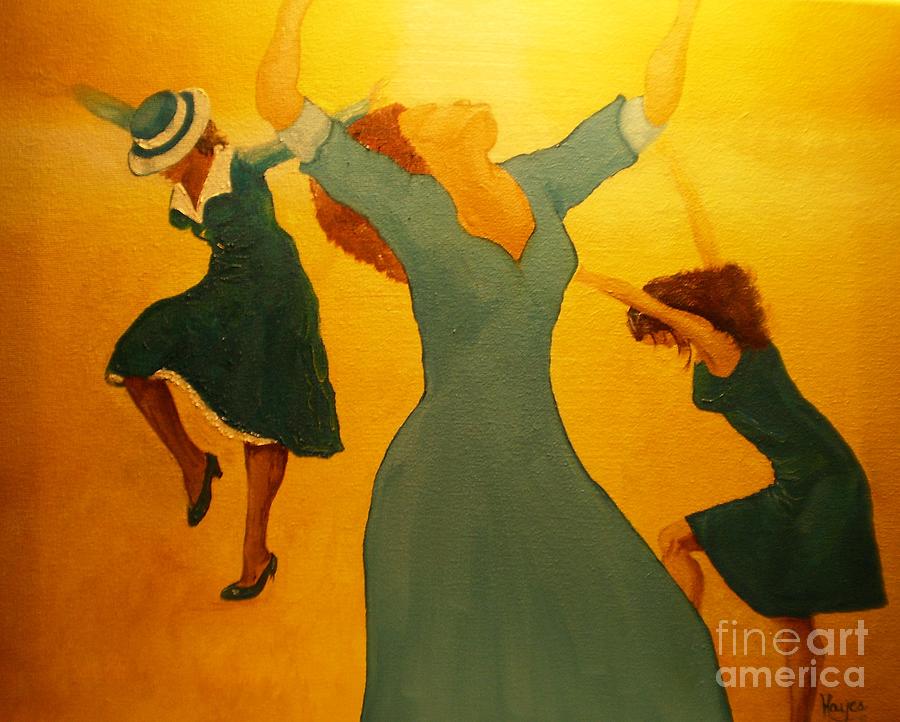
Total Praise–Sermon 7-14-19

“You are the source of my strength. You are the strength of my life. I lift my hands in total praise to you.”

Note: As always, this is a working text, not a transcription of the sermon as preached in the context of a worship service.

Rev. Dr. Todd Grant Yonkman, Transitional Senior Minister

First Congregational Church of Granby

Sermon Series: My Favorite Scripture

14 July 2019

Text: Psalm 121

Total Praise

This summer we’re doing a sermon series called “My Favorite Scripture.” Today’s favorite Scripture comes from Nancy Rodney. She chose Psalm 121. Nancy first learned Psalm 121 as a student at Northfield-Mount Hermon School, where she met Rob, the man who would later become her husband. She learned to read the Psalm as I did when I was a child.

“I lift up my eyes to the hills—

from where will my help come? 

2 My help comes from the LORD,

who made heaven and earth.”

The Psalmist is in a valley. Maybe it’s literal. Maybe it’s emotional or financial or political. Certainly it’s spiritual. She is surrounded on all sides, boxed in. Can’t move forward. Can’t move back. How many of you have been in this place? What does it feel like? How did you respond? 

The Psalmist responds by asking a powerful question: “From where will my help come?” This is a deeply spiritual question. It’s a soul searching question. It’s a question that arises from the gut when life lays you flat. It’s a humbling, maybe even humiliating question. I can’t get myself out of this mess. I don’t know about you, but I was taught from a young age that grown up solves his own problems. He doesn’t ask for help. It’s embarrassing. It shows you’re not self-sufficient. It shows you’re human. 

So I tried to fix myself. And you know what? It didn’t work. The more I struggled, the deeper into the valley I sunk. If you’re like me, you may have had a number of peaks and valleys in your life. I won’t tell you about all of mine. We don’t have the time. But I do remember the time my dad came out to the family. I was 21-years-old at the time and home from college for the summer. We were sitting at the table having Sunday afternoon dinner following church, which was our custom. Dad was drunk. He told my brother and me to stop horsing around. He had something to say. Then he said it. “I have AIDS. I’m bisexual. I have been all my life.” It felt like a meteor dropped from the sky and crushed me. My vision went blurry. My had ringing in my ears. I remember us kids getting up from our chairs to hug dad. The rest of the story I’ve had to piece together over many years. But that moment sent me into a valley that I would never have found my way out of without friends, family, mentors, and a lot of therapy. That’s the thing about the valley: you can’t pull yourself out. Someone has to reach down and rescue you.

But the world tells us to be self-sufficient, to put on a brave face, to pull it together, and when the pain and lonliness get too much, the world is more than happy to sell us a limitless variety of ways to numb out. Nancy tells me that when she was older, she gained a new, perhaps deeper, understanding of this text. This deeper understanding came when she made a group pilgrimage to the Holy Lands. During Nancy’s tour one of the pastor-guides explained that in ancient times locals would set up shrines to their gods on the tops of the hills. So that when the Psalmist says, “I lift up my eyes to the hills,” what she is seeing is all of these little shrines to the little gods with their little spheres of influence and their little areas of concern: the fertility god and the rain god and the river god and the sun god and the moon god and the star god and the god of this tribe and the god of that clan and the god of this king and the god of that city, each one shouting: “I will save you. I will make you feel good. I will satisfy you.” Or maybe they’re mocking you: “You’ll never make it. You’re stuck forever. You’re my prisoner now. Try harder! Run faster. Work longer.” When you imagine this text, what idols do you see dancing on the hills?

But then another voice breaks through the cacaphony: “My help comes from the LORD, maker of heaven and earth.” The valley didn’t break the Psalmist. It broke her open. Have you known someone broken by suffering? They become bitter and small and angry. They lash out at people or become depressed. It’s an incredibly sad thing to witness. On the other hand, perhaps you’ve known someone who’s gone through suffering, who’s walked through the valley, and come out on the other side kinder, gentler, whose spirit has been expanded. They use that suffering to connect with other people, to build up community, to heal others and bless many.

I think for example of Edith Wilhelm, whose ashes we will inter in the Memorial Garden following worship today. Edith and her family were refugees of Nazi Germany. They were immigrants seeking asylum. Edith was just a child. Yet this country welcomed her and her family and aren’t we at First Church of Granby grateful that our forebears welcomed immigrants and refugees because what a blessing Edith and the Wilhelm family was as is to this church. Edith took her childhood experience as a refugee and used it to welcome others. She was one of the founders of the refugee ministry here at this church, which welcomed other families to the U.S. and expressed Jesus’ ministry of compassion in profound, life-changing ways. This country pulled Edith and her family out of a valley. She turned that experience around and made her life about lifting others up.

What is we made that our mission focus at FCC Granby. What if we become the community that extended a hand. Not simply with charity. When my dad came out, I didn’t need charity. I didn’t want charity. I needed support. I needed encouragement. I needed people who would talk less and listen more. Don’t you think there are people in this community going through valley times? What if instead of spending so much time focusing on ourselves and the people in this room, we turned our focus outward, to our neighbors? What if we spend our time getting to know them. What if, instead of expecting them to come to us, we went out to them?

I think this church is going through a valley time. One person who came to worship last week after having been away for a while said to me, “It seems like things at the church are falling apart.” My answer, “Yes, we are!” How we respond will determine whether this time breaks us and turns us into a small, depressed, and resentful social club or whether this time breaks us open. We can use this opportunity to go to our neighbors and say, “We’ve screwed up. We havent’ been there for you. Teach us how to be the church you need.” And see what happens. Like all declining churches, we can’t climb out of this valley ourselves. We need someone to reach in and lift us out. And those someones are the people who are not yet members of this church. From where will our help come? The LORD. Where will we meet our God? In our neighbor.

What’s Up with Pastor Todd 10 July 2019

What’s Up with Pastor Todd 7-9-19

This Sunday will feature the first in a “My Favorite Scripture” worship series. We’ve invited individuals in the congregation to identify their favorites Scripture texts and share what makes them their favorite. Then I design a worship service around that text.

This week’s favorite Scripture, Psalm 121, comes from Nancy Rodney. Nancy chose Psalm 121 in part because of a revelatory experience she had with the text. Nancy went to high school at Northfield-Mount Hermon School, an idependent boarding school in the Berkshires. At that time Scripture study was included as part of the curriculum at NMH. When she first encountered Psalm 121 at NMH, Nancy understood the famous first two verses of the Psalm as pointing in the same direction: God. 

“I lift up my eyes to the hills–

From where will my help come?

My help comes from the LORD,

Who made heaven and earth.”

The conventional reading, the one Nancy learned in high school, goes something like this: A person is wandering alone in the wilderness looking for help. Perhaps she is discouraged or downcast. She looks up and discovers that her help is found in God. 

But later in life, Nancy learned another reading. She made a tour of the Holy Land led by a group of pastors. While on the tour she saw with her own eyes the Judean hill country: barren wildnerness hills not unlike the ones the Psalmist might have looked to for inspiration. She learned from one of the pastor-guides that in ancient days the indigneous people of this land would set up shrines to the various local deities on the tops of these hills. She learned that another, more historically informed reading of Psalm 121, might be an anitphonal one that points in two different and contrasting directions. 

One voice says, “I will lift up my eyes to the hills–from where will my help come?” This voice is pointing the reader to the hilltops where the local deities reside: the conventional gods of the day, the familiar places we turn to and the small comforts we cling to for security and help. Our 401k, the cup of coffee in the morning, the voices from our phones, TVs, and computer screens that reinforce our political and cultural biases, our job titles, our Instagram feeds, our social circles. The question: “From where will my help come?” The answer: Not here! There’s a note of despair: look at these hills surrounding me on all sides, more than I can count, stretching to the horizon, each one with its little god dancing on top, begging for my attention and loyalty and not one of them can help me! Not one can heal the depth of the wound in my soul.

The second voice (maybe another voice in the same person’s consciousness?) shifts the gaze from the hills and their small, ultimately powerless, idols and toward God, who is God not only of the high places, but of the low as well and every place in between. Question: “From where will my help come?” Answer: The Creator of heaven and earth who is not limited to this place or that, to this group or that one, to this political party, to that nation, to this religion, belief system, lifestyle, tribe, race or tradition. Either God is God of all or no God at all. 

New York Times columnist David Brooks recently gave an emotionally vulnerable TED talk about what he describes as a “time in the valley” following his divorce in 2013. During that time he went through many changes and developed some profound insights into what he calls “the lies our culture tells us about what matters.” These include: 1) Career success is fulfilling; 2) I can make myself happy or “the lie of self-sufficiency”; 3) the “lie of the meritocracy” or you’re worth more if you accomplish more. I imagine these lies and others as those idols dancing on the tops of those ancient Judean hills tormenting the Psalmist to the brink of despair. As an antidote to our culture’s lies, Brooks proposes devoting oneself to deep, authentic relationship. He calls folks who do this sacred work “weavers” and has founded an organization called “Weave” that supports this kind of holy community building.

In this time of tribalism and disaffection when people cast about for this silver bullet or that one, this savior or that numbing drug, when powerful corporations and noisy political leaders have unprecedented power to capture our attention and sell our identities, I wonder what would happen if we shifted our gaze from the “high places” to the every day places. I wonder what would happen if we devoted ourselves to our neighbors–the real flesh-and-blood people who live right next door or just down the street? I wonder what would happen if we took up the unglamourous work of looking closely, listening deeply, and making a genuine, human connection. My guess is that we would find the maker of heaven and earth right now, right here.

“Speaking What We’ve Seen and Heard.” Sermon 3-24-19

Rev. Dr. Todd Grant Yonkman, Transitional Senior Minister

First Congregational Church of Stamford

Sermon for the 3rdSunday of Silent Period

24 March 2019

Text: Acts 4:1-21

Speaking What We’ve Seen and Heard

            Scripture tells us that the Sadducees forbade Peter and John from telling people about Jesus. Why? The Sadducees were an ancient school of Judaism that did not believe in resurrection. Jews at the time of Jesus, like Jews and Christians today, had a wide variety of beliefs about the afterlife. Some believed in heaven and hell. Some did not. Some Jews believed that that God would bring good people back to life at the end of time, others did not. What’s important here is that the Sadducees believed people just die. Human beings are mortal. God is eternal. What’s important is what we do with our lives here and now. Our lives are carried forward in the memories of our family and our faith community who are entrusted with the sacred task of remembering those who have gone on before. That doesn’t sound so strange, does it? In fact, my guess is that many modern people believe some version of this, including some people here this morning. It’s a rational belief. It fits the evidence of our lives as we live them in the conventional world of consensual reality. Dead people stay dead, and we remember them. Peter and John were telling folks that God had raised Jesus from the dead. God had reached past the impenetrable barrier of finitude and restored someone to life. God broke the rules. And that scared the life out of the Sadducees, so they tried shut Peter and John up.

            It wasn’t just that Peter and John were saying it. If no one listened, there would be no reason for the Sadducees to intervene. If no one believed, there would be no reason for the Sadducees to feel threatened. But people did listen because a man that they knew well, a man who had been lame from his birth, a man whom they passed by on their way to the temple, a man who begged alms from them because his disability gave him no other option, a man who watched others pass through the Beautiful Gate but who wasn’t able to enter himself, this man was now walking and dancing and leaping and shouting and telling everyone that Peter and John had healed him. When they asked how this miracle happened Peter told them that it was through the power of Jesus, whom God had raised from the dead. The people listened. Not only did they listen, they believed. They believed that the same power that healed this man could heal them, too. They believed that the same power that had raised Jesus could raise them, too. The message had power not because it was some fantasy. The message had power not because the people were gullible. The message had power not because Peter and John incredibly talented con men. The message had power because there was new evidence. The evidence that transformed Peter and John was the appearance of the risen Christ. The evidence that convinced the people at the temple was the testimony of a man who had been healed and the testimony of those who were agents of his healing. The healed man, Peter and John, were speaking not what they imagined, but what they had seen and heard. 

            I believe in God because I’ve seen the evidence. I’m not interested in fantasies or lies or sophisticated cons to lighten your wallets any more than you are. I believe in God because of you. You have stepped out beyond the bounds of what I thought possible. Clinging to the past, refusing to face reality, fighting change–these behaviors are very familiar to me. I confront these behaviors within myself every day. I think it’s incredibly ironic that God has called me to lead you and other congregations through transition when personally I’m so horrible at it. I don’t enjoy transitions at all. I find them frightening and exhausting. Like you, I’d rather be in control. Like the Sadducees, I’d rather God stuck to the rules. I’d rather God’s wisdom were conventional wisdom, God’s reality consensual reality. I like the idea of resurrection, but I hate that one has to pass through death to get there. I’d much rather the myth of progress were true. I’d much rather the path abundant and eternal life led every upward and onward. But it doesn’t. In order to know joy, God invites us to become acquainted with sorrow. In order to know delight, God invites us to walk the path of suffering. In order to know healing, God asks us to face our disease. In order to know freedom, God opens in us the heart of letting go. And you have done all these things. You are doing all these things. I believe in the way of Jesus because I’ve seen the evidence. And the evidence is you.