
What’s Up with Pastor Todd 5-15-20

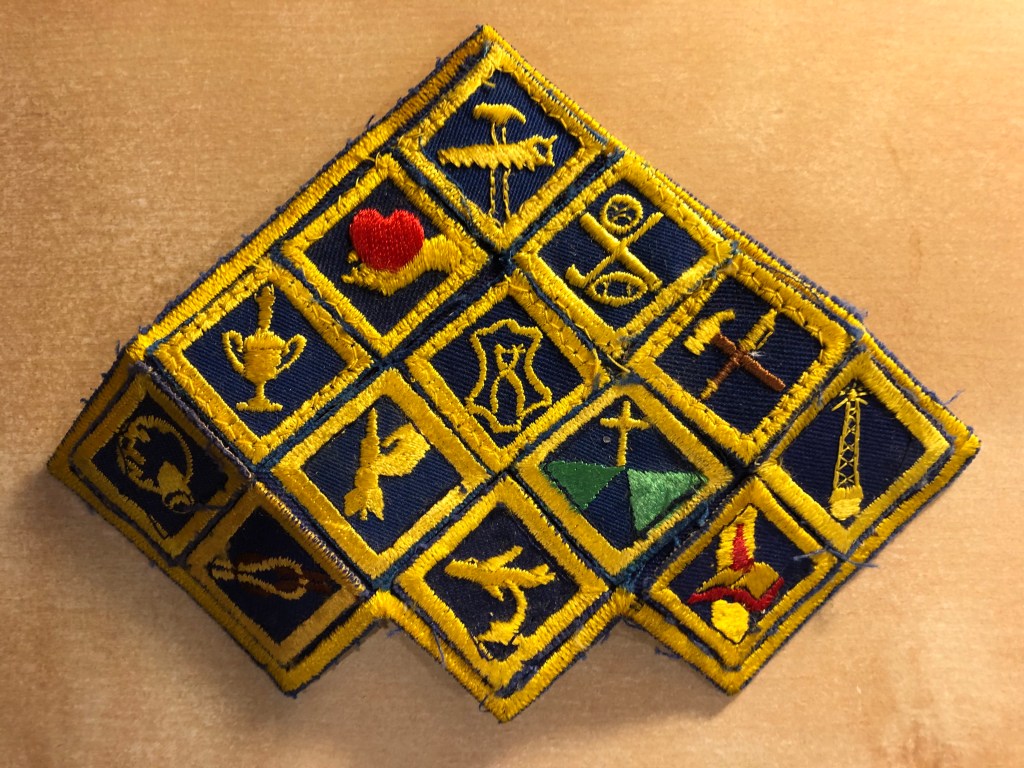
My Cadets merit badge sash circa 1980-something

What’s Up with Pastor Todd 5-15-20

Every Wednesday evening from third grade through eighth grade I would put on my uniform–including the merit badge sash, which I was very proud of–go to church, line up in the “Fellowship Hall” with the other boys according to our grades, and go through the opening exercises of “Cadets,” my church’s more Jesus-y version of Boy Scouts. 

The opening exercises included reciting the Cadet’s Pledge, singing the Cadet’s Song (“Living for Jesus”), and reciting the Cadet’s Scripture verse, “If you love me, you will keep my commandments (John 14:15).” I liked Cadets. I liked earning the different merit badges for knot tying, wood working, electronics, etc. Of course there was a “Bible” merit badge. One of the things I had to do to earn it was memorize the names of the books of the Bible in order–a helpful skill that I use to this day! I liked the campouts, the fundraising, cameraderie, and I’m grateful to the men who gave their time and resources to mentor young boys like me. 

I thought of Cadets when reading the Gospel lectionary for the sixth Sunday of Easter. John 14:15-21 continues Jesus’ “farewell discourse,” which we began studying last Sunday. It’s the Gospel of John’s version of Jesus’ final instructions to his disciples before his crucifixion. We study texts like this during the Easter Season to prepare ourselves–as Jesus prepared his followers–to be Christ’s hands and heart for the world. The historical Jesus is a memory. The living Christ is you and I. Contrary to popular belief, loving Jesus is not primarily an emotion. Emotions come and go. Loving Jesus is an action. More importantly, it’s a repeated action. We call repeated action directed toward the object of devotion “spiritual practice.” Worship is spiritual practice, cleaning the kitchen–if it’s done with an awareness of Christ’s presence–can be spiritual practice, donating to the food pantry is spiritual practice, walking the dog can be spiritual practice. 

Mother Teresa famously said, “Not all of us can do great things, but we can do small things with great love.” Whatever we do–if we do it as Christ’s hands and heart–has the potential to bring us deeper into communion with God and all of life. This is loving Jesus. This is keeping his commandments.
What’s Up with Pastor Todd 5-8-20

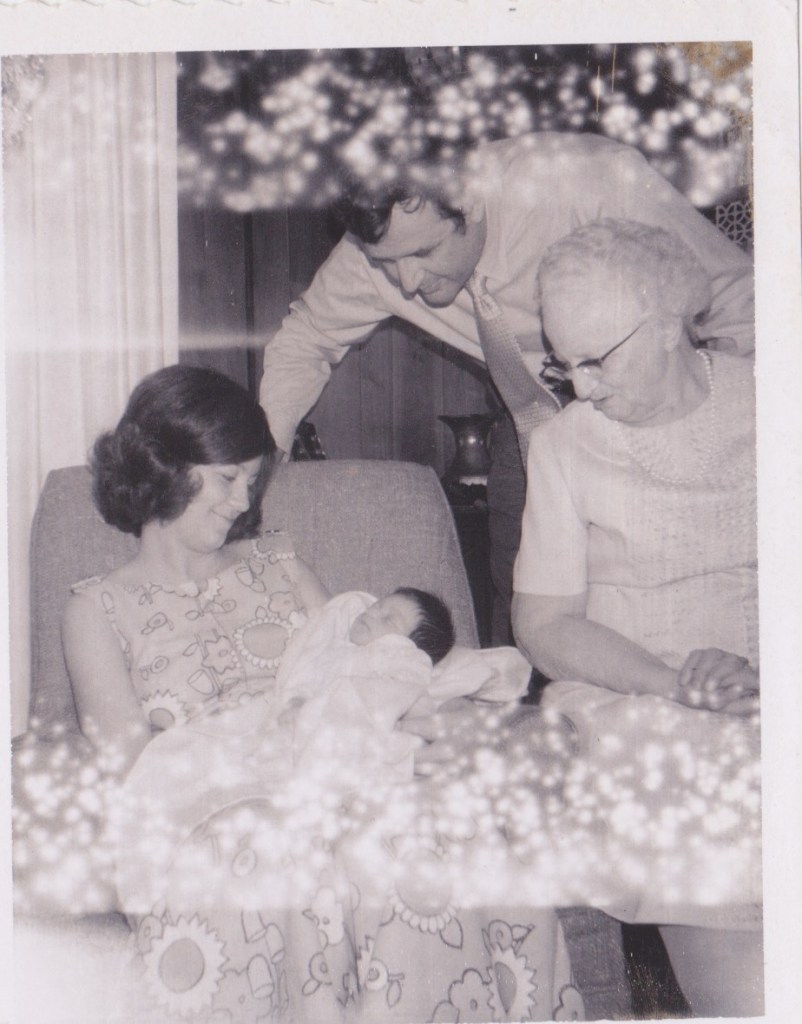
Mom, me, her father (Grandpa Hoekstra) and her grandmother (Grandma Fannie)

What’s Up with Pastor Todd 5-8-20

Dad used to say to me, “You’re just like your mother.” It was not meant as a compliment. Mom and Dad didn’t get along very well. He saw her as weak and indecisive while at the same time claiming she was scheming and manipulative. In reality, my mother is none of these things. After his death, I gained access to Dad’s medical records which included a diagnosis of “narcissistic personality with a histrionic flair.” This meant that he had a tendency to view himself as persecuted. Dad was gay, and he did have deeply wounding experiences of homophobia. But it was as if he had persecution goggles welded to his face. No matter how much Mom or any of us tried to love him, he had a very difficult time accepting it. The point is, Dad’s accusations weren’t personal. It was the mental illness talking.

It’s also possible that Dad heard the words “you’re just like your mother” said to him when he was a boy. He shared with me that in his mind he was “special” and his mother’s “favorite.” In Dad’s time as in ours, the accusation of being a “momma’s boy” often meant bullying was on the way. Clearly, Dad enjoyed the attention he got from his mother. And he was very close to her. But the relationship between mothers and sons can be complicated. This is due in no small part to sexism and discomfort in the wider culture with males who display “female” qualities (the premise of which I reject all together, by the way. There are no essentially “male” or “female” qualities, only human ones.)

Dad’s accusations often had no basis in reality, but I hope he was right that I am just like my mother. She is strong. She is good. She is an adventurer. And she has never stopped growing and changing in all of the time I’ve known her. She is a happily retired minister and chaplain who has traveled the world and blessed countless lives–not least, mine.

What’s Up with Pastor Todd 5-1-20

“The Gate Within”

What’s Up with Pastor Todd 5-1-20

The Gospel of John has a special feature the other gospels do not. In John Jesus makes a number of theological statements that begin with the phrase “I am”: “I am the light of the world”; “I am the Bread of Life”; “I am the true vine”; “I am the resurrection and the life”; “I am the way, the truth, and the life.” There are seven “I am” statements in all. Two are found in John chapter 10, part of which serves as the lectionary text for this coming Sunday, the Fourth Sunday of Easter also known as “Good Shepherd Sunday.” The “I am” statements of John 10 are: “I am the Good Shepherd,” and “I am the gate for the sheep.” I have heard many sermons and sung many hymns about the Good Shepherd. I have never heard a sermon or sung a hymn about the Gate, good or otherwise. So let’s talk about the gate!

It’s easy for me to understand why the Good Shepherd would get all the attention. The Good Shepherd invokes the romantic images of the “green pastures” and “still waters” that “restore my soul” in Psalm 23. The Good Shepherd feels accessible and relatable and comforting. The Gate seems a little weird: The gate for the sheep? What does that mean? However, my experience in life and in reading the Bible is that it’s often the overlooked things that bring the biggest insights. So this Sunday we’ll sing songs about the Good Shepherd, but we’ll reflect on the Gate and our own calling to open the way to abundant life for all during this time of pandemic.