
The Widow and the Judge

What’s Up with Pastor Todd 9-25-19
The sound of rain on the trees and grass, the smell of moist earth on the breeze drifting through the window screens invites my awarenes to return to just this moment. As I notice the small details of life unfolding just as it is, I’m grateful. Admittedly, this is a pleasant moment when gratitude tends to manifest more easily, but what a gift that we as human beings have this capacity of simple appreciation.
I find that bringing my awareness to the present moment is almost always helpful. It’s easy to get lost in dreams of the past or visions of the future–be they frightening or longed for. Reality almost always turns out to be different from what we imagine.
That’s why after our second Meet the Minister meeting, which we shared this past Monday, I invited everyone gathered in the three season porch on the Wilhelm Farm to bring their attention to the late summer breeze, the patchy sunshine on the concrete floor, and their friends gathered at the table for conversation, cookies, and punch. Not every moment is a crisis. Every moment is potentially a moment to enjoy.
This is so important to remember as we move through this time of transition. We need to know where our help comes from. The Psalmist did. “My help comes from the LORD, who made heaven and earth. He will not let your foot be moved; he who keeps you will not slumber.” There is a fair amount of grief and anxiety in the congregation right now. There is also a fair amount of hope. Our task in the months ahead will be, among other things, letting go of what once was and trusting that though we don’t know what the future holds, we know who holds the future.
I was sharing some of this with the staff. They suggested that having some sense of a plan would help with the anxiety. It’s not up to me to tell you what the plan is. Any plan is up to us to craft together. That’s in part what the Meet the Minister meetings are for. Nevertheless, I can share my general sense of direction at this point. Right now we are working in a 3-5 year timeline. During that time we are going to shift our focus outward toward reaching new people. New people bring new life, new energy, and new hope. We are right now in the process of forming a Vitality Team to lead this effort. At the same time, we will be working through a process of building congregational health. We have already started this work with Meet the Minister meetings and the upcoming monthly Working Lunch program following worship. Additionally, the Church Council is recommending we engage the services of a consultant to help us with the congregational health piece. Finally, we will continue a process of collaboration with South Congregational Church to build relationships and determine whether or not we share a common mission. For now, all conversations about money, pastors, and buildings should be set to the side. Those decisions can be made once we determine whether or not we want to be together. If we discover that we can build a compelling vision for the future together, then we wil make those other decisions based on that common vision.
I know this is very high level and abstract for some, but maybe it will reduce anxiety to know that I and other members of your church family can see a positive path forward. As we move forward, the path will become clearer. And, once again, nothing is set in stone beyond the fact that if we don’t do something to address the decline trend we’re simply sealing our own fate. Tell me what you think. This is just my sense of things based on my conversations with you, with the folks at South Church, and my 23 years experience working with congregations in transition.

What’s Up with Pastor Todd 9-19-19
The path to congregational sustainability is a paradoxical process of reaching out and reaching in. This past weekend we began training in the “reaching out” piece. 11 folks from First Congregational Church of Granby participated in a workshop entitled “Reaching New People” hosted at First Church in Windsor and led by Rev. Paul Nickerson, a UCC pastor who consults with scores of congregations across the country around issues of church vitality. First Church in Windsor participated with a team of about 20. FCC Wallingford and South Congregational Church of Granby also had representatives present.
During this intense 9 hour workshop over two days, we learned how changes in the wider culture have made the “attraction model” of reaching new people ineffective. We learned best practices of getting out into our community and inviting people into authentic relationships. This is the basis for reaching new people in the 21st century. We wrapped up the workshop by developing a plan for implementing these new strategies and identifying people who could serve on a Vitality Team to work with the congregation so that together we can use our limited resources to greatest effect in growing the church. The Vitality Team will be supported by ongoing coaching from Rev. Nickerson. Reaching new people isn’t just the job of a few. It’s everyone’s responsibility to learn how to be good inviters. If each person in worship invited one friend to worship every week, we’d instantly double our attendance. Imagine that!
I have already begun leading the “reaching in” process. “Reaching in” is another way of saying “building organizational health.” I have been meeting with staff and team leaders, refining and implementing church policies, casting a vision for a range of possible futures for the congregation, modeling healthy leadership that honors FCC Granby’s Behavioral Covenent, reporting to the appropriate committees, and doing a lot, I mean a lot, of listening. Reaching in is a slow, deliberate process whereby we create safe space in which difficult truths can be spoken and heard in love. No congregation is perfect. Every congregation has baggage from the past that needs to be brought into the light, examined, healed, and released. Every congregation can improve its ability to listen deeply, communicate clearly, and engage differing perspectives in ways that draw people together instead of driving them apart. Most often an intentional congregational process led by a neutral expert (not the pastor) who knows the congregation but has no vested interest in particular outcomes is the most effective way to accomplish these goals.
As a congregation we need to tend our wounds, atone for our mistakes, and build a culture of hope so that we can welcome newcomers and weave them into our congregational life. As a congregation we need to let go of past hurts that weigh us down so that when the storms of change wash over our tiny boat, instead of sinking to the bottom, we can ride the waves. We need to learn how to be vulnerable and trusting with each other so that whatever the future holds we can face it with joy.
How is this related to our conversations with South Church? As I’ve said before, we need to fix the holes in our boat because if we tie one leaky life raft to another leaky life raft, where does that get us? We’re all still going down. Or think of it this way: what marriage is most likely to succeed? One in which the partners are stressed out, depressed, and dying or one in which the partners are happy, hopeful, secure in their identities, and looking to the future?
Whatever our future, the process of reaching out and reaching in will take us where God and the Town of Granby need us to be.
What’s Up with Pastor Todd 9-4-19
One of the hottest topics at FCC Granby has to do with the question, “How do we reach new people?” My first response “I don’t know.” Those of you know me will know that that’s a bit of a joke. The fact is that I was put on this earth to help people connect to God. It’s the one thing I seem to be able to do. But, a key to reaching new people is starting in exactly this place of “not knowing.”
Each person is unique and is in a different place on their spiritual journeys. In order to reach that person who is right in front of us, we start from a place of complete openness and not knowing. “Who are you?” “What makes you tick?” “What are your loves?” “What are your fears?” “What do you long for?” Now, you wouldn’t necessarily ask these questions to a complete stranger. They would think you’re weird or inappropriate. But in our minds and attitudes that’s where we begin. Great spiritual teacher Shunryu Suzuki calls this “beginner’s mind.” It is a mind of love, of radical compassion, and limitless possibility. An expert already knows the answer. A beginner is a friend who shares your questions and is excited to search with you for the answers.
This is very different from charity. I have found that in UCC churches, we confuse “reaching new people” with charity. We call it “outreach.” “We do tons of outreach,” people tell me. We feed homeless people at the shelter and collect food for the foodbank and donate diapers to the womens’ shelter. All of these are worthy causes. A helpful way to think of them is as “mission to.” We have a “mission to” the homeless community or a “mission to” victims of abuse or a “mission to” refugees. We offer them a service, but we don’t usually put the future of our church in their hands.
Charity–at least as congregations practice it–tends to have a “mission to” approach. By contrast, reaching new people requires a “mission with” approach. A “mission with” approach seeks to make spiritual connections with people for the purpose of helping all of us connect to God. It is sharing your faith with your neighbors. It is inviting your friends to a church barbeque. It is starting a lunch time Bible study in your office or in your home. It is praying with a family member. It is attending community events and supporting community initiatives. It is asking town leaders, “If you were to create a church from scratch, what would it look like?” And then designing worship, program, building, staffing, everything around not what we would prefer but around what the community truly needs.
Beginner’s mind is a humble mind that admits that perhaps we are declining as a congregation because we don’t know how to do church as well as we think we do. A beginner’s mind is willing to consider that perhaps instead of trying to convince people that they should come to us, we should go to them.
Today I had a touching conversation with Robin, whose son owns the Village Cork and Keg. She’s stressed out working multiple jobs and helping out her son at his business. I offered to pray for her. We had a profound moment of spiritual connection right there in the package store. That’s where we were. That’s where we met. Reaching new people means reaching people where they are. When we reach out to others with a beginners mind and the intention of being in “mission with” them rather than doing a “mission to” them, we might find, to our surprise, a divine presence reaching back.
What’s Up with Pastor Todd 8-19-18
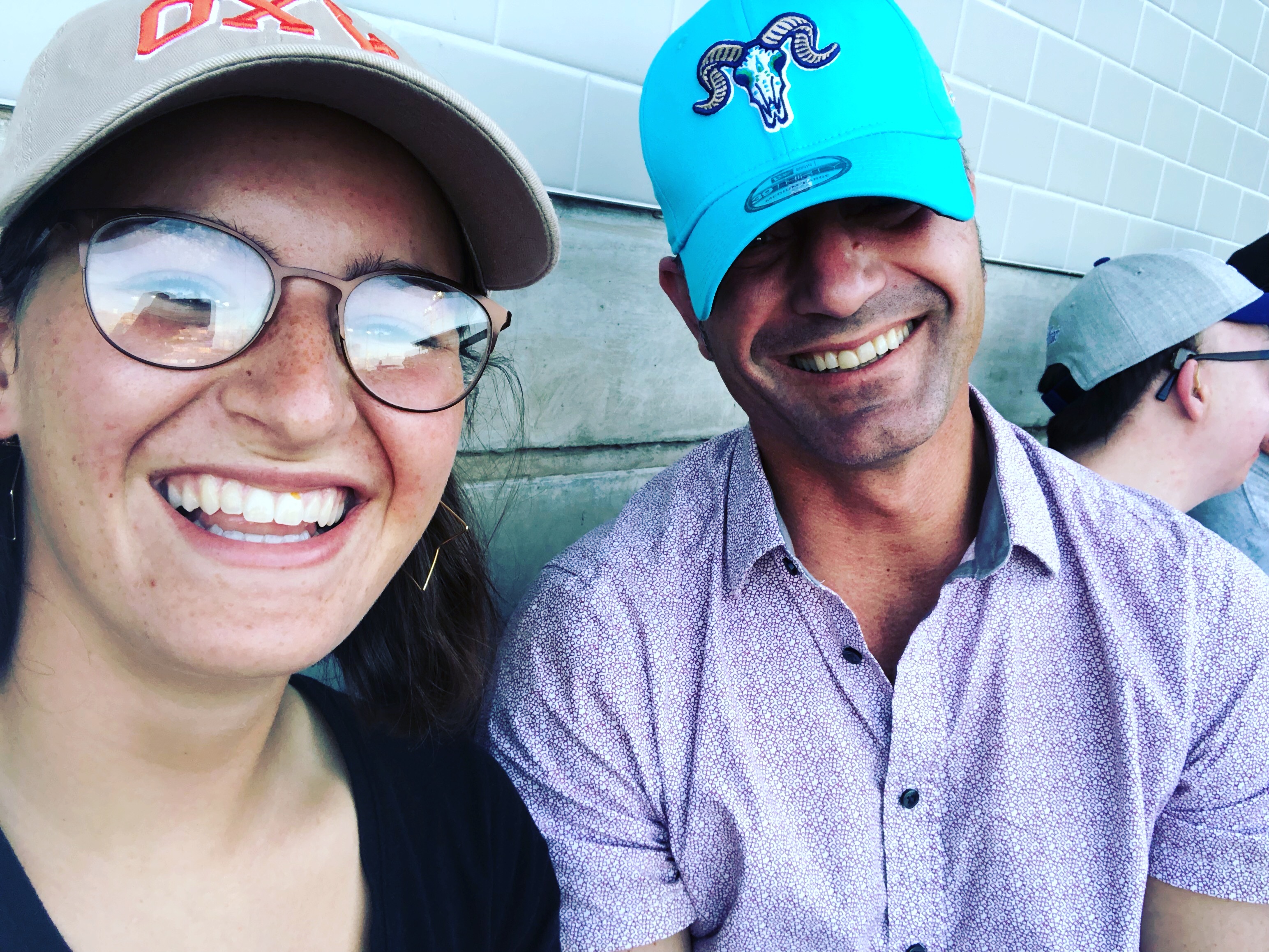
We’ve been preparing all summer. Perhaps even longer than that: since high school graduation, or maybe a year ago when Olivia and I flew to LA to visit Occidental College. We could dial it back even further: to the moment I first met newborn Olivia, held her, and knew in my heart that one day life would ask me to let her go.
Tomorrow Nicole–my wife, Olivia’s mom–will fly with Liv to LA and move her into her freshman dorm. A couple weeks from now Nicole and I will move Liv’s older sister, Fiona, to Williams’ College for her senior year. Though it’s been happening in stages, the nest continues to empty.
Moving one’s youngest to LA to begin college is both a “change” and a “transition.” Transition and change are related but different concepts. In his book Managing Transitions, William Bridges writes, “It isn’t the changes that do you in, it’s the transitions.” Bridges defines “change” as “situational” and “transition” as “psychological.”
Change is starting a new job, moving to a new location, receiving a new diagnosis, welcoming a new family member, saying goodbye. Change can be big or small, welcome or unwelcome, pleasant or unpleasant. Change is the nature of reality. Change just is.
Transition, according to Bridges, “is a three-phase process that people go through as they internalize and come to terms with the details of the new situation that the change brings about.” Change is moving Olivia to LA. Transition is coming to terms with a new identity: empty nester. The three phase process is 1) ending/losing/letting go, 2) “the neutral zone (chaos),” and 3) new beginning.
Change and transition happen on a personal level. They also happen in organizations. As your transitional minister, it is my job to help FCC Granby identify the kinds of changes our situation is calling for and then lead a transition through the three phases: ending, chaos, new beginning.
The distinction between change and transition is key because without that understanding, what most churches do is rearrange the deck chairs on the Titanic. They change their by-laws so that “committees” are now called “ministry teams.” They use different words for Communion or change the words of familiar hymns. They develop new programs that focus on the same people. They may even merge with another congregation but because there is no process of transition, the newly merged congregation just ends up being a dying, mashed up, grumpy repeat of the old ones. In dying churches there is often a ton of change but none that leads to a fundamentally new sense of purpose and identity. For that, one needs to go through transition.
As your transitional minister, I am not particularly focused on surface level change. Is whether we sing the Doxology following the offering or some other reponse really going to turn this church around? Is focusing on food insecurity instead of homelessness really going to be the key to a sustainable future? Is changing the words to Communion suddenly going to bring in the crowds? Usually when someone gives me permission to change something, it’s surface change. However, when I change something and the congregation says, “Change back,” then I know we’re into transition territory because what we resist is not “change” per se, but change that results in loss of some kind, exactly the kind of loss that is the beginning of transition.

What’s Up with Pastor Todd 8-12-19
It’s not often that I get a request to write to a topic, but church member Aurelle Locke has asked that I write about the difference between treating newcomers to church as “visitors” versus treating newcomers as “guests.” In short, a “visitor” tends to be unexpected. Someone shows up during office hours wanting to see me. Our office manager, Sue, walks down the hall, knocks on my door, and says, “Pastor Todd, you have a visitor.” A “guest” is someone you’ve invited, so you’re prepared to welcome them. Nicole and I love to host parties. We have our process of preparation to receive guests down to a science. She cooks. I clean. Cleaning for guests is a spiritual discipline for me. I prepare my heart to receive our guests as I prepare the space.
Here’s the context: Aurelle had noticed that I started doing weekly children’s sermons. At some point before my arrival, the church had stopped including children’s sermons in worship, I was told, because so few children were showing up for Sunday worship. Too often there were no children in worship.
I understand that having a children’s sermon when there are no children in worship calls attention to the fact that we don’t have a critical mass of children in the congregation. There are people in the congregation who remember a time not too long ago when we had many children. I understand that some might feel bad to be reminded of this. But it makes no sense to hide the fact. People are going to notice anyway and wonder what, if anything, we are doing about it. Also, not having a children’s sermon when families with children do show up sends the message that they are “visitors.” We were not expecting them and, therefore, not prepared for them. This is the attitude I call, “You’re welcome if you come (but you probably won’t).”
Instead, we want people–especially newcomers–to feel like “guests.” That is, you are invited, we are expecting you, and we have prepared this experience with you in mind. This is the attitude I call, “We want you here, and we’re serious enough to have prepared for you.”
This attitude change is a key for shifting from a declining congregation to a growing one. It holds not only for children’s sermon but also for every aspect of a church’s life. That’s why, for example, I turn on the entryway lights when I enter the church. For some reason, that doesn’t seem to be the practice here. But think about it, How does that feel when you walk into a building and all the lights are off? If it were my first time in that building, I would assume no one is home.
Another example: make sure there are signs to indicate where in the building the meeting or event is. Better yet, have someone stationed at the door to greet and give people directions.
I’ll never forget the time I led community Bible study. We had triple the normal attendance because we made personal invitations. The newcomers appreciated the Bible study, but they went out of their way to comment on the wonderful, clear signs that told them where to find the Bible study. They got the message: “We want you here, and we’re serious enough to have prepared for you.”
So much of this stuff is not expensive, not difficult, and definitely not rocket science. It’s just a matter of awareness. And awareness is the fundamental spiritual practice. Everything communicates, so everything counts. Are we communicating, “You’re welcome if you come (but you probably won’t)?” How do people in Granby view us, really?
Here’s an example of, “We want you here, and we’re serious enough to have prepared for you”: What if as a requirement to attend a “Thank Goodness it’s Friday” social supper, everyone is expected to bring a guest? And we brought food and beverage enough for everyone? And we made it a special point to focus our attention less on the people we already know and more on the people we have yet to meet? Our church would grow so fast we would have a whole new set of problems. Good problems. Problems like, “How are we going to fit all these kids in our Sunday school classrooms . . . ?”

Rev. Dr. Todd Grant Yonkman, Transitional Senior Minister
First Congregational Church of Granby
Sermon Series: Favorite Scripture
28 July 2019
Text: Rev. 22:16-20
Spiritual Goal
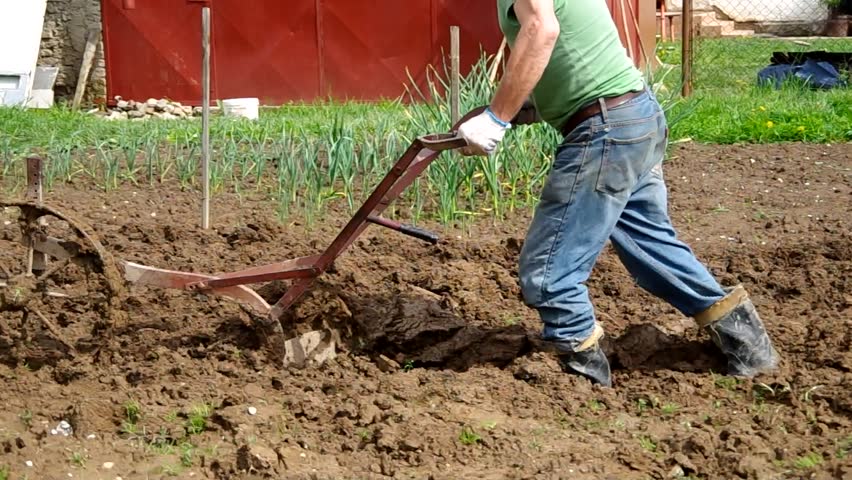
What’s our purpose as Christians? As a church? That’s the question behind today’s favorite Scripture. It comes to us from Nancy Dow. When Nancy told me that her favorite Scripture is Revelation 22:16-20, she said, “I think it’s important that we focus on the end.” What I understood her to be saying is that we as Christians should not lose focus our purpose. What is our goal? What are we working toward? It reminds me of the sacred conversation Ann and I had last week in which she explained that when you’re plowing a field, you can’t look back. You need to keep your eyes on the horizon. Revelation 22:16-20 is very much focused on the horizon. This text contains the last words of the last chapter of the last book of the Bible. Last words carry special power. When someone dies, we often give their last words special significance. When I write a sermon I put a lot of focus on the end, the last paragraph, the last sentence, the last word, because that’s what people are most likely to remember.
In today’s Scripture the most repeated word is “come.”
The Spirit and the bride say, “Come.”
And let everyone who hears say, “Come.”
And let everyone who is thirsty come.
Let anyone who wishes take the water of life as a gift.
The one who testifies to these things says, “Surely I am coming
soon.”
Amen. Come, Lord Jesus!
The word that rings through this passage is “come.” It’s not a “come if you’d like to” invitation. It’s a “get over here. We want you. We need you” invitation. At the center is the water of life. The image I see is a gathering at a well or maybe at the beach. There’s an old folk song that goes, “I went down in the river to pray, studying about that good old day and who shall wear the robe and crown, dear Lord, show me the way. O brothers let’s go down. Let’s go down. Come on down. O brothers let’s go down, down in the river to pray.” When we look to the horizon, what do we see? An invitation. “Come.”
The whole of our purpose is invitation. It’s helping people, help each other connect to God. Martin Luther famously said that Christianity is one beggar telling another beggar where to find bread. And there are a lot of hungry people out there. Our own Rebecca Brown has proven that. She came here four years ago as a lay minister for children and youth. When she arrived there were eight people in the youth group. Now there are over forty. How did she do that? Invitation.
Some of you may think that means Rebecca did all the inviting. That’s not the case at all. She engaged step by step in a very methodical process. The first thing she did was tell the group that their job was to grow. This message was met with resistance. There were some in the group who did not want to grow. They didn’t want “outsiders” messing things up. This was their group made up of people they were comfortable with. What if they didn’t like the new people? Rebecca held her ground, and the people who didn’t want to grow left the group. Now she was down to four kids.
Rebecca took those four kids and poured everything she had into them. She went to every event, every game, every concert, every party. Every opportunity she had to embed herself in the lives of the youth of this town, she took. She didn’t sit in the church and wait for youth to come to her, she went to them. She met youth on their terms, in their space. She made herself the guest. Instead of setting herself up as someone with the answers, she made herself a student of youth culture. She invited them to teach her. She showed up for them. Then they started showing up for her.
According to Rebecca, it only took about a year of networking and showing up before word about the youth group at FCC Granby started to spread. In other words, the youth themselves became the inviters. There wasn’t any fancy advertising. There weren’t any splashy events. It was all word of mouth. The reason I mention this is that this is consistent with other stories I’ve heard about church growth. My office manager in Stamford was a member of Grace Church in New Canaan for many years. Today Grace Church has thousands of members in a multi-million dollar campus that was featured in the New York Times because of its award-winning architecture. She told me she remembered the church went it was a group of people meeting in the pastor’s back yard. I asked her what was the secret to their growth. She said, “It was all word of mouth.” In terms of our FCC youth group, the eight that then became four has increased 10-fold to a group of over 40 kids. What if our church membership increased 10-fold? We would have a whole new set of problems. Good problems. Let everyone who hears, say, “Come.” Let everyone who is thirsty come.
The other thing that’s significant about our youth group is that it focuses on the spiritual needs of youth. The numbers only tell part of the story. Rebecca calls it “breaking into the hearts of our kids.” She describes her program as “No fun. No games. No food.” It’s the real stuff: honest, spiritual conversations about things that have direct relevance to their lives as teenagers, conversations, friendships, experiences that they can get nowhere else. If they could have these conversations elsewhere, they probably would. Rebecca sees her task as creating a safe container where young people can let down their pretenses, open their hearts, and be vulnerable. In other words, youth group is about getting real. It’s about authenticity. And, yes, sometimes they have food, fun, and games. Granby youth have spiritual lives and spiritual needs that aren’t being met anywhere else. I wonder if this is also the case for Granby adults?
Every one of us is here because someone else brought us whether it was a parent, grandparent, neighbor, or friend. Maybe it wasn’t to this particular church. Maybe you were one of the increasingly rare types who will just show up at church because it’s something you already value. But how did you come to value it? Because at some point somehow somewhere down the line someone said, “Come.”
Jesus didn’t wait for us to come to him. Scripture says, “5 Let the same mind be in you that was in Christ Jesus,
6 who, though he was in the form of God,
did not regard equality with God
as something to be exploited,
7 but emptied himself,
taking the form of a slave,
being born in human likeness.
The world is hurting. How can we be satisfied huddling together inside these enjoying each other’s company when there are so many longing for a heart connection? The goal of the spiritual life is the joy of extending oneself to welcome the other. How do you expect to grow if you won’t stretch? And stepping out beyond our familiar and comfortable walls into the world to engage people where they are is an endless opportunity to stretch. The Spirit says, “Come.” And if we indeed are the spiritual people we imagine ourselves to be, we say with every fiber of our being, “Come. We want you here. Let’s learn together how to heal this world.”

What’s Up with Pastor Todd 7-15-19
Sunday we continue our “My Favorite Scripture” sermon series. This week we’ll be looking at Luke 9:57-62, focusing particularly on verse 62: “No one who puts a hand to the plow and looks back is fit for the kingdom of God.” This Scripture is a favorite of Ann Wilhelm.
Ann found this Scripture inscribed in the cover of her father’s childhood Bible. Ann’s father, Fred, and his wife, Edith, who was a refugee from Nazi Germany, bought a farm in Granby on which they raised Ann and her siblings. Today Ann and her husband Bill Bentley own and manage the family farm. This Scripture came to mind as Ann was thinking about FCC Granby and her role in the church’s transition to a new way of being.
For me, this Scripture points to the tendency of people and congregations in transition to hedge our bets. As the familiar hymn says, “Love so amazing, so divine demands my soul, my life, my all.” But we don’t want to let go of it all. We don’t want to turn our church over to Jesus and let him have his way with us. What if something happens I don’t like? What if I’m asked to give up something important to me personally? So there’s a lot of bargaining that goes on in church transition. Not surprising, since bargaining is one of the stages of grief. And transition always involves loss and grief.
But I want to hear Ann’s thoughts. And I want you to hear them, too. So this Sunday we will be doing something a little different with the sermon. Ann and I will be sharing the sermon as a “sacred conversation.” It’s a kind of semi-scripted dialogue in which together Ann and I will be reflecting on the Scripture and its connection to our life as a congregation. I look forward to a great conversation!
By the time you receive this I will have taken a couple days of meditation retreat. I’m grateful for the opportunity to go deeper spiritually so that I can lead the congregation in deepening our connection with God. Successful congregational transition requires that we go in two directions at once. We need to go deeper spiritually because transition is incredibly difficult and demanding. We need to get spiritually “fit” for the kingdom of God so that we can meet the demands of the work ahead of us. We also need to go outward relationally to connect with our neighbors. As I said this past Sunday: the future of FCC Granby lies with the people who are not yet members of our congregation.
*Call to Worship (from Psalm 77)
Leader: I will call to mind the deeds of the LORD; I will remember your wonders of old.
People: I will meditate on all your work, and muse on your mighty deeds.
Leader: Your way, O God, is holy. What god is so great as our God?
People: With your strong arm you redeemed your people, the descendants of Jacob and Joseph.
Opening Prayer
Holy God, abiding faith is so difficult. We continually hedge our bets. With our mouths we say we trust in you, but in reality we continue to cling to tattered shreds of the familiar and comfortable. Teach us to let go. Teach us to seek first your Kingdom and its righteousnes. Teach us to exchange the tattered shreds of what once was for the unimaginable gift of what might be. In Jesus’ name, Amen.

What’s Up with Pastor Todd 6-20-19
This Sunday FCC Granby is joining with South Congregational Church of Granby to celebrate a “Union Service.” As I understand it these special worship services have been taking place for several years. Usually about twice a year the two congregations have gathered on Sunday morning for a joint worship service—sometimes in the First Church building, sometimes in the South Church building.
These services are part of a larger conversation about closer collaboration between the two congregations—some have even talked about the possibility of merger. Part of my role as Transitional Senior Minister is to help FCC Granby weigh closer collaboration with South Church as a possible path to long term sustainability for the ministry of the United Church of Christ in Granby.
I am still learning the details of the conversations so far. I am still learning the strengths and weaknesses of FCC, the dreams and visions of South Church, the needs and potentials of the Town of Granby. Every transition is unique. The path to sustainability, if that is indeed FCC’s desire, is going to have to be designed and walked by the members of FCC ourselves. No one else can do it for you.
The point of the union services, as I see it, is to worship together. The point of worshipping together is to see how it feels. What is the energy? How does it feel to have more people in worship? Does the blend of these congregational microcultures make sense? Most of all, could we be more together than apart?
While the answer to that question might seem obvious to some, in reality it isn’t. Most of the time when churches merge, they don’t grow. In fact, they soon shrink back down to whatever size one or the other previously was. That’s because the merger is not undertaken with a vision for a brand new identity and purpose of the new combined community. If you don’t fix the holes in the life rafts, it doesn’t matter if you have one or two. Everyone’s going down. In fact, while we’re desparately trying to keep from sinking, it may be that we’re missing the cruise ship that was sent to save us.
So the focus can’t be whose building or whose pastor or whose endowment. That’s just a fight over leaky lifeboats at this point. The question has to be Do we have a shared vision to reach new people in the ways that they want to be reached? If the question is one of maintianing an insitution, we’re doomed. If, however, we truly love our neighbors and are willing to do whatever it takes to help them connect to God, the answers to these other questions around our conversations with South Church will soon become crystal clear.
 Todd Grant Yonkman