How to Handle Anger

Call to Worship
Jesus said, “Love God with all your heart, soul, mind, and strength.”
Jesus said, “Love your neighbor as yourself.”
We do our best to love others.
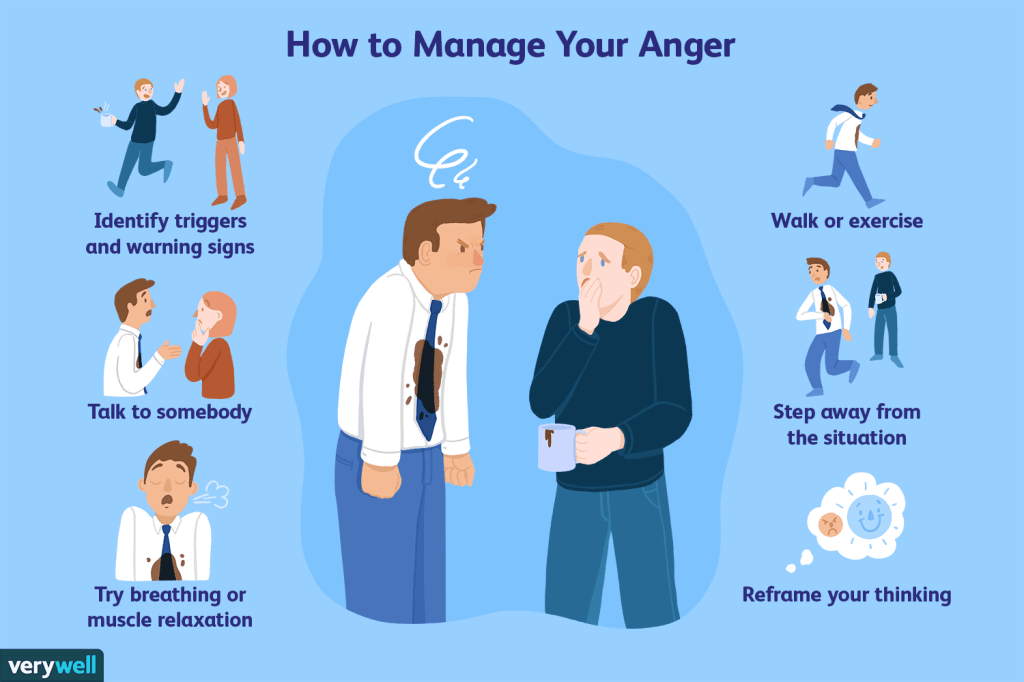
Sometimes we become angry, even with those we love.
Holy God, teach us how to handle anger.
Teach us how to speak the truth in love.
Prayer of Dedication
Holy God, we dedicate our offerings in service of love and justice. Amen.
What’s Up with Pastor Todd 2-14-20
Handling anger is difficult to do well. Buddhism, for example, identifies anger (along with greed and ignorance) as one of the “three poisons.” In the Sermon on the Mount, Jesus says, “everyone who becomes angry with his brother is liable to judgment.” Anger is a human emotion. We feel it, often before we’re consciously aware of it. Anger “overcomes” us, floods our neurotransmitters, narrows our vision, sets our hearts racing, “boils” in our guts. It activates the “fight or flight” response in the most primitive parts of our brain. Anger can be incredibly destructive whether we express it outwardly in hurtful words and actions or turn it inward where it manifests as depression, bitterness, and physical ailments. So how do we handle it?
Although I doubt they intended to, my family taught me that anger was scary and shameful. They didn’t teach me this explicitly. Like all children, I learned my lessons on anger by watching my caregivers (who, in turn, learned how to handle anger from their caregivers.) We were a Dutch immigrant family that tended toward emotional reserve. As an adult I can see that there was a lot of anger under the surface. I’m grateful I didn’t witness any physical violence or verbal abuse. Instead rage seethed underneath and manifested as physical absence, cutting remarks, alcoholism, infidelity, lying, and other passive-agressive behaviors. This disconnect between how we as a family presented ourselves publicly as happy and healthy and the chaos churning behind closed doors created its own challenges for me as I became an adult.
As an adult I’m still very much learning how best to handle my anger. For me, meeting the reality of anger begins and ends with awareness. It was a huge shift for me simply to admit that I’m incredibly angry . . . for all kinds of reasons. These days most of my anger is in the form of “moral outrage.” I anger myself when I notice my own failings as a Christian. I notice loving churches that have so much to offer their communities “hiding their light under a bushel” while mean, vengeful, and bigoted Christians spread their message far and wide and I get very, very angry. Mostly I’m exhausted by the moral outrages of our current politics, but when our government puts children in cages or when 26 first-graders are gunned down in their classroom and politicians cry “2nd amendment” or when I notice the casual, day-to-day violence and racism that implicate all of us who vote, pay taxes, and work for the improvement of our communities, my anger flares up, and I say something.
Just creating the psychic space where anger can come into view increases the likelihood that I can engage it productively. It’s become a joke around our house when I’m moping and acting out of sorts for my wife to say to me, “Now Todd, use your words.” Just saying “I’m angry” opens the door for conversation that can create the conditions whereby anger, which is simply a form of psychic energy, can be directed toward fixing a situation that is not as good as it could be.
Anger arises in the context of love. Mr. Rogers put it this way, “It’s the people we love the most who can make us feel the gladdest and the maddest! Love and anger are such a puzzle!” Jesus’ command to “love your neighbor as yourself” is the context for his teaching on anger. This week at First Congregational Church of Granby we will stand close enough to the flame of anger to benefit from its warmth and energy yet at a respectful enough distance that none gets burned.
*Opening Prayer
God of unconditional love, you tell us that heaven is a banquet where everyone has a place at the table. We look forward to that banquet in the world to come. But what if we could taste it right here, right now? What if we lived that reality today? What if we experienced that unbounded joy? It seems impossible, but you tell us that with you, all things are possible. We confess we live too much in our worries and fears. We worry that if more people join us at the table, there may not be room for us. We’re afraid that someone might take our place. Teach us a deeper truth. Teach us the reality that your love is limitless and that as we share it we will see that there is room at the table for everyone. Give us the tools to love people in the ways they need not the ways we would prefer because we know that love is the highest worship. Amen.
*Prayer of Dedication
We dedicate our offerings to the work of making room at the table so that more and more our earthly reality might reflect the heavenly one. Amen.

What’s Up with Pastor Todd 12-24-19
This Advent season we’ve explored ways to cultivate hope, peace, joy, and love in our lives. The cultivation of these qualities creates an optimal environment for the Spirit of Christ to be born in our lives. That’s the idea, anyway. This, of course, isn’t a one time or even an annual process. The cultivation of hope, peace, joy, and love is a practice we as Christians are invited to continue every day because our circumstances are continually changing and every day is an opportunity to refresh these qualities in our lives.
Nevertheless, as I prepare for Christmas Eve services, I’m faced with the question, What is this “Christ-event”–as some theologians call it–anyway? What am I preparing for?
Jesus the Christ was a real, historical person who was born some two millennia ago around 6 A.D., most scholars think. Only two of the four gospels contain birth narratives. Both birth narratives contain a mix of historical and mythological details told not primarily for the purpose of documenting historical “truth” in the modern sense but for the purpose of expressing theological truth rooted in human experience that we can access today, in this very moment, in fact.
For me, the theological truth of Jesus’ birth is that God is being born each and every moment in my experience. Each moment is a precious gift to be welcomed, nurtured, attented to, prized, and shared.
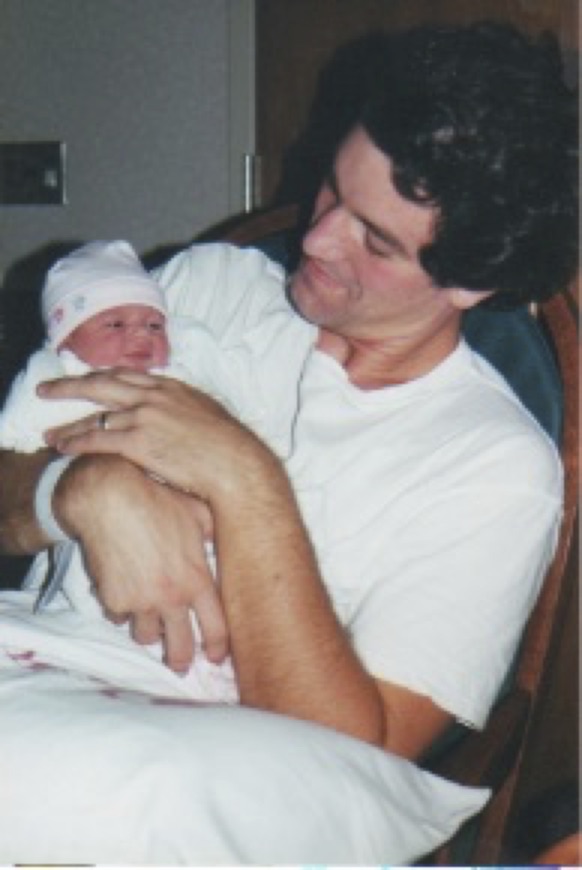
Is every moment pleasant? No. Absolutely not. I remember early one morning after our second child, Olivia, was born. She woke up screaming to be fed. It was my turn to do the night feeding, so I got up, warmed up some breast milk from the fridge, picked up the screaming child from her crib, and sat down in the rocking chair to feed her. Not thirty seconds later, her older sister, Fiona, who was three at the time, was standing next to me in tears because Olivia had woken her up. Fiona wailed that she wanted me to rock her. Then Olivia started crying again. This routine had been going on for weeks. I was delirious with exhaustion. I distinctly remember having the thought, “This is going to kill me.”
But it didn’t, of course. Somehow I managed to handle the situation by myself. My wife, Nicole, got her sleep. And now those screaming children are beautiful adults.
Can you tend your life like you would a precious infant? Can you welcome the screaming with patience? Can you welcome the smiles with joy? Can you savor that newborn scent even if the air its carried on is bitter cold?
I am so glad to share this one precious life with you. My wish for us this Christmas is greater strength and deeper tenderness to welcome all the moments of 2020, no matter what shape they take, no matter what opportunities they bring.

What’s Up with Pastor Todd 12-18-19
“Joseph, son of David, do not be afraid to take Mary as your wife . . . .” (Matthew 1:20)
When Joseph found out his fiance Mary was pregnant and he wasn’t the father, an angel says to him, “Do not be afraid.” It’s interesting that the emotion attributed to Joseph at this point is fear. I might have thought anger because from a human standpoint, the assumption would be that Mary had cheated on him. But anger isn’t named. The emotion that needs to be released in order for the holy wedding to take place is fear.
The thought of marriage scared the pants off me when Nicole and I were dated. My parents were in the process of an ugly divorce. Her parents had also had an acrimonious divorce. Our families’ recent track records were not good. Who could say we would do any better? In the end, with fear and trembling, I asked, and she said, “Yes.” Twenty-three years later we’re still together! For me, it has less to do with anything special about us. It has more to do with God’s grace and an amazing support system. And even after all these years, I am deeply aware of how fragile it all is.
The Apostle John writes that “perfect love casts out fear.” This suggests that love and fear go together. True love demands vulnerability, vulnerability brings risk, risk often gives rise to fear. “Will I be rejected?” “Will I be taken advantage of?” “Will my loved one leave or die?” Human love is imperfect, so fear goes with the territory. That’s why for me a key to making human love work is grounding myself everyday in God’s perfect love. If you’re not at least a little afraid, you may not be risking true love. If you find yourself afraid to, for example, share your feelings, be honest, meet a neighbor, share a gift, make a friend, commit to a relationship, instead of ignoring the fear, you might sit with it for a bit, invite divine love to shed some light on the situation, and then step forward with courage.
 Todd Grant Yonkman