
Category: jesus
What’s Up with Pastor Todd 4-17-20

What’s Up with Pastor Todd 4-17-20
On the church calendar this is the first week of the Easter Season: 50 days between Easter and Pentecost. Pentecost is the Sunday we celebrate the outpouring of the Holy Spirit on Jesus’ followers. Jesus had ascended to heaven following his resurrection, but had promised his followers the Holy Spirit, who would empower them to carry on his mission even though the physcial form of the historical Jesus would no longer be present in the world. The 50 days of the Easter Season was an intense time during which Jesus prepared his followers to be his hands and heart for the world.
This preparation begins with appearances of the resurrected Christ. This week’s Scripture, John 20:18-31, recounts two appearances of Jesus to the disciples who had gathered the week before to celebrate Passover with Jesus in the “upper room” they had rented for the occasion. The text–like all of the stories of Jesus’ appearances–raises two big questions: “Who is this resurrected Jesus?” And “How should we respond to him?”
The John 20 account is famous for the story of a disciple named Thomas. As I mentioned above, Jesus appears twice in John 20. The first time Thomas is absent. His fellow disciples tell Thomas that they saw Jesus, but he doesn’t believe them. He says, “Unless I see the mark of the nails in his hands, and put my finger in the mark of the nails and my hand in his side, I will not believe.” Jesus appears to the disciples a second time. This time Thomas is among them. Jesus invites Thomas to examine and touch his wounds–just as Thomas had demanded–and Thomas believes. The scene ends with Jesus saying to Thomas, “Have you believed because you have seen me? Blessed are those who have not seen and yet have come to believe.”
If you were in Thomas’ shoes, how would you respond to reports that Jesus was alive? I grew up in a very conservative Christian community that understood faith to be a kind of “belief without proof,” a kind of “take my word for it.” The Bible says God raised Jesus from the dead, so we should accept it as fact even if it seems like a fairytale. To doubt or question was understood to be antithetical to faith. While I definitely had my questions and even as a young child asked them, more than that, I wanted to be a good Christian, so I accepted what my parents and Sunday school teachers and pastors said even if not everything made sense.
As a young adult I studied at a divinity school where we learned to question and critique Biblical texts and church doctrines. As an middle-aged adult I have pastored more liberal churches in which folks tend to wear doubt as a badge of pride–a sign of intellectual rigor and freedom of conscience. And as I have gone deeper in my studies I have noticed yet another turn: a practice of doubting one’s doubts. A comedian once put it this way: “You say there is no God. Are you sure? Have you looked everywhere?”
I invite us to consider stepping beyond faith and doubt as intellectual exercise. The significance of Christ’s resurrection for me is the reality it points to: following Christ’s way moment to moment makes new and abundant life possible for me, for you, for all of creation. Try it yourself and see!
In the Garden
Daily Devotional 4-7-20
Worship Resource 4-12-20, Easter Sunday-Year A
Opening Prayer
God of life, defeater of death, we worship you because you alone are worthy. Thank you for Jesus, firstborn of the dead, who has shown us the pathway to life everlasting. In these stay at home days, be our shelter. In this time when news of illness and death is all around, restore us to life. In this time of economic anxiety and financial peril, establish our faith in your generous provision. Amen.
What’s Up with Pastor Todd 4-10-20
What’s Up with Pastor Todd 4-10-20
The resurrection story in the Gospel of John is famous for its recounting of Mary’s personal encounter with Jesus “in the garden” near the tomb. John is the only gospel that contains this story. It’s vivid in detail, and it inspired the schmaltzy hymn “In the Garden.” For those of you not familiar, it goes like this:
I come to the garden alone
While the dew is still on the roses
And the voice I hear
falling on my ear
the Son of God discloses.
Chorus:
And he walks with me
And he talks with me
And he tells me I am his own
And the joy we share
As we tarry there
None other has ever known.
The joke in my family was, “Who’s Andy?” (You know “Andy” walks with me. “Andy” talks with me . . .)
You probably love this hymn. A lot of people do. And I’m not immune to schmaltz, but this particular hymn was always a little much for me.
That’s why I’ve chosen to preach on this text this week. I wonder if there’s something vivid and powerful underneath the layers of sentimentality that have been slathered on this particular resurrection scene that can speak to this time of crisis.
If I had to guess, it might have something to do with the garden and gardening itself. John tells us that when Mary encounters Jesus she at first mistakes him for the “gardener.” The image of the garden reminds me of the Biblical Garden of Eden and all that transpired there: creation, disobedience, the curse of Adam and Eve, and the promise of redemption. It also reminds me of the famous pronouncement following creation: “God saw all that God had made, and behold it was very good.”
As coronavirus wreaks havoc across the planet, does “very good” still apply? Had resurrection really happened back when Mary encountered “the gardener” so many centuries ago? More importantly, can it happen now?
Love Wins
Palm Sunday Worship Livestream 4-5-20

What’s Up with Pastor Todd 4-3-30

What’s Up with Pastor Todd 4-3-20
It’s week two of the stay at home order for the State of Connecticut. I’m sitting on the three season porch where I’ve spent the day in Zoom meetings. Late this afternoon I spent an hour on what has been a four year project of cleaning up our overgrown backyard. Otherwise these four walls have defined the limits of my physical movements. Spiritually, I’ve been preparing for Palm Sunday.
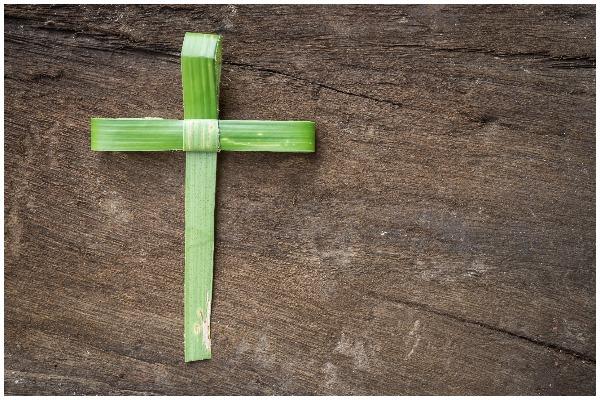
When I was a kid, Palm Sunday was the warm up for Easter. I remember lining up before worship in the Narthex with dozens of other kids waiting to receive my palm branch. When the congregation stood and the organ played the introduction to “All Glory, Laud, and Honor,” our Sunday school teachers led us in a palm parade down the center aisle. The celebration was loud, grand, and performed with a packed house. It felt like the time my daughter’s fifth grade team won the Downeast Maine girls basketball tournament. Following the championship game the town firetruck led a parade down Main Street. Folks lined frigid streets, dark already at 4pm, to cheer the victors. There’s nothing so grand as supporting the winning team. And there’s nothing so innocent and blissful as children leading the parade.
I love the blissful innocence of the children’s Palm parade. But I can’t shake the heartbreaking irony of the Palm Sunday story. The same cheering crowds would be calling for Jesus’ crucifixion just days later. So if the Palm Sunday story is the story of Jesus’ “Truimphal Entry” into Jerusalem, the lesson seems to be that, at least in human terms, utter defeat can follow closely on triumph’s heels. But if we sit with the story for a while–for me that “while” is closing in on 50 years–we might widen our view and consider the possibility that God’s activity to redeem humanity extends beyond our conventional, self-centered definitions of triumph and defeat.
In this time of global pandemic the range of human potential is being put on display much the way it was that holy week when Jesus made his final journey to Jerusalem. We bear witness to heroic doctors, nurses, caregivers, healthworkers, and first responders putting their lives on the line for the sake of others. We notice common kindnesses among neighbors. Many of us are making an extra effort to connect, to help, and to encourage. Sadly, but perhaps not surprisingly, we also witness humanity’s less attractive tendencies: the tendencies of politicans to posture, the tendencies of rich people to use their privilege to serve themselves, and the tendencies of rest of us common folks to hoard toilet paper and Lysol wipes.
Our job as Christians approaching Palm Sunday is to widen our view and to deepen our understanding: to cheer with the children, to let our hearts break as we recognize ourselves in the crowds that so quickly turned on Jesus once they figured out he wasn’t bringing the conventional, human triumph they expected, and to step beyond our limited ideas about triumph and defeat into the boundless, redeeming love of God.
What’s Up with Pastor Todd 3-20-20
What’s Up with Pastor Todd 3-20-20
It’s a bit of a risk writing a piece scheduled to publish two days from now. A lot could change and likely will change in the intervening hours.
This morning I listened to the New York Times podcast “The Daily,” which I find helpful because the host, Michael Barbaro, usually takes one current issue and goes a bit more in depth than most news broadcasts.
Today’s podcast was an interview with New York governor Andrew Cuomo on his state’s response to coronavirus. I appreciated Governor Cuomo’s frank and honest assessment of the situation in his state and the clear actions New York is taking to “flatten the curve,” that is, slow the spread of the virus so that the healthcare system isn’t overhwhelmed, which will increase the chance that deaths can be minimized.
At the end of the interview Governor Cuomo made a direct appeal to everyone in his state to set their desires and self-interest aside for the good of the whole. He particularly appealed to those whose risk of serious health consequences from the virus is low to nevertheless observe social distancing protocols. He recognized that for many the closing of bars and businesses would have serious economic consequences but that in this case, saving lives comes first. As long as we have our lives, Governor Cuomo argued, we have an opportunity to figure out together how we will get through the economic consequences of this crisis.
I find myself strangely moved by the interview. I think the reason is that it reflects my values and my understanding of Christian values. You personally may not like Governor Cuomo. You may disagree with his policies and political positions on other important issues. The point of this piece is not to argue politics. The point is that the rhetoric of caring for one’s neighbor–”loving one’s neighbor as oneself”–as the Bible puts it, has been so absent from our politics for so long. I found it deeply moving to hear a politician calling for that kind of moral action.
The Old Testament Scripture for the fourth week in Lent is 1 Samuel 16:1-13. It tells the story of how God sent the prophet Samuel to find a new king for Israel. The new king didn’t come from the ruling class. He wasn’t rich, famous, or endowed with other conventional qualifications for the job (except, perhaps, that he was male, which is another “What’s Up” for another time). That future king, who was named David, turned out to be the greatest king of ancient Israel and the ancestor of the one Christians would come to recognize as Savior of the World, namely, Jesus.
The message of Scripture is that God raises up leaders from unexpected places in times of crisis. Our world is now in a time of crisis. Our politicians are calling for moral leadership. Now is our time as a church–one that professes to follow Jesus’ command to “love your neighbor as yourself”–to provide moral leadership for our town and the wider world.
 Todd Grant Yonkman