Honoring Mothers


Centering Prayer
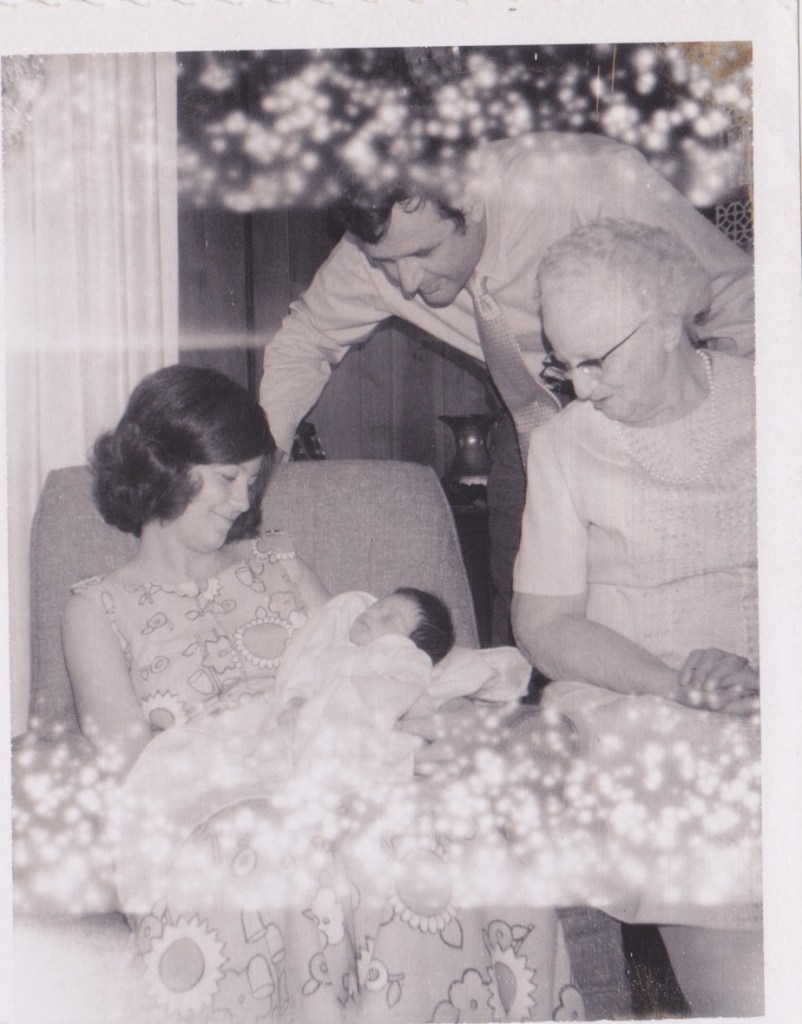
Mother God, womb of the world, thank you for mothers, who gave us life from their bodies. Life is the gift that makes all other gifts possible, so we say “Thank you, mom, for life.” A mother’s love can be so intimate as to be overlooked. We repent taking our mothers’ love for granted. A mother’s absence can be so painful as to leave us forever scarred. Give us the grace to embrace our own mothering, as imperfect as it may be. Give us the wisdom to honor our mothers in their full humanity. Give us the will as a nation to pay mothers more than just lip service. We pray for equal pay for equal work. We pray for paid maternity leave. We pray for access to health care and housing and education and all of the tools mothers need to flourish. Amen!


Opening Prayer
God of the sparrow, God of the whale, God of quark and quasar, the Psalmist looked at the vastness of the heavens and wondered at your compassion for mere human beings. Thousands of years later we, too, wonder at the vastness of the universe while we exploit and pollute the Earth. Teach us to love our only home the way you love us. Teach us to treat our fellow beings with care. Free us from greed and fear, which drive our self-destructive behaviors. Teach us to trust in your abundant provision. Amen.
What’s Up with Pastor Todd 4-16-21

Our transition coach, Claire Bamberg, recommended everyone from First Church and South Church read Weird Church: Welcome to the Twenty-First Century by Paul Nixon and Beth Ann Estock as a resource for envisioning what the new church God is birthing among us as a result of our collaboration might be. In chapter 5, Nixon and Estock write about “shame-based systematic theology” (p. 51), which has been a feature of many Christian churches for centuries. The authors propose a shift away from “shame-based theology” toward an approach to doing church based on love and letting go.
While this may sound a bit abstract mystical, it is not in the least. Some researchers argue that shame is the most powerful force in human psychological, social, and spiritual life. Shame is an emotion. Emotions are made up of thoughts, feelings, and physical sensations. Here I think it’s important to distinguish between what some researchers call “healthy shame” and “toxic” or “chronic” shame. In it’s benign or “healthy” form, shame simply lets us know when we are out of alignment socially. It might be that feeling of “dis-ease” when we enter a room of strangers or that feeling of embarrassment when we make an inappropriate comment. Internally it could arise as a sense that we are not living in alignment with our values.
Healthy shame can prevent us from doing socially harmful things. This is the kind of shame the Prophet Jeremiah writes about: “They have treated the wound of my people carelessly, saying, “Peace, peace,” when there is no peace. They acted shamefully, they committed abomination; yet they were not ashamed, they did not know how to blush” (6:14). For an in depth study see Shame: Theory, Therapy, Theology by Stephen Pattinson.
When Nixon and Estock are writing about “shame-based theology,” they are referring to “toxic” or “chronic” shame. Toxic/chronic shame is the sense that “there is something fundamentally wrong with me.” Whereas guilt is the sense that “I’ve done bad,” toxic shame is the sense that “I am bad.” Author Brene Brown talks about this as the difference between “feeling shame” and “being shamed.” Listen to her podcast “Shame and Accountability.”
When I moved from my church of origin to the “liberal” UCC I thought I was leaving shame-based theology behind. I discovered that we have our own version. Some call it “toxic wokeness” or “cancel culture.” All of it–whether it’s from the “right” or the “left,” conservative or liberal, “blue,” or “orange,” or “green” stages of spiral dynamics (to use Estock and Nixon’s terminology) arises from a deep-seated desire for purity. It’s a belief that there’s something fundamentally wrong with reality and if we could just eliminate it or “them” everything would be “good.” It’s a worry or a sense or a fear that the declaration of Genesis that “God saw all that God had made and behold it was very good,” no longer applies.
Toxic shame is a tool of oppression. In her podcast, Brene Brown quotes author and activist Audre Lorde: “You can’t dismantle the master’s house with the master’s tools.” A “weird church” won’t abandon working for justice, but it will avoid using the master’s tools to do so.
The vision of a theology oriented toward loving and letting go is grounded in a practice of radical acceptance. It looks more like a “yellow” or “turquoise” stage in spiral dynamics. Loving and letting go means letting go of our dreams of purity and meeting the world as it is. Filled with deep faith in the ongoing goodness of creation, we can meet each moment whether pleasant or unpleasant, each person whether loveable or hateful, each situation whether harmful or healing, with fierce tenderness and longsuffering patience because everything we encounter is woven into the seamless fabric of God’s boundless love.

Opening Prayer
Holy God, on this Easter morning we welcome the sunrise. We welcome the birdsong. We welcome the branches swaying above our heads. We welcome the opportunity to greet familiar faces and meet new ones. We welcome the energy and joy and promise of a new day, new beginnings, and new challenges to face. We welcome the chance to hear with new ears the old story of Jesus: how he died at the hands of violent people and was raised by the unstoppable power of your boundless love. Renew our faith in resurrection. Renew our commitment to the Jesus way. Amen.


Prayer of Confession
Holy God, Jesus tells us that the Kingdom of Heaven is near. Scripture tells us that resurrection is assured. Yet we live in fear. We’re afraid of losing our loved ones. We’re afraid of the unknown. We’re afraid people won’t like us or our children will forget us. We know we’re not the church we once were and afraid of what that might mean. We’re afraid that if people knew who we really are, they wouldn’t love us anymore. While we long for abundant life, we’re afraid of what it might demand from us. Disrupt our addiction to fear. Open our lives to true boldness. Give us confidence not in what we can achieve, but in the power of what you are doing in and through us. Amen.

What’s Up with Pastor Todd 3-19-21
Part of our discussion at GUCCI (Granby UCC Initiative) this week was the formation of work groups that will be tasked with visioning a new, unified UCC congregation in Granby.
One of the points we emphasized was that the work groups should be led by visionaries who are clear that their job isn’t to recreate the past but to imagine something new. This can be trickier than it sounds. It is a natural human tendency to stick with what we know. We all want to be experts. None of us wants to fail or look foolish. As the old saying goes, the safest place for the sailboat is in the harbor, but that’s not what it’s made for. That’s not what the church is made for.
In their research of hundreds of church consolidations, Tomberlin and Warren have found that a–perhaps the–key to success of any consolidation is a forward looking, outward facing vision (Better Together: Making Church Mergers Work). What does it take to discover God’s vision for our future?
I suggest we start with some study, reflection, prayer, and conversation. Start with study of vision passages in Scripture. Some that come to mind are God’s promise to Abraham to make of him and Sarah “a great nation.” God showed Abraham a vision of the stars. God says, “Look toward the heavens, so shall your descendants be (Gen. 15). In Isaiah. 43:19 God says, “I am about to do a new thing; now it springs forth, do you not perceive it? I will make a way in the wilderness and rivers in the desert.” Or Jer. 29:11: “For surely I know the plans I have for you, says the LORD, plans for your welfare and not for harm, to give you a future with hope.”
A key question for developing an outward focused vision is asking NOT what kind of church do I prefer, but what kind of church does this town need? There are many resources for this. Please check out the detailed demographic data for the town of Granby from MissionInsight and posted to http://www.firstchurchgranby.org. Also important is developing a survey and interviewing leaders, neighbors, and friends. YOU CAN HELP. Just say to your neighbor, “If you were to go to church, what kind of church would you go to?” Or some such similar question. You will find that many folks will be eager to share their opinions with you. Please document your findings and share with GUCCI.
Finally, gather a prayer group, dedicate time to pray personally, or make a prayer request during worship for God’s vision. The Bible promises that if we humble ourselves, pray, and “seek God’s face,” God will hear our prayers, provide healing and hope.
 Todd Grant Yonkman