Holy God, on this Easter morning we welcome the sunrise. We welcome the birdsong. We welcome the branches swaying above our heads. We welcome the opportunity to greet familiar faces and meet new ones. We welcome the energy and joy and promise of a new day, new beginnings, and new challenges to face. We welcome the chance to hear with new ears the old story of Jesus: how he died at the hands of violent people and was raised by the unstoppable power of your boundless love. Renew our faith in resurrection. Renew our commitment to the Jesus way. Amen.
Holy God, Jesus tells us that the Kingdom of Heaven is near. Scripture tells us that resurrection is assured. Yet we live in fear. We’re afraid of losing our loved ones. We’re afraid of the unknown. We’re afraid people won’t like us or our children will forget us. We know we’re not the church we once were and afraid of what that might mean. We’re afraid that if people knew who we really are, they wouldn’t love us anymore. While we long for abundant life, we’re afraid of what it might demand from us. Disrupt our addiction to fear. Open our lives to true boldness. Give us confidence not in what we can achieve, but in the power of what you are doing in and through us. Amen.
Part of our discussion at GUCCI (Granby UCC Initiative) this week was the formation of work groups that will be tasked with visioning a new, unified UCC congregation in Granby.
One of the points we emphasized was that the work groups should be led by visionaries who are clear that their job isn’t to recreate the past but to imagine something new. This can be trickier than it sounds. It is a natural human tendency to stick with what we know. We all want to be experts. None of us wants to fail or look foolish. As the old saying goes, the safest place for the sailboat is in the harbor, but that’s not what it’s made for. That’s not what the church is made for.
In their research of hundreds of church consolidations, Tomberlin and Warren have found that a–perhaps the–key to success of any consolidation is a forward looking, outward facing vision (Better Together: Making Church Mergers Work). What does it take to discover God’s vision for our future?
I suggest we start with some study, reflection, prayer, and conversation. Start with study of vision passages in Scripture. Some that come to mind are God’s promise to Abraham to make of him and Sarah “a great nation.” God showed Abraham a vision of the stars. God says, “Look toward the heavens, so shall your descendants be (Gen. 15). In Isaiah. 43:19 God says, “I am about to do a new thing; now it springs forth, do you not perceive it? I will make a way in the wilderness and rivers in the desert.” Or Jer. 29:11: “For surely I know the plans I have for you, says the LORD, plans for your welfare and not for harm, to give you a future with hope.”
A key question for developing an outward focused vision is asking NOT what kind of church do I prefer, but what kind of church does this town need? There are many resources for this. Please check out the detailed demographic data for the town of Granby from MissionInsight and posted to http://www.firstchurchgranby.org. Also important is developing a survey and interviewing leaders, neighbors, and friends. YOU CAN HELP. Just say to your neighbor, “If you were to go to church, what kind of church would you go to?” Or some such similar question. You will find that many folks will be eager to share their opinions with you. Please document your findings and share with GUCCI.
Finally, gather a prayer group, dedicate time to pray personally, or make a prayer request during worship for God’s vision. The Bible promises that if we humble ourselves, pray, and “seek God’s face,” God will hear our prayers, provide healing and hope.
We confess, Holy God, our impatience. We confess our boredom, our preference for stimulation–those little dopamine hits that excite the brain’s pleasure centers. The waiting is the hardest part. We wander the garden wondering where and when and if the spring shoots will sprout. Forgive our distraction. Give us faith in a seed. Give us rising hope. Amen.
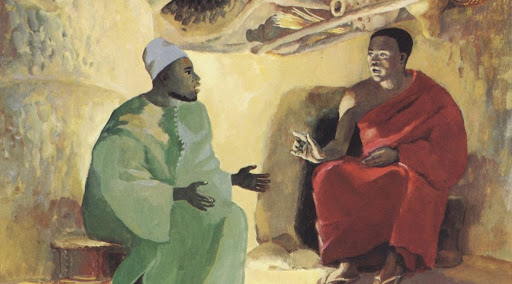
We confess, O God, we often find ourselves confused. Like Nicodemus, we are searching for answers. Like Nicodemus, we find ourselves confused. Like Nicodemus, we approach you under cover of night, afraid of what it might mean to expose our broken hearts to the light of day. Like Nicodemus, it can be difficult to see that the one before us is the very one we seek. Like Nicodemus, keep us faithful to the end so that we, too, might bear witness to resurrection. Amen.
Today I invite us to consider a key to all successful congregational endeavors: momentum. Years ago I was invited to attend the first “Nehemiah Institute” in Atlanta, GA. It was founded by Rev. Cameron Trimble and the Southeast Conference UCC to train church planters and church redevelopers. Nehemiah Institute is known today as Covergence, one of the premier progressive church organizations in the U.S. One of the speakers was the pastor of a small church in rural New Hampshire that had recently experienced a dramatic turnaround from a dying, conflicted congregation to a healthy, vibrant, growing congregation. One of the conference attendees asked this pastor, “What is your secret?” She said, “I follow the energy.”
Every congregation has an energy or “momentum.” The key to shifting from the decline side of the church life cycle to the growing side is shifting the momentum. It is looking for those signs of life–where the positive, healthy energy is manifesting–and nurturing them. This builds momentum. Failing to do this means that the congregation will simply keep sliding down the decline slope. It’s like looking around your yard while the snow is melting and the spring sun is shining and noticing what is coming up and then putting your time and attention into protecting those shoots and helping them grow.
Momentum is also key to church consolidation. In a “joining model” in which there is a “lead church” and a “joining church,” the “lead” church is the church with momentum. It is a common misconception that the lead church is the bigger church. NOT SO. The lead church could be the smaller church if that is the church that is growing, reaching new people, starting new ministries, and building momentum. (See Better Together, p. 7) Since First Church and South Church are NOT pursuing a joining model but a “marriage model” in which two congregations join as equals to create a new congregation, it is vitally important that we build momentum together. If not, we will encounter difficulties.
Under the leadership of our Vitality Team, First Church has been building some wonderful momentum. Already in 2021–in the midst of a pandemic!–we have welcomed seven new members! First Church has momentum. The question for our marriage model consolidation is: How will we build momentum together with South Church? It was the topic of our last Vitality Team meeting and I hope a topic in our upcoming conversations with South Church. Our combined efforts promise to bring even more new life and even stronger forward momentum.





 Todd Grant Yonkman