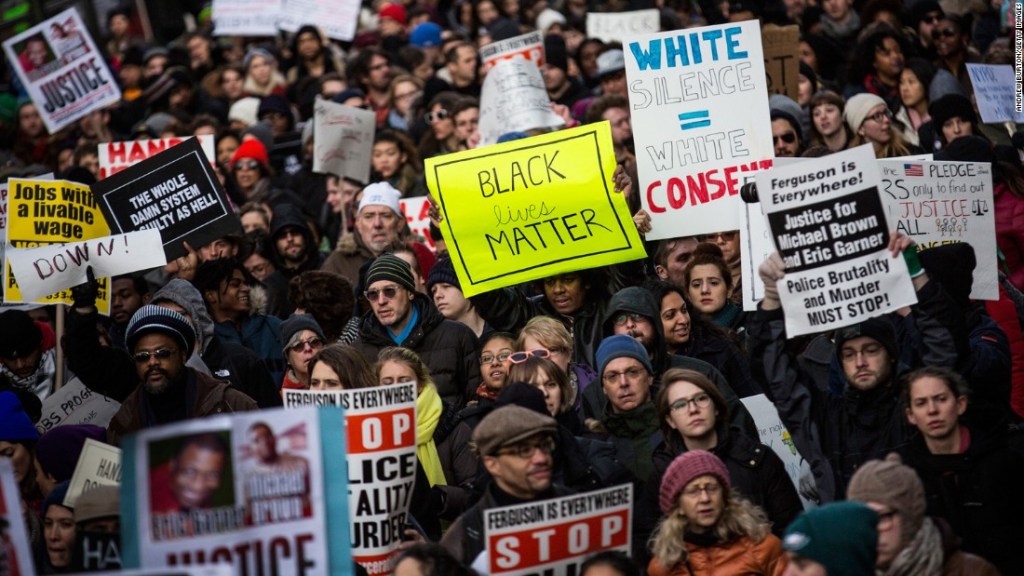
Worship Resources, Trinity Sunday, Year A, Holy Communion #systemicracism #blacklivesmatter

Opening Prayer                                                                                                                                          

Holy God, you call us to make disciples, but how can we invite others to follow when we ourselves have such a tendency to stray from your way of love? Tune our hearts to your call to return to the boundless embrace of your never changing love. Amen.

Invitation to the Table 

Jesus said: “I am the bread of life; anyone who comes to me shall not hunger; anyone who believes in me shall never thirst.” Nevertheless, we hunger; nevertheless we thirst. We hunger for justice on behalf of Black lives lost and Black bodies broken under the crushing weight of systemic racism. We thirst for righteousness that is necessary for all to live in peace.

This table is open to all who hunger and thirst for God. Come to this sacred table not because you must but because you may. Come not because you are fulfilled but because in your emptiness you stand in need of God’s mercy and assurance. Come not to express an opinion, but to seek a presence and to pray for a Spirit. 

Come to this table, sisters and brothers, as you are. Partake and share. It is spread for you and me that we might again know that God has come to us, shared our common lot, and invited us to step past the bonds of hatred and fear into God’s boundless embrace.

The Great Thanksgiving 

Holy God, we praise and bless you for creation and the gift of life and for your abiding love which brings us close to you, the source of all blessing. We thank you for revealing your will for us in the giving of the law and in the preaching of the prophets.

The prophet Amos called on the ancient Israelites to “let justice roll down like waters and righteousness like a mighty stream.” Centuries later your prophet Dr. Martin Luther King, Jr. called on the people of America to do the same. 

We thank you for the prophets of this moment who call us to once again examine our hearts, to shake free of our complacency, to open our ears to the cries of those suffocating in the grip of racial hatred. We thank you for calling us to be the healing hands and passionate heart of Jesus to our world.

With the faithful in every place and time, we praise with joy your holy name:

Holy, holy, holy God of love and majesty, the whole universe speaks of your glory, O God Most High. Amen.

What’s Up with Pastor Todd 6-1-20

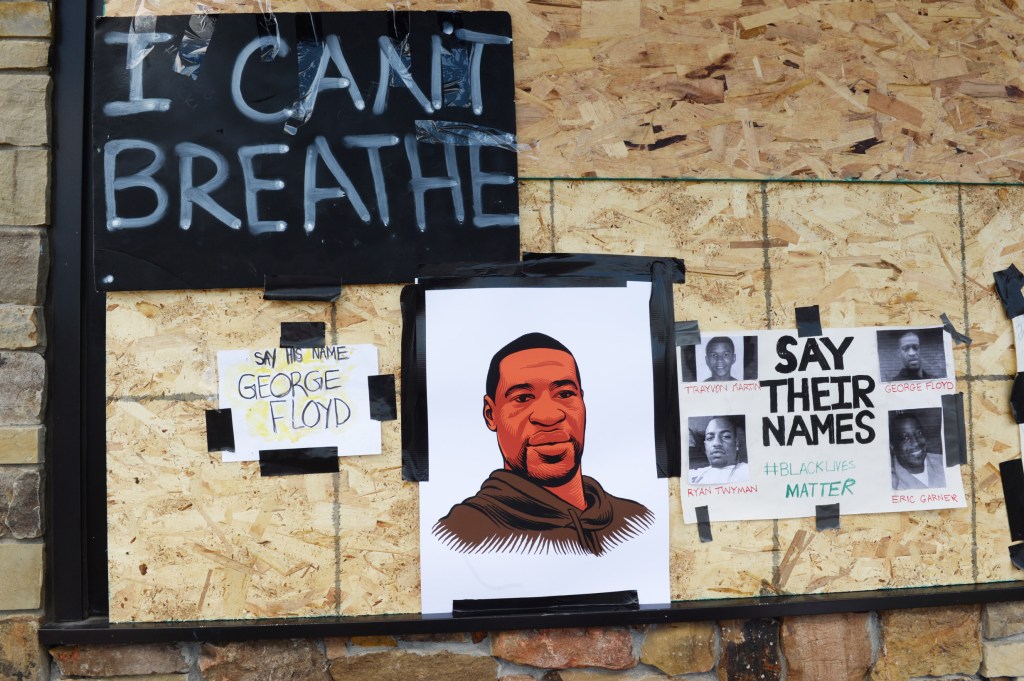
Signs, artwork and flowers were placed by people to pay their respects and protest the Monday death of George Floyd at the intersection of 38th St. and Chicago Ave. in Minneapolis on Saturday, May 30 2020. (Scott Takushi / Pioneer Press)

What’s Up with Pastor Todd 6-1-20

Sunday, May 31, 7am: “I can’t breathe.” George Floyd called out for his mother and pleaded with the Minneapolis police officer who had his knee on his neck. “I can’t breathe,” said Mr. Floyd, until he lost consciousness and later died. “I can’t breathe,” said George Floyd, an unarmed African American while a white police officer squeezed the life out of him and four other police officers looked on.

When I read the story and watched the video of George Floyd’s death this week I was immediately reminded of Eric Garner, another unarmed Black man who called out, “I can’t breathe,” while a white police officer held him in a choke hold on a Staten Island street corner several years ago.

The stories of George Floyd, Eric Garner, Breonna Taylor, Ahmed Arbery, Tamir Rice, Sandra Bland, Trayvon Martin, Philando Castile, Freddie Gray, Michael Brown, the nine who were gunned down during a Bible study at Mother Emmanuel A.M.E. Church–Clementa C. Pinckney, Cynthia Marie Graham Hurd, Susie Jackson, Ethel Lee Lance, Depayne Middleton-Doctor, Tywanza Sanders, Daniel L. Simmons, Sharonda Coleman-Singleton, Myra Thompson . . . (say their names) are stories of a system of racial violence that goes all the way back to the very founding of our nation; nevertheless, the cry “I can’t breathe” also reminds me of an interview I heard back in March with an Italian doctor responsible for a hospital in Milan overwhelmed with coronavirus patients. He described what it was like to watch his patients die in isolation, their breath cut off as their lungs filled up with fluid. And even though coronavirus doesn’t discriminate based on the color of one’s skin, here in the U.S., people of color are disproportionately dying of the disease because as a nation we refuse to directly confront and address what pastor and activist Jim Wallis calls “American’s original sin.” So even in the case of coronavirus, we cannot escape the specter of systemic racism.

Though my chest is tight with grief, anger, and fear on behalf of my family, friends, former parishioners, brothers and sisters in Christ, my neighbors, my neighborhood, my country, I can breathe. And as long as I can breathe I am going to speak out against racism in all its forms wherever I see it. And I see it all around. 

Monday, June 1, 3:29pm: Much has transpired in the past 24 hours. While I can only imagine what it’s like for my friends, neighbors, biological family, and faith family of color to experience the repeated traumatization of systemic racism in America, I know that to bear witness to trauma is also to receive that trauma into one’s heart. Emotions in my household remain raw. Nevertheless, I had an encouraging conversation with a small group of Granby town leaders this morning. We are determined to channel the collective energy of our grief and fear into positive action. Our dream is to lead a sacred conversation on race in the town of Granby. I invite you to pray for us, to pray for yourselves and your neighbors, to pray for our town, our nation. I invite all of us to breathe for George Floyd. I invite us to breathe for Eric Garner. I invite us to breathe for all of our brothers and sisters of color who have swung from the lynching tree. I invite us to lament and repent the sin of systemic racism. And then breathe once again, for the healing of your heart, for the healing of our world.

What’s Up with Pastor Todd 5-22-20

What’s Up with Pastor Todd 5-22-20

This Sunday marks both the seventh Sunday of the Easter Season and Memorial Day weekend. The gospel lectionary for this Sunday is John 17:1-11. Jesus has been giving his disciples an extended farewell address following what would be their last supper together. Chapter 17 contains the concluding prayer of Jesus’ farewell address. 

My years learning the crafts of preaching and writing have taught me to pay special attention to endings. For example, while I may go off script while preaching the body of a sermon, I always make sure I have a carefully crafted final sentence that will bring my homiletical flights in for a landing. Of all the things one might write or say, folks tend to remember the ending.

Another rhetorical strategy for helping an audience retain information is repetition. In his concluding prayer Jesus repeats the phrase “that they may all be one.” This is the message that Jesus wants to leave his disciples–that he wants to leave us: “that they may all be one.” It also happens to be the motto of the United Church of Christ: That they may all be one.

The UCC motto “That they may all be one” caught my attention while I was a divinity school student. I had left the denomination of my upbringing and was searching for a new church home. While I didn’t know a lot about the UCC, I thought Jesus’ final prayer for his disciples, his dream for the world, was a great foundation upon which to build my faith, my vocation, my career.

Over the past 20+ years I’ve learned a few things about the prayer that they may all be one. The most important is this: on the most fundamental level of reality, the level that is beyond human comprehension, we are always already one. In other words, Jesus’ prayer is less an expression of a goal he wants us to achieve and more a description of a reality he wants us to wake up to.

Buddhists use the metaphor of waves and the ocean to explain the confusion we experience around unity and separation. Like waves each one of us is a manifestation of the movement of the great ocean. We are never at any moment not a part of the ocean. In fact, waves are the ocean. We are one with God. We are one with each other. At all times. What affects the ocean affects the waves. What affects the waves affects the ocean. It would be ridiculous for a wave to say, “I am not the ocean,” or for a wave to say to another wave, “You have nothing to do with me.” Yet, that is how we humans too often behave. We act as if an injury to one has nothing to do with us. We wallow in self-pity thinking we are bereft and alone. We become envious or annoyed with others thinking their words or behavior are somehow personally directed at us when more often than not, they are just rolling along, manifesting as one small crest on this great, ever active womb of life.

Revitalization, Redevelopment, Restart

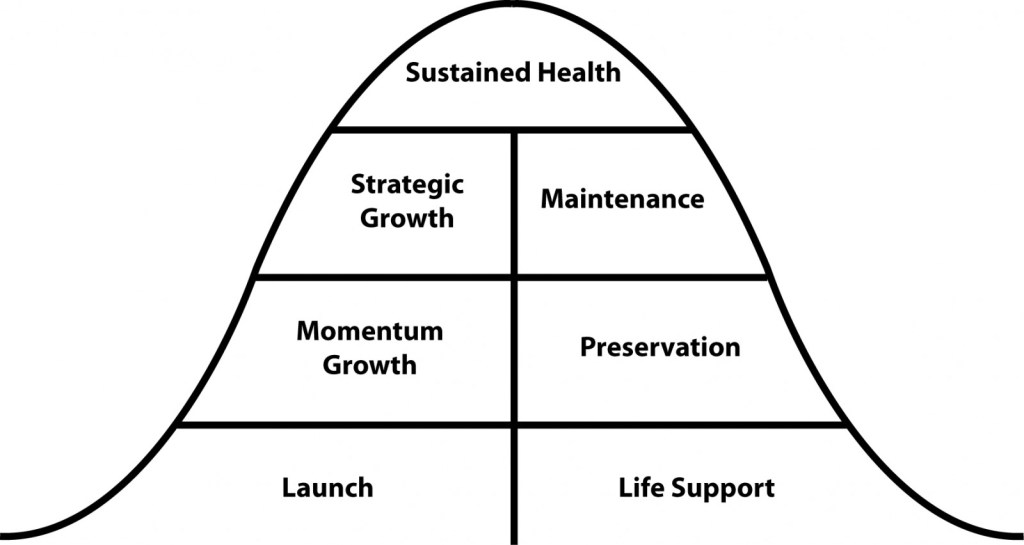
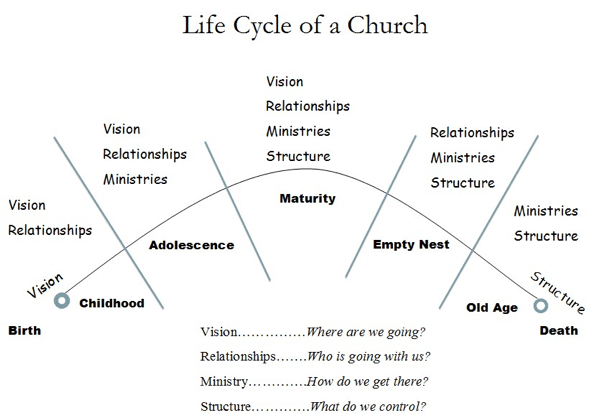
Recently a colleague asked if there is a resource that deals with the topics of church redevelopment, church revitalization, and church restart. I’m not aware of any that bring all of these interventions together in one place, so here is my attempt at a (very) quick summary with references for further reading.


1. Church revitalization, church redevelopment, turnaround are all terms used for interventions with congregations on the decline side of the congregational life-cycle. The level of intervention depends upon how far along the decline path the congregation is. As the congregation moves further along the decline path the options for shifting to a growth trajectory become fewer and more dramatic. The lesson: don’t wait to make the changes needed for growth. The avoidance of a little discomfort now only means you’re compounding pain in the future. For more details on these dynamics see:


Can Our Church Live? Redeveloping Congregations in Decline by Alice Mann

Reconstructing Church: Tools for Turning Your Congregation Around by Todd Grant Yonkman

2. Church Restart. At a certain point on the decline-side of the church lifecycle a congregation reaches a “point of no return” where the financial and human resources are depleted to the point that turning the church around is no longer possible. The good news is that resurrection is still possible. Death is inevitable, but depending on local circumstances and how the dying process is managed, a range of rebirth possibilities is available. For more details on different models of church restart see:


Dying to Restart by Weins and Turner

Worship Resource 5-17-20, Easter 6A, John 14:15-21

Opening Prayer

We love you, Jesus, and we do our best to keep your commandments. You said that no one has greater love than to lay down one’s life for others. Though we are too often tired, discouraged, and preoccupied we once again offer ourselves as your hands and heart for the world. Bless our worship that we might offer a sacrifice worthy of your boundless love. Amen.

“Plenty Good Room (Interbeing)”

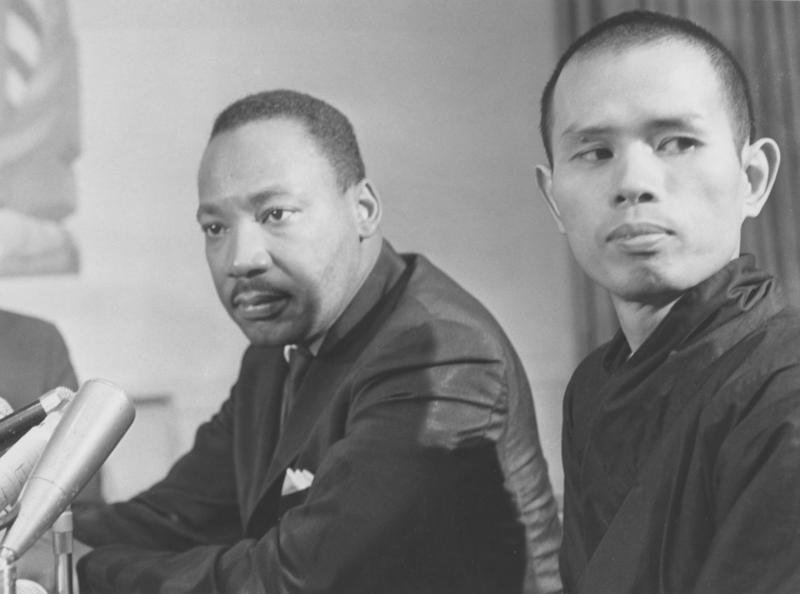
MLK and Thich Nhat Hanh, Chicago, 1966

Rev. Dr. Todd Grant Yonkman, Transitional Senior Minister

First Congregational Church of Granby

Sermon for the 5th Sunday of Easter

10 May 2020

Text: John 14:1-14

Plenty Good Room

When I was teenager my dad used to say to me, “You’re just like your mother.” Some of you may have read the piece I wrote this week about the complicated relationship between my parents. They didn’t get along well for a number of reasons. Dad only said, “You’re just like your mother” to me when he was upset with me, so I learned that being “just like my mother” was a bad thing. I watched my own behavior to see for myself if dad was right. Am I just like my mother? And if I am, what kind of man does that make me? My mom is a pastor. If I become one, does that make me “just like” her? How does that affect my relationship with dad? It was all very difficult and complicated, but it’s a situation all of us share to some degree or another. Each of us is the product of parents. The very cells of our bodies are built with the genes of others. This is true not only for parents and children, but for all of life on this planet, even, in fact, for the entire universe. Buddhist monk and peace activist Thich Nhat Hanh has a term for this reality: “Interbeing.”

Interbeing is a term that could describe the truth at the heart of our Scripture text this morning. Jesus says to his followers, “I am in the Father and the Father is in me.” “The Father” is Jesus’ word for God. Jesus is telling us that just like you and I owe our very existence to our parents, Jesus owes his very existence to God. Just like we are formed from the very genes of our parents, Jesus is formed from the very spirit or “breath”–which in the Bible is the same word–of God. In the same way that I am “just like” my mother, Jesus is “just like” God. And, by the way, so are you. So am I.

A few verses later Jesus says, “You will know that I am in my Father, and you in me, and I in you.” In other words, we are just like Jesus. In the same way Jesus is in God and God in Jesus, we are in Jesus and Jesus is in us. God, Jesus, you, me, the entire universe, we all–to once again use the words of Thich Nhat Hanh–”inter-are.” 

This can all sound very abstract and impractical, but it actually isn’t. In fact, you don’t need religion–whether Buddhism, Christianity, or any other–to tell you that we are all inescapably interconnected. Science tells us this. Biology tells us this. Physics tells us this. Common sense tells us this. The coronavirus tells us. What we need religion for is to remind us what we already know–that my health and wellbeing is intimately connected to yours. What we need religion for is to hold us accountable for doing what is right, no matter how difficult that might be.

Dr. King famously said, “Injustice anywhere is a threat to justice everywhere.” Dr. Martin Luther King, Jr. nominated Thich Nhat Hanh for the Nobel Peace prize. His statement about justice is a statement of interbeing. Racism isn’t just a problem for the South, racism is a problem right here in Granby. Homelessness isn’t just a problem for Hartford or Springfield. In fact, one of our church members who has been active in affordable housing for years said in a meeting this week that most of the homeless in Hartford don’t come from Hartford. They come from places like Granby, like Simsbury, like West Hartland. To look down on other communities–even if it is in pity–as if these issues are problems for “those people” is to completely miss the truth of interbeing. This is what makes interbeing so difficult. Relieving your suffering isn’t as much about changing you as it is about changing me. Ending homelessness isn’t so much about changing Hartford, it’s about changing Granby.

Because he was speaking in and to a patriarchal culture, Jesus said, “I am in the Father and the Father is in me.” But he could just as easily have said, “I am in my Mother and my Mother is in me.” On this day when we honor mothers, we can honor them by remembering our connection to all of life. On this day when we take time to make expressions of love to our mothers we can consider whether it is truly possible to love our mothers without also loving our neighbors. On this day when we recognize the priceless gift of life our mothers have given us, we realize that life is not ours to keep but ours to share.

What’s Up with Pastor Todd 5-15-20

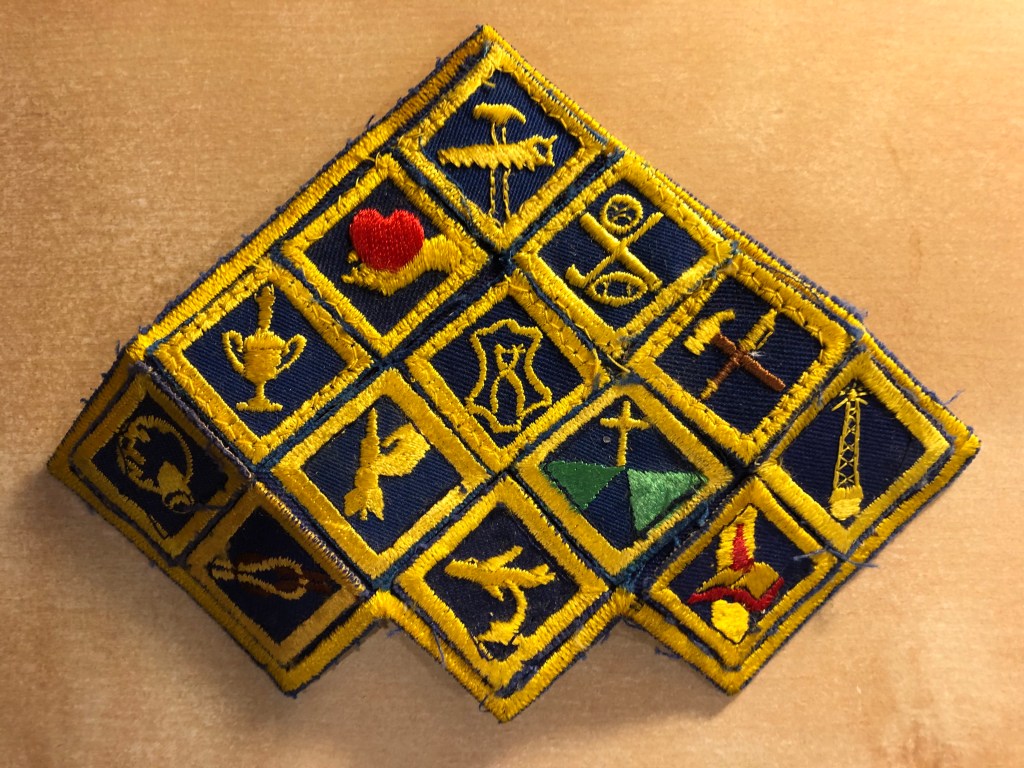
My Cadets merit badge sash circa 1980-something

What’s Up with Pastor Todd 5-15-20

Every Wednesday evening from third grade through eighth grade I would put on my uniform–including the merit badge sash, which I was very proud of–go to church, line up in the “Fellowship Hall” with the other boys according to our grades, and go through the opening exercises of “Cadets,” my church’s more Jesus-y version of Boy Scouts. 

The opening exercises included reciting the Cadet’s Pledge, singing the Cadet’s Song (“Living for Jesus”), and reciting the Cadet’s Scripture verse, “If you love me, you will keep my commandments (John 14:15).” I liked Cadets. I liked earning the different merit badges for knot tying, wood working, electronics, etc. Of course there was a “Bible” merit badge. One of the things I had to do to earn it was memorize the names of the books of the Bible in order–a helpful skill that I use to this day! I liked the campouts, the fundraising, cameraderie, and I’m grateful to the men who gave their time and resources to mentor young boys like me. 

I thought of Cadets when reading the Gospel lectionary for the sixth Sunday of Easter. John 14:15-21 continues Jesus’ “farewell discourse,” which we began studying last Sunday. It’s the Gospel of John’s version of Jesus’ final instructions to his disciples before his crucifixion. We study texts like this during the Easter Season to prepare ourselves–as Jesus prepared his followers–to be Christ’s hands and heart for the world. The historical Jesus is a memory. The living Christ is you and I. Contrary to popular belief, loving Jesus is not primarily an emotion. Emotions come and go. Loving Jesus is an action. More importantly, it’s a repeated action. We call repeated action directed toward the object of devotion “spiritual practice.” Worship is spiritual practice, cleaning the kitchen–if it’s done with an awareness of Christ’s presence–can be spiritual practice, donating to the food pantry is spiritual practice, walking the dog can be spiritual practice. 

Mother Teresa famously said, “Not all of us can do great things, but we can do small things with great love.” Whatever we do–if we do it as Christ’s hands and heart–has the potential to bring us deeper into communion with God and all of life. This is loving Jesus. This is keeping his commandments.