What’s Up with Pastor Todd 10 July 2019

What’s Up with Pastor Todd 7-9-19

This Sunday will feature the first in a “My Favorite Scripture” worship series. We’ve invited individuals in the congregation to identify their favorites Scripture texts and share what makes them their favorite. Then I design a worship service around that text.

This week’s favorite Scripture, Psalm 121, comes from Nancy Rodney. Nancy chose Psalm 121 in part because of a revelatory experience she had with the text. Nancy went to high school at Northfield-Mount Hermon School, an idependent boarding school in the Berkshires. At that time Scripture study was included as part of the curriculum at NMH. When she first encountered Psalm 121 at NMH, Nancy understood the famous first two verses of the Psalm as pointing in the same direction: God. 

“I lift up my eyes to the hills–

From where will my help come?

My help comes from the LORD,

Who made heaven and earth.”

The conventional reading, the one Nancy learned in high school, goes something like this: A person is wandering alone in the wilderness looking for help. Perhaps she is discouraged or downcast. She looks up and discovers that her help is found in God. 

But later in life, Nancy learned another reading. She made a tour of the Holy Land led by a group of pastors. While on the tour she saw with her own eyes the Judean hill country: barren wildnerness hills not unlike the ones the Psalmist might have looked to for inspiration. She learned from one of the pastor-guides that in ancient days the indigneous people of this land would set up shrines to the various local deities on the tops of these hills. She learned that another, more historically informed reading of Psalm 121, might be an anitphonal one that points in two different and contrasting directions. 

One voice says, “I will lift up my eyes to the hills–from where will my help come?” This voice is pointing the reader to the hilltops where the local deities reside: the conventional gods of the day, the familiar places we turn to and the small comforts we cling to for security and help. Our 401k, the cup of coffee in the morning, the voices from our phones, TVs, and computer screens that reinforce our political and cultural biases, our job titles, our Instagram feeds, our social circles. The question: “From where will my help come?” The answer: Not here! There’s a note of despair: look at these hills surrounding me on all sides, more than I can count, stretching to the horizon, each one with its little god dancing on top, begging for my attention and loyalty and not one of them can help me! Not one can heal the depth of the wound in my soul.

The second voice (maybe another voice in the same person’s consciousness?) shifts the gaze from the hills and their small, ultimately powerless, idols and toward God, who is God not only of the high places, but of the low as well and every place in between. Question: “From where will my help come?” Answer: The Creator of heaven and earth who is not limited to this place or that, to this group or that one, to this political party, to that nation, to this religion, belief system, lifestyle, tribe, race or tradition. Either God is God of all or no God at all. 

New York Times columnist David Brooks recently gave an emotionally vulnerable TED talk about what he describes as a “time in the valley” following his divorce in 2013. During that time he went through many changes and developed some profound insights into what he calls “the lies our culture tells us about what matters.” These include: 1) Career success is fulfilling; 2) I can make myself happy or “the lie of self-sufficiency”; 3) the “lie of the meritocracy” or you’re worth more if you accomplish more. I imagine these lies and others as those idols dancing on the tops of those ancient Judean hills tormenting the Psalmist to the brink of despair. As an antidote to our culture’s lies, Brooks proposes devoting oneself to deep, authentic relationship. He calls folks who do this sacred work “weavers” and has founded an organization called “Weave” that supports this kind of holy community building.

In this time of tribalism and disaffection when people cast about for this silver bullet or that one, this savior or that numbing drug, when powerful corporations and noisy political leaders have unprecedented power to capture our attention and sell our identities, I wonder what would happen if we shifted our gaze from the “high places” to the every day places. I wonder what would happen if we devoted ourselves to our neighbors–the real flesh-and-blood people who live right next door or just down the street? I wonder what would happen if we took up the unglamourous work of looking closely, listening deeply, and making a genuine, human connection. My guess is that we would find the maker of heaven and earth right now, right here.
No Looking Back–Sermon for Open and Affirming Sunday 2019

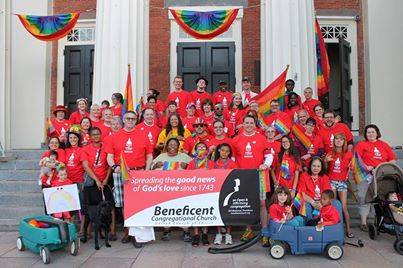
2013 Pride Parade Beneficent Church, Providence, Rhode Island

Rev. Dr. Todd Grant Yonkman, Transitional Senior Minister

First Congregational Church of Granby

Sermon for Open and Affirming Sunday

30 June 2019

Text: Luke 9:51-62

No Looking Back

Many of you know my story. But for those who are new I’ll do a quick refresher. I was born and raised in Grand Rapids, Michigan. My family and all our relatives belonged to a conservative Christian denomination called the Christian Reformed Church. I went to Christian schools and graduated from a Christian college. On the surface we were a model family. Dad had a good job. Mom stayed at home and raised us kids. We went to church twice on Sunday. We lived in a nice, new house in a nice new subdivision. Mom and dad led Marriage Encounter weekends during which they coached other couples on how to make their marriages more loving, healthy, and intimate. Years later, after my dad came out as gay and my parents divorced, one of my high school friends who knew my family well put it this way: “The Oscar for best performance in a marriage goes to Bill and Jayne Yonkman.” Open and Affirming Sunday is many things to many people, but for me it’s this: Be out. Be proud. The only Oscars any of us should get are for the work we do in Hollywood, not the lives we live at home or in the church. 

Open and Affirming originated with a 1985 resolution to the United Church of Christ General Synod that the denomination encourage all of its member churches to welcome LGBTQ people into all areas of congregational life including lay leadership and ordination. Since then 1400 UCCs have become Open and Affirming. Other denominations have followed the UCC lead in welcoming gay people including the Episcopal Church, the Presbyterian Church (USA), the Disciples of Christ, the Evangelical Lutheran Church in America, some Baptist denominations, some Pentecostal denominations, the United Church of Canada, and other denominations in Europe, Asia, Africa, Australia, and New Zealand. Same sex marriage has been legalized throughout much of Europe, in some Latin American countries, and here in the U.S. Much has changed since my dad was growing up gay and shamed in 1950s rural Michigan. Open and Affirming Sunday celebrates the progress we’ve made as Christians and human beings on this planet to embrace our LGBTQ brothers and sisters. It also recognizes how fragile this progress is and how far we have to go.

Open and Affirming is the UCC’s way of recognizing what the gay rights movement calls “pride.” The modern gay rights movement began at 1:20 am on June 28, 1969, when the police raided the Stonewall Inn, a gay bar in NYC. This was a common occurrance at the time because New York, like most places in the U.S. at the time, had laws against almost any type of gay expression even in private. The affect, if not the point, of these laws was to shame LGBTQ people. 

In order to be gay in 1969, you had to sneak. And what does sneaking do to the soul? What did the “Saint of Dry Creek” tell his son? “If you sneak, it means you think you’re doing the wrong thing, and if you run around your whole life thinking you’re doing the wrong thing, you’ll ruin your immortal soul.” In 1959 the Saint of Dry Creek told his son to be proud of himself and not to sneak. On June 28, 1969 the patrons of the Stonewall Inn resisted the police raid on their safe and sacred space, and out of that resistance, the modern gay rights movement was born. When an entire culture is set on shaming you, how do you resist? With pride. You resist shame by stopping sneaking and stepping into the light.

That was the power of the first “gay liberation march” organized a year after the Stonewall uprising in June of 1970. Several thousand LGBTQ people marched from the Stonewall Inn 51 blocks up 7th Avenue to Central Park in the middle of the day with signs and flags and chants–during the day. Even then, many felt like they had to wear masks in case their employers found out and they would be fired. In Central Park, they had a “gay-in.” It was basically a gay version of a “be-in, which was a hippie way to make a political statement by hanging out and be visible in this case as gay people. Every year since 1970 the NYC Pride parade and the LGBTQ rights movement has grown. Now Pride is worldwide. In many places around the world homosexuality remains a crime often punishable by death. Nevertheless, people once forced to live in the shadows are stepping out into the light risking their lives and livelihoods because they know that hiding, while it might preserve your privilege and in some cases be necessary to preserve your life, ultimately ruins the soul.

Open and Affirming in the UCC begins with the recognition of the negative effects that Christian teachings and behavior have had on LGBTQ people. We’ve been telling LGBTQ people to sneak when Jesus clearly invites all people to be true. You can’t do anything if you can’t be honest about who you are. To my LGBTQ brothers and sisters I want to say on behalf of the church that I’m sorry. 

Unfortunately many of our brothers and sisters in Christ around the world continue to ruin souls by telling people–particularly LGBTQ people–that God wants you to sneak. So what do we say to those people? 

In 2013 my wife and I had the opportunity to join Marriage Equality Rhode Island in bringing marriage equality to the state. As a part of that effort, I testified before the Senate Judiciary Committee. The testimony lasted through the day, into the evening, and on into the early hours of the next morning. Many people spoke both for and against marriage equality. Amont those against it, I heard some of the many of the vile and hurtful slanders against gay people that I thought we as a society had left behind. But there they were, people shaming and dehumanizing other human beings in public in the name of Jesus. Needless to say, it was disturbing.

When my turn to speak came in the wee hours, I sat across from a state senator whom I knew personally, who was a Christian, and who himself said many of the hurtful things others had been saying. I shared my family’s story. I share my message to him with you as something you can say to Christians who do not share our Open and Affirming values. Here’s what I say: “I am a Christian. That means I follow Christ. Not Paul. Not Moses. I follow Jesus. And Jesus gave Christians one command: love everyone, period. You can’t both love someone and call them an abomination at the same time. If you are telling people that loving someone of the same sex is sinful, you are not loving them, you are shaming them, and in shaming them, you are not saving their soul, you are destroying it.” The result of that hearing and the work of many in the Marriage Equality Rhode Island coalition is that we won marriage equality for Rhode Island!

My family gave me the opportunity to experience the devastating effects of LGBTQ shaming up close and personal. I can say from my own experience that when you shame an LGBTQ person, when you demand that they sneak in order to survive, you commit spiritual malpractice not only against the individual but also against their families and everyone they love. The shame runs deep, and it takes a lifetime to heal. I’m still trying to heal from having a shame-filled dad who spent two-thirds of his life sneaking. 

The good news is that healing is possible. And the irony is that I have found healing in the very Christianity whose institutions shamed my father and hurt my family. I had to leave the church of my childhood, but I’ve found welcome in the UCC, and for that I’m grateful. And a part of my ministry in the UCC is creating truly open and affirming spaces for LGBTQ people. 

Jesus said, “No one who puts their hand to the plow and looks back is fit for the kingdom of God.” I am grateful Jesus has called me to this work of creating open and affirming congregations. I have put my hand to the plow. I am not looking back. I have left the small, comfortable world of my childhood where we pretended LGBTQ people didn’t exist. I’ve stepped into God’s wide world of love. And I hope you will, too. There is no place for shame in God’s house. That’s why it’s so important that we stand together as a faith family–gay, straight, and in-between–and take pride. Let’s raise the rainbow flag and step into the light with pride. There’s no looking back.

What’s Up with Pastor Todd 7-1-19

What’s Up with Pastor Todd 7-1-19

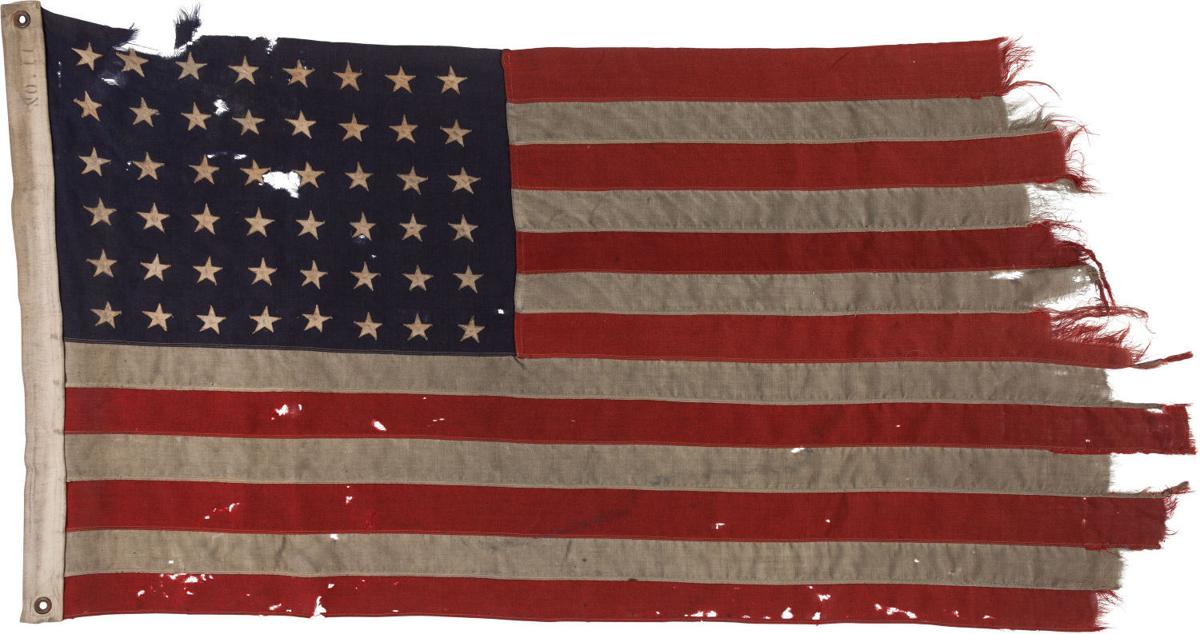
Growing up I attended Christian schools. Every morning we would stand by our desks, face the American flag hanging from a bracket on the wall, put our hands over our hearts, and recite the pledge of allegiance. I’m sure there were other morning rituals–taking of attendance, prayer, announcements over the intercom–but I remember most clearly reciting the pledge while facing the flag.

My education was intended to reflect a Christian worldview. English, math, social studies, science, phys ed–none of these subjects were beyond the purview of God, and, therefore, of the Christian faith. Don’t get me wrong. It’s not like we looked for hidden spiritual meanings in times tables or the condensation cycle. At times there were explicit Christian connections, for example, in learning about evolution as a “theory” incompatible with the Biblical teaching of creation, but most of the time the teaching was implicit: the logical beauty of math reflects the order of God’s good creation, the creation of art is humanity’s appropriate response to our Creator, history is the story of God’s hidden plan of redemption. What was the implicit Christian teaching behind our unquestioned ritual of honoring the American flag every morning?

Looking back as an adult, I would say the teaching around the flag was twofold: 1) that one can be both a patriotic citizen and a faithful Christian; and 2) a Christian’s highest loyalty is to Jesus and his teachings. Full stop. The practical result is an approach that honors every single one of my fellow American citizens as a child of God no matter our disgreements while at the same time critically assessing our nation’s history and current policies in the light of Jesus’ one commandment: love.

Many years of theological education at some of the finest learning institutions in the world have taught me to call this stance critical or “prophetic” engagement in public life. While I have left behind many of the beliefs of my childhood–denial of evolution, uncritical acceptance of whitewashed U.S. history, nearly complete obliviousness to subversive themes in art and literature–I carry with me the prophetic engagement that I was (perhaps accidentally) taught in my Christian upbrining.

Which brings me to the issue of the American flag and it’s place in church. Personally, I don’t need to have the American flag in church. It’s my view that we Christians show our faithfulness to our fellow Americans by being the kindest, most loving people we can be. No other expressions of patriotism are needed. Nevertheless, I take seriously the feelings some of my fellow Christians and fellow citizens have about the flag as a symbol of the sacrifice they and others have made in military service to our country. I also take seriously the feelings of those for whom the America flag is an irredeemable of symbol of colonialism and oppression. This seems to be how symbols in general function: they have the potential both to draw us together and tear us apart.

So at FCC Granby we have done a very church-like thing: strike a compromise. On Memorial Day, Independence Day, and Veterans Day we will display the flag in the meetinghouse. The rest of the year it will be displayed in the narthex along with the Christian flag (which is another article for another time.)

Despite the attempts of some to weaponize the flag for culture wars, I continue to humbly respect the sacred sacrifce of those who have served while unflinchingly examining with clear eyes the full range of our past and present as a nation–from racism, slavery, and genocide to dignity, equality, and human rights. My faith tells me three things about America: 1) We are a a human creation and therefore temporary. We had a beginning in 1776, and we will have an end; 2) Like most human creations we are a mix of good and bad; 3) Like all things on this earth we are not beyond the healing power of God’s love.

Worship Resources for Proper 8C / Ordinary 13C / Pentecost +3 June 30, 2016, Open and Affirming Sunday

*Prayer of Dedication    

Holy God, we bring all of who we are and offer ourselves to you, trusting you know and love us exactly as we are. Make us instruments of your peace, justice, and love. Amen.

What’s Up with Pastor Todd 6-24-19

What’s Up with Pastor Todd 6-24-19

This coming Sunday, June 30, First Congregational Church of Granby is celebrating Open and Affirming Sunday. Open and Affirming (ONA) is a designation created in 1985 following a resolution that was approved at the United Church of Christ (UCC) General Synod that year encouraging UCC congregations to welcome (or consider welcoming) gay, lesbian, and bisexual members. Following later General Synod resolutions affirming transgender members of the church, the welcome was extended so that, today, an ONA covenant typically welcomes members of any sexual orientation or gender identity and expression.

The Open and Affirming program is administered by the UCC Open and Affirming Coalition, which supports congregations and other church settings as they consider the adoption of an ONA “covenant” and maintains the official registry of ONA congregations and ministries. The Coalition encourages UCC congregations, campus ministries, seminaries, regional bodies and other settings of the church to engage their members in serious study of sexual orientation and gender identity and to declare publicly their full welcome and inclusion of LGBTQ people. With more than 1,400 congregations, the UCC’s ONA program is the largest of several LGBT-welcoming church movements in U.S. and Canadian churches.

FCC Granby adopted an Open and Affirming statement in 2009. Here it is: “We affirm the dignity and worth of every person, regarless of age, gender, ethnicity, race, mental or phyiscal ability or sexual orientation. We offer sacraments and rites to all who enter our circle of faith. We celebrate the gifts that each person brings to First Congregational Church and invite them to share in all areas of its service, leadership, activities, responsibilities, and privileges.”

I’m new to FCC Granby. I was not around when our ONA statement was adopted. I was not part of the conversations, and I’m only beginning to understand what ONA means here. I find the people of FCC Granby warm and welcoming. There seems to be an easy rapport among people of different sexual orientations. This is all good. But I don’t think it’s safe to assume that everyone here understands ONA in the same way. And the statement leaves room for interpretation. 

While it is good to affirm the worth of every person regardless of age, gender, ethnicity, race, and mental or physical ability, the ONA designation was specifically created to affirm and welcome LGBTQ+ people. When we broaden the statement it can create confusion. People interpret the statement to mean, “We just welcome everyone here.” So for example, when I recently had a Sunday morning off and volunteered to sing in the choir of my wife’s church, one of the choir members said to me, “It’s a good thing we have an ONA statement so that we can welcome you into the choir.” My response: “What do you mean?” The man’s face reddened. “You know, as married to the pastor.” “Oh,” I said. Another choir member jumps in for the save: “It’s just his weird sense of humor.” It was an interesting interaction. Is “pastor’s spouse” a marginalized category that needs special inclusion? Was he was using ONA in the “we welcome everyone” sense? Is the fact that I’m both a man and the pastor’s spouse a violation of this person’s gender role expectations? In the end, who cares. But this encounter, and many others that I’ve had with church people over the years indicates to me that people can be confused and uncomfortable with the ONA designation. Folks are frightened of being labeled “the gay church,” so they water the welcome down. I don’t want to water it down. I was to focus it up.

For me, the need to clearly and specifically extend welcome to LGBTQ+ people arises from the fact that churches as institutions as well as individual Christians have excluded, tortured, killed, made laws against, and have attempted to erase from existence LGBTQ+ people for thousands of years now. That’s a lot of hate to overcome. And the only way to overcome it is to apologize profusely, make amends, face our own homophobia, actively communicate to LGBTQ+ people that we want you here, recognize that every one of us lands somewhere on a spectrum of gay, straight, or in between, and celebrate Pride! Shame has no place in God’s house. God loves every part of you and every part of me. Let’s not hide who we are. Let’s be brave! Let’s be bold! Let’s be fabulous!

What’s Up with Pastor Todd 6-20-19

What’s Up with Pastor Todd 6-20-19

This Sunday FCC Granby is joining with South Congregational Church of Granby to celebrate a “Union Service.” As I understand it these special worship services have been taking place for several years. Usually about twice a year the two congregations have gathered on Sunday morning for a joint worship service—sometimes in the First Church building, sometimes in the South Church building.

These services are part of a larger conversation about closer collaboration between the two congregations—some have even talked about the possibility of merger. Part of my role as Transitional Senior Minister is to help FCC Granby weigh closer collaboration with South Church as a possible path to long term sustainability for the ministry of the United Church of Christ in Granby.

I am still learning the details of the conversations so far. I am still learning the strengths and weaknesses of FCC, the dreams and visions of South Church, the needs and potentials of the Town of Granby. Every transition is unique. The path to sustainability, if that is indeed FCC’s desire, is going to have to be designed and walked by the members of FCC ourselves. No one else can do it for you.

The point of the union services, as I see it, is to worship together. The point of worshipping together is to see how it feels. What is the energy? How does it feel to have more people in worship? Does the blend of these congregational microcultures make sense? Most of all, could we be more together than apart?

While the answer to that question might seem obvious to some, in reality it isn’t. Most of the time when churches merge, they don’t grow. In fact, they soon shrink back down to whatever size one or the other previously was. That’s because the merger is not undertaken with a vision for a brand new identity and purpose of the new combined community.  If you don’t fix the holes in the life rafts, it doesn’t matter if you have one or two. Everyone’s going down. In fact, while we’re desparately trying to keep from sinking, it may be that we’re missing the cruise ship that was sent to save us.

So the focus can’t be whose building or whose pastor or whose endowment. That’s just a fight over leaky lifeboats at this point. The question has to be Do we have a shared vision to reach new people in the ways that they want to be reached? If the question is one of maintianing an insitution, we’re doomed. If, however, we truly love our neighbors and are willing to do whatever it takes to help them connect to God, the answers to these other questions around our conversations with South Church will soon become crystal clear.

What’s Up with Pastor Todd 6-10-19

What’s Up with Pastor Todd 6-10-19

         The origins of Father’s Day are complicated. As our fathers tend to be. If you thought Father’s Day was a response to Mother’s Day, you’d be right. Though it doesn’t seem like a simple reassertion of patriarchy. In fact, a significant number of men resisted it for years. They had seen how Mother’s Day, originally conceived as an opportunity for women’s empowerment in response to the horrors of the Civil War, became commercialized and sentimentalized, and they didn’t want any part of it. Because of this resistance, Father’s Day didn’t become an official national holiday until 1972. 

62 years earlier, in 1910, Sonora Smart Dodd organized one of the first Father’s Days in honor of her father, a Civil War veteran and widower who had raised his children as a single dad. William Jackson Smart took on parenting roles that were not conventional for men at the time. One of the origins of Father’s Day was a celebration of men who were willing to step out of conventional gender roles to care for their families.

         At about the same time, a Father’s Day celebration was organized in West Virginia to honor the 362 men who had died in a coal mining explosion the previous year. This origin of Father’s Day reminds us of others experiences of fatherhood: grief over the fathers who are absent for whatever reason, and the expendability of men’s bodies, particularly the bodies of poor and workingclass men.

         My dad was a gay man. He grew up on a small dairy farm in northern Michigan. Though the family wasn’t poor, they didn’t have much. He was the first in his family to receive a college education. He married a woman because that’s what his conservative Christian upbringing told him to do. He raised four children and was grandfather to 11 grandchildren by the time he died of AIDS in 2012. He was a successful businessman with a genius level IQ. He was also an adulterous alcoholic bully with a criminal record who repeatedly put his family in danger. He did provide for us children. He did choose recovery eventually. He did come out and live the most honest version of his life that he could. He did love us with his version of love. Perhaps every human love leave wounds. As I said at the outset, fathers can be complicated.

         I am father to two amazing young women. It is the greatest blessing of my life. And if I’m honest, day to day I have no idea what I’m doing. I realize that might make me sound incompetent or irresponsible to some. I do indeed make it my business to learn what I can about best parenting practices. My wife and I spend significant time, energy, and financial resources making the best decisions we can for our children. But I am acutely aware that the models of fatherhood that I have inherited, for better or for worse, too often seem inadequate for the times. Especially as they grow older, my children simply know a lot of things about the world that I don’t. Their experiences are different from mine. Their contexts are different. And in significant ways their futures will be different, once again, for better or for worse, than mine. 

         What do I fall back on? The things I do know: that deepest love is bare attention, unconditional availability, unwavering presence. Wherever life takes my children, my heart is with them, and I am ready to leap to their aid, if aid is what’s called for. My deepest practice is the practice of letting go. When first Fiona–21 years ago–and then Olivia–17 years ago– were born it was as if my soul or some piece of it separated from me and became enfleshed in another, fragile being over whom I knew my protection would always in some sense be limited and who one day likely would leave my protective care entirely. How can I entrust my precious one’s to this dangerous and difficult world where they will continue to meet both unimagined joy and devastating disappointment? 

These days fatherhood for me is calmly sitting in the passenger seat while Olivia learns to drive. Dropping Fiona off at the airport for her summer job in Chicago. Preparing for Olivia’s move to Los Angeles where she will begin her college education. And savoring every moment they are home.


The Advent of this Noise–Sermon for Pentecost 9 June 2019

Rev. Dr. Todd Grant Yonkman, Transitional Senior Minister

First Congregational Church of Granby

Sermon for Pentecost

9 June 2019

Text: Acts 2:1-21

The Advent of this Noise

Scripture says, “And on the Advent of this noise the multitude gathered and were confused because each one heard them speaking in his own language.” I chose this translation of the text because the phrase “Advent of this noise” made me smile. The word advent means the arrival of a notable person, thing, or event. I associate the word advent with the Christian season of Advent during which we prepare for the arrival of Jesus at Christmas. Putting the word “advent,” which for me has a positive connotation with the word “noise,” which has a more negative connotation, is a humorous and provocative turn of phrase. The miracle of Pentecost is a celebration of noise, a blessing of cacophony with salvific power on the same level as the birth of Christ. Pentecost is often called the birthday of the church. The Holy Spirit is poured out on the disciples and a new spiritual movement is born. Jesus is born in a stable. The church is born in noise.

But what kind of noise is this? First there was “a noise like a turbulent wind borne out of the sky” that “filled the house where they were sitting.”  What does this noise make you think of? A storm? A hurricane? Some powerful natural force. In the Old Testament God often appears in storms and clouds. Psa. 29:9 says, “The voice of the LORD causes the oaks to whirl, and strips the forest bare; and in his temple all say, “Glory!”

On Mount Sinai God appears to a ragtag group of former slaves in clouds and thunder and fire. Out of that theophany God creates a new spiritual community called the people of Israel. God promises to be their God and they promise to do what God wants them to do. We are spiritual inheritors of those promises made in the midst of thunder and wind and deafening noise. And don’t forget the fire. The tongues of fire that rest on each of the disciples are reminders of the fire on Mount Sinai. In the new Christian community each of us is a mini Mount Sinai. Each of us is meant to be a place where others can encounter God. This is where the other noise comes in.

Scripture says, “And they were all filled with a Holy Spirit and began to speak in other tongues as the Spirit gave them to utter.” It was at the sound of this noise–the noise of hundreds of people speaking dozens of different languages–that caused confusion among the Jewish people gathered in Jerusalem for the Pentecost celebration. (Yes, Pentecost is another holiday we have inherited from Judaism.) But why were they confused? You might assume that it was difficult to understand what the disciples were saying because of the jumble of languages all happening at the same time. Some churches do dramatic readings of Acts 2 by having folks read the text in different languages at the same time. That experience is indeed one of cacophony. But Scripture doesn’t say that the confusion of the multitude is the result of cacophony. In fact, it’s exactly the opposite. The multitude is confused “because each one heard them speaking in his own language.” The multitude was confused because they actually understood what was going on. Why would that be confusing?

Here’s where the church so often gets Pentecost so wrong. The miracle of Pentecost is NOT that the world learned the language and adopted the culture of the church. It’s that the church learned the languages and adopted the cultures of the world. It’s not that the Holy Spirit suddenly changed non-church-goers and brought them into the church. The Holy Spirit changed church people and sent them out into the world.

This is where you have to understand the context of the situation. Scripture says that the multitude gathered in the house at Pentecost were Jews from all over the Roman Empire: Parthians, Medes, Elamites, and residents of Mesopotamia, Judea and Cappadocia, Pontus and Asia,  10 Phrygia and Pamphylia, Egypt and the parts of Libya belonging to Cyrene, and visitors from Rome, both Jews and proselytes,  11 Cretans and Arabs,” to be precise. And when there is a public gathering in the context of empire you speak the language of empire. For the folks gathered at that first Pentecost it would have been Greek, because Greek empire preceded the Roman one, or Latin, because that was the language of Rome.

One of the expectations of empire is that you learn the language of empire and you conform to the language of empire. But that’s not how the gospel comes to people. Jesus is trying to teach us something so important here: the good news always comes to people in their mother tongue. In our churches we’ve got that completely backwards. We expect everyone else to learn our language. We expect them to learn our hymns and sing our songs and stand up when we say and bow their heads the way we do. We expect them to know who Cousin Becky is and that she has colon cancer and that they should sign up for TGIF even though they’re brand new and don’t know a soul. We expect them to entrust their children to our childcare even though it’s in the basement and they don’t know where that is. We expect them to appreciate choral music even though when they get in the car there’s hip hop on the radio. We expect them to come to this building to encounter God even though they live much of their lives online. But that’s the opposite of Christianity. That’s not the language of freedom. Those are the expectations of oppressors and empire builders. It’s not for others to learn our language and culture but for us to learn theirs.

We want to discern our future so what do we do? We survey ourselves because Christianity is all about what I want right? I suspect that people aren’t as interested in us as they might be because we say we are about justice but then we speak the language of empire. Empire is primarily concerned about itself. Jesus is primarily concerned about others. If we truly want a future, the next survey needs to be in person, and it needs to be of the town of Granby and what our neighbors want. When we do that, they might start to believe that we are Christians.

Everything communicates. Everything is a language: from our building to our bulletins to our staffing to our worship to our food to our programs. Everything tells the public what our mission is and who we value. And often there is a gap between what we think we are communicating and what we actually are communicating. For example we may think we are communicating inclusion, but are we? What could we let go of to make space for those who don’t feel like they have a place here? For me, personally, this is the most exhilarating part of being a Christian. I love the vast diversity of people and cultures and I want to connect with all of them. Remember the little Holy Spirit-Mount Sinai fires above people’s heads at Pentecost? Jesus doesn’t expect people to encounter God in church. He expects them to encounter God in you. Then, and only then, might they consider attending your church. There’s a theological word for this: incarnation. Jesus gave up everything to become God incarnate for us. We in turn are called to give up what’s most precious to us: the way we do our worship? The coziness with which we can assume people will recognize our faces and know our personal stories? The worship the town of Granby needs may sound like noise to you. But the advent of that noise might just be this town’s salvation, and ours. This is the true incarnation.

It is my experience that the more deeply and sincerely I follow Jesus, the more effectively and respectfully I’m able to connect with people across cultures, generations, languages, and worldviews. Humbly following Jesus is a pathway to connection to God’s great universe and connection is the pathway to healing and wholeness for me personally and for our planet. It could be for us as a church as well. It could be for you.

What’s Up with Pastor Todd 5-29-19

What’s Up with Pastor Todd 5-29-19

I just finished a day of professional training. I’m in the process of becoming a Professional Certified Coach through the International Coaching Federation. No, I’m not being trained as an athletic coach, although the model is roughly similar. Rather, I’m being trained as leadership coach thanks to a grant from the Lilly Endowment. The Lilly Endowment Inc., headquartered in Indianapolis, Indiana, is one of the world’s largest private philanthropic foundations and among the largest endowments in the United States. It supports the causes of religion, education and community development. Lilly is paying for my training. In return I and an ecumenical cohort of about 16 other clergy will provide leadership coaching in our congregations and to our fellow clergy. I’m grateful to the Massachusetts, Connecticut, and Rhode Island Conferences of the United Church of Christ for securing and administering this grant.

Leadership coaching helps individuals and groups increase their effectiveness in living out their most deeply held values through listening deeply, asking powerful questions, identifying limiting beliefs, brainstorming possibilities, developing action steps, and building structures of accountability. As a coach in training, I’m here to help you dream big and identify the resources you need to build a bridge to your desired future.

What does any of this have to do with being a pastor?  Everything. The stereotypical image of the pastor as one who brings down the divine, authoritative word from on high is just that, a stereotype, and not a particularly accurate one at that. My experience of pastoring is much more down to earth. It’s taking out the garbage and doing the laundry kind of work. It’s paying attention to daily details, eliminating unhealthy habits, and building healthy ones. It’s intimate engagement with the rhythms of congregational life in order to build awareness. “This is who we say we are. This is what our actions say. How can we close that gap?”

Through this process of intimate engagement, the pastor makes it her job to notice, and to assist the congregation in noticing, the new life God is birthing in and among them. Another name for a birthing coach is midwife. My wife and I used midwives for the births of both our children. From what I’ve witnessed, childbirth is one of the most grueling and dangerous things human beings do. No wonder so few congregations choose the abundant and eternally renewing life God offers and instead choose a long drugged out hospice. Midwives are tough as nails. And in this analogy, the pastor is a midwife. If it’s truly to be the congregation’s baby, the congregation is going to need to do the labor. As your pastor/coach, a powerful question to consider at this point in our ministry together is Are we pregnant? If so, what’s the next step?