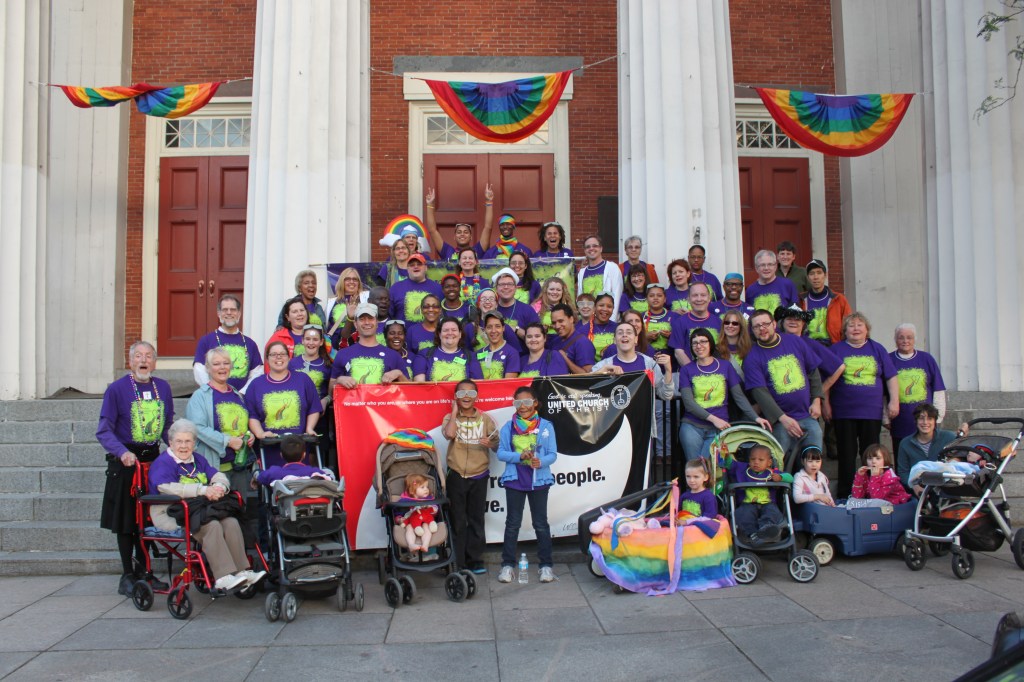
Family Pride

What’s Up with Pastor Todd 6-18-21
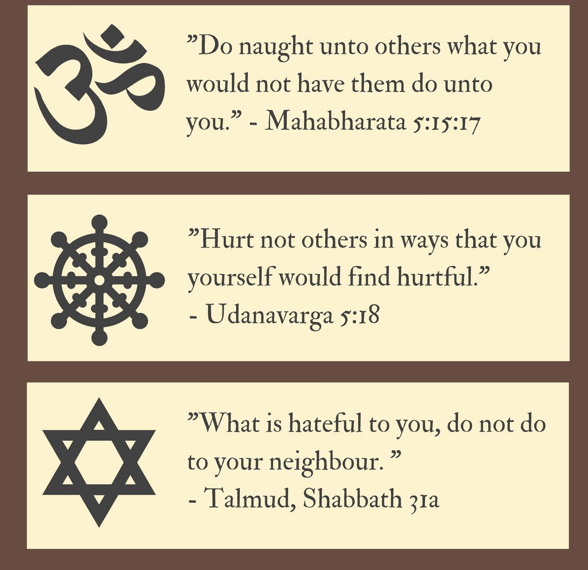
You’ve probably heard of the “golden rule”: “Do unto others as you would have them do unto you” (Matthew 7:12). It’s part of Jesus’ famous Sermon on the Mount. Versions of the golden rule are found in many other sacred texts from other religions, including a version that is known as the “silver rule”: “Do not do unto others as you would not have done to you.”
I recently encountered the “silver rule” applied to the practice of reaching new people in the book Religious Diversity, What’s the Problem? Buddhist Advice for Flourishing with Religious Diversity by Rita M. Gross. Dr. Gross is Professor Emertia of Comparative Religious Studies at University of Wisconsin-Eau Claire and Senior Dharma Teacher in the Nyingma Lineage of Vajrayana Buddhism. Her book was recommended to me by one of the members of Harvard Divinity School’s Harvard Pluralism Project, which I participate in as a representative of the United Church of Christ.
Reaching new people is a mission component of almost every organization–profit and not-for-profit–because every organization is made of people and no individual person lasts forever. So if an institution wants to continue–much less grow–some intentional effort is required. There are many thoughts on how to reach new people as without them no church will survive in the long term, so I thought I would take the opportunity that the consolidation process raises to define more precisely the theology of reaching new people for myself in the hope that others might find it helpful. Dr. Gross’ distinction between universal religion and exclusive religion helpful in this regard.
A universal religion is one that is based on ideas that are potentially relevant to everyone. The three great universal religions are Christianity, Islam, and Buddhism. Since these religions are based on ideas, they can adapt to many cultures and easily spread around the world. Reaching new people is an important part of universal religions.
A universal religion may or may not also be an exclusive religion. A universal religion is exclusive when it says both “Our religion is true for everyone” and “Everyone else’s beliefs are false.” Historically, Christianity and Islam are both universal and exclusive. The project of the universal and exclusive religion is to eliminate religious diversity. When religious monoculture is the end, all kinds of ethically questionable means are justified. The other option is exemplified by Buddhism, which is a universal religion but not exclusive. In other words, Buddhists believe that theirs is a universal truth that is potentially helpful for everyone, but there is no expectation that everyone must become Buddhist. In fact, for some people Buddhism isn’t particularly meaningful, and that’s just fine. Buddhism is universal and pluralist, that is, accepting of many religions and beliefs.
A universal and pluralist religion follows the “silver rule” when reaching new people: “do not do unto others as you would not have them do unto you.” Do you want someone pushing their religion on you? No? Then don’t do that. Would you like an invitation from a friend to something you’re interested in? Do do that. My approach to reaching new people is informed by Buddhist practice: I try to be invitational without being overbearing. I try to invest in people without expecting anything in return. I try to respect the dignity and inherent worth of every individual. It’s not my intention to eliminate difference; rather, love invites me to join with all beings in celebration of our God-given, baffling, and beautiful diversity.
What’s Up with Pastor Todd 12-11-20
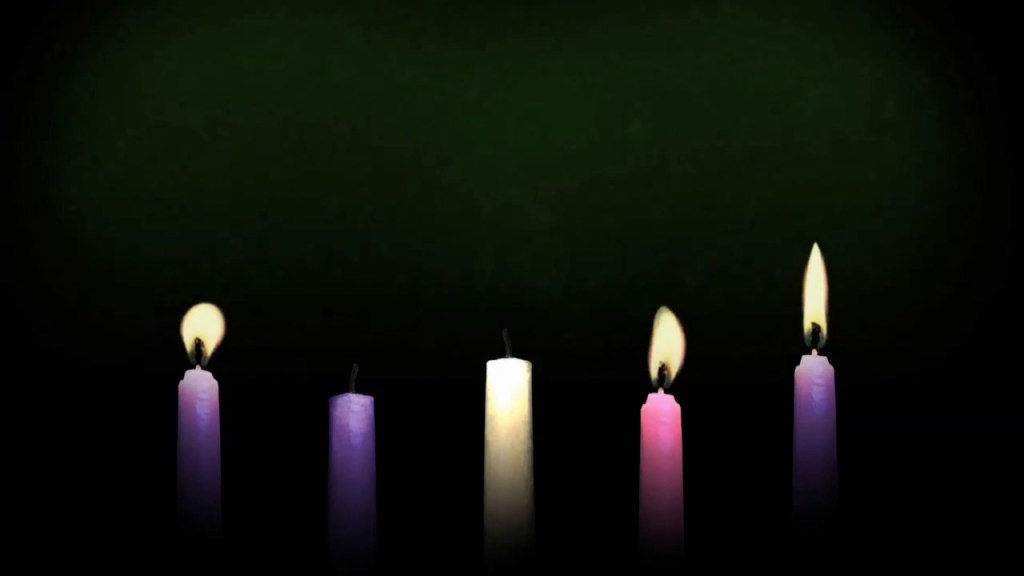
The theme for the third Sunday in Advent is love. Love is an important theme not only for Christianity and life in general but also more specifically for congregational transition. The big question driving the transition at First Congregational Church of Granby is What is our path to sustainability? The one word answer is love. We have to love our community. And you can’t love someone you’re not in relationship with. That’s why our Vitality Team has been focusing on developing strategies for building authentic relationships with our neighbors.
At our Nov. 23 “What’s Next?” workshop, someone asked for more information and resources on new models for doing church effectively and sustainably in the 21st century. I was tasked by our transition coach with providing that information. There’s a lot out there, and the magic of the Internet gives us access to much of it.
This week’s article comes from Rev. Paul Nixon, leadership coach and founder of the Epicenter Group in Washington, D.C. It’s called “Turning the Sustainability Question on it’s Head.” I encourage you to read the whole thing. It’s not long. Here’s a sample quote: “Their [the church Rev. Nixon was consulting with] core work is not to rebuild their church membership – that is important work, but not the core work. Their core work is cultivating a wider neighborhood that is rooted in gospel values – and weaving their lives with the lives of those in this larger neighborhood. The work of sustainability is rooted in and driven by RELATIONSHIPS. Jesus said, Seek first the Reign of God, and all these other things will be added along the way. Any church that understands that it exists to sustain community, neighborhood and justice will seldom be a church running out of people or resources.”
My “why” is love. I love people. I love God. That love is always calling me to connect, to seek and to see and to cultivate the connections among us. I’m so grateful that we can do this work of cultivating relationships together both in the town of Granby and beyond. We’re headed in the right direction. The question is Which of the approaches before us–downsizing or consolidating–will give us the best chance of weaving our lives with the lives of those in our larger Granby neighborhood?
What’s Up with Pastor Todd 3-13-20
This week I followed my normal work schedule. I sat down at my desk, got my “to do” list from Sue, our Office Manager, and began with the first item: “First Edition article.” Usually that means I write “What’s Up with Pastor Todd” based on a theme for the week or a Scripture text. The Scripture text for this week is Exodus 17:1-7. You’ll find my reflections on the text below in the “Lenten Reflections Week 3” article.
Four days later what would otherwise function adequately as “What’s Up with Pastor Todd” is in need of an update. The reality of coronavirus is inviting us as individuals and communities to make rapid changes out of concern for the health and wellbeing of all.
Your leadership on congregational and denominational levels has been monitoring the situation closely. In a separate email you will be receiving details of our decision to close the church for two weeks beginning Friday, March 13 through Sunday, March 22. This is in compliance with recommendations from the Southern New England Conference of the United Church of Christ. The mission trip to Puerto Rico has also been postponed. We hope to organize a mission trip for autumn 2020. During the weeks to come we will find creative ways to stay connected, attend to appropriate needs, and continue our spiritual preparation for Easter.
Worship will continue through our Facebook livestream. As usual, sermon recordings will be available on the website. There will be more updates to come, so please check your email. Also, please help your friends and neighbors who may not use email or have access to Facebook stay connected and stay informed. Even though the church will be closed to the public, Sue will return to the office on Monday. You can email or call her with questions, or contact me at pastor@firstchurchgranby.org.

God of love,
God of light,
God of life,
You made us light. You made us for love. Nothing can change that. Sometimes we lose touch with who we are. Sometimes we forget why we’re here. Teach us simply to open. Scrape away the layers of anger, doubt, and bitterness so that our light can shine before others. Amen.

Pastor’s Page Feb. 2020
February is discernment month for First Church Granby. Feb. 9 following worship will be our annual congregational “discernment” meeting. I think it’s great that FCCG has one meeting a year devoted to the spiritual practice of discernment. There are many different approaches to discernment. You can find a number of different examples in the Bible: prayer and fasting, casting lots, consulting prophets, rituals involving sacrifice, pilgrimage. Gideon famously put fleece outside overnight to discern what God wanted him to do in battle. Moses ascended Mount Sinai to receive the 10 commandments. We won’t be doing any of these things. We will be doing prayer and conversation. But what all these have in common is the ancient human attempt to determine what God wants or what God is up to, in more formal language, “divine will.”
Divine will is a notoriously difficult thing to determine. The Bible is full of stories of individuals who claimed to know the divine will when, it turns out, they didn’t. The results are usually unpleasant. So humility is the first and most important quality to bring to discernment. The second is patience. Scripture says that “the Spirit moves where it will.” God answers in God’s good time. And sometimes the answer is silence. In which case, we might decide to sit with the question a while longer. But I want to encourage us that it is indeed possible to discern God’s deepest longing for us. I’ve experienced it. I’ve witnessed it happen in congregations. We’ll know we’ve nailed it when there is a moment of connection, joy, and release. God’s will may not be pleasant. God may not be inviting us to do something we particularly want to do. But there is joy and release knowing it’s the right thing to do. There is a deep sense of connection knowing that in the long run discerning and doing God’s will leads to abundant life in this world, and eternal life in the world to come.
So don’t miss worship Feb. 9 and stay for the meeting after. Our transition coach, Claire Bamberg will be joining us and facilitating a discernment discussion on the topic of “What is Your ‘Why’?”
What’s Up with Pastor Todd 12-18-19
“Joseph, son of David, do not be afraid to take Mary as your wife . . . .” (Matthew 1:20)
When Joseph found out his fiance Mary was pregnant and he wasn’t the father, an angel says to him, “Do not be afraid.” It’s interesting that the emotion attributed to Joseph at this point is fear. I might have thought anger because from a human standpoint, the assumption would be that Mary had cheated on him. But anger isn’t named. The emotion that needs to be released in order for the holy wedding to take place is fear.
The thought of marriage scared the pants off me when Nicole and I were dated. My parents were in the process of an ugly divorce. Her parents had also had an acrimonious divorce. Our families’ recent track records were not good. Who could say we would do any better? In the end, with fear and trembling, I asked, and she said, “Yes.” Twenty-three years later we’re still together! For me, it has less to do with anything special about us. It has more to do with God’s grace and an amazing support system. And even after all these years, I am deeply aware of how fragile it all is.
The Apostle John writes that “perfect love casts out fear.” This suggests that love and fear go together. True love demands vulnerability, vulnerability brings risk, risk often gives rise to fear. “Will I be rejected?” “Will I be taken advantage of?” “Will my loved one leave or die?” Human love is imperfect, so fear goes with the territory. That’s why for me a key to making human love work is grounding myself everyday in God’s perfect love. If you’re not at least a little afraid, you may not be risking true love. If you find yourself afraid to, for example, share your feelings, be honest, meet a neighbor, share a gift, make a friend, commit to a relationship, instead of ignoring the fear, you might sit with it for a bit, invite divine love to shed some light on the situation, and then step forward with courage.


Pastor’s Page Jan. 2019
Happy 2020 everyone! I hope you have a safe and satifsfying new year. Growing up, winter on the farm was a time for fixing everything that needed fixing, planning for spring planting, keeping the livestock alive, and snowmobiling! The energy shifted away from the intensity of autumn harvest. But it would be a mistake to think that nothing was going on under the snow blanket that covered the fields and forests. Winter is a time of intense natural activity. We imagine nothing is happening only because we can’t see it.
William Bridges in his classic, Transitions, writes about times in transition when it seems like nothing is happening. We might find ourselves feeling bored or restless in the “neutral zone.” The neutral zone is the chaotic period between the ending of the old thing and the beginning of the new. What was it like for the Israelites during their 40 years in the wilderness? They left the terror of Egypt but they had not yet reached the Promised Land. In between I can imagine any number of people coming to Moses asking, “Are we there, yet?” In fact, the story of that time is one of continual complaining on the part of God’s people. God was patient. But the Bible is clear that most of those complainers did not end up in the Promised Land. So, what’s the alternative?
Modern ecology has taught us a lot about what goes on underground during the winter. Roots deepen, strengthen, and reach out to make new connections. All kinds of plants store up energy for the burst of growth in spring.
If you’re feeling bored and restless and complain-y this month, come see me, but only if you’re willing to be put to work building new connections in the community and planning new ways to reach out. Winter is a time when folks can feel especially isolated. Remember that old saying, “If you want a friend, be a friend?” What would happen if everyone who signed up for “Souper Saturday” (see below) were expected to bring a friend along with their appetizer? Wouldn’t that be exciting? Be warned. If you come to me with your winter blahs, you may walk away with an invitation to find someone else to cheer up!
 Todd Grant Yonkman