
Can These Bones Live?

What’s Up with Pastor Todd 3-20-20
It’s a bit of a risk writing a piece scheduled to publish two days from now. A lot could change and likely will change in the intervening hours.
This morning I listened to the New York Times podcast “The Daily,” which I find helpful because the host, Michael Barbaro, usually takes one current issue and goes a bit more in depth than most news broadcasts.
Today’s podcast was an interview with New York governor Andrew Cuomo on his state’s response to coronavirus. I appreciated Governor Cuomo’s frank and honest assessment of the situation in his state and the clear actions New York is taking to “flatten the curve,” that is, slow the spread of the virus so that the healthcare system isn’t overhwhelmed, which will increase the chance that deaths can be minimized.
At the end of the interview Governor Cuomo made a direct appeal to everyone in his state to set their desires and self-interest aside for the good of the whole. He particularly appealed to those whose risk of serious health consequences from the virus is low to nevertheless observe social distancing protocols. He recognized that for many the closing of bars and businesses would have serious economic consequences but that in this case, saving lives comes first. As long as we have our lives, Governor Cuomo argued, we have an opportunity to figure out together how we will get through the economic consequences of this crisis.
I find myself strangely moved by the interview. I think the reason is that it reflects my values and my understanding of Christian values. You personally may not like Governor Cuomo. You may disagree with his policies and political positions on other important issues. The point of this piece is not to argue politics. The point is that the rhetoric of caring for one’s neighbor–”loving one’s neighbor as oneself”–as the Bible puts it, has been so absent from our politics for so long. I found it deeply moving to hear a politician calling for that kind of moral action.
The Old Testament Scripture for the fourth week in Lent is 1 Samuel 16:1-13. It tells the story of how God sent the prophet Samuel to find a new king for Israel. The new king didn’t come from the ruling class. He wasn’t rich, famous, or endowed with other conventional qualifications for the job (except, perhaps, that he was male, which is another “What’s Up” for another time). That future king, who was named David, turned out to be the greatest king of ancient Israel and the ancestor of the one Christians would come to recognize as Savior of the World, namely, Jesus.
The message of Scripture is that God raises up leaders from unexpected places in times of crisis. Our world is now in a time of crisis. Our politicians are calling for moral leadership. Now is our time as a church–one that professes to follow Jesus’ command to “love your neighbor as yourself”–to provide moral leadership for our town and the wider world.
What’s Up with Pastor Todd 10-30-19
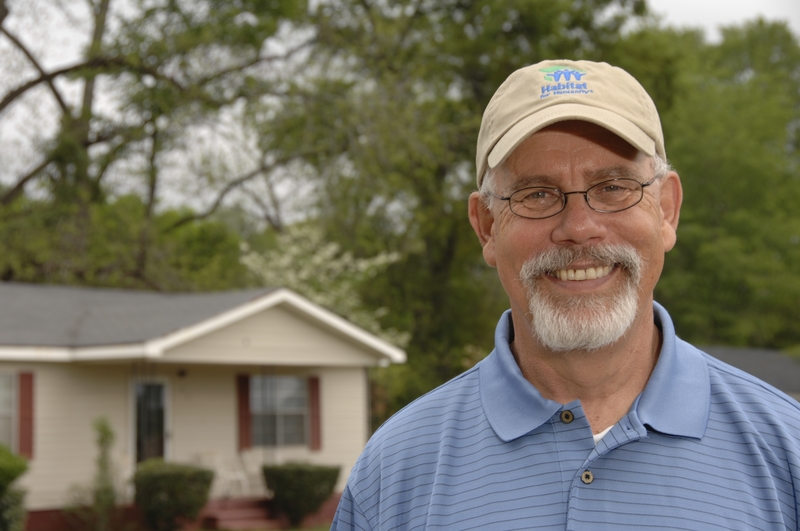
This coming Sunday, November 3, First Congregational Church of Granby welcomes guest speaker Clive Rainey to our 10am worship service. Clive is Habitat for Humanity’s “first volunteer. Clive joined founders Millard and Linda Fuller soon after they founded Habitat in 1976. You can read more of Habitat’s story here. Clive has served in many different capacities and played a key role in the development of the organization. In his 40 + years with Habitat, Clive has lead thousands of builds all over the world.
When asked “What is the first feeling you have when you put a hammer in your hands?’ Clive responds, “A feeling of power! This hammer is more powerful than guns or bombs or terrorism or dictators; more powerful than poverty or hatred. With this hammer I can change the world! I can begin that change with this house, this family, this neighborhood, this community, this country.” I think Clive would agree that the power he is speaking of does not reside in the hammer itself but in what the hammer represents. In the context of Habitat, the hammer represents a particular approach to changing the world called “partnership housing.”
It’s Habitat’s model of partnership that has made it truly transformative–the kind of organization that high capacity leaders like former president Jimmy Carter would give their lives to. My understanding of the model is that it’s less about charity and more about solidarity. When one is building a house in partnership with a family, a neighborhood, and a community, a context is created in which authentic relationships across race, class, and cultures can emerge. Charity keeps social hierarchies in place. There is the helper and the helped. No matter how the situation of the helped might be changed, the helper maintains her status as “not the helped.” In partnership characterized by solidarity, it’s clear that we’re all in this together. My fate is inextricably linked to yours. In the case of Habitat, clients are literally co-builders with volunteers. This social leveling creates an opportunity–even if for a moment–wherein helper and helped have the opportunity to meet together as equals in an authentic relationship of mutual love and respect. The helped is no longer an “object of charity,” but a full human being, no longer “other,” but, in some sense, me.
I have found that solidarity can scare the pants off most white, middle class, mainstream Americans. We don’t want to consider the possibility that given different circumstances, we might need housing assistance. We don’t want to consider the possibility that our relative privilege has little to do with our own personal worthiness and much more to do with chance and the fact that we live in an exploitive system that tends to benefit the few at the expense of the many. We don’t want to give up our sense of status and superiority. We don’t want to stand in the place of those who have experienced misfortune, discrimination, or exploitation. My guess is that that’s why there is a lot of charity in the world. Much rarer is true partnership. Habitat has developed an authentic, partnership model.
For me, solidarity, not charity, offers an opportunity for a more authentic walk with Jesus, who “though he was in the form of God, did not regard equality with God as something to be exploited, but emptied himself, taking the form of a slave, being born in human likeness. And being found in human form, he humbled himself” (Philippians 2:7-8). It turns out that the model of authentic partnership is also a model for authentic Christianity.
For critiques of the charity model read Winners Take All: The Elite Charade of Changing the World by Anand Giridharadas and Toxic Charity: How Churches and Charities Hurt Those They Help, And How to Reverse It by Robert D. Lupton. I hope you will join us this Sunday to meet Clive and learn the meaning of authentic partnership.
 Todd Grant Yonkman