What’s Up with Pastor Todd 9-18-20

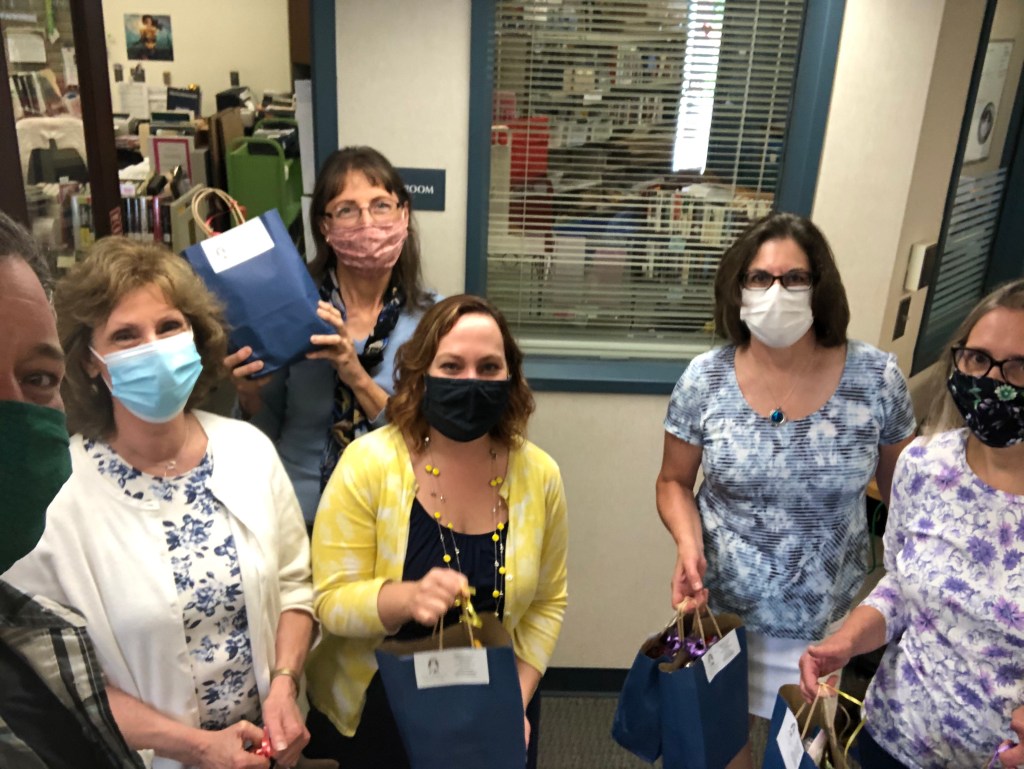
Vitality Team delivering “thank you” gift bags to Granby Public Library staff

What’s Up with Pastor Todd 9-18-20

Hi folks! Looking forward to our virtual congregational meeting Tuesday evening, Sept. 22, 7pm. Since the agenda has to do with providing a budget/funding for our Vitality Team, I thought it might be helpful if I offered a little context for the Vitality Team and where we are overall in our transition process.

The Vitality Team was formed last year after First Church sent a group of about 12 people to a Reaching New People workshop at First Church in Windsor. At the workshop the team developed a plan for reaching new people. The Vitality Team was tasked with implementing that plan. The role of the Vitality Team is to create a culture of growth at FCCG. It is NOT the Vitality Team’s responsibility to be the only people in the congregation reaching new people. That is the job of every member of our church. The Vitality Team’s job is to implement the plan and develop new ways for our congregation to invest in people who are not yet members of our church.

Following the Reaching New People workshop we did a workshop with Rev. Dr. Claire Bamberg on the church lifecycle. We did a self-assessment of where we are currently in the life-cycle that begins with birth, continues on an upward trajectory toward maturity, and then begins a downward path of decline and eventually death. Somewhere on the decline side of the curve churches pass a sustainability threshold. Our sense at the time was that we were below that threshold. Hence the focus on reaching new people.

In many areas of our society COVID is accelerating trends that were already underway before the pandemic: online shopping, decline of retail, reliance on social media, etc. The same is true in the church world. Many congregations that were already in distress before the pandemic are closing their doors. The pre-pandemic trend with FCCG was preparing to step outside our walls and engage our community. I’m glad to say that the pandemic has only accelerated that process. The Vitality Team is leading the charge in getting outside our walls. The future of our congregation lies with people who are not yet members of our church. This is true regardless of what happens in our conversations with South Church. Though COVID presents a challenge to new engagement, together we are planting seeds for future growth. 
What’s Up with Pastor Todd 8-14-20

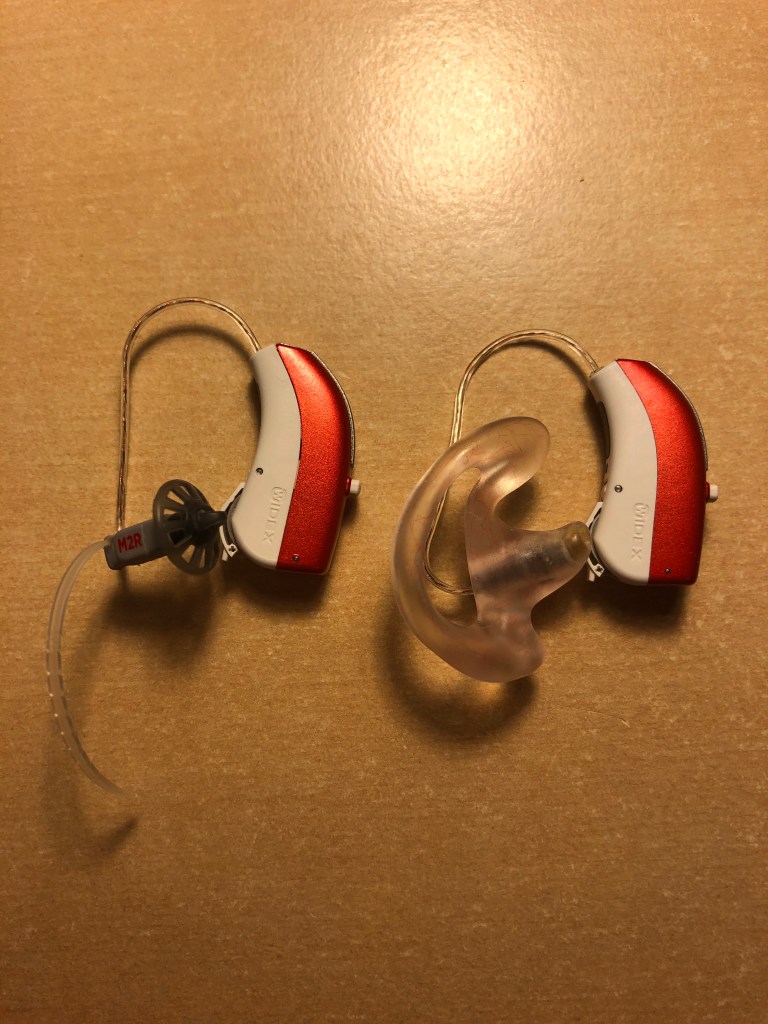
Sporty Red

What’s Up with Pastor Todd 8-14-20

I had two experiences in the last two weeks that changed my perspective on the accessibility movement for people with disabilities: 1) I listened to a podcast on the 30th anniversary of the Americans with Disabilities Act; 2) I had my regular visit to the audiologist.

I’m writing to this topic not only because of these experiences but also because I’m wondering if a part of our vision for the future of First Congregational Church of Granby might be reaching individuals with special needs and their families. I’ll explain, but first my recent experiences.

Did you know there was such a thing as “ugly laws?” I didn’t. That was one of the shocking things I learned listening to the history of the ADA. 

In the United States a number of cities in the 19th century enacted laws that prohibited beggars, poor people, people with mental illness, and people with disabilities from public spaces. An 1881 Chicago law read as follows: 

Any person who is diseased, maimed, mutilated, or in any way deformed, so as to be an unsightly or disgusting object, or an improper person to be allowed in or on the streets, highways, thoroughfares, or public places in the city, shall not therein or thereon expose himself or herself to public view, under the penalty of a fine of $1 for each offense (Chicago City Code 1881).

“An improper person” . . . What a telling line. I had always assumed that the need for making public spaces accessible arose from the ignorance of the able-bodied people designing the spaces. I didn’t realize that the lack of accessibility also arose from a feeling much deeper than that: disgust, embarrassment, that uncomfortable feeling that arises when one encounters someone with obvious physical differences that remind us of the fragility of our own bodies. I am aware of having those feelings myself, for example, when I encounter an amputee or someone with severe mental or physical challenges–particularly, if I haven’t met them before. There is a little moment of adjustment as my mind shifts to encountering this person whose ways of moving through the world are different from mine.

The disabilities movement isn’t only about access to public spaces. The disability movement is saying, “We want you to see us. We are human beings with intrinsic worth. We will not be ashamed of who we are.” This new (for me) perspective resonated with me. I can now see connections with other civil rights movements: racial justice, LGBTQIA+ movements, and women’s movements, for example. 

It also helped me understand the conversations I’ve had again and again with my audiologists over the years. Every time I go in for a new pair of hearing aids (like I did two weeks ago) I get to choose a “color.” There are usually six or seven colors to choose from. Five or six of the colors are different shades of beige, brown, or black–to match skin tone or hair color. But there’s always one color that’s bright. I remember when years ago I chose electric blue. It created quite a bit of consternation for my audiologist and even my family. A few years later I chose emerald green. Once again my audiologist said, “Wouldn’t you rather match your hair?” My newest pair is “sporty red.” Now instead of asking, “Why did you choose that color?” my family asks, “What color did you get!” But my audiologist still somehow felt obligated to ask, “Don’t you want something less visible?” 

Learning the history of the ADA and the “capitol crawl” demonstration of 1990 taught me that visibility is the point.  I invite you to watch the video of Jennifer Keelan, who at 9-years-old got out of her wheelchair, crawled up the steps of the Capitol Building, and changed the world. 

I also invite you to follow the links below for videos of an inspiring weekly worship service called “Parable” developed by Wayzata Community Church, a UCC in Minnesota. 

The service is designed with differently abled people and their families in mind. The joy is infectious. I know it’s difficult to plan during COVID time, but I find this time is a great opportunity to dream. It might seem like a heavy lift for our little church to do something like “Parables,” but perhaps if we partnered with South Church and maybe even East Granby?

In his famous hymn to love the Apostle Paul wrote, “For now we see in a mirror dimly, but then we shall see face to face. Now I know only in part; then I will know fully, even as I am fully known.”

To be seen and known is to be loved. When we see each other with all of our brokenness and beauty, a new world is possible.

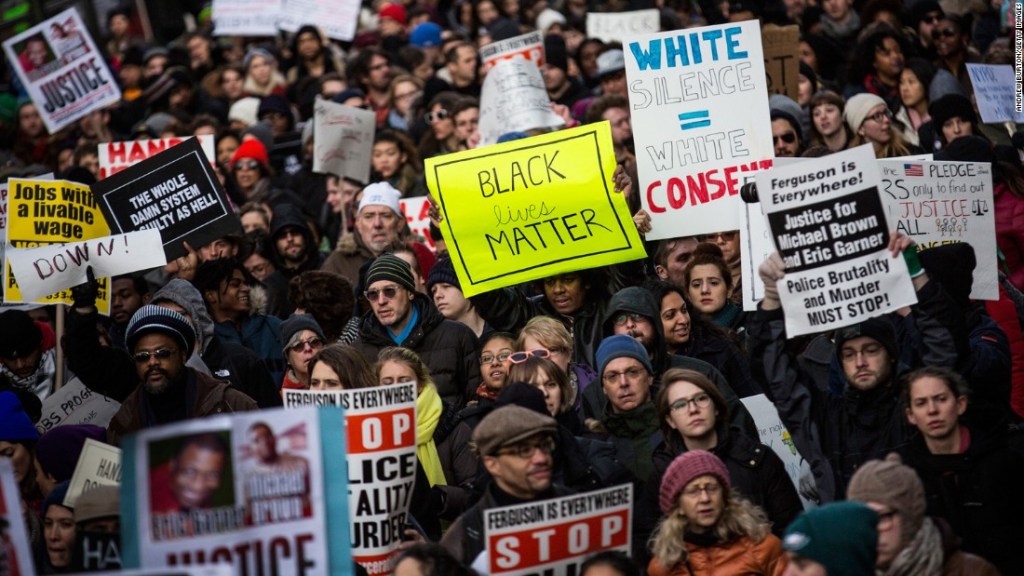
Worship Resources, Trinity Sunday, Year A, Holy Communion #systemicracism #blacklivesmatter

Opening Prayer                                                                                                                                          

Holy God, you call us to make disciples, but how can we invite others to follow when we ourselves have such a tendency to stray from your way of love? Tune our hearts to your call to return to the boundless embrace of your never changing love. Amen.

Invitation to the Table 

Jesus said: “I am the bread of life; anyone who comes to me shall not hunger; anyone who believes in me shall never thirst.” Nevertheless, we hunger; nevertheless we thirst. We hunger for justice on behalf of Black lives lost and Black bodies broken under the crushing weight of systemic racism. We thirst for righteousness that is necessary for all to live in peace.

This table is open to all who hunger and thirst for God. Come to this sacred table not because you must but because you may. Come not because you are fulfilled but because in your emptiness you stand in need of God’s mercy and assurance. Come not to express an opinion, but to seek a presence and to pray for a Spirit. 

Come to this table, sisters and brothers, as you are. Partake and share. It is spread for you and me that we might again know that God has come to us, shared our common lot, and invited us to step past the bonds of hatred and fear into God’s boundless embrace.

The Great Thanksgiving 

Holy God, we praise and bless you for creation and the gift of life and for your abiding love which brings us close to you, the source of all blessing. We thank you for revealing your will for us in the giving of the law and in the preaching of the prophets.

The prophet Amos called on the ancient Israelites to “let justice roll down like waters and righteousness like a mighty stream.” Centuries later your prophet Dr. Martin Luther King, Jr. called on the people of America to do the same. 

We thank you for the prophets of this moment who call us to once again examine our hearts, to shake free of our complacency, to open our ears to the cries of those suffocating in the grip of racial hatred. We thank you for calling us to be the healing hands and passionate heart of Jesus to our world.

With the faithful in every place and time, we praise with joy your holy name:

Holy, holy, holy God of love and majesty, the whole universe speaks of your glory, O God Most High. Amen.

What’s Up with Pastor Todd 5-1-20

“The Gate Within”

What’s Up with Pastor Todd 5-1-20

The Gospel of John has a special feature the other gospels do not. In John Jesus makes a number of theological statements that begin with the phrase “I am”: “I am the light of the world”; “I am the Bread of Life”; “I am the true vine”; “I am the resurrection and the life”; “I am the way, the truth, and the life.” There are seven “I am” statements in all. Two are found in John chapter 10, part of which serves as the lectionary text for this coming Sunday, the Fourth Sunday of Easter also known as “Good Shepherd Sunday.” The “I am” statements of John 10 are: “I am the Good Shepherd,” and “I am the gate for the sheep.” I have heard many sermons and sung many hymns about the Good Shepherd. I have never heard a sermon or sung a hymn about the Gate, good or otherwise. So let’s talk about the gate!

It’s easy for me to understand why the Good Shepherd would get all the attention. The Good Shepherd invokes the romantic images of the “green pastures” and “still waters” that “restore my soul” in Psalm 23. The Good Shepherd feels accessible and relatable and comforting. The Gate seems a little weird: The gate for the sheep? What does that mean? However, my experience in life and in reading the Bible is that it’s often the overlooked things that bring the biggest insights. So this Sunday we’ll sing songs about the Good Shepherd, but we’ll reflect on the Gate and our own calling to open the way to abundant life for all during this time of pandemic.

Worship Resources Proper 4C following 1 Kings 18:20-21, (22-29), 30-39

Pastoral Prayer

God of sheer silence,

We quiet our minds and open our hearts to you. We await an encounter. Our ears alert to an authentic word of life. We recognize the fragility of existence. Life and death are of extreme importance. Time passes quickly and opportunity is lost, so we strive to awaken. We fear dropping our defenses, but the danger is really only a danger to our ego, our pride is threatened, or narrow sense of self, our old, tired stories: I’m alone, no one will help me, all is lost. We step past all of these fears.

The only thing lost is scarcity thinking. The only thing lost is self-pity. The only thing lost is the sweet drug of defeat. Instead of indulging our whining, you invite us, even command us to get up and get busy building your kingdom. With the slightest breeze you breathe us to life.

What’s Up with Pastor Todd 2-7-2020

What’s Up with Pastor Todd 2-7-2020

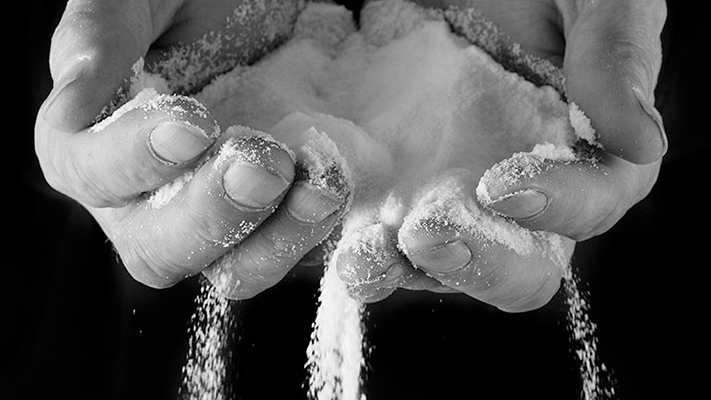
When I was a kid, we had our own slang. Now that I have kids of my own I find myself in the role of deciphering the distinctive, sometimes confusing languages of their tribes. “Salty” is a term my youngest, Olivia, likes to use. From context clues I gather it means something like “annoyed,” as in “I was salty with my professor because she gave a list of assignments for the week on Monday but then added more on Wednesday.” “Salty” can also be used in the context of disagreeing with something someone said in class, a friend forgetting a birthday, someone undeserving getting recognition. When Olivia uses it, “salty” isn’t particularly angry, resentful, or mean, but I think that has more to do with Olivia, who is a naturally happy and loving person, than with the term itself, which, according to the Urban Dictionary, is more along the lines of “angry, bitter, resentful.” For Olivia, “salty” is along the lines of “feisty.”

“Salty” as a term for angry, upset, “suddenly enraged,” is actually throwback slang first used in 1938 and associated, not surprisingly, with sailors, who had a reputation for gruff, rowdy, and drunken behavior. 

The other common use of “salt” as an adjective comes from our Scripture text for this Sunday. In his Sermon on the Mount Jesus says, “You are the salt of the earth; but if the salt should become insipid, by what shall it be made salty?” From this famous text we get the phrase “salt of the earth.” I hear people use this term to describe folks who are humble, have moral integrity, and are generally considered “good people,” “pillars of the community,” whose goodness often goes unrecognized. While I think there’s some of that meaning in the text, it certainly doesn’t capture all of it.

To get the rest of the meaning, we need to look at the rest of the sentence: “You are the salt of the earth; but if the salt becomes insipid, by what shall it be made salty? It is no longer of any use except to scatter outside for people to tread upon.” “Insipid” means “dull, boring, flavorless, weak, vapid, spiritless.” Yes, “salt of the earth” has to do with humility, moral integrity, and all of those things we tend to like as Christians. But I hear Jesus giving a sharp, dare I say, “salty” warning to his followers against dullness, irrelevance, blandness, a kind of false humility that is really just acquiescence to the status quo. It’s a form of spiritual laziness that views the church’s role as being “chaplains to power,” reassuring the wealthy and spiritually satisfied that everything is “OK.”

I am super grateful that my children are faithful Christians and dedicated churchgoers. I don’t attribute that to any special example that their parents set, other than that while they were living at home, we brought them to church every week. If you asked them, my guess is that they would agree with many young people that the church is too often “insipid, boring, and irrelevant.” And, by the way, it has little to do with whether a band is used in worship or video clips or anything like that–though these things can help. The reason my children are still engaged is that church provided the context in which they could build authentic relationships with “salty” Christians, that is, feisty Christians who had some flavor, some fire, who were not satisfied with the status quo but who risked their personal comfort to stand up against injustice, who viewed the church not as a social club where “we take care of our own,” but as a social movement whose purpose is to change the world.

Worship Resources for the 5th Sunday of Epiphany, Year A, 2-9-20

Opening Prayer

Loving God, as children we learn to ask Why? Why is the sky blue? Why do ducks quack? Why do I have to go to bed? Why do I have to share my toys? “Why” is how we learn about our world and our place in it. God of “Why,” you have told us that unless we become like one of these little children, we will not enter your kingdom. Teach us to never stop asking Why. Teach us to never stop trusting your answer. Amen.

Prayer of Dedication     

We dedicate our gifts and our lives to your holy purpose, O God. Amen.