Total Praise–Sermon 7-14-19

“You are the source of my strength. You are the strength of my life. I lift my hands in total praise to you.”

Note: As always, this is a working text, not a transcription of the sermon as preached in the context of a worship service.

Rev. Dr. Todd Grant Yonkman, Transitional Senior Minister

First Congregational Church of Granby

Sermon Series: My Favorite Scripture

14 July 2019

Text: Psalm 121

Total Praise

This summer we’re doing a sermon series called “My Favorite Scripture.” Today’s favorite Scripture comes from Nancy Rodney. She chose Psalm 121. Nancy first learned Psalm 121 as a student at Northfield-Mount Hermon School, where she met Rob, the man who would later become her husband. She learned to read the Psalm as I did when I was a child.

“I lift up my eyes to the hills—

from where will my help come? 

2 My help comes from the LORD,

who made heaven and earth.”

The Psalmist is in a valley. Maybe it’s literal. Maybe it’s emotional or financial or political. Certainly it’s spiritual. She is surrounded on all sides, boxed in. Can’t move forward. Can’t move back. How many of you have been in this place? What does it feel like? How did you respond? 

The Psalmist responds by asking a powerful question: “From where will my help come?” This is a deeply spiritual question. It’s a soul searching question. It’s a question that arises from the gut when life lays you flat. It’s a humbling, maybe even humiliating question. I can’t get myself out of this mess. I don’t know about you, but I was taught from a young age that grown up solves his own problems. He doesn’t ask for help. It’s embarrassing. It shows you’re not self-sufficient. It shows you’re human. 

So I tried to fix myself. And you know what? It didn’t work. The more I struggled, the deeper into the valley I sunk. If you’re like me, you may have had a number of peaks and valleys in your life. I won’t tell you about all of mine. We don’t have the time. But I do remember the time my dad came out to the family. I was 21-years-old at the time and home from college for the summer. We were sitting at the table having Sunday afternoon dinner following church, which was our custom. Dad was drunk. He told my brother and me to stop horsing around. He had something to say. Then he said it. “I have AIDS. I’m bisexual. I have been all my life.” It felt like a meteor dropped from the sky and crushed me. My vision went blurry. My had ringing in my ears. I remember us kids getting up from our chairs to hug dad. The rest of the story I’ve had to piece together over many years. But that moment sent me into a valley that I would never have found my way out of without friends, family, mentors, and a lot of therapy. That’s the thing about the valley: you can’t pull yourself out. Someone has to reach down and rescue you.

But the world tells us to be self-sufficient, to put on a brave face, to pull it together, and when the pain and lonliness get too much, the world is more than happy to sell us a limitless variety of ways to numb out. Nancy tells me that when she was older, she gained a new, perhaps deeper, understanding of this text. This deeper understanding came when she made a group pilgrimage to the Holy Lands. During Nancy’s tour one of the pastor-guides explained that in ancient times locals would set up shrines to their gods on the tops of the hills. So that when the Psalmist says, “I lift up my eyes to the hills,” what she is seeing is all of these little shrines to the little gods with their little spheres of influence and their little areas of concern: the fertility god and the rain god and the river god and the sun god and the moon god and the star god and the god of this tribe and the god of that clan and the god of this king and the god of that city, each one shouting: “I will save you. I will make you feel good. I will satisfy you.” Or maybe they’re mocking you: “You’ll never make it. You’re stuck forever. You’re my prisoner now. Try harder! Run faster. Work longer.” When you imagine this text, what idols do you see dancing on the hills?

But then another voice breaks through the cacaphony: “My help comes from the LORD, maker of heaven and earth.” The valley didn’t break the Psalmist. It broke her open. Have you known someone broken by suffering? They become bitter and small and angry. They lash out at people or become depressed. It’s an incredibly sad thing to witness. On the other hand, perhaps you’ve known someone who’s gone through suffering, who’s walked through the valley, and come out on the other side kinder, gentler, whose spirit has been expanded. They use that suffering to connect with other people, to build up community, to heal others and bless many.

I think for example of Edith Wilhelm, whose ashes we will inter in the Memorial Garden following worship today. Edith and her family were refugees of Nazi Germany. They were immigrants seeking asylum. Edith was just a child. Yet this country welcomed her and her family and aren’t we at First Church of Granby grateful that our forebears welcomed immigrants and refugees because what a blessing Edith and the Wilhelm family was as is to this church. Edith took her childhood experience as a refugee and used it to welcome others. She was one of the founders of the refugee ministry here at this church, which welcomed other families to the U.S. and expressed Jesus’ ministry of compassion in profound, life-changing ways. This country pulled Edith and her family out of a valley. She turned that experience around and made her life about lifting others up.

What is we made that our mission focus at FCC Granby. What if we become the community that extended a hand. Not simply with charity. When my dad came out, I didn’t need charity. I didn’t want charity. I needed support. I needed encouragement. I needed people who would talk less and listen more. Don’t you think there are people in this community going through valley times? What if instead of spending so much time focusing on ourselves and the people in this room, we turned our focus outward, to our neighbors? What if we spend our time getting to know them. What if, instead of expecting them to come to us, we went out to them?

I think this church is going through a valley time. One person who came to worship last week after having been away for a while said to me, “It seems like things at the church are falling apart.” My answer, “Yes, we are!” How we respond will determine whether this time breaks us and turns us into a small, depressed, and resentful social club or whether this time breaks us open. We can use this opportunity to go to our neighbors and say, “We’ve screwed up. We havent’ been there for you. Teach us how to be the church you need.” And see what happens. Like all declining churches, we can’t climb out of this valley ourselves. We need someone to reach in and lift us out. And those someones are the people who are not yet members of this church. From where will our help come? The LORD. Where will we meet our God? In our neighbor.
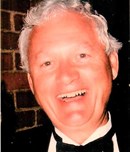
Funeral Sermon Lt. Cl. Gerald Dickerson 12/3/1932 –6/30/2019

Lt. Cl. Gerald Dickerson 12/3/1932 — 6/30/2019

Rev. Dr. Todd Grant Yonkman, Transitional Senior Minister

First Congregational Church of Granby

Funeral for Gerald Dickerson

13 July 2019

Gerald A. Dickerson was born in Dickinson, ND December 3, 1932. He on June 30–just over a week ago–after an 8 year battle with Alzheimer’s disease. Jerry grew up poor in rural Montana. He and his brother were raised by a single mom who worked tirelessly to provide for her boys. Life was hard. Opportunities were few. Corrine commented that it was a miracle Jerry and his brother Dale didn’t end up in jail. Work provided the structure Jerry needed to move forward in his life. He was hardworking, high energy, and had a love baseball. In fact, he was a top pitching prospect until pleurisy, which he developed while working at a dry cleaner, ended his baseball career. 

Jerry graduated Brooklyn High School, Brooklyn, OH, Class of 1940. After that he went to Baldwin Wallace College where he joined the Reserve Officers Training Corps. After graduation from college, Jerry was commissioned as an officer in the United States Marine Corps. He served in the USMC for over 20 years until his retirement in 1992. After his retirement, he worked with The Hartford Insurance Company and then Farmers and Trader’s Insurance Company in insurance sales and as a general manager. 

Jerry is remembered as a fun and intelligent man, if not always super handy around the house. For example, one time he purchased a new lawn mower. He brought it home, got it out of the car, set it up in the lawn, and yanked on the pull cord ‘til his arm was sore. Frustrated, he called the place where he purchased it. They sent a service guy out to see what was wrong with the brand new mower. The service guy looked it over. Nothing wrong. Then he turned to Jerry, “Did you put gas in it?” You know what happens next.

Jerry had a large, loving family. His wife, Corrine. Five children, 11 grandchildren, and four great-grandchildren, who will miss him very much.

Earlier in the service Brenna read to us from Ecclesiastes. It’s a relatively well known piece of Scripture as far as Scripture goes. My guess this is due primarily to Pete Seeger, who wrote the song “Turn! Turn! Turn!” based on this text back in the 1950s, which the Byrds then covered and made it into a hit. 

What is it about this text that we love so much? It seems so matter of fact. No earth shattering truths here. “For everything there is a season, and a time for every matter under heaven: 

2 a time to be born, and a time to die;

a time to plant, and a time to pluck up what is planted; 

3 a time to kill, and a time to heal;

a time to break down, and a time to build up; 

4 a time to weep, and a time to laugh;

a time to mourn, and a time to dance . . .” and so on.

For me, what this text does is invite us to be present every moment to this very moment, to face whatever it is we’re facing, to feel whatever it is we’re feeling, to accept whatever gift the universe is offering us and embrace it as our life, our one precious life, to drink deeply, to live fully, to love completely, and then let go trusting that whatever season we find ourselves in–whether its a season of joy or grief of building up or breaking down, or planting or plucking up, of living or of dying, it is in this very season that we will find God.  

What’s Up with Pastor Todd 10 July 2019

What’s Up with Pastor Todd 7-9-19

This Sunday will feature the first in a “My Favorite Scripture” worship series. We’ve invited individuals in the congregation to identify their favorites Scripture texts and share what makes them their favorite. Then I design a worship service around that text.

This week’s favorite Scripture, Psalm 121, comes from Nancy Rodney. Nancy chose Psalm 121 in part because of a revelatory experience she had with the text. Nancy went to high school at Northfield-Mount Hermon School, an idependent boarding school in the Berkshires. At that time Scripture study was included as part of the curriculum at NMH. When she first encountered Psalm 121 at NMH, Nancy understood the famous first two verses of the Psalm as pointing in the same direction: God. 

“I lift up my eyes to the hills–

From where will my help come?

My help comes from the LORD,

Who made heaven and earth.”

The conventional reading, the one Nancy learned in high school, goes something like this: A person is wandering alone in the wilderness looking for help. Perhaps she is discouraged or downcast. She looks up and discovers that her help is found in God. 

But later in life, Nancy learned another reading. She made a tour of the Holy Land led by a group of pastors. While on the tour she saw with her own eyes the Judean hill country: barren wildnerness hills not unlike the ones the Psalmist might have looked to for inspiration. She learned from one of the pastor-guides that in ancient days the indigneous people of this land would set up shrines to the various local deities on the tops of these hills. She learned that another, more historically informed reading of Psalm 121, might be an anitphonal one that points in two different and contrasting directions. 

One voice says, “I will lift up my eyes to the hills–from where will my help come?” This voice is pointing the reader to the hilltops where the local deities reside: the conventional gods of the day, the familiar places we turn to and the small comforts we cling to for security and help. Our 401k, the cup of coffee in the morning, the voices from our phones, TVs, and computer screens that reinforce our political and cultural biases, our job titles, our Instagram feeds, our social circles. The question: “From where will my help come?” The answer: Not here! There’s a note of despair: look at these hills surrounding me on all sides, more than I can count, stretching to the horizon, each one with its little god dancing on top, begging for my attention and loyalty and not one of them can help me! Not one can heal the depth of the wound in my soul.

The second voice (maybe another voice in the same person’s consciousness?) shifts the gaze from the hills and their small, ultimately powerless, idols and toward God, who is God not only of the high places, but of the low as well and every place in between. Question: “From where will my help come?” Answer: The Creator of heaven and earth who is not limited to this place or that, to this group or that one, to this political party, to that nation, to this religion, belief system, lifestyle, tribe, race or tradition. Either God is God of all or no God at all. 

New York Times columnist David Brooks recently gave an emotionally vulnerable TED talk about what he describes as a “time in the valley” following his divorce in 2013. During that time he went through many changes and developed some profound insights into what he calls “the lies our culture tells us about what matters.” These include: 1) Career success is fulfilling; 2) I can make myself happy or “the lie of self-sufficiency”; 3) the “lie of the meritocracy” or you’re worth more if you accomplish more. I imagine these lies and others as those idols dancing on the tops of those ancient Judean hills tormenting the Psalmist to the brink of despair. As an antidote to our culture’s lies, Brooks proposes devoting oneself to deep, authentic relationship. He calls folks who do this sacred work “weavers” and has founded an organization called “Weave” that supports this kind of holy community building.

In this time of tribalism and disaffection when people cast about for this silver bullet or that one, this savior or that numbing drug, when powerful corporations and noisy political leaders have unprecedented power to capture our attention and sell our identities, I wonder what would happen if we shifted our gaze from the “high places” to the every day places. I wonder what would happen if we devoted ourselves to our neighbors–the real flesh-and-blood people who live right next door or just down the street? I wonder what would happen if we took up the unglamourous work of looking closely, listening deeply, and making a genuine, human connection. My guess is that we would find the maker of heaven and earth right now, right here.

What’s Up with Pastor Todd 6-10-19

What’s Up with Pastor Todd 6-10-19

         The origins of Father’s Day are complicated. As our fathers tend to be. If you thought Father’s Day was a response to Mother’s Day, you’d be right. Though it doesn’t seem like a simple reassertion of patriarchy. In fact, a significant number of men resisted it for years. They had seen how Mother’s Day, originally conceived as an opportunity for women’s empowerment in response to the horrors of the Civil War, became commercialized and sentimentalized, and they didn’t want any part of it. Because of this resistance, Father’s Day didn’t become an official national holiday until 1972. 

62 years earlier, in 1910, Sonora Smart Dodd organized one of the first Father’s Days in honor of her father, a Civil War veteran and widower who had raised his children as a single dad. William Jackson Smart took on parenting roles that were not conventional for men at the time. One of the origins of Father’s Day was a celebration of men who were willing to step out of conventional gender roles to care for their families.

         At about the same time, a Father’s Day celebration was organized in West Virginia to honor the 362 men who had died in a coal mining explosion the previous year. This origin of Father’s Day reminds us of others experiences of fatherhood: grief over the fathers who are absent for whatever reason, and the expendability of men’s bodies, particularly the bodies of poor and workingclass men.

         My dad was a gay man. He grew up on a small dairy farm in northern Michigan. Though the family wasn’t poor, they didn’t have much. He was the first in his family to receive a college education. He married a woman because that’s what his conservative Christian upbringing told him to do. He raised four children and was grandfather to 11 grandchildren by the time he died of AIDS in 2012. He was a successful businessman with a genius level IQ. He was also an adulterous alcoholic bully with a criminal record who repeatedly put his family in danger. He did provide for us children. He did choose recovery eventually. He did come out and live the most honest version of his life that he could. He did love us with his version of love. Perhaps every human love leave wounds. As I said at the outset, fathers can be complicated.

         I am father to two amazing young women. It is the greatest blessing of my life. And if I’m honest, day to day I have no idea what I’m doing. I realize that might make me sound incompetent or irresponsible to some. I do indeed make it my business to learn what I can about best parenting practices. My wife and I spend significant time, energy, and financial resources making the best decisions we can for our children. But I am acutely aware that the models of fatherhood that I have inherited, for better or for worse, too often seem inadequate for the times. Especially as they grow older, my children simply know a lot of things about the world that I don’t. Their experiences are different from mine. Their contexts are different. And in significant ways their futures will be different, once again, for better or for worse, than mine. 

         What do I fall back on? The things I do know: that deepest love is bare attention, unconditional availability, unwavering presence. Wherever life takes my children, my heart is with them, and I am ready to leap to their aid, if aid is what’s called for. My deepest practice is the practice of letting go. When first Fiona–21 years ago–and then Olivia–17 years ago– were born it was as if my soul or some piece of it separated from me and became enfleshed in another, fragile being over whom I knew my protection would always in some sense be limited and who one day likely would leave my protective care entirely. How can I entrust my precious one’s to this dangerous and difficult world where they will continue to meet both unimagined joy and devastating disappointment? 

These days fatherhood for me is calmly sitting in the passenger seat while Olivia learns to drive. Dropping Fiona off at the airport for her summer job in Chicago. Preparing for Olivia’s move to Los Angeles where she will begin her college education. And savoring every moment they are home.


The Advent of this Noise–Sermon for Pentecost 9 June 2019

Rev. Dr. Todd Grant Yonkman, Transitional Senior Minister

First Congregational Church of Granby

Sermon for Pentecost

9 June 2019

Text: Acts 2:1-21

The Advent of this Noise

Scripture says, “And on the Advent of this noise the multitude gathered and were confused because each one heard them speaking in his own language.” I chose this translation of the text because the phrase “Advent of this noise” made me smile. The word advent means the arrival of a notable person, thing, or event. I associate the word advent with the Christian season of Advent during which we prepare for the arrival of Jesus at Christmas. Putting the word “advent,” which for me has a positive connotation with the word “noise,” which has a more negative connotation, is a humorous and provocative turn of phrase. The miracle of Pentecost is a celebration of noise, a blessing of cacophony with salvific power on the same level as the birth of Christ. Pentecost is often called the birthday of the church. The Holy Spirit is poured out on the disciples and a new spiritual movement is born. Jesus is born in a stable. The church is born in noise.

But what kind of noise is this? First there was “a noise like a turbulent wind borne out of the sky” that “filled the house where they were sitting.”  What does this noise make you think of? A storm? A hurricane? Some powerful natural force. In the Old Testament God often appears in storms and clouds. Psa. 29:9 says, “The voice of the LORD causes the oaks to whirl, and strips the forest bare; and in his temple all say, “Glory!”

On Mount Sinai God appears to a ragtag group of former slaves in clouds and thunder and fire. Out of that theophany God creates a new spiritual community called the people of Israel. God promises to be their God and they promise to do what God wants them to do. We are spiritual inheritors of those promises made in the midst of thunder and wind and deafening noise. And don’t forget the fire. The tongues of fire that rest on each of the disciples are reminders of the fire on Mount Sinai. In the new Christian community each of us is a mini Mount Sinai. Each of us is meant to be a place where others can encounter God. This is where the other noise comes in.

Scripture says, “And they were all filled with a Holy Spirit and began to speak in other tongues as the Spirit gave them to utter.” It was at the sound of this noise–the noise of hundreds of people speaking dozens of different languages–that caused confusion among the Jewish people gathered in Jerusalem for the Pentecost celebration. (Yes, Pentecost is another holiday we have inherited from Judaism.) But why were they confused? You might assume that it was difficult to understand what the disciples were saying because of the jumble of languages all happening at the same time. Some churches do dramatic readings of Acts 2 by having folks read the text in different languages at the same time. That experience is indeed one of cacophony. But Scripture doesn’t say that the confusion of the multitude is the result of cacophony. In fact, it’s exactly the opposite. The multitude is confused “because each one heard them speaking in his own language.” The multitude was confused because they actually understood what was going on. Why would that be confusing?

Here’s where the church so often gets Pentecost so wrong. The miracle of Pentecost is NOT that the world learned the language and adopted the culture of the church. It’s that the church learned the languages and adopted the cultures of the world. It’s not that the Holy Spirit suddenly changed non-church-goers and brought them into the church. The Holy Spirit changed church people and sent them out into the world.

This is where you have to understand the context of the situation. Scripture says that the multitude gathered in the house at Pentecost were Jews from all over the Roman Empire: Parthians, Medes, Elamites, and residents of Mesopotamia, Judea and Cappadocia, Pontus and Asia,  10 Phrygia and Pamphylia, Egypt and the parts of Libya belonging to Cyrene, and visitors from Rome, both Jews and proselytes,  11 Cretans and Arabs,” to be precise. And when there is a public gathering in the context of empire you speak the language of empire. For the folks gathered at that first Pentecost it would have been Greek, because Greek empire preceded the Roman one, or Latin, because that was the language of Rome.

One of the expectations of empire is that you learn the language of empire and you conform to the language of empire. But that’s not how the gospel comes to people. Jesus is trying to teach us something so important here: the good news always comes to people in their mother tongue. In our churches we’ve got that completely backwards. We expect everyone else to learn our language. We expect them to learn our hymns and sing our songs and stand up when we say and bow their heads the way we do. We expect them to know who Cousin Becky is and that she has colon cancer and that they should sign up for TGIF even though they’re brand new and don’t know a soul. We expect them to entrust their children to our childcare even though it’s in the basement and they don’t know where that is. We expect them to appreciate choral music even though when they get in the car there’s hip hop on the radio. We expect them to come to this building to encounter God even though they live much of their lives online. But that’s the opposite of Christianity. That’s not the language of freedom. Those are the expectations of oppressors and empire builders. It’s not for others to learn our language and culture but for us to learn theirs.

We want to discern our future so what do we do? We survey ourselves because Christianity is all about what I want right? I suspect that people aren’t as interested in us as they might be because we say we are about justice but then we speak the language of empire. Empire is primarily concerned about itself. Jesus is primarily concerned about others. If we truly want a future, the next survey needs to be in person, and it needs to be of the town of Granby and what our neighbors want. When we do that, they might start to believe that we are Christians.

Everything communicates. Everything is a language: from our building to our bulletins to our staffing to our worship to our food to our programs. Everything tells the public what our mission is and who we value. And often there is a gap between what we think we are communicating and what we actually are communicating. For example we may think we are communicating inclusion, but are we? What could we let go of to make space for those who don’t feel like they have a place here? For me, personally, this is the most exhilarating part of being a Christian. I love the vast diversity of people and cultures and I want to connect with all of them. Remember the little Holy Spirit-Mount Sinai fires above people’s heads at Pentecost? Jesus doesn’t expect people to encounter God in church. He expects them to encounter God in you. Then, and only then, might they consider attending your church. There’s a theological word for this: incarnation. Jesus gave up everything to become God incarnate for us. We in turn are called to give up what’s most precious to us: the way we do our worship? The coziness with which we can assume people will recognize our faces and know our personal stories? The worship the town of Granby needs may sound like noise to you. But the advent of that noise might just be this town’s salvation, and ours. This is the true incarnation.

It is my experience that the more deeply and sincerely I follow Jesus, the more effectively and respectfully I’m able to connect with people across cultures, generations, languages, and worldviews. Humbly following Jesus is a pathway to connection to God’s great universe and connection is the pathway to healing and wholeness for me personally and for our planet. It could be for us as a church as well. It could be for you.

Worship Resources for Farewell Service 3-31-19 (Acts 4:23-31)

Call To Worship         

Scripture reminds us that we are all connected. Scripture teaches us that we are already complete. Scripture shows us that our true nature is freedom. Worship is the way we remind ourselves of what we already know: we are bound together in God’s limitless love. Let’s worship God.

Prayer of Confession

Holy God, we live distracted, fragmented lives. On our own, we are powerless to put ourselves back together. We believe the lie that we are hopelessly alone. We allow ourselves to be seduced by the claim that life is a relentless war for dominance. Send your spirit upon us. Calm our fears. Heal our hearts. Give us the quiet confidence to boldly proclaim your everlasting love. Amen.

Prayer of Dedication

Holy God, we pray for boldness, not just protection, as we offer our lives and resources in service of the gospel. We dedicate these offerings to the healing of the world. Amen.

Worship Resources for Sunday 3-24-19 (Acts 4:1-22)

Call To Worship        

The human heart longs for God. That ache that we feel inside, the isolation, the lack of purpose and meaning, unresolved grief if it isn’t attended to can lead us to some pretty dark places. That’s why before he ascended to heaven, Jesus gave his disciples an experience and a mission. The experience was resurrection. The mission was tell what they had seen and heard. In worship we have the opportunity to connect with God and live out our mission. Let’s worship God.

Prayer of Confession       

How can we share with others what we haven’t experienced ourselves? Holy God, we’re just like the first disciples. Jesus stands right before us yet somehow we miss it. Jesus tells us in plain words the way of the cross that leads to resurrection; nevertheless, we resist. Open the eyes of our hearts. We want to see you. Amen.

“Speaking What We’ve Seen and Heard.” Sermon 3-24-19

Rev. Dr. Todd Grant Yonkman, Transitional Senior Minister

First Congregational Church of Stamford

Sermon for the 3rdSunday of Silent Period

24 March 2019

Text: Acts 4:1-21

Speaking What We’ve Seen and Heard

            Scripture tells us that the Sadducees forbade Peter and John from telling people about Jesus. Why? The Sadducees were an ancient school of Judaism that did not believe in resurrection. Jews at the time of Jesus, like Jews and Christians today, had a wide variety of beliefs about the afterlife. Some believed in heaven and hell. Some did not. Some Jews believed that that God would bring good people back to life at the end of time, others did not. What’s important here is that the Sadducees believed people just die. Human beings are mortal. God is eternal. What’s important is what we do with our lives here and now. Our lives are carried forward in the memories of our family and our faith community who are entrusted with the sacred task of remembering those who have gone on before. That doesn’t sound so strange, does it? In fact, my guess is that many modern people believe some version of this, including some people here this morning. It’s a rational belief. It fits the evidence of our lives as we live them in the conventional world of consensual reality. Dead people stay dead, and we remember them. Peter and John were telling folks that God had raised Jesus from the dead. God had reached past the impenetrable barrier of finitude and restored someone to life. God broke the rules. And that scared the life out of the Sadducees, so they tried shut Peter and John up.

            It wasn’t just that Peter and John were saying it. If no one listened, there would be no reason for the Sadducees to intervene. If no one believed, there would be no reason for the Sadducees to feel threatened. But people did listen because a man that they knew well, a man who had been lame from his birth, a man whom they passed by on their way to the temple, a man who begged alms from them because his disability gave him no other option, a man who watched others pass through the Beautiful Gate but who wasn’t able to enter himself, this man was now walking and dancing and leaping and shouting and telling everyone that Peter and John had healed him. When they asked how this miracle happened Peter told them that it was through the power of Jesus, whom God had raised from the dead. The people listened. Not only did they listen, they believed. They believed that the same power that healed this man could heal them, too. They believed that the same power that had raised Jesus could raise them, too. The message had power not because it was some fantasy. The message had power not because the people were gullible. The message had power not because Peter and John incredibly talented con men. The message had power because there was new evidence. The evidence that transformed Peter and John was the appearance of the risen Christ. The evidence that convinced the people at the temple was the testimony of a man who had been healed and the testimony of those who were agents of his healing. The healed man, Peter and John, were speaking not what they imagined, but what they had seen and heard. 

            I believe in God because I’ve seen the evidence. I’m not interested in fantasies or lies or sophisticated cons to lighten your wallets any more than you are. I believe in God because of you. You have stepped out beyond the bounds of what I thought possible. Clinging to the past, refusing to face reality, fighting change–these behaviors are very familiar to me. I confront these behaviors within myself every day. I think it’s incredibly ironic that God has called me to lead you and other congregations through transition when personally I’m so horrible at it. I don’t enjoy transitions at all. I find them frightening and exhausting. Like you, I’d rather be in control. Like the Sadducees, I’d rather God stuck to the rules. I’d rather God’s wisdom were conventional wisdom, God’s reality consensual reality. I like the idea of resurrection, but I hate that one has to pass through death to get there. I’d much rather the myth of progress were true. I’d much rather the path abundant and eternal life led every upward and onward. But it doesn’t. In order to know joy, God invites us to become acquainted with sorrow. In order to know delight, God invites us to walk the path of suffering. In order to know healing, God asks us to face our disease. In order to know freedom, God opens in us the heart of letting go. And you have done all these things. You are doing all these things. I believe in the way of Jesus because I’ve seen the evidence. And the evidence is you.