What’s Up with Pastor Todd 6-26-20

What’s Up with Pastor Todd 6-26-20

On Sunday, June 28, 1970 the first Pride Parade was held in New York City. Similar events were held in June of 1970 in Chicago and San Francisco. All were in response to the Stonewall uprising the previous year, which marks the beginning of the modern gay rights movement. 

For the first time in its 50 year history the NYC pride parade is cancelled due to coronavirus. Cancelled for the first time in 50 years, on its 50th anniversary.

A couple weeks ago I began an online training for leadership and organizational coaching during the COVID pandemic. As the group was naming the different dynamics around loss, grief, and trauma folks are experiencing during this time, the AIDS epidemic came up. For those of us who lived through the 1980s/1990s decades of the AIDS epidemic, when thousands upon thousands of mostly gay men were dying in places like New York City, San Francisco, and Miami, COVID brings up ghosts of that trauma. As many of you know, my dad was one of those gay men who died of AIDS, so this year’s Pride is just a strange, strange time for me, and I’m guessing for many of my LGBTQIA+ brothers and sisters. 

Folks are hosting virtual Pride events, but for me and my family the highlight of Pride has always been the parade. My kids tell me that Providence (RI) Pride was their favorite event of the year. People of all ages, colors, and creeds gathered downtown for a day of fun and joy and celebration. We marched as a church. We waved banners and wore silly hats and cheered for the crowd as the crowd cheered for us. The City of Providence was never happier or more together than on Pride weekend. 

My Pride story is a family story. It’s a story of my family finding its family: a community of people committed to living without shame; people of all different identities committed to accepting and loving every inch of themselves and every part of every other. Nothing needs to be hidden. Everything can be talked about. Vulnerability, instead of a sign of weakness, is lifted up as a sign of strength. Pride is a time of honoring those who have gone before: martyrs and heroes and loved ones lost who had the courage to live their truth, and because they chose to do so, paved the way for those of us who would follow to more perfectly manifest what, for me, is nothing other than God’s boundless, unconditional love.
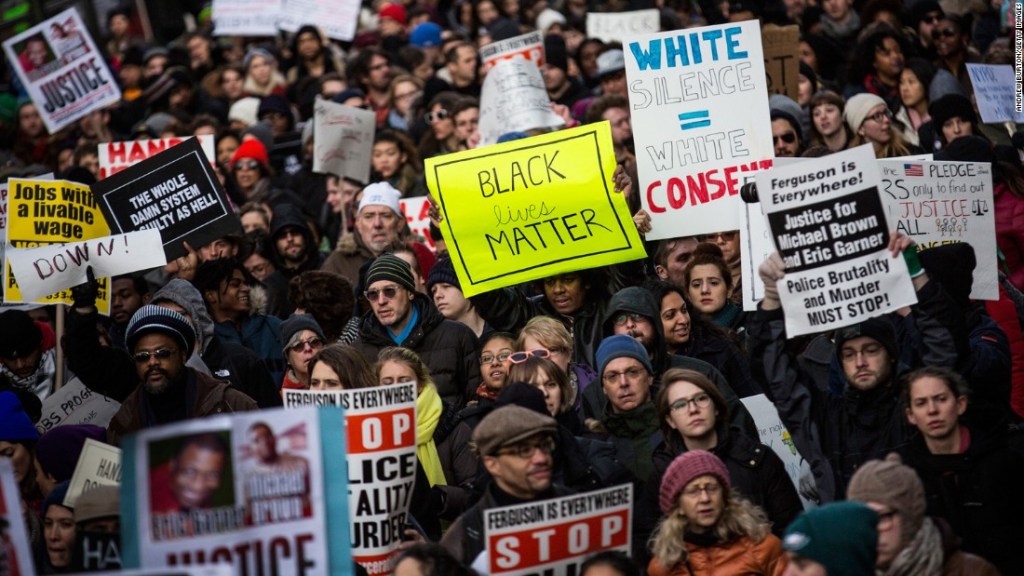

Worship Resources, Trinity Sunday, Year A, Holy Communion #systemicracism #blacklivesmatter

Opening Prayer                                                                                                                                          

Holy God, you call us to make disciples, but how can we invite others to follow when we ourselves have such a tendency to stray from your way of love? Tune our hearts to your call to return to the boundless embrace of your never changing love. Amen.

Invitation to the Table 

Jesus said: “I am the bread of life; anyone who comes to me shall not hunger; anyone who believes in me shall never thirst.” Nevertheless, we hunger; nevertheless we thirst. We hunger for justice on behalf of Black lives lost and Black bodies broken under the crushing weight of systemic racism. We thirst for righteousness that is necessary for all to live in peace.

This table is open to all who hunger and thirst for God. Come to this sacred table not because you must but because you may. Come not because you are fulfilled but because in your emptiness you stand in need of God’s mercy and assurance. Come not to express an opinion, but to seek a presence and to pray for a Spirit. 

Come to this table, sisters and brothers, as you are. Partake and share. It is spread for you and me that we might again know that God has come to us, shared our common lot, and invited us to step past the bonds of hatred and fear into God’s boundless embrace.

The Great Thanksgiving 

Holy God, we praise and bless you for creation and the gift of life and for your abiding love which brings us close to you, the source of all blessing. We thank you for revealing your will for us in the giving of the law and in the preaching of the prophets.

The prophet Amos called on the ancient Israelites to “let justice roll down like waters and righteousness like a mighty stream.” Centuries later your prophet Dr. Martin Luther King, Jr. called on the people of America to do the same. 

We thank you for the prophets of this moment who call us to once again examine our hearts, to shake free of our complacency, to open our ears to the cries of those suffocating in the grip of racial hatred. We thank you for calling us to be the healing hands and passionate heart of Jesus to our world.

With the faithful in every place and time, we praise with joy your holy name:

Holy, holy, holy God of love and majesty, the whole universe speaks of your glory, O God Most High. Amen.

What’s Up with Pastor Todd? 5-29-20

What’s Up with Pastor Todd 5-29-20

This past Memorial Day, my family and I traveled to my brother-in-law’s house nearby for what one of my friends joking calls a “get apart.” (You know, a physically distanced “get together.”) 

Our conversation covered a broad range of topics–as it usually does–including our common situation of global pandemic. My brother-in-law, who works as a federal prosecutor, noted that New Zealand and some European countries (like Germany) were able to much more effectively contain the virus because, in his opinion, in general their citizens have much more trust in their federal governments than, for example, the U.S. does.

While trust is only one factor affecting a government’s coronavirus response, it reminds me how critical trust is to human flourishing. In many cases, it is literally a matter of life and death. 

Trust is also a critical factor in congregational life. One of the foundational tasks of transitional ministry is building and maintaining trust among congregation members and between congregation and leadership. Steven Covey in his book The Eighth Habit: From Effectiveness to Greatness writes about “the speed of trust.” High trust levels in organizations allows them to move quickly to adapt and address problems. If we had higher trust levels in the U.S., would we have been able to move more quickly to prevent infections and deaths? It is a sobering question. This is a critical question for maintaining our national health. It also illustrates why high trust levels are so important to congregational health.

How does one build trust in a congregation? Three tasks: competence, compassion, common mission. Competence: leadership has to prove to the congregation that they can do the job in a consistently competent fashion. Show up for meetings, do your homework, strive for excellence. If you don’t know something, get training or ask for help. Compassion: people have to know that you have their best interest at heart. You need to demonstrate that you see your role as promoting the health and well-being of the congregation as a whole, not your personal needs for power and control. Common mission: this is illustrated by a Scripture text for this coming Sunday–Pentecost Sunday.

The Old Testament reading is from Numbers 11:24-30. Moses’ father-in-law Jethro tells Moses that he can’t lead God’s people on his own. Jethro recommends Moses appoint 70 “elders” to share the leadership burden. Moses follows his father-in-law’s advice. Moses gathers the 70 elders around the tent that served as the holy space for the people as they may their wilderness journey. God’s spirit “rested upon [the elders] and they prophesied.” 

Here’s the part I love: a couple of the elders didn’t make it to the tent for the ceremony. For some reason they had stayed in the main camp with the rest of the 600,000 or so Israelites. Nevertheless, God’s spirit had gone out to them as well causing them to prophesy among the people in the camp even though they hadn’t gone through the formal authorization the others had. Joshua, Moses’ right hand man, said, “Moses, stop them!” Moses responded, “Are you jealous for my sake? Would that all the LORD’S people were prophets, and that the LORD would put his spirit on them!” 

Moses was clear about his role as leader among the Israelites. It wasn’t about him, his status, his ego, his power. His role was to work with God to create circumstances in which God’s people could flourish. His job wasn’t to control the process but to bless, notice, and name God’s spirit wherever and however it shows up.

What’s Up with Pastor Todd 5-22-20

What’s Up with Pastor Todd 5-22-20

This Sunday marks both the seventh Sunday of the Easter Season and Memorial Day weekend. The gospel lectionary for this Sunday is John 17:1-11. Jesus has been giving his disciples an extended farewell address following what would be their last supper together. Chapter 17 contains the concluding prayer of Jesus’ farewell address. 

My years learning the crafts of preaching and writing have taught me to pay special attention to endings. For example, while I may go off script while preaching the body of a sermon, I always make sure I have a carefully crafted final sentence that will bring my homiletical flights in for a landing. Of all the things one might write or say, folks tend to remember the ending.

Another rhetorical strategy for helping an audience retain information is repetition. In his concluding prayer Jesus repeats the phrase “that they may all be one.” This is the message that Jesus wants to leave his disciples–that he wants to leave us: “that they may all be one.” It also happens to be the motto of the United Church of Christ: That they may all be one.

The UCC motto “That they may all be one” caught my attention while I was a divinity school student. I had left the denomination of my upbringing and was searching for a new church home. While I didn’t know a lot about the UCC, I thought Jesus’ final prayer for his disciples, his dream for the world, was a great foundation upon which to build my faith, my vocation, my career.

Over the past 20+ years I’ve learned a few things about the prayer that they may all be one. The most important is this: on the most fundamental level of reality, the level that is beyond human comprehension, we are always already one. In other words, Jesus’ prayer is less an expression of a goal he wants us to achieve and more a description of a reality he wants us to wake up to.

Buddhists use the metaphor of waves and the ocean to explain the confusion we experience around unity and separation. Like waves each one of us is a manifestation of the movement of the great ocean. We are never at any moment not a part of the ocean. In fact, waves are the ocean. We are one with God. We are one with each other. At all times. What affects the ocean affects the waves. What affects the waves affects the ocean. It would be ridiculous for a wave to say, “I am not the ocean,” or for a wave to say to another wave, “You have nothing to do with me.” Yet, that is how we humans too often behave. We act as if an injury to one has nothing to do with us. We wallow in self-pity thinking we are bereft and alone. We become envious or annoyed with others thinking their words or behavior are somehow personally directed at us when more often than not, they are just rolling along, manifesting as one small crest on this great, ever active womb of life.

“Plenty Good Room (Interbeing)”

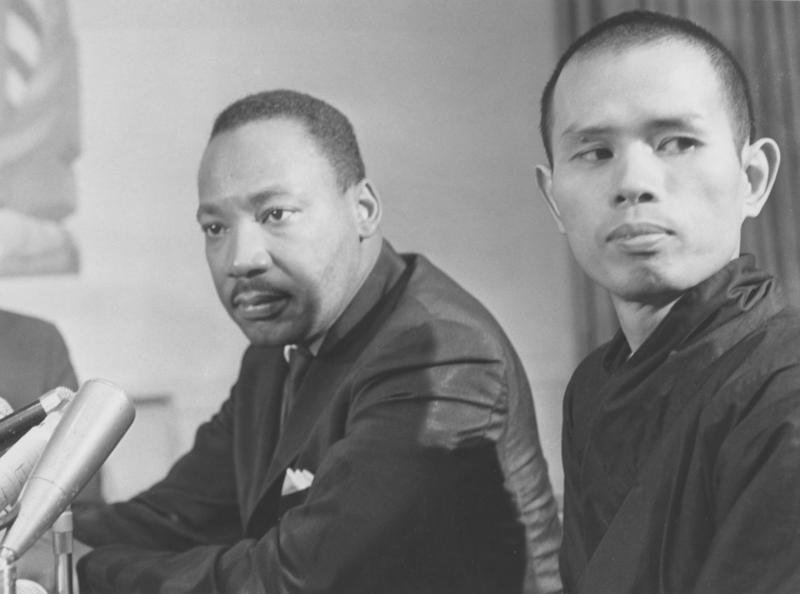
MLK and Thich Nhat Hanh, Chicago, 1966

Rev. Dr. Todd Grant Yonkman, Transitional Senior Minister

First Congregational Church of Granby

Sermon for the 5th Sunday of Easter

10 May 2020

Text: John 14:1-14

Plenty Good Room

When I was teenager my dad used to say to me, “You’re just like your mother.” Some of you may have read the piece I wrote this week about the complicated relationship between my parents. They didn’t get along well for a number of reasons. Dad only said, “You’re just like your mother” to me when he was upset with me, so I learned that being “just like my mother” was a bad thing. I watched my own behavior to see for myself if dad was right. Am I just like my mother? And if I am, what kind of man does that make me? My mom is a pastor. If I become one, does that make me “just like” her? How does that affect my relationship with dad? It was all very difficult and complicated, but it’s a situation all of us share to some degree or another. Each of us is the product of parents. The very cells of our bodies are built with the genes of others. This is true not only for parents and children, but for all of life on this planet, even, in fact, for the entire universe. Buddhist monk and peace activist Thich Nhat Hanh has a term for this reality: “Interbeing.”

Interbeing is a term that could describe the truth at the heart of our Scripture text this morning. Jesus says to his followers, “I am in the Father and the Father is in me.” “The Father” is Jesus’ word for God. Jesus is telling us that just like you and I owe our very existence to our parents, Jesus owes his very existence to God. Just like we are formed from the very genes of our parents, Jesus is formed from the very spirit or “breath”–which in the Bible is the same word–of God. In the same way that I am “just like” my mother, Jesus is “just like” God. And, by the way, so are you. So am I.

A few verses later Jesus says, “You will know that I am in my Father, and you in me, and I in you.” In other words, we are just like Jesus. In the same way Jesus is in God and God in Jesus, we are in Jesus and Jesus is in us. God, Jesus, you, me, the entire universe, we all–to once again use the words of Thich Nhat Hanh–”inter-are.” 

This can all sound very abstract and impractical, but it actually isn’t. In fact, you don’t need religion–whether Buddhism, Christianity, or any other–to tell you that we are all inescapably interconnected. Science tells us this. Biology tells us this. Physics tells us this. Common sense tells us this. The coronavirus tells us. What we need religion for is to remind us what we already know–that my health and wellbeing is intimately connected to yours. What we need religion for is to hold us accountable for doing what is right, no matter how difficult that might be.

Dr. King famously said, “Injustice anywhere is a threat to justice everywhere.” Dr. Martin Luther King, Jr. nominated Thich Nhat Hanh for the Nobel Peace prize. His statement about justice is a statement of interbeing. Racism isn’t just a problem for the South, racism is a problem right here in Granby. Homelessness isn’t just a problem for Hartford or Springfield. In fact, one of our church members who has been active in affordable housing for years said in a meeting this week that most of the homeless in Hartford don’t come from Hartford. They come from places like Granby, like Simsbury, like West Hartland. To look down on other communities–even if it is in pity–as if these issues are problems for “those people” is to completely miss the truth of interbeing. This is what makes interbeing so difficult. Relieving your suffering isn’t as much about changing you as it is about changing me. Ending homelessness isn’t so much about changing Hartford, it’s about changing Granby.

Because he was speaking in and to a patriarchal culture, Jesus said, “I am in the Father and the Father is in me.” But he could just as easily have said, “I am in my Mother and my Mother is in me.” On this day when we honor mothers, we can honor them by remembering our connection to all of life. On this day when we take time to make expressions of love to our mothers we can consider whether it is truly possible to love our mothers without also loving our neighbors. On this day when we recognize the priceless gift of life our mothers have given us, we realize that life is not ours to keep but ours to share.

What’s Up with Pastor Todd 5-15-20

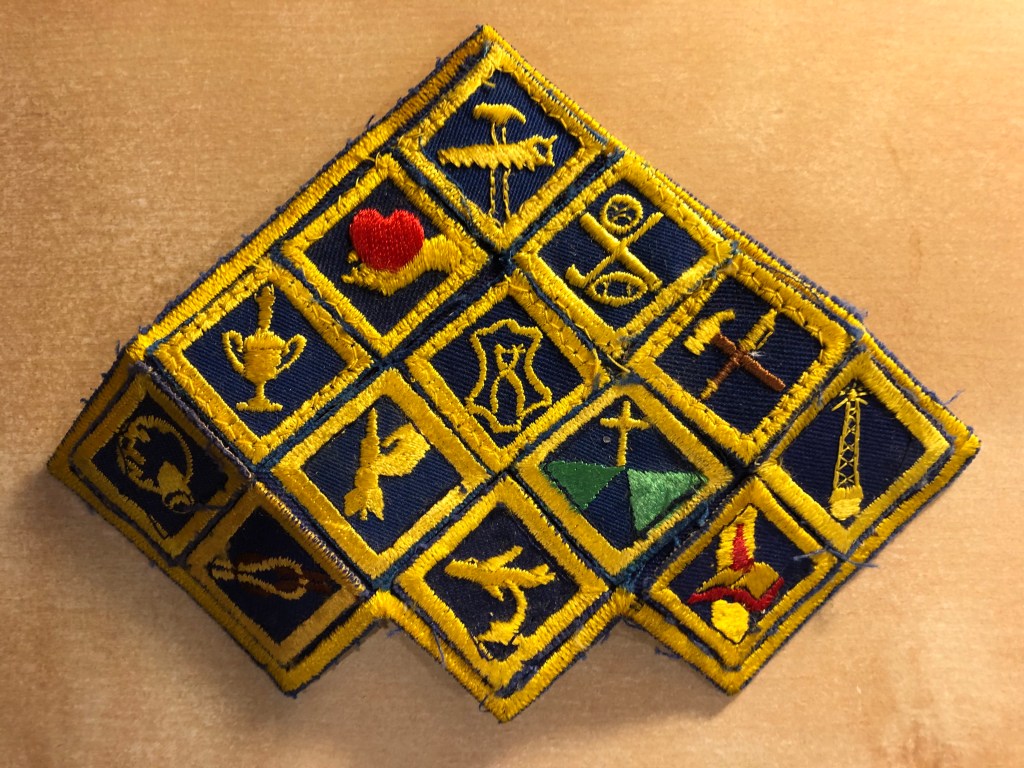
My Cadets merit badge sash circa 1980-something

What’s Up with Pastor Todd 5-15-20

Every Wednesday evening from third grade through eighth grade I would put on my uniform–including the merit badge sash, which I was very proud of–go to church, line up in the “Fellowship Hall” with the other boys according to our grades, and go through the opening exercises of “Cadets,” my church’s more Jesus-y version of Boy Scouts. 

The opening exercises included reciting the Cadet’s Pledge, singing the Cadet’s Song (“Living for Jesus”), and reciting the Cadet’s Scripture verse, “If you love me, you will keep my commandments (John 14:15).” I liked Cadets. I liked earning the different merit badges for knot tying, wood working, electronics, etc. Of course there was a “Bible” merit badge. One of the things I had to do to earn it was memorize the names of the books of the Bible in order–a helpful skill that I use to this day! I liked the campouts, the fundraising, cameraderie, and I’m grateful to the men who gave their time and resources to mentor young boys like me. 

I thought of Cadets when reading the Gospel lectionary for the sixth Sunday of Easter. John 14:15-21 continues Jesus’ “farewell discourse,” which we began studying last Sunday. It’s the Gospel of John’s version of Jesus’ final instructions to his disciples before his crucifixion. We study texts like this during the Easter Season to prepare ourselves–as Jesus prepared his followers–to be Christ’s hands and heart for the world. The historical Jesus is a memory. The living Christ is you and I. Contrary to popular belief, loving Jesus is not primarily an emotion. Emotions come and go. Loving Jesus is an action. More importantly, it’s a repeated action. We call repeated action directed toward the object of devotion “spiritual practice.” Worship is spiritual practice, cleaning the kitchen–if it’s done with an awareness of Christ’s presence–can be spiritual practice, donating to the food pantry is spiritual practice, walking the dog can be spiritual practice. 

Mother Teresa famously said, “Not all of us can do great things, but we can do small things with great love.” Whatever we do–if we do it as Christ’s hands and heart–has the potential to bring us deeper into communion with God and all of life. This is loving Jesus. This is keeping his commandments.