Holy God, in times of comfort we forget you. In times of distress we question you. Teach us in every moment to trust in you. We confess that at times we’re impatient. When our bodies are stressed our moods get depressed. Lift us up. Save us, O God, and see us through. Amen.
Prayer of Dedication
O God, you provided us life-giving water in the desert of despair. We make our offerings in humble gratitude. Amen.
O God our help in ages past. Our hope for years to come. Our shelter from the stormy blast, and our eternal home, we lift our eyes to you. We look to you for help in our time of need. Teach us to look to you always and at every moment, not only in times of distress, so that when need arises we can be your hands and heart for others. We confess at times we forget you. Remind us even now. Amen.
Prayer of Dedication
In gratitude for your ever present help, O God, we offer you our gifts of time, talent, and treasure. Amen.
It’s week two of Lent. How is your adventure going? I’m happy to report I’ve been keeping to my discipline of increased daily prayer/meditation time. At the outset I wondered how my body would respond to increased time sitting in formal meditation posture. The biggest issue is that my feet tend to fall asleep. But, so far it hasn’t been a big problem. As I said on Ash Wednesday, the key to Lent for me is picking a discipline that’s doable.
This week’s Scripture is Psalm 121: “I lift my eyes to the hills–from where will my help come?” I memorized this Psalm as a child. Psalm 121 is one of the most well known psalms–second only to Psalm 23. Like Psalm 23, Psalm 121 speaks of God’s providence. One commentator writes that “this is a song for the anxious and afraid.” In a season of coronavirus and political uncertainty Psalm 121 is a timely text.
Psalm 121 is ancient poetry. One pastor describes poetry as “language for what matters most.” It’s language that speaks from and to that part of our brains that generally operates at the level of dreams, intuition, emotion, and our deepest values. It’s that part of ourselves that we struggled to access in our workshop last month on “What is Your ‘Why?’” Rev. Bamberg, who led the workshop, suggested that a sign we’re operating at the level is when the “tears start to come.” Some of us are more comfortable working at that level of spiritual depth than others, but all of us have the ability to access our deepest selves, and Psalm 121 is tool that can illuminate that space: like a spelunker’s headlamp or the hacker’s “back door” that offers access to the source code.
Our emotional source code was written by many hands: care-givers, parents, teachers, grandparents, siblings, mentors. Our minds weave their words and actions into scripts that play in our heads. Things happen and the scripts play: “You’re a failure,” “This isn’t so bad,” “We’ll be OK,” “The sky is falling!” “When will the other shoe drop.” Some voices are reassuring. Some are fearful and accusing. When for the psalmist voices of fear and accusation arose, she had Psalm 121 as a counter program: “The LORD will keep you from all evil; he will keep your life. The LORD will keep your going out and your coming in from this time forth and forever more.”
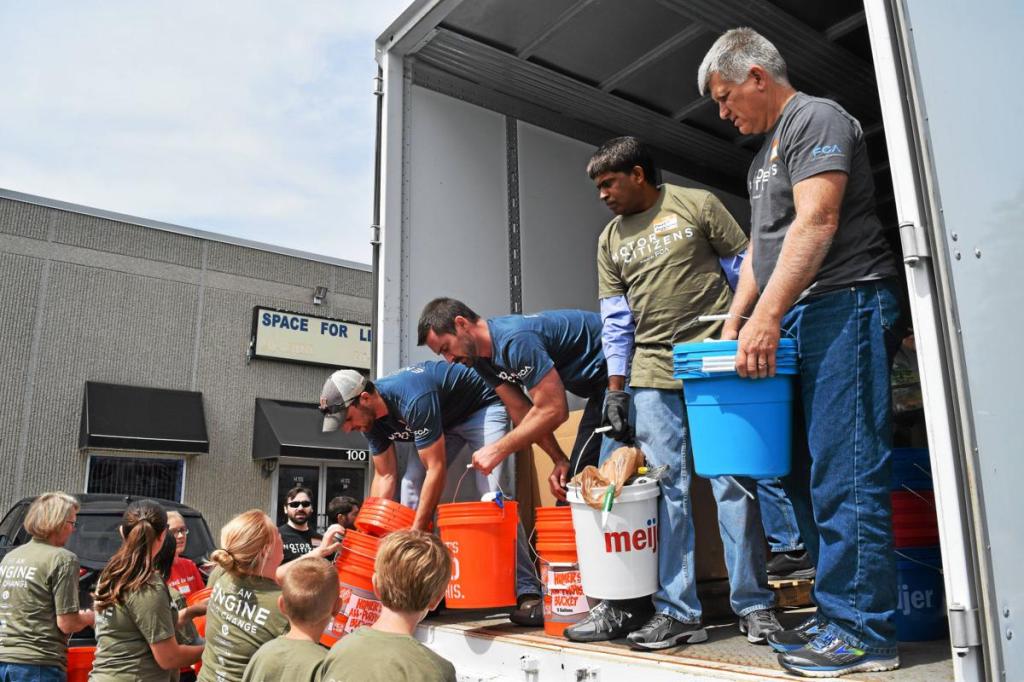
In times of anxiety Fred Rogers’ advice to children was “look for the helpers” because, he said, “if you look for the helpers, you’ll know that there’s hope.”
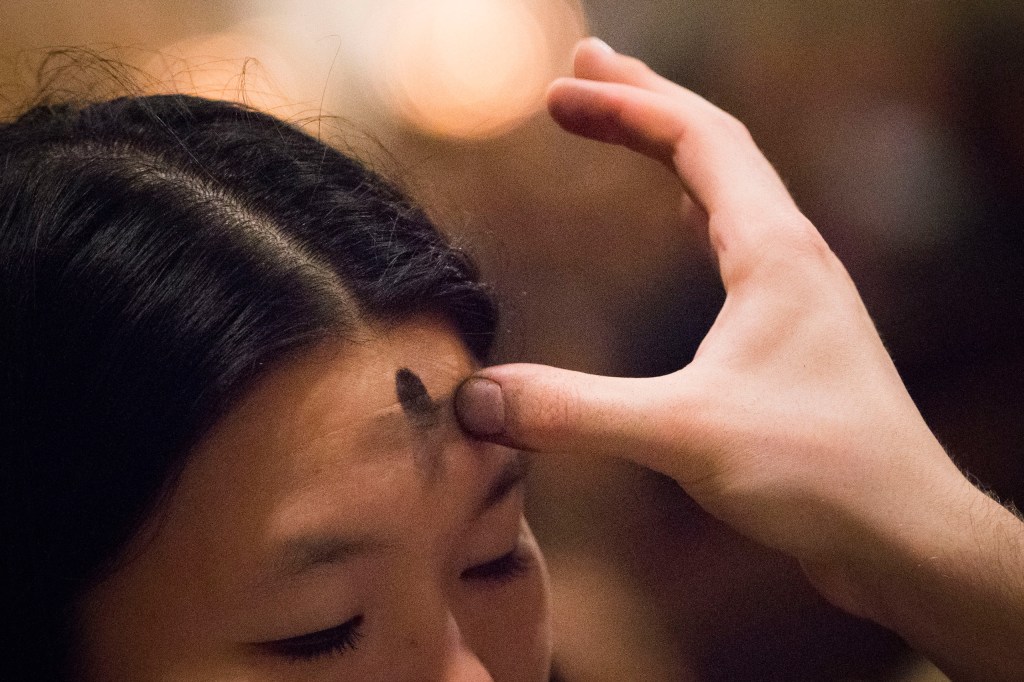
A woman receives ashes at Saint Patrick’s Cathedral on Ash Wednesday in New York February 13, 2013. REUTERS/Adrees Latif (UNITED STATES – Tags: RELIGION ANNIVERSARY) – RTR3DQUCSermon by Rev. Dr. Todd Grant Yonkman at First Congregational Church of Granby 26 February 2020
Holy God, trust is difficult. Day after day we suffer insults to our ego. Reality refuses to bend to our will. We suffer setbacks, endure disappointments, fear failure, weather the storms of shame and self-doubt. The voices of our culture that tell us our value is in producing and consuming, competing and vanquishing, branding and marketing ourselves are so insistent. Sometimes those voices are our voices. Teach us to trust in our ultimate value, which nothing, not even death, can diminish. Teach us to drop our small, fragile ego and embrace the great adventure of living for you. Amen.
*Prayer of Dedication
Holy God, only your irresistible grace will enable us to completely trust in you. Nevertheless, even with incomplete faith we offer you a portion of our finances, trusting that you will complete the good work you’ve begun in us. Amen.
March brings us to the church season of Lent. Lent is 40 days of spiritual preparation for Easter. The 40 days of Lent correspond to the 40 days of spiritual preparation Jesus did before launching his public ministry. Scripture tells us that Jesus’ spiritual preparation involved 40 days of prayer, fasting, and temptation in the “wilderness.” Jesus’ 40 days in the wilderness echo the 40 days and 40 nights of the great flood that was God’s great “do-over” with humanity. It also echoes the Israelites’ 40 years sojourn through the wilderness, which was less about getting to a geographical location called Canaan, and more about shifting spiritual orientation away from a culture of enslavement and toward a culture of freedom.
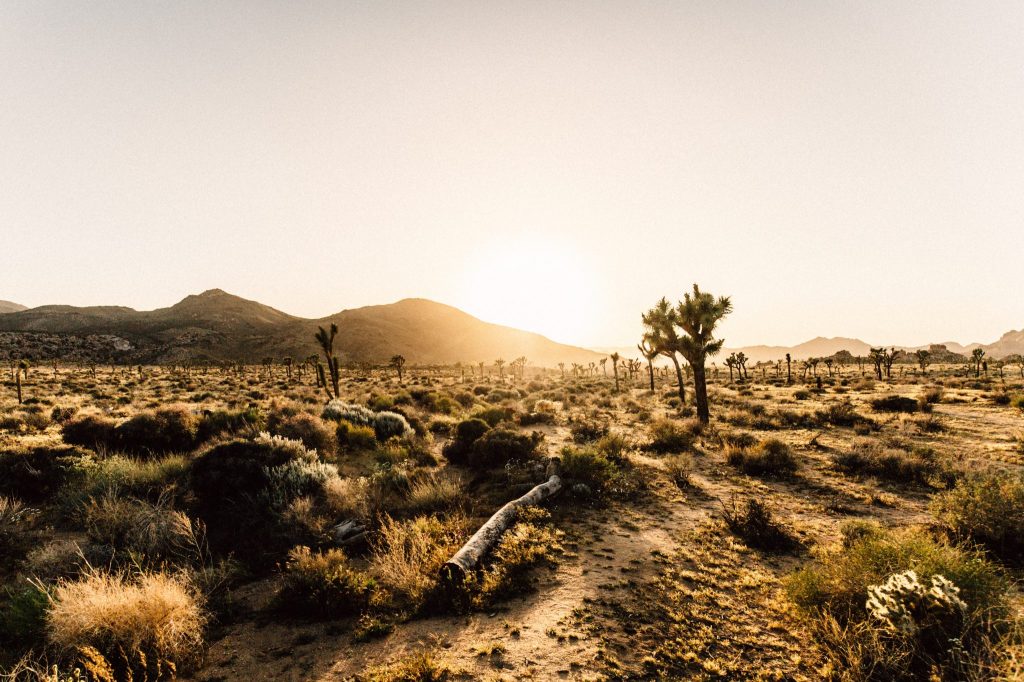
“Wilderness” is the metaphor author William Bridges uses to describe the time between the ending of an old identity and way of doing things and the beginning of a new identity and way of doing things. In the three phases of transition–ending, neutral zone, new beginning–wilderness is the “neutral zone,” the “in between time.”
We as a congregation are rapidly moving into the neutral zone wilderness. So the timing of Lent is particularly fortuitous this year. It will give us an opportunity to study more closely the dynamics of the neutral zone and develop strategies for gracefully moving through it.
Many people make spiritual preparation for Easter by taking on a spiritual discipline for Lent. Some give up caffeine or chocolate or alcohol in imitation of Jesus’ fast. I think that’s great. Do what makes sense to you. You might also consider simply making a commitment to worship every Sunday. If you already do that, consider inviting a friend. Wilderness journeys involve risk and discomfort. What do you think it was like for Jesus alone in the desert for 40 days? If inviting a friend feels risky and uncomfortable for you, Lent might be the perfect time to take that adventure. If you’d like some personal coaching around that, see me! I’m happy to help.
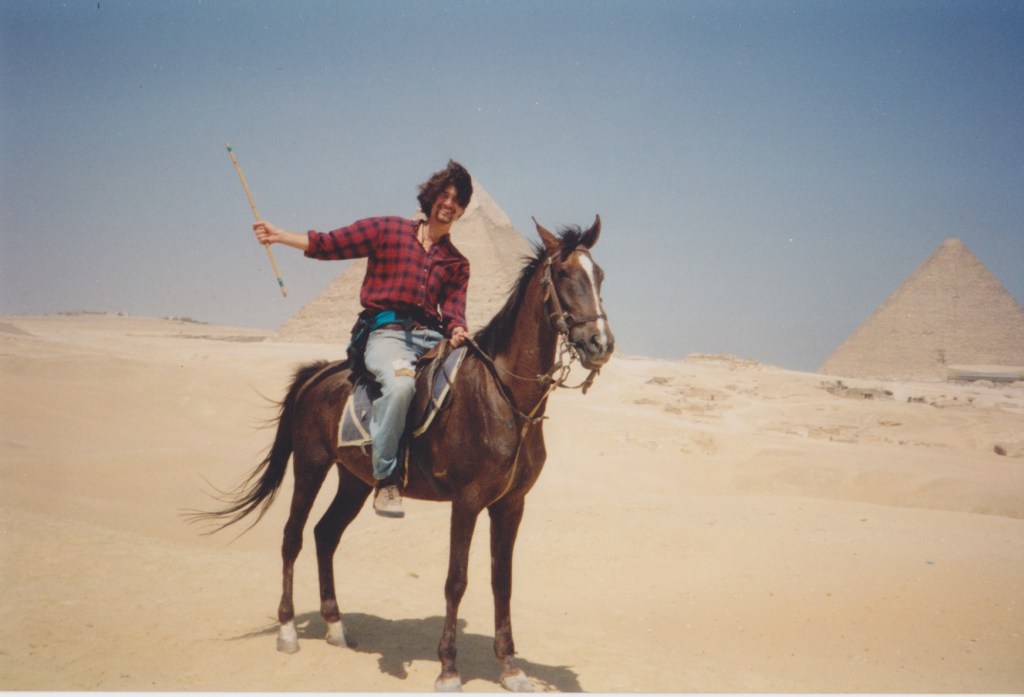
Me making an awkward horseback adventure circa 1993, Giza, Egypt
What’s Up with Pastor Todd 2-28-20
As a kid I loved adventure. I would spend hours playing outdoors either with friends or by myself. It didn’t matter. As long as there was a hill to be climbed, a trail to be followed, insects to catch, flowers to pick, game to track, berries to harvest, a fort to build it didn’t matter to me whether I was alone or accompanied. I loved to explore.
When it got too dark to play outside, I followed the street lights home, where mom ususally had a casserole in the oven. Soon it was time to set the table for supper. Afterwards it was dishes and homework and lying in bed reading about adventures: Robinson Crusoe, Treasure Island, 20,000 Leagues Under the Sea. Just writing it down makes it all seem like a quaint, distant world.
Nevertheless, what I realize now is that safe-enough space to explore on my own, use my imagination, and create adventures with minimal parental supervision was key to who I have become. I still love adventure. I’m happiest when I’m facing the joy and fear of the unknown over the horizon. I didn’t realize it at the time but the safe-enough space I experienced as a child gave me the mix of confidence and caution that has made bigger and bigger adult adventures surviveable, enjoyable, and transformative.
Two weeks ago First Congregational Church of Granby did a worship and workshop around the theme “Know Your ‘Why?’” We explored both our personal “whys” and our “why” as a congregation, that is, what is our purpose? First we had to slog through what turned out to be a series of items that we thought were “whys” but turned out to be “whats.” For example, “To feed the hungry.” That turned about to be “what” we do. The question is why feed the hungry? Finally, after hours of deep conversation, tears, and several attempts at articulating powerful, inarticulate longings of the heart, we came up with “A safe place to explore who you truly are and who God is calling you to be.”
I would say a “safe-enough” place or space is key to all spiritual development. A part of my kid adventures was the possibility of injury, discomfort, getting lost and then reoriented. My vision for First Congregational Church is that we create a spiritual container large enough for each of us to experiment, fail, make mistakes, repent, bactine and bandage our boo-boos, and develop our own sense of self-confidence and self-worth that is not overly dependent on others’ approval. The abundant life Jesus promised is rooted in the declaration at Jesus’ baptism and ours: “You are my beloved child. In you I am well-pleased.” Rev. William Sloane Coffin said, “Faith is not belief without proof but trust without reservation.” Foundational trust in the boundless love of God makes every adventure possible.
You made us light. You made us for love. Nothing can change that. Sometimes we lose touch with who we are. Sometimes we forget why we’re here. Teach us simply to open. Scrape away the layers of anger, doubt, and bitterness so that our light can shine before others. Amen.



 Todd Grant Yonkman