What’s Up with Pastor Todd 1/23/19

Folks have been encouraging me to give an update regarding the Restart Plan for FCC Stamford.

There’s a group of about 27 church members working on six separate task forces to implement the restart plan, which the congregation approved at last fall’s congregational meeting. There’s too much to report on in this space, so I will only touch on some highlights. If you have further questions please contact Maureen Matthews, Rob Godzeno, or me.

  • The Restart Team has agreed to hire Griffith Coaching to support the Search Task Force in their work to identify a restart pastor with the appropriate qualifications and cultural match for the FCC Restart. The Connecticut Conference of the United Church of Christ (CTUCC) supports FCC in our decision to work with Griffith Coaching, which has its own professional search services. Griffith Coaching will be working in coordination with CTUCC. Rev. Jim Griffith is the restart coach that helped us develop our restart plan last year.
  • Jim Griffith and his search associate, Sally Morgenthaler, will be joining us February 1-3 for a “Discovery Weekend,” during which they will be conducting small group interviews to get a sense from FCC members of what kind of restart pastor will be a good match. Click here for the Discovery Weekend schedule.
  • On February 10 we will commission the Task Forces during worship. Following worship we will have a congregational meeting to hear reports from the Task Forces and create an Advisory Committee to carry out the responsibilities of our existing boards and committees that have not been delegated to any restart task force.
  • March 2-3 is Legacy Weekend. This is in essence a memorial service for FCC Stamford. It marks a time of remembering and letting go of what was in order to make space for what the new church will be.
  • After the March 3 Legacy Service, the church will go into a six month “Silent Period.”  The purpose of the Silent Period is to create a shift in energy toward a deeper engagement with our spiritual lives and the lives of those in the Stamford community. This shift will prepare us for our “soft opening” in a new space in September 2019. The Silent Period will have its own worship and programming schedule. The Silence Task Force is currently working on the plan, which will be publicly available at the February 10 congregational meeting.

That’s probably enough information for now. Once again, for questions contact me, Maureen Matthews or Rob Godzeno.

Prayers for Epiphany 3C January 27, 2019

Call to Worship

God has given you a purpose and a mission that only you can carry out. It is God’s great mission of salvation for all of creation. It is an impossible mission for us as limited, sinful individuals. But together, we can come closer. And with God all things are possible. God needs your unique contribution. Without it we are all impoverished. Worship is one of the ways we get in touch with God’s calling on our lives. Let’s listen with all our hearts. Sing with all our soul. Pray with all our mind and strength.

Prayer of Confession

Holy God, we pray for your Spirit. We confess that for too long we have wandered aimlessly. Our minds carry us here and there into gilded memories of a past that never existed or futures filled with imaginary threats and escapist fantasies. Teach us the mystery of fulfilling the Scripture now, in the precious present, which is the only opportunity we have to truly change the world. Forgive us and restore us to ourselves. Amen.

Prayer of Dedication

We dedicate these gifts and our lives to living out our God given purpose right here and right now. Amen.

What’s Up with Pastor Todd 1/17/19


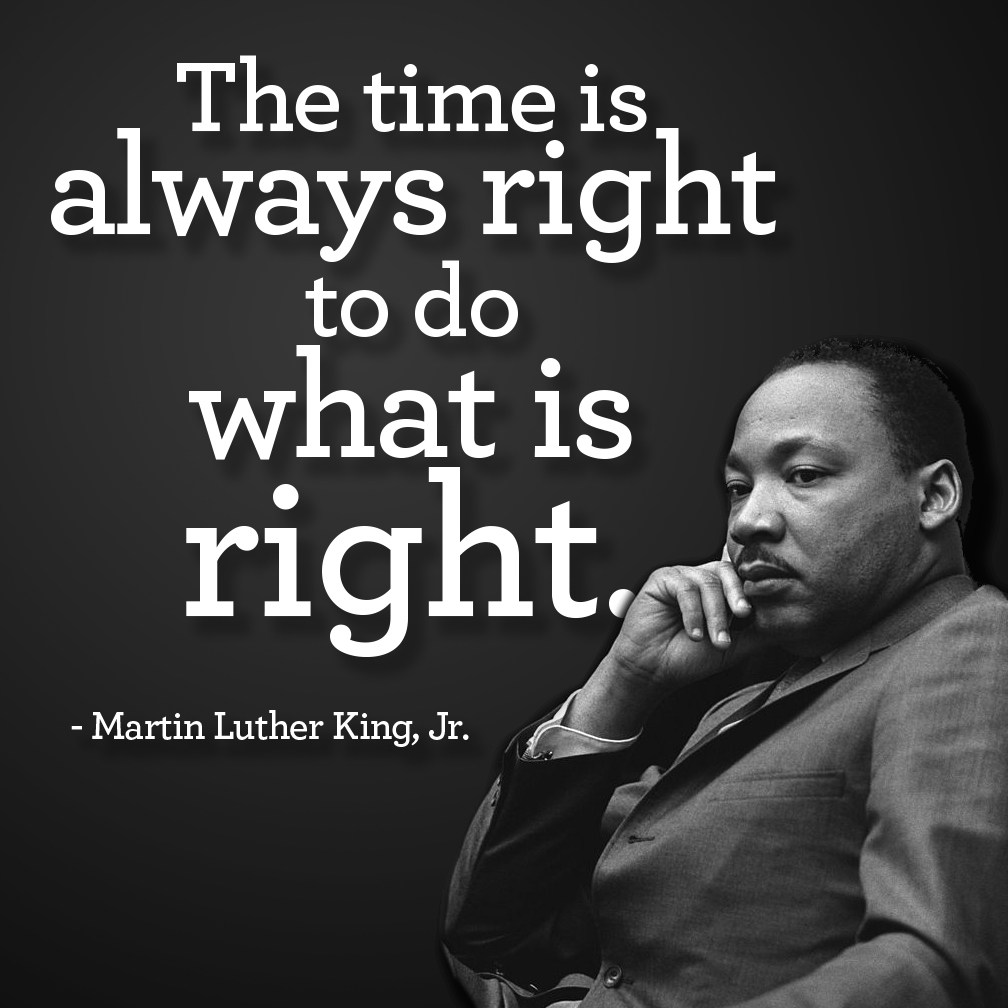
This weekend marks the MLK holiday weekend. At FCC we will be marking the occasion with a joint worship service at North Stamford Community Church, 31 Cascade Rd., Stamford. Worship begins at 11am. Pastor Jacki and I will be speaking to the theme, “I Have a Dream.” We will also be inviting the congregations to share their dreams. In preparation for Sunday I’ve been reading from King’s “Letter from a Birmingham Jail.” King wrote this open letter to a group of fellow clergy who were criticizing his use of non-violent direct action to bring about justice for African Americans, particularly in the South. The criticism was that King was creating unrest and “disturbing the peace” by raising awareness of the suffering of black people. Instead, these clergy, who identified as “white moderates,” recommended patience and incremental change. King defended his actions and called on his colleagues to remember their God, who, we are told, heard the cries of his people oppressed in Egypt and took action on their behalf to free them. King famously wrote about the “fierce urgency of now.”

The Letter from a Birmingham Jail reminded once again of the difference between charity and justice. Charity meets the needs of suffering people while leaving the social structures that create suffering in place. Justice takes a critical look at the structures and seeks to change them. Saint Oscar Romero, a Salvadoran Catholic priest martyred for his work on behalf of the poor once said, “When I feed the poor, they call me a saint. When I ask why there are so many poor people, they call me a Communist.” Which is exactly what they called Dr. King.

I don’t believe that we have to become Communists to create more just social structures in the U.S., but my dream is that as a church, we use the opportunity that our church restart affords to engage not only in acts of charity but also in a movement for justice.

What’s Up with Pastor Todd 1/7/19

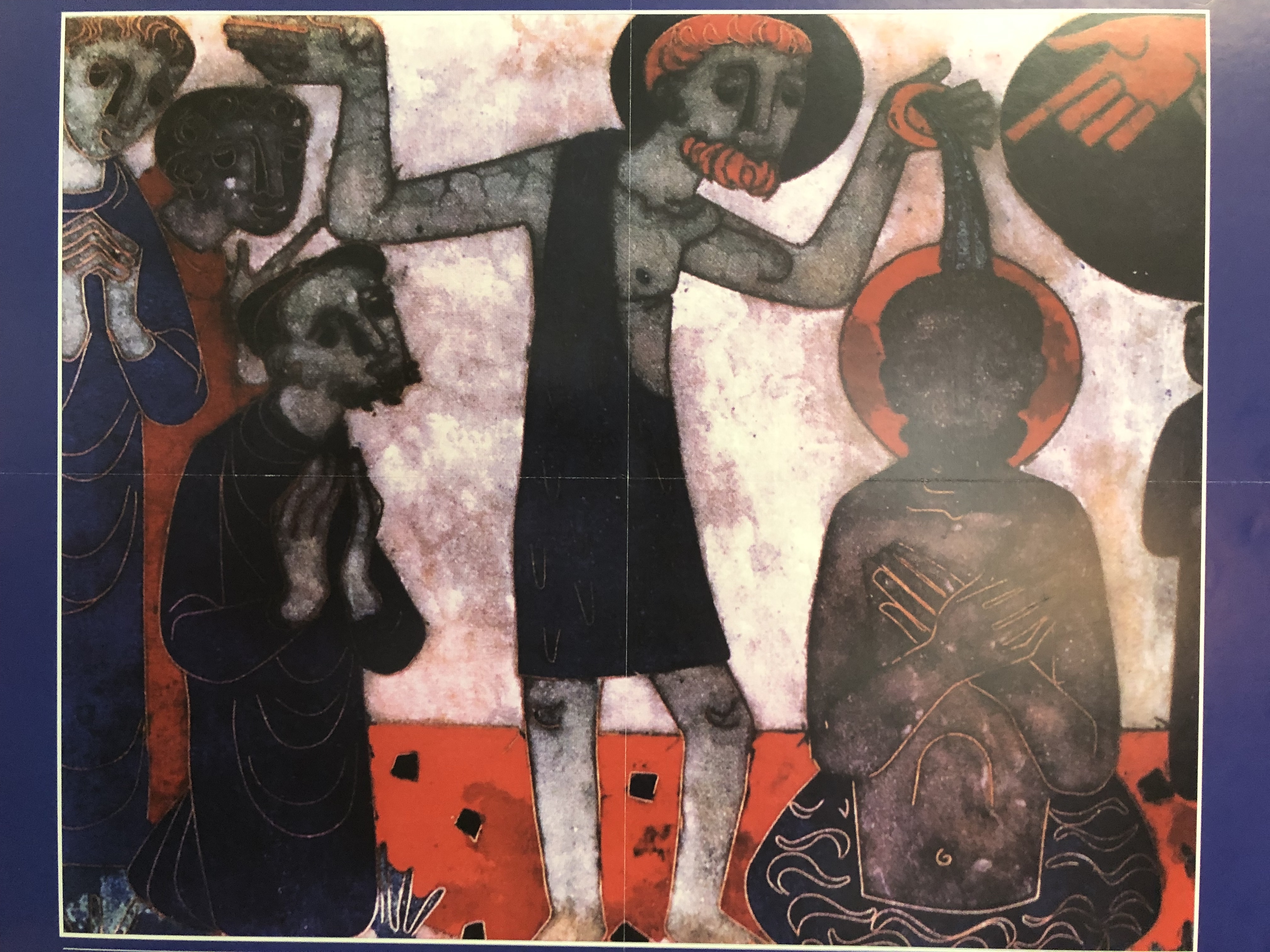
Baptism of Christ by Egino Weinart

This Sunday we celebrate the Baptism of Christ. Jesus’ baptism has been a complicated subject for Christians from the beginning. Scripture says that when he was a young adult, Jesus was baptized by his relative, John, in the Jordan River. John said that his baptism was for repentance and forgiveness of sin. So the question arose immediately: What did Jesus do that he needed to repent and be baptized? Scripture doesn’t answer this question. Rather, it dances uncomfortably around what appears to be the historical fact of Jesus undergoing water baptism, which, on the surface seems to be in tension with the claim that Jesus is the Son of God, and, therefore, without sin.

In the Christian church, baptism is a sacrament. A sacrament is a sacred ritual that helps us step into the story of God’s love. Baptism uses the symbol of water, which can mean many things: washing, drowning, life, power, chaos, creation, refreshment, womb. Baptism wraps up all of these deep meanings and helps to set us on the Christian path.

What we make of Christ’s baptism and what we make of ours, therefore, is a matter of interpretation. It can change and shift over time, which is what makes baptism so powerful and meaningful. When we baptize infants, it’s not so much about cleansing for sin as it is about welcoming an innocent newcomer into the family. At other stages of our lives, it’s a reminder of the commitment we’ve made to follow in Christ’s way.

As we step into 2019 as individuals and as a church, reconnection to baptism is a great reminder of our commitment and God’s deliverance. We don’t need to be perfect for God to love us, we just need to be willing to take the plunge and follow God’s lead as best we can.

A recommended resource on baptism and other Christian theological issues is Fr. Richard Rohr’s “Daily Meditations” newsletter. Sign up at www.cac.org.

Prayers for 17th Sunday after Pentecost Year B. “Who Do You Say that I am?”

Text: Mk 8:27-38

*Call to Worship

Who is Jesus? For two thousand years folks have been asking this question. We might ask ourselves Who is Jesus for me? Or Who is Jesus for my neighbor? Or Who is the Jesus we meet in the Bible? Who is Jesus for the gospel writers Matthew or Mark or Luke or John? Who is Jesus for the Apostle Paul? Who is Jesus? Faith is not just seeking an answer. It’s living the question.

Prayer of Confession   

O God, we confess we don’t know who Jesus is in any final way. He’s always out ahead of us inviting us to follow him. Give us the courage to follow despite our fear. Give us the strength to press on past the limits of what we think we’re capable of. Forgive us when we turn away. In Jesus’ name. Amen.

*Prayer of Dedication

We give, God, because Jesus taught us to give. We serve because Jesus taught us to service. We sacrifice because Jesus gave his life as a ransom for many. Just as you raised Jesus from the grave, we know that we, too, shall be lifted up. Amen.


Gender Trouble/No Separation

Rev. Dr. Todd Grant Yonkman, Transitional Senior Minister

First Congregational Church of Stamford

Sermon Series: Starting Again

7 October 2018

Text: Mark 10:2-16

Gender Trouble/No Separation

Our theme for this fall is “Starting Again.” Our text for today is Jesus’ teaching on divorce. Divorce is certainly a time of starting again for many people. Half of all marriages in the U.S. end in divorce. It’s become a common experience. Something that a number of folks here have been through. It’s also common that as people go through divorce they seek out a community of support. Church can be that supportive community. So as we think about our theme of starting again in terms of reimagining who we are as a church, we can think about how we connect to people going through divorce. How do we offer healing and hope in a time that can be very painful and disorienting for so many?

My experience of divorce is as a child of divorce. No fault divorce became legal in California in the early 1970s and spread to the rest of the country so that by the time I was coming of age in the 1980s, there was a whole generation of kids growing up in blended families, splitting holiday time between mom and dad, and all of those other complicated things that families that have experienced divorce do.

My parents’ case was a little different. First of all, my parents didn’t get divorced until 1993. They had been married 25 years. I was 23-years-old and out of the house. So my parents divorce didn’t have the same effect on me as it did on my younger siblings. But it did affect me. The second thing was that my dad was gay. Dad knew that he was gay when he married mom, but he kept that important piece of information hidden from her. It was a different time and a different place. West Michigan in the late 60s/early 70s was–and still is, in fact–a very conservative place. It wasn’t OK to be gay. And it wasn’t OK to get a divorce.

So mom and dad stayed together. Even after he came out to her 10 years into their marriage, they stayed together. Even after he cheated on her again and again, they stayed together. Even after he became an alcoholic, they stayed together. Even after he exposed her to HIV, they stayed together. (Fortunately mom never contracted AIDS.) It wasn’t until she found out that he had put her name on a shell company that he was using to launder money for some of his corrupt business dealings did she decide that she had had enough. She was willing to put up with a lot. But go to jail for him? No. The risk of staying with dad finally outweighed the risk of leaving him. Which tells you that 25-years-ago in conservative West Michigan, the risks that divorce posed for a woman were very high. Or at least my mom thought so. Women at that time risked impoverishment, social stigma, and loneliness. Even decades after the counterculture, divorce was a risk, especially for women.

But it wasn’t just the financial and social risks of divorce that caused mom to stay with her marriage so long. It was to protect dad from having to come out. It was to protect us kids from the stigma of having a gay dad. And it was because her church and the wider culture taught her from the time she was a child that women should submit to men. She was taught that a man is the rightful head of the household. He is to be respected and obeyed. Her church taught used the teaching of the Apostle Paul that a woman should not teach or hold authority over a man to keep women out of leadership and in the home where it was thought they belonged. In other words, the church she grew up in supported patriarchy, the idea that men should have power over women. So they missed how Jesus is critiquing patriarchy in his teaching on divorce. And if you think we don’t teach patriarchy here, just look at the wall of senior ministers by the church offices. There you’ll find the names of 26 senior ministers. 25 men. 1 woman.

Jesus’ basic teaching on divorce is that marriage is a solemn spiritual union that cannot be dissolved without spiritual consequences. And I think that pretty much anyone who has experienced divorce would agree with that. People who study life stressors put divorce at the top of the list along with the death of a spouse. Divorce is a very difficult and painful thing. My guess is that most people don’t enter into it lightly. We don’t get married intending to divorce even if it’s out there as a possibility. Even though some people may say that marriage is just a piece of paper, my guess is most people don’t experience it that way. So when Jesus says, “What God has joined together, let no one separate,” he is articulating an ideal that we can aspire to.

But what we’re missing is the radical nature of what Jesus is expressing here. In order to see that, we have to understand the patriarchal context in which Jesus is speaking. In Jesus’ time women were considered the property of men. There was nothing spiritual about it. It was a legal and financial contract between families to create heirs for the families wealth. Wives were the property of their husbands. Fidelity was expected on the part of women, but not of men. Men could have as many affairs as they wanted as long as it wasn’t with another man’s wife because that would be violating his property. Husbands could divorce their wives for almost any reason. Wives, however, could not divorce their husbands. So to suggest that marriage is a spiritual matter with moral obligations on the parts of both men and women is to call the entire patriarchal system into question.

Also notice this seemingly puzzling verse. “Whoever divorces his wife and marries another commits adultery against her, and if she divorces her husband and marries another, she commits adultery.” Huh? What does remarriage have to do with adultery? What Jesus is saying to both men and women is that you can’t just set aside your spouse and marry someone else because you’ve found someone whom you like better. That’s not a reason for divorce. But notice also that it applies to both men and women. In other words, for Jesus, women are not the property of men. If fidelity is expected of women, it must be expected of men, too. If a man can get a divorce, a woman can, too, and the same rules apply to each. I know this doesn’t sound like much, but in the context of Biblical culture, the fact that Jesus is granting women any rights at all in relation to their husbands is a critique of patriarchy that we as Christians need to take seriously. In the words of one of my wife’s parishioners, “Before there was a #metoo movement, Jesus cared for women.” How did Jesus reach where he could offer a vision of healing and hope for men and women? By listening to the women. By believing the women. By recognizing how the default setting of patriarchy is to discredit and disregard women’s voices and perspectives.

On this World Communion Sunday when we celebrate unity in Christ, we need to remember how Jesus sought to bring men and women together on equal ground. In order move closer toward Jesus’ vision, we need to hire women. We need to elect women. We need to support women. As men, we need to notice our own patriarchy-shaped biases. This will help us be a true place of healing for all people: married, single, widowed, divorced. This will be a step toward true communion. This will be starting again.

 

Regular People Doing Scary Things

What’s Up with Pastor Todd 10-4-18

“Activism is about regular people doing scary things.” That’s what Ana Maria Archila told a reporter who interviewed her about her confrontation with Senator Jeff Flake in an elevator on capitol hill last week. That confrontation led to a shift in the confirmation process for Judge Brett Kavanaugh. Instead of having a Senate vote last week as planned, there has been a delay so that allegations of sexual assault against Judge Kavanaugh can be investigated by the FBI. This shift was seen as a crisis of conscience on the part of Senator Flake when directly confronted by assault survivors.

Ms. Archila is an activist. She is the co-executive director for the Center for Popular Democracy. The other woman who confronted Senator Flake, Maria Gallagher, had never engaged in any kind of activism before, but was motivated by the Kavanaugh hearings to travel to Washington to see if she could make her voice heard. Many people, including the women themselves, were surprised when their voices actually were heard, and that their voices made a difference whether Judge Kavanaugh is confirmed or not.

Ms. Archila told the story of how she and Ms. Gallagher happened to meet in the Senate offices. They were both looking for Senator Flake in hopes of sharing their stories of sexual assault with him. She talked about how both of them were scared and that neither had shared their stories publicly before. Even more than Ms. Archila, Ms. Gallagher was just a “regular person” doing something she had never done before. She was making herself vulnerable before a very powerful person. And that scary vulnerability changed him. Activism is about regular people doing scary things.

It occurred to me that church restart is also about regular people doing scary things–not nearly as scary as confronting a senator in the capitol building–but scary nevertheless. Introducing yourself to strangers can be scary. Sharing your faith can be scary. Inviting neighbors to a party can be scary. Putting yourself out there can be scary. But it’s something we all need to learn to do. We can’t just leave it to the professionals–clergy and staff. Regular people, lay people, doing scary things can have a big impact.


How Is It with Your Soul?

In a 2016 article for Ministry Matters, United Methodist pastor Joseph Yoo writes, “John Wesley would open up all small group meetings with the question “How is it with your soul?” That’s a far deeper question than, “How are you?”

I mean, how is your soul doing? How is your spirit faring? Really, how are you?

It’s a jarring question because we often ask, “How are you?” out of habit and usually get impatient when someone has the nerve to actually tell us how they are doing.

Perhaps it’s a question we like to avoid because answering it forces us to really take stock on the health of our souls — which often leads to admitting that we may not be doing as well as we want others to think.”

We find ourselves beginning the program year at First Congregational Church of Stamford with many familiar things: worship, Sunday school, Bible study, Thrift Shop, ministry team meetings, and Prudential Council meetings. Other things seem less familiar and more uncertain: talk about selling our building, meetings of a “restart” team, a budget process that’s more complicated than usual because these big questions of space, location, and identity that have seemed settled for so long are now much less so, which makes it harder to plan income and expenses.

In times like these it’s important we ask ourselves and each other, “How is it with your soul?”

Rev. Yoo continues, “This question steers me to analyze my life and my habits. What are the things that I’m engaging in that bring my soul closer God? What are the things that I’m doing that are putting a wedge between God and myself? What are the things that I’m doing in my life that really make my soul shine brightly and flourish? What are things I’m engaged in that are draining the life out of my soul?”

How is it with your soul? In these unsettling times it’s important that each one of us prioritizes those things that bring spiritual health and wellness.


Worship Resources based on 1 John 3:1-7

Call to Worship

Beloved, we are God’s children now; what we will be has not yet been revealed. God is creating new life in and among us even now. Do you see it? Do you feel it? Will you help us notice, nurture, and celebrate resurrection? Together we will pray for faith to embrace who we are becoming, even if it isn’t yet entirely clear who we will be. Let’s worship God.