
What’s Up with Pastor Todd 10 July 2019

What’s Up with Pastor Todd 7-9-19

This Sunday will feature the first in a “My Favorite Scripture” worship series. We’ve invited individuals in the congregation to identify their favorites Scripture texts and share what makes them their favorite. Then I design a worship service around that text.

This week’s favorite Scripture, Psalm 121, comes from Nancy Rodney. Nancy chose Psalm 121 in part because of a revelatory experience she had with the text. Nancy went to high school at Northfield-Mount Hermon School, an idependent boarding school in the Berkshires. At that time Scripture study was included as part of the curriculum at NMH. When she first encountered Psalm 121 at NMH, Nancy understood the famous first two verses of the Psalm as pointing in the same direction: God. 

“I lift up my eyes to the hills–

From where will my help come?

My help comes from the LORD,

Who made heaven and earth.”

The conventional reading, the one Nancy learned in high school, goes something like this: A person is wandering alone in the wilderness looking for help. Perhaps she is discouraged or downcast. She looks up and discovers that her help is found in God. 

But later in life, Nancy learned another reading. She made a tour of the Holy Land led by a group of pastors. While on the tour she saw with her own eyes the Judean hill country: barren wildnerness hills not unlike the ones the Psalmist might have looked to for inspiration. She learned from one of the pastor-guides that in ancient days the indigneous people of this land would set up shrines to the various local deities on the tops of these hills. She learned that another, more historically informed reading of Psalm 121, might be an anitphonal one that points in two different and contrasting directions. 

One voice says, “I will lift up my eyes to the hills–from where will my help come?” This voice is pointing the reader to the hilltops where the local deities reside: the conventional gods of the day, the familiar places we turn to and the small comforts we cling to for security and help. Our 401k, the cup of coffee in the morning, the voices from our phones, TVs, and computer screens that reinforce our political and cultural biases, our job titles, our Instagram feeds, our social circles. The question: “From where will my help come?” The answer: Not here! There’s a note of despair: look at these hills surrounding me on all sides, more than I can count, stretching to the horizon, each one with its little god dancing on top, begging for my attention and loyalty and not one of them can help me! Not one can heal the depth of the wound in my soul.

The second voice (maybe another voice in the same person’s consciousness?) shifts the gaze from the hills and their small, ultimately powerless, idols and toward God, who is God not only of the high places, but of the low as well and every place in between. Question: “From where will my help come?” Answer: The Creator of heaven and earth who is not limited to this place or that, to this group or that one, to this political party, to that nation, to this religion, belief system, lifestyle, tribe, race or tradition. Either God is God of all or no God at all. 

New York Times columnist David Brooks recently gave an emotionally vulnerable TED talk about what he describes as a “time in the valley” following his divorce in 2013. During that time he went through many changes and developed some profound insights into what he calls “the lies our culture tells us about what matters.” These include: 1) Career success is fulfilling; 2) I can make myself happy or “the lie of self-sufficiency”; 3) the “lie of the meritocracy” or you’re worth more if you accomplish more. I imagine these lies and others as those idols dancing on the tops of those ancient Judean hills tormenting the Psalmist to the brink of despair. As an antidote to our culture’s lies, Brooks proposes devoting oneself to deep, authentic relationship. He calls folks who do this sacred work “weavers” and has founded an organization called “Weave” that supports this kind of holy community building.

In this time of tribalism and disaffection when people cast about for this silver bullet or that one, this savior or that numbing drug, when powerful corporations and noisy political leaders have unprecedented power to capture our attention and sell our identities, I wonder what would happen if we shifted our gaze from the “high places” to the every day places. I wonder what would happen if we devoted ourselves to our neighbors–the real flesh-and-blood people who live right next door or just down the street? I wonder what would happen if we took up the unglamourous work of looking closely, listening deeply, and making a genuine, human connection. My guess is that we would find the maker of heaven and earth right now, right here.
No Looking Back–Sermon for Open and Affirming Sunday 2019

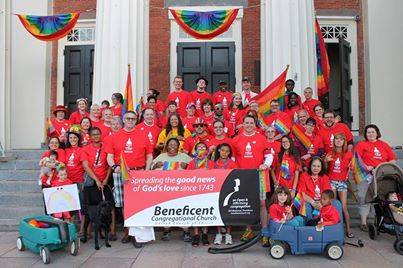
2013 Pride Parade Beneficent Church, Providence, Rhode Island

Rev. Dr. Todd Grant Yonkman, Transitional Senior Minister

First Congregational Church of Granby

Sermon for Open and Affirming Sunday

30 June 2019

Text: Luke 9:51-62

No Looking Back

Many of you know my story. But for those who are new I’ll do a quick refresher. I was born and raised in Grand Rapids, Michigan. My family and all our relatives belonged to a conservative Christian denomination called the Christian Reformed Church. I went to Christian schools and graduated from a Christian college. On the surface we were a model family. Dad had a good job. Mom stayed at home and raised us kids. We went to church twice on Sunday. We lived in a nice, new house in a nice new subdivision. Mom and dad led Marriage Encounter weekends during which they coached other couples on how to make their marriages more loving, healthy, and intimate. Years later, after my dad came out as gay and my parents divorced, one of my high school friends who knew my family well put it this way: “The Oscar for best performance in a marriage goes to Bill and Jayne Yonkman.” Open and Affirming Sunday is many things to many people, but for me it’s this: Be out. Be proud. The only Oscars any of us should get are for the work we do in Hollywood, not the lives we live at home or in the church. 

Open and Affirming originated with a 1985 resolution to the United Church of Christ General Synod that the denomination encourage all of its member churches to welcome LGBTQ people into all areas of congregational life including lay leadership and ordination. Since then 1400 UCCs have become Open and Affirming. Other denominations have followed the UCC lead in welcoming gay people including the Episcopal Church, the Presbyterian Church (USA), the Disciples of Christ, the Evangelical Lutheran Church in America, some Baptist denominations, some Pentecostal denominations, the United Church of Canada, and other denominations in Europe, Asia, Africa, Australia, and New Zealand. Same sex marriage has been legalized throughout much of Europe, in some Latin American countries, and here in the U.S. Much has changed since my dad was growing up gay and shamed in 1950s rural Michigan. Open and Affirming Sunday celebrates the progress we’ve made as Christians and human beings on this planet to embrace our LGBTQ brothers and sisters. It also recognizes how fragile this progress is and how far we have to go.

Open and Affirming is the UCC’s way of recognizing what the gay rights movement calls “pride.” The modern gay rights movement began at 1:20 am on June 28, 1969, when the police raided the Stonewall Inn, a gay bar in NYC. This was a common occurrance at the time because New York, like most places in the U.S. at the time, had laws against almost any type of gay expression even in private. The affect, if not the point, of these laws was to shame LGBTQ people. 

In order to be gay in 1969, you had to sneak. And what does sneaking do to the soul? What did the “Saint of Dry Creek” tell his son? “If you sneak, it means you think you’re doing the wrong thing, and if you run around your whole life thinking you’re doing the wrong thing, you’ll ruin your immortal soul.” In 1959 the Saint of Dry Creek told his son to be proud of himself and not to sneak. On June 28, 1969 the patrons of the Stonewall Inn resisted the police raid on their safe and sacred space, and out of that resistance, the modern gay rights movement was born. When an entire culture is set on shaming you, how do you resist? With pride. You resist shame by stopping sneaking and stepping into the light.

That was the power of the first “gay liberation march” organized a year after the Stonewall uprising in June of 1970. Several thousand LGBTQ people marched from the Stonewall Inn 51 blocks up 7th Avenue to Central Park in the middle of the day with signs and flags and chants–during the day. Even then, many felt like they had to wear masks in case their employers found out and they would be fired. In Central Park, they had a “gay-in.” It was basically a gay version of a “be-in, which was a hippie way to make a political statement by hanging out and be visible in this case as gay people. Every year since 1970 the NYC Pride parade and the LGBTQ rights movement has grown. Now Pride is worldwide. In many places around the world homosexuality remains a crime often punishable by death. Nevertheless, people once forced to live in the shadows are stepping out into the light risking their lives and livelihoods because they know that hiding, while it might preserve your privilege and in some cases be necessary to preserve your life, ultimately ruins the soul.

Open and Affirming in the UCC begins with the recognition of the negative effects that Christian teachings and behavior have had on LGBTQ people. We’ve been telling LGBTQ people to sneak when Jesus clearly invites all people to be true. You can’t do anything if you can’t be honest about who you are. To my LGBTQ brothers and sisters I want to say on behalf of the church that I’m sorry. 

Unfortunately many of our brothers and sisters in Christ around the world continue to ruin souls by telling people–particularly LGBTQ people–that God wants you to sneak. So what do we say to those people? 

In 2013 my wife and I had the opportunity to join Marriage Equality Rhode Island in bringing marriage equality to the state. As a part of that effort, I testified before the Senate Judiciary Committee. The testimony lasted through the day, into the evening, and on into the early hours of the next morning. Many people spoke both for and against marriage equality. Amont those against it, I heard some of the many of the vile and hurtful slanders against gay people that I thought we as a society had left behind. But there they were, people shaming and dehumanizing other human beings in public in the name of Jesus. Needless to say, it was disturbing.

When my turn to speak came in the wee hours, I sat across from a state senator whom I knew personally, who was a Christian, and who himself said many of the hurtful things others had been saying. I shared my family’s story. I share my message to him with you as something you can say to Christians who do not share our Open and Affirming values. Here’s what I say: “I am a Christian. That means I follow Christ. Not Paul. Not Moses. I follow Jesus. And Jesus gave Christians one command: love everyone, period. You can’t both love someone and call them an abomination at the same time. If you are telling people that loving someone of the same sex is sinful, you are not loving them, you are shaming them, and in shaming them, you are not saving their soul, you are destroying it.” The result of that hearing and the work of many in the Marriage Equality Rhode Island coalition is that we won marriage equality for Rhode Island!

My family gave me the opportunity to experience the devastating effects of LGBTQ shaming up close and personal. I can say from my own experience that when you shame an LGBTQ person, when you demand that they sneak in order to survive, you commit spiritual malpractice not only against the individual but also against their families and everyone they love. The shame runs deep, and it takes a lifetime to heal. I’m still trying to heal from having a shame-filled dad who spent two-thirds of his life sneaking. 

The good news is that healing is possible. And the irony is that I have found healing in the very Christianity whose institutions shamed my father and hurt my family. I had to leave the church of my childhood, but I’ve found welcome in the UCC, and for that I’m grateful. And a part of my ministry in the UCC is creating truly open and affirming spaces for LGBTQ people. 

Jesus said, “No one who puts their hand to the plow and looks back is fit for the kingdom of God.” I am grateful Jesus has called me to this work of creating open and affirming congregations. I have put my hand to the plow. I am not looking back. I have left the small, comfortable world of my childhood where we pretended LGBTQ people didn’t exist. I’ve stepped into God’s wide world of love. And I hope you will, too. There is no place for shame in God’s house. That’s why it’s so important that we stand together as a faith family–gay, straight, and in-between–and take pride. Let’s raise the rainbow flag and step into the light with pride. There’s no looking back.

What’s Up with Pastor Todd 7-1-19

What’s Up with Pastor Todd 7-1-19

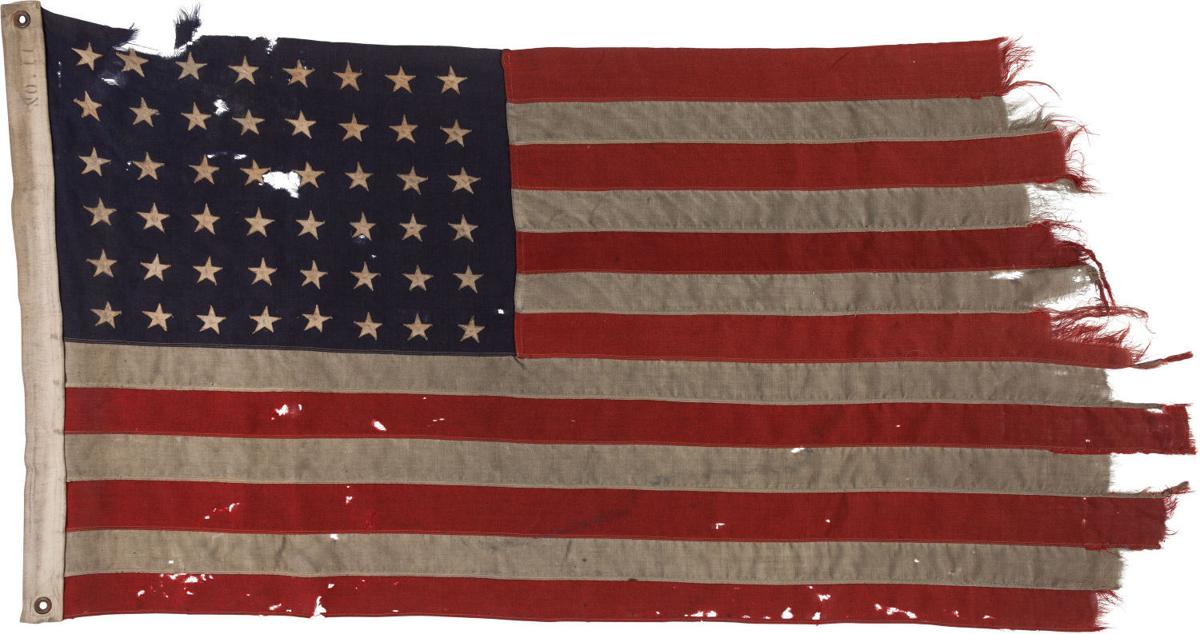
Growing up I attended Christian schools. Every morning we would stand by our desks, face the American flag hanging from a bracket on the wall, put our hands over our hearts, and recite the pledge of allegiance. I’m sure there were other morning rituals–taking of attendance, prayer, announcements over the intercom–but I remember most clearly reciting the pledge while facing the flag.

My education was intended to reflect a Christian worldview. English, math, social studies, science, phys ed–none of these subjects were beyond the purview of God, and, therefore, of the Christian faith. Don’t get me wrong. It’s not like we looked for hidden spiritual meanings in times tables or the condensation cycle. At times there were explicit Christian connections, for example, in learning about evolution as a “theory” incompatible with the Biblical teaching of creation, but most of the time the teaching was implicit: the logical beauty of math reflects the order of God’s good creation, the creation of art is humanity’s appropriate response to our Creator, history is the story of God’s hidden plan of redemption. What was the implicit Christian teaching behind our unquestioned ritual of honoring the American flag every morning?

Looking back as an adult, I would say the teaching around the flag was twofold: 1) that one can be both a patriotic citizen and a faithful Christian; and 2) a Christian’s highest loyalty is to Jesus and his teachings. Full stop. The practical result is an approach that honors every single one of my fellow American citizens as a child of God no matter our disgreements while at the same time critically assessing our nation’s history and current policies in the light of Jesus’ one commandment: love.

Many years of theological education at some of the finest learning institutions in the world have taught me to call this stance critical or “prophetic” engagement in public life. While I have left behind many of the beliefs of my childhood–denial of evolution, uncritical acceptance of whitewashed U.S. history, nearly complete obliviousness to subversive themes in art and literature–I carry with me the prophetic engagement that I was (perhaps accidentally) taught in my Christian upbrining.

Which brings me to the issue of the American flag and it’s place in church. Personally, I don’t need to have the American flag in church. It’s my view that we Christians show our faithfulness to our fellow Americans by being the kindest, most loving people we can be. No other expressions of patriotism are needed. Nevertheless, I take seriously the feelings some of my fellow Christians and fellow citizens have about the flag as a symbol of the sacrifice they and others have made in military service to our country. I also take seriously the feelings of those for whom the America flag is an irredeemable of symbol of colonialism and oppression. This seems to be how symbols in general function: they have the potential both to draw us together and tear us apart.

So at FCC Granby we have done a very church-like thing: strike a compromise. On Memorial Day, Independence Day, and Veterans Day we will display the flag in the meetinghouse. The rest of the year it will be displayed in the narthex along with the Christian flag (which is another article for another time.)

Despite the attempts of some to weaponize the flag for culture wars, I continue to humbly respect the sacred sacrifce of those who have served while unflinchingly examining with clear eyes the full range of our past and present as a nation–from racism, slavery, and genocide to dignity, equality, and human rights. My faith tells me three things about America: 1) We are a a human creation and therefore temporary. We had a beginning in 1776, and we will have an end; 2) Like most human creations we are a mix of good and bad; 3) Like all things on this earth we are not beyond the healing power of God’s love.